-
AI MUSIC STUDIO
Inspiration
We wanted to make it easier for musicians to create songs that truly match the emotion or theme they have in mind. Often, artists know how they want a song to feel, but there’s no clear way to measure or guide that feeling during the creative process. This project was inspired by the idea of helping artists translate their emotional vision into something more intentional and structured.
What it does
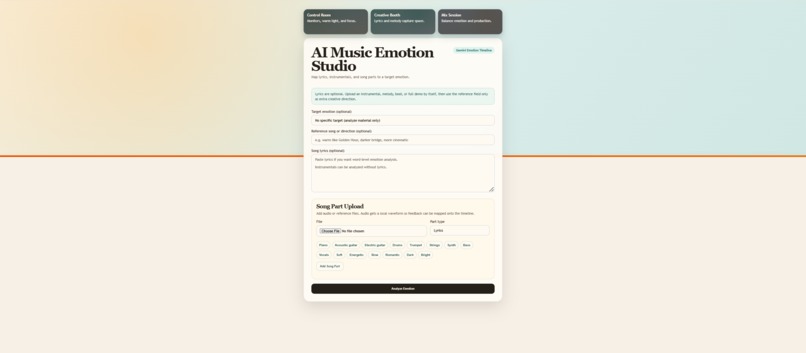
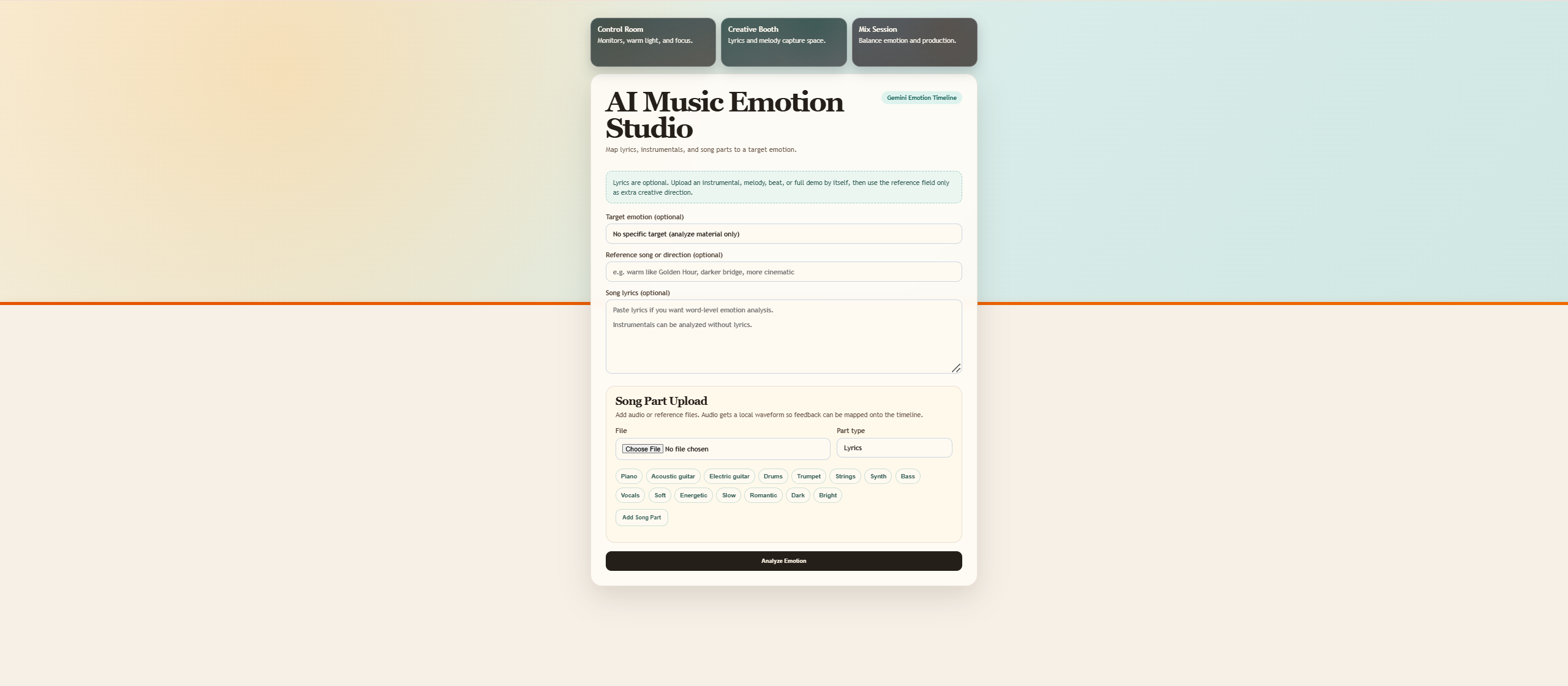
AI Music Emotion Studio helps users analyze lyrics and song ideas against a target emotion. Instead of guessing how a song feels, users can receive a match score, emotional breakdown, and suggestions to improve alignment with their intended vibe.
How we built it
We built a full-stack web application using React for the frontend and Node.js with Express for the backend. The system uses a pretrained AI model through an API, guided by structured prompts, to analyze emotional intent based on user input and labeled song components.
Challenges we ran into
One of the main challenges was moving from a simple idea to something that actually works in real time. We also had to handle environment setup issues, API integration, and balancing between mock functionality and real AI responses within a limited timeframe.
Accomplishments that we're proud of
One accomplishment we are proud of is building a working full-stack AI application within the hackathon timeframe. We were able to turn a creative idea into a usable tool with a frontend, backend, AI-powered analysis, emotion scoring, and a clear workflow for helping musicians refine their songs. We are also proud that the project connects technology with creativity in a way that feels practical for real artists.
What we learned
We learned how to structure a full-stack AI application, handle API-based AI integration, and design a system that guides creativity rather than just generating content. We also learned how to prioritize features quickly under hackathon time constraints.
What's next for AI Music Emotion Studio
In the future, we plan to integrate audio analysis and train on labeled music-emotion datasets so the system can better understand melodies, instruments, and full compositions—not just text input.
Built With
- css
- express.js
- html
- javascript
- node.js
- openai-api
- react
- tailwind-css
- vite
- vs-code

Log in or sign up for Devpost to join the conversation.