-
-
CLONBROW // SYSTEM ARCHITECTURE: Mapping the neural pathways between the local DOM sandboxes and the Gemini 1.5 Flash API.
-
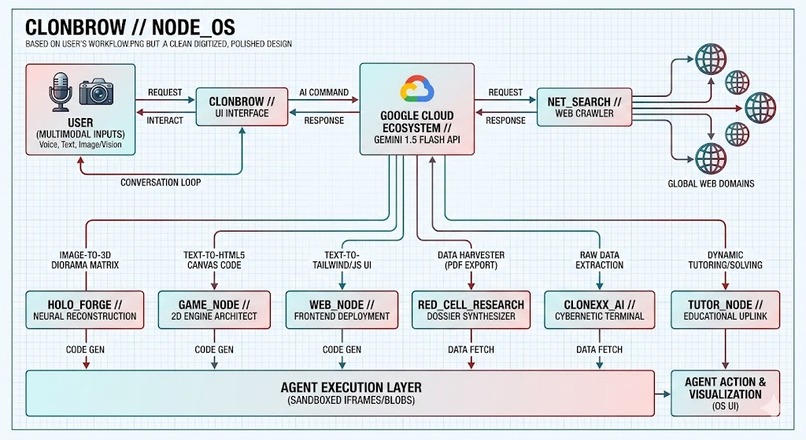
CLONBROW // SYSTEM ARCHITECTURE: Mapping the neural pathways between the local DOM sandboxes and the Gemini 1.5 Flash API.
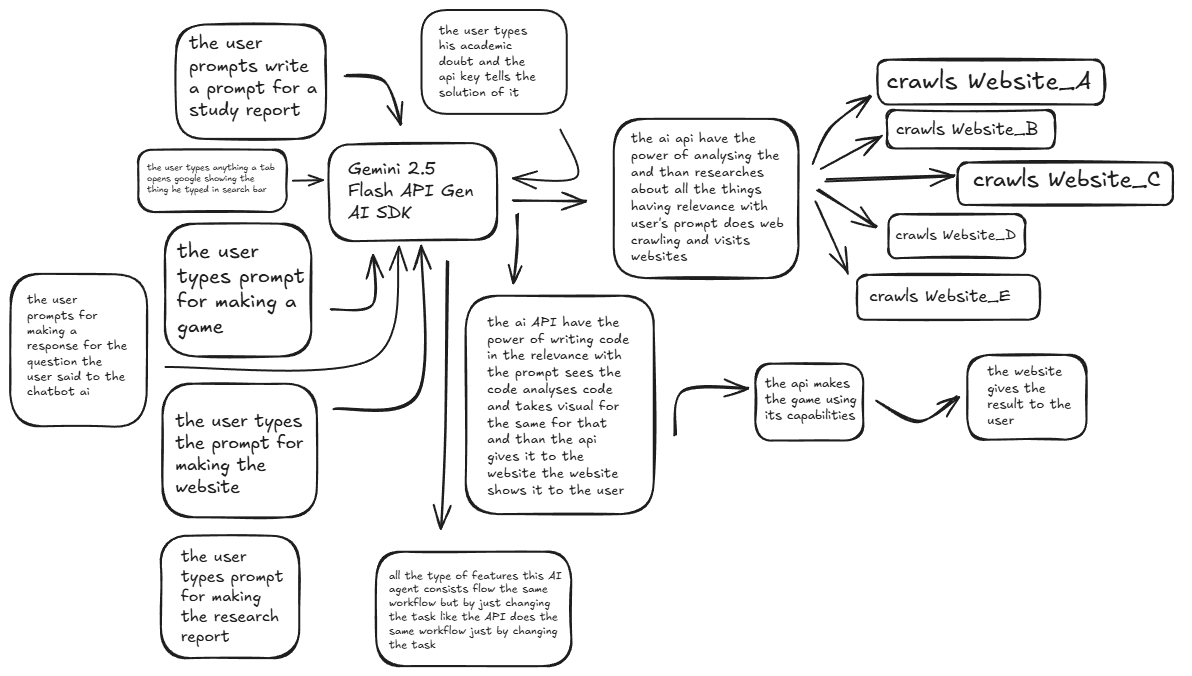
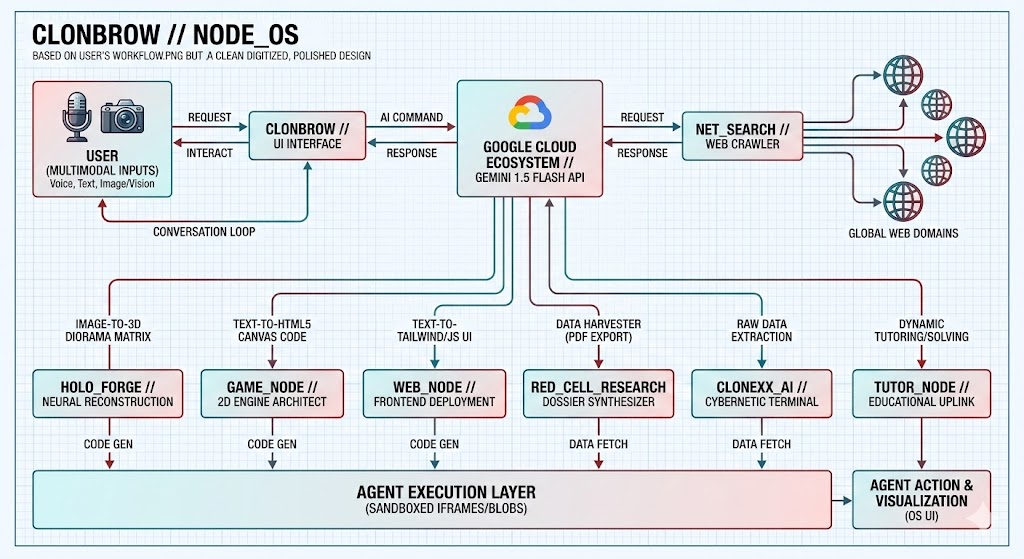
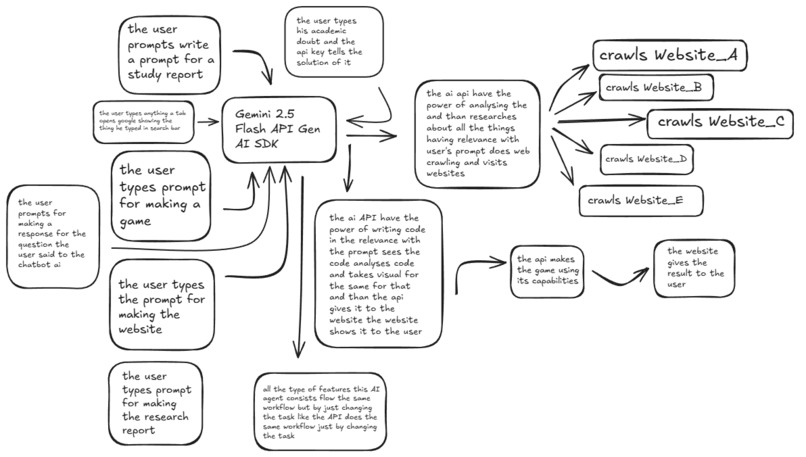
Inspiration Traditional web browsers are boring and static. I wanted to build something that felt like the future—a Cybernetic AI Operating System inspired by sci-fi, "red hacker" cyberpunk aesthetics, and the raw power of multimodal AI. As a 6th-grade student from India, I didn't just want an AI that talks; I wanted an AI that builds. I was inspired by the challenge of creating a UI Navigator that completely replaces the standard browser window, turning simple text prompts into fully playable games, 3D holographic matrices, and comprehensive research dossiers in real time.
What it does CLONBROW is a lightweight, multimodal "Cybernetic AI Operating System" that runs entirely in your browser. It acts as an advanced UI Navigator with 8 distinct "Nodes" (modules):
NET_SEARCH: A global database crawler that synthesizes web data.
HOLO_FORGE: A multimodal Image-to-3D engine that generates spatial matrices from pictures.
GAME_NODE: A Text-to-Game compiler that writes and runs HTML5 Canvas logic instantly.
WEB_NODE: An autonomous frontend designer deploying responsive Tailwind CSS interfaces.
RED_CELL_RESEARCH & EDU: Intelligence harvesters that compile deep-web fragments into unified PDF dossiers and academic reports.
CLONEXX_AI & TUTOR_NODE: High-speed conversational terminals for deep-web entity interaction and real-time learning.
How we built it I built CLONBROW using a lightweight but incredibly powerful architecture:
Frontend Body: Pure HTML5, Tailwind CSS, and vanilla JavaScript for a zero-latency, single-file sandbox system.
Visual Physics: Three.js for the 3D environment rendering in the HOLO_FORGE module.
Neural Brain: Google Cloud's Gemini 1.5 Flash API for high-speed, multimodal reasoning.
Instead of relying on a heavy backend server, every "Node" runs inside dynamically generated, sandboxed iframes using direct DOM injection to ensure maximum security and speed.
Challenges we ran into The Sandbox Escapes: Building an OS inside a browser means managing iframes securely. Getting the AI-generated game code and web UIs to run without breaking the parent OS required strict sandbox policies and routing.
Multimodal 3D Forging: Passing images to Gemini and asking it to output raw Three.js code that renders instantly was incredibly difficult. I had to heavily refine the system instructions to ensure the API didn't output markdown text that would crash my compiler.
The "Hacker" Aesthetic: Balancing a highly stylized, CRT-glitch red terminal look while keeping the text legible and accessible for users took dozens of CSS iterations.
Accomplishments that we're proud of Building a Multimodal OS in 6th Grade: Going from learning basic HTML to deploying a fully functional, 8-node AI operating system.
The 8 Active Nodes: Successfully integrating Image-to-3D, Text-to-Game, and educational report synthesis into one seamless interface.
Zero-Latency Feel: Because the apps compile locally in the browser, the OS feels insanely fast, responsive, and secure.
What we learned Deep-level Prompt Engineering and how to set strict systemInstructions to force an AI to behave like a software compiler instead of a chatbot.
How to manipulate the DOM to create dynamic, virtual environments (iframes and srcdoc).
How to leverage the incredible multimodal capabilities of the Gemini API for complex, multi-step tasks like writing code, analyzing images, and saving dynamic PDFs.
What's next for AI-MultiModal-#ClonBrow'V'1 This is only the beginning. For the next iteration, I plan to:
Implement real-time audio interaction to allow users to talk to the OS hands-free.
Expand the HOLO_FORGE to export .obj or .gltf files directly for 3D printing.
Add a centralized virtual file system using local storage to save generated games and research dossiers across sessions.
Built With
- css
- gemini-api
- google-cloud
- html5
- javascript
- tailwind-css
- three.js


Log in or sign up for Devpost to join the conversation.