-
-
2
-
1. Art Of the Emotion
Inspiration
The inspiration for AI Mood Scope came from the desire to bridge the gap between technology and human emotions. We aimed to create a tool that empowers users to better understand their own moods and mental well-being. Our goal was to harness the power of AI to interpret emotions in a unique way—through visuals—making self-reflection accessible and engaging.
What it does
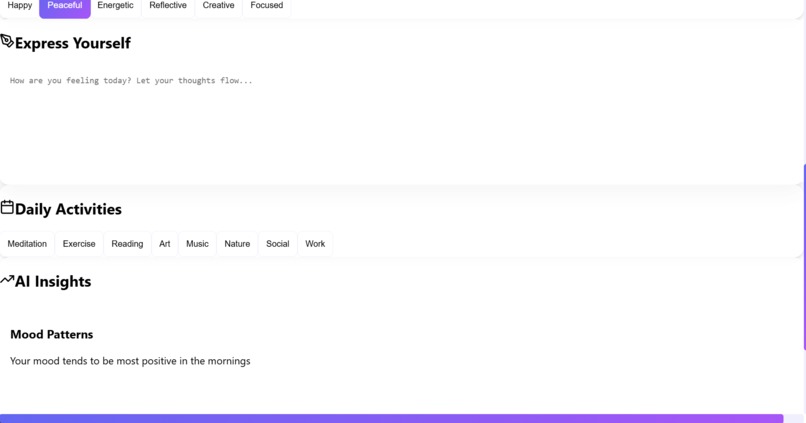
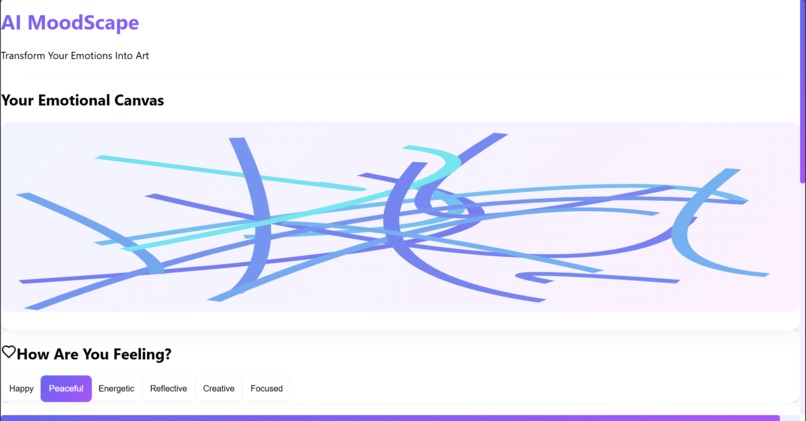
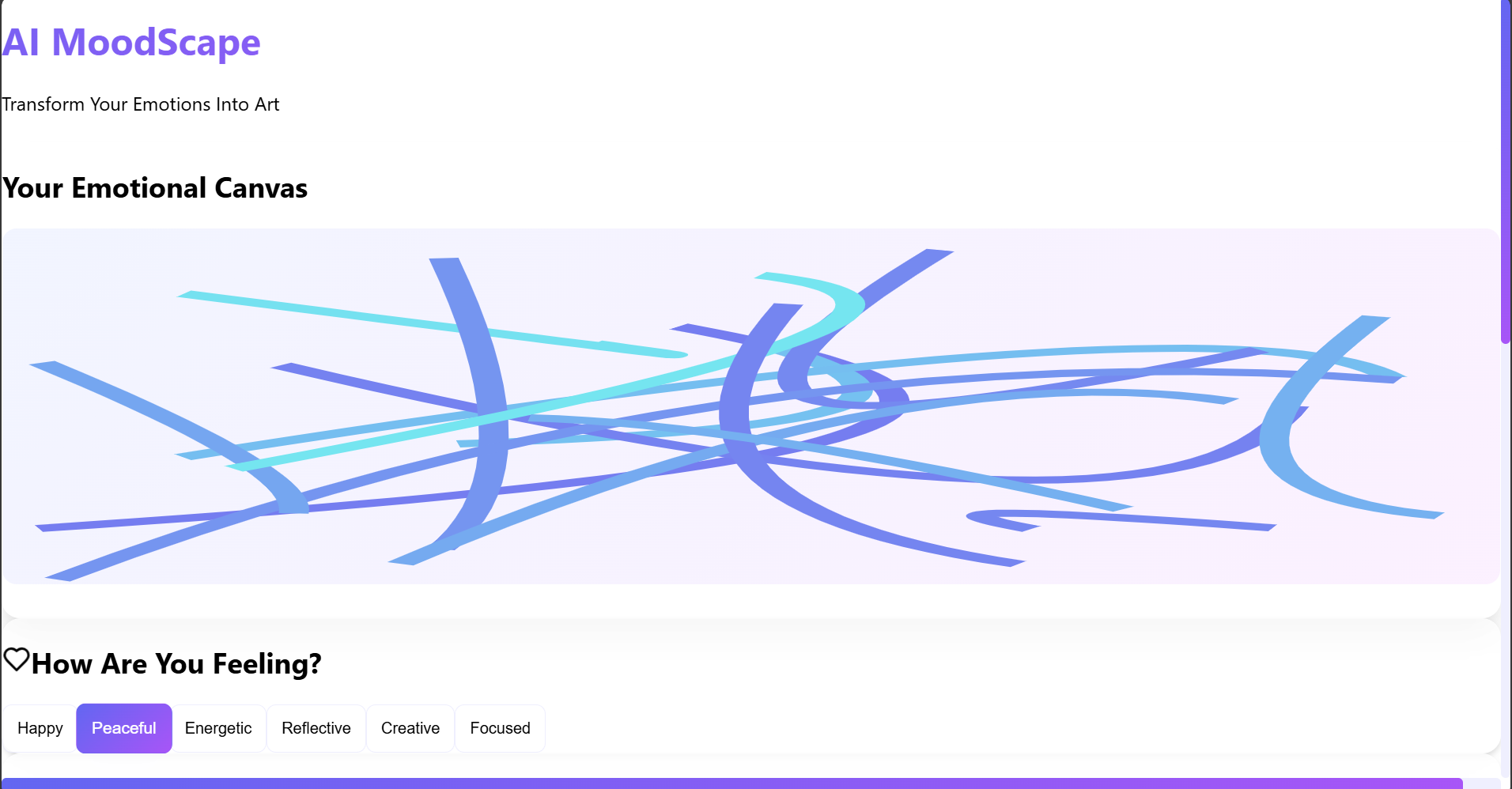
AI Mood Scope analyzes a user's mood based on real-time data, such as facial expressions, voice tone, and user feedback. It then generates a unique piece of digital artwork that represents the user’s emotional state. The tool not only reflects moods but also helps users visualize their inner feelings, providing them with a starting point for emotional awareness and growth.
How we built it
We developed AI Mood Scope using a combination of machine learning models and image generation algorithms. The process involved:
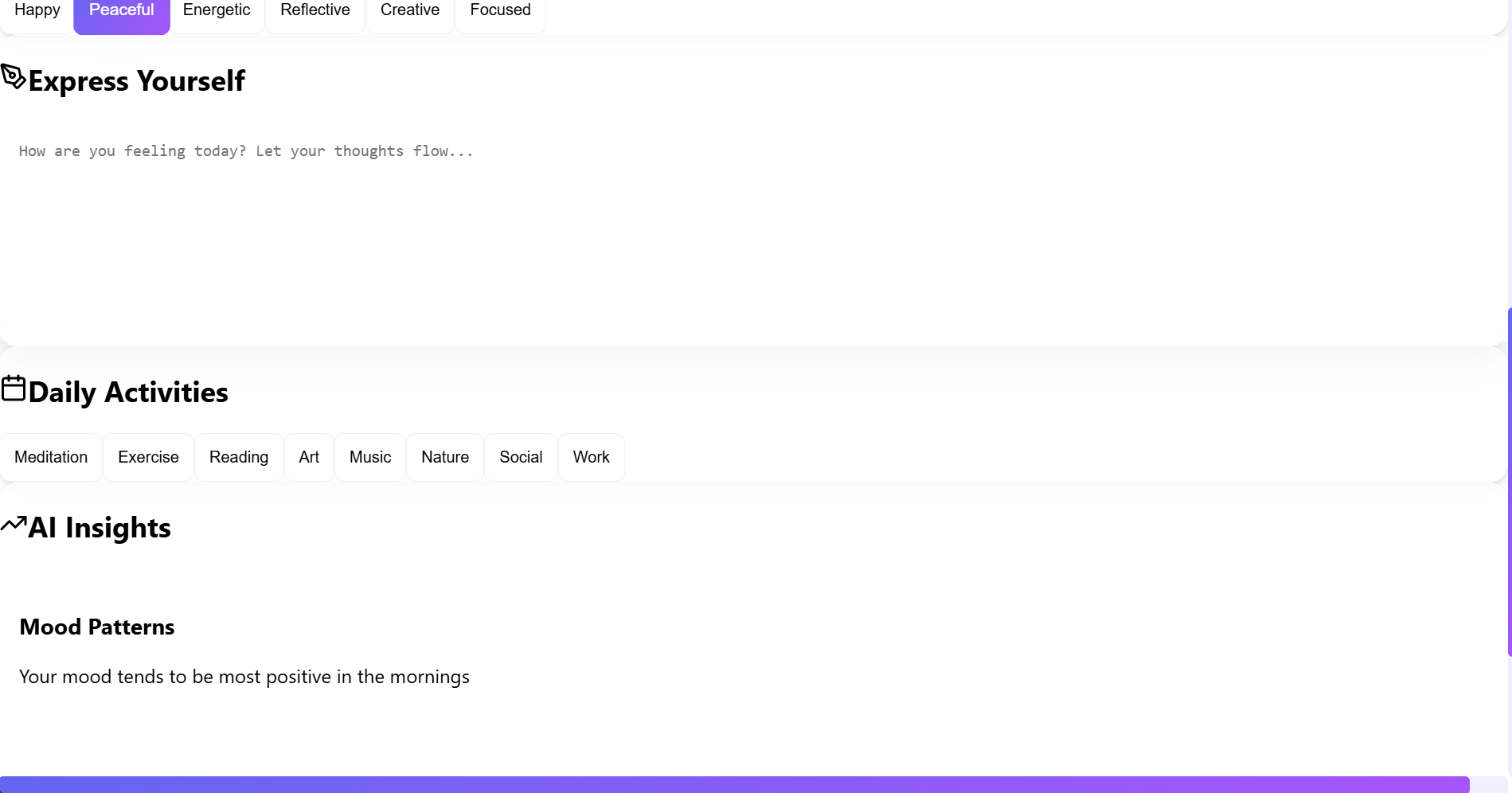
Facial and Voice Analysis: Using deep learning models, we interpreted facial expressions and voice tones to capture emotional nuances. Mood Classification: The data was classified into specific emotional states using a sentiment analysis model trained on diverse datasets. Art Generation: Leveraging a neural network, we mapped each mood to corresponding colors, shapes, and patterns to create a unique artwork. Frontend and Integration: We combined these elements with a user-friendly interface built in React, providing a seamless experience for users to interact with the tool.
Challenges we ran into
Interpreting Subtle Emotions: Identifying subtle differences between similar emotions proved challenging, and it required additional data to refine our model. Real-Time Processing: Ensuring that the analysis and artwork generation occurred in real time was a technical hurdle, demanding optimizations in both the machine learning pipeline and UI response times. Art Representation: Translating complex emotions into visually representative art required experimenting with various design parameters to capture the essence of each mood.
Accomplishments that we're proud of
Emotion-to-Art Mapping: Successfully creating a unique artwork that users feel represents their mood was a major achievement for us. Enhanced User Experience: Our streamlined interface makes complex technology accessible to users, providing a simple and engaging way to explore self-awareness. Technical Integration: Combining machine learning with visual design tools was complex, and we’re proud to have created a functional, cohesive tool that bridges these fields.
What we learned
Deep Learning Techniques: This project deepened our knowledge of emotion recognition and image generation, expanding our expertise in AI-driven creativity. Human-Centered Design: Balancing advanced technology with a user-friendly design reminded us of the importance of empathy in tech innovation. Artistic Interpretation of Data: We gained valuable insights into how data can drive creative expression, inspiring new ways to represent information visually.
What's next for Ai Mood Scope
Expanded Emotion Recognition: We aim to enhance the model to detect a wider range of emotions and cultural variations in expressions. Personalized Art Styles: Giving users the ability to customize aspects of the artwork would make the experience more personal. Integration with Wellness Tools: By connecting with other wellness and mental health apps, we hope to make AI Mood Scope a more holistic tool for emotional well-being.

Log in or sign up for Devpost to join the conversation.