-
-
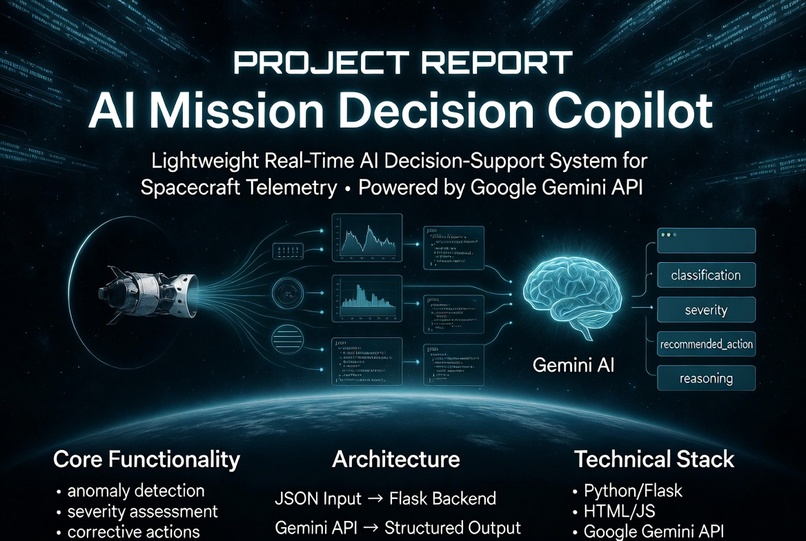
AI Mission Decision Copilot: Telemetry → Flask → Gemini API for real-time anomaly detection.
-
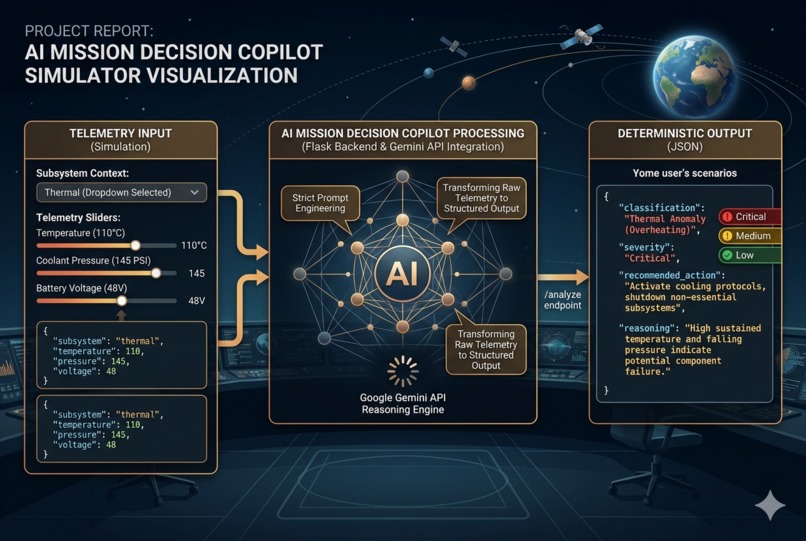
Simulator: Telemetry input → Gemini AI → JSON output (classification, severity, action)
-
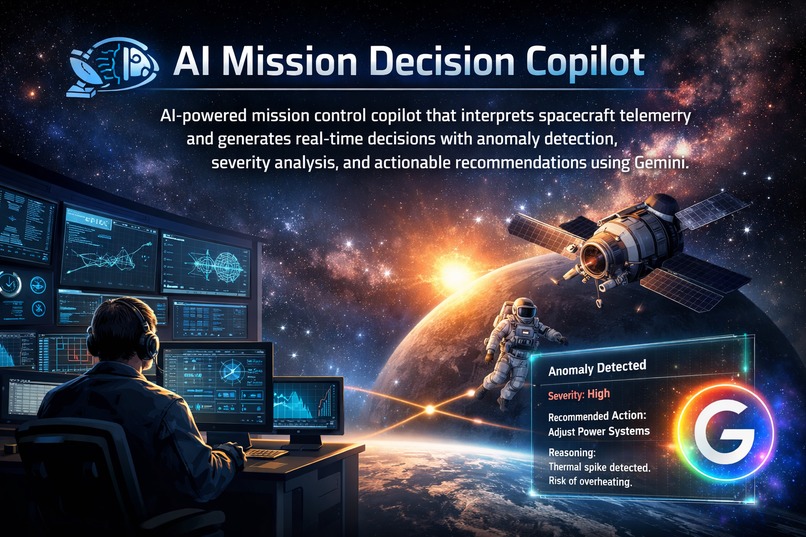
Mission control using AI Copilot for real-time spacecraft telemetry analysis with Gemini.
-
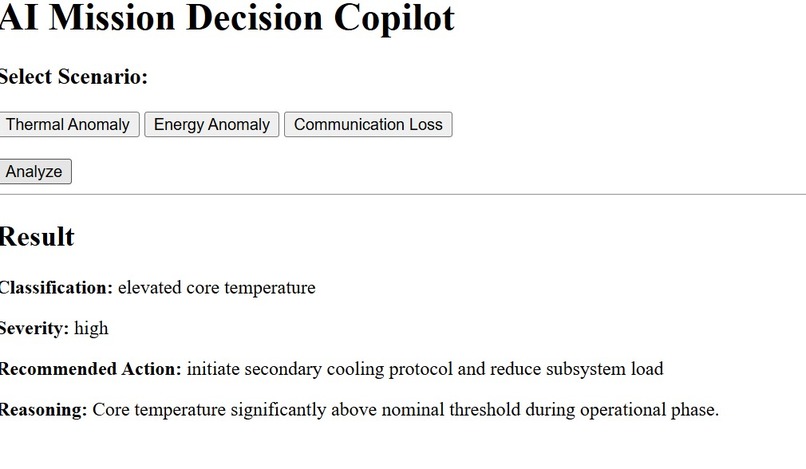
Thermal Anomaly: “Elevated core temperature” – High. Recommend: activate cooling & reduce load.
-
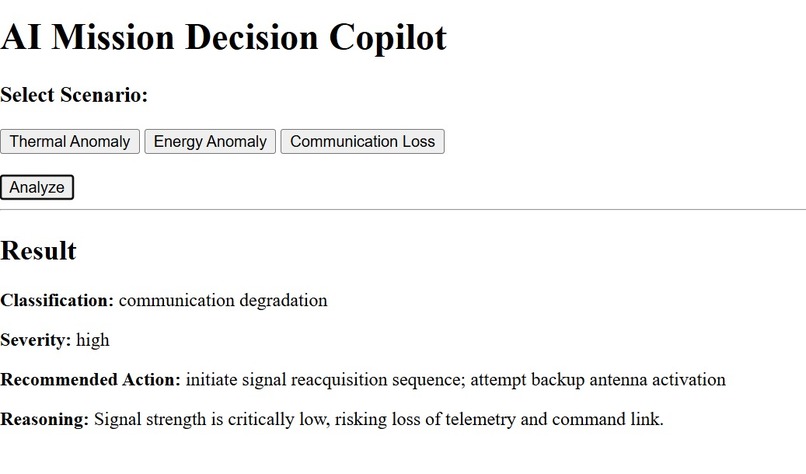
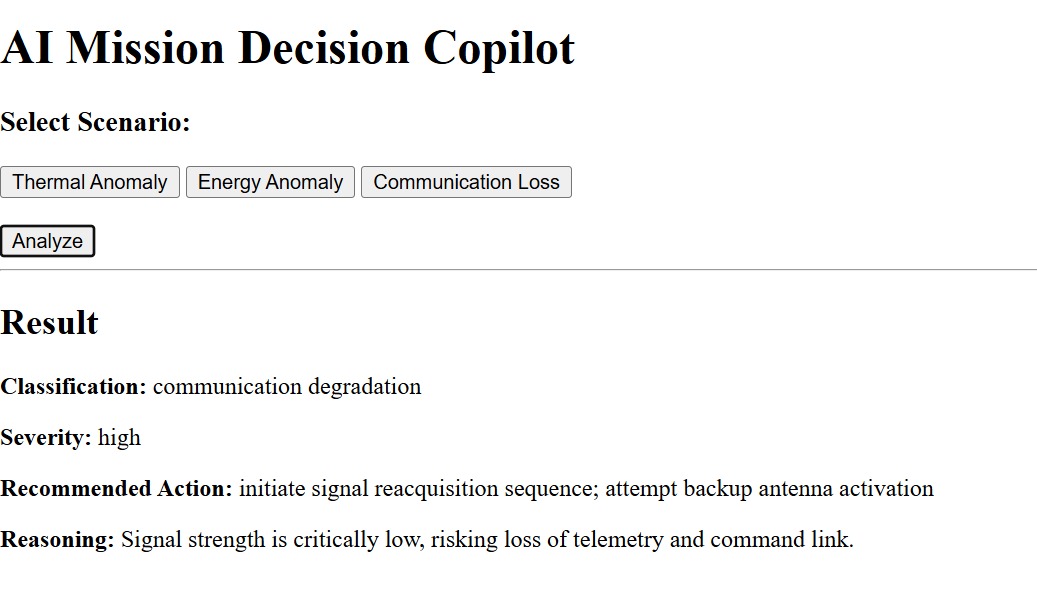
Communication Loss: “Degradation” – High. Recommend: signal reacquisition + backup antenna.
-
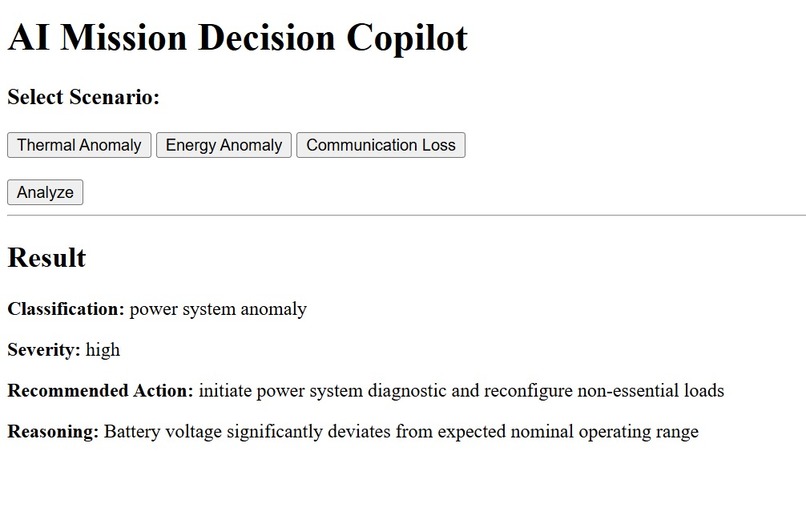
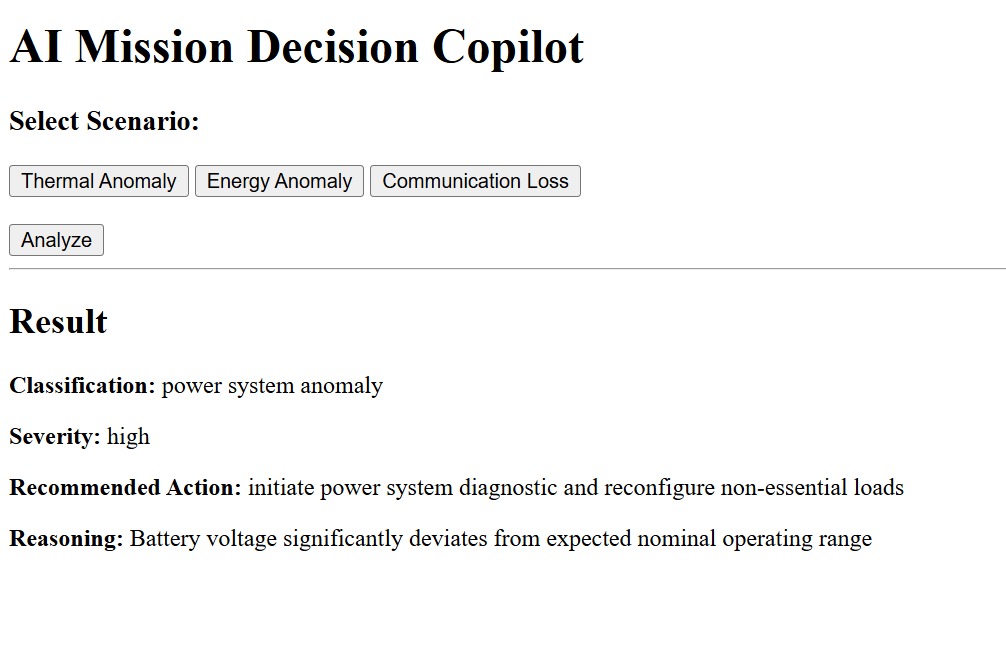
Energy Anomaly: “Power system anomaly” – High severity. Recommend: diagnostic & reconfigure loads.
-
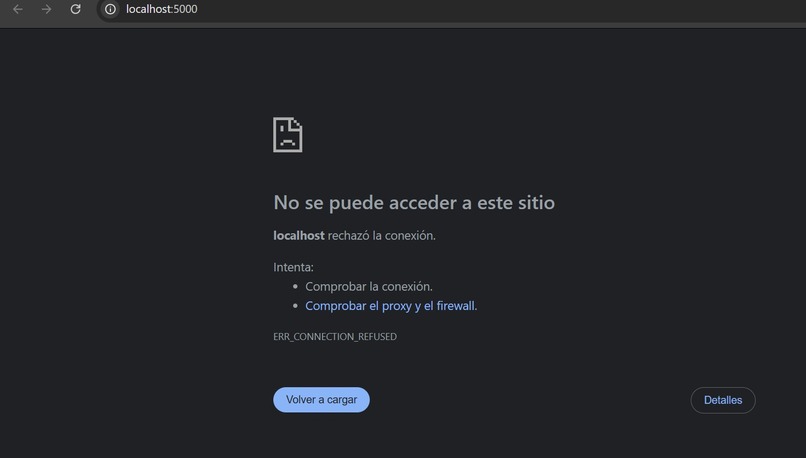
showing the localhost connection error



Inspiration
In real space missions, a single telemetry anomaly can decide mission success or failure, yet operators often face raw data overload with no instant, explainable recommendation. Inspired by NASA-style mission control, we built a lightweight AI copilot that turns complex spacecraft telemetry into clear, structured decisions in seconds using Google Gemini.
What it does
The AI Mission Decision Copilot is a real-time decision-support system that:
Receives structured spacecraft telemetry (temperature, battery voltage, packet loss, etc.) Classifies the anomaly Assigns severity (low/medium/high/critical) Recommends a corrective action Provides concise technical reasoning
It currently supports three demo scenarios: Thermal Anomaly, Energy Anomaly, and Communication Loss. Everything runs locally in under 30 seconds with clean JSON output, perfect for mission-critical clarity.
How we built it
Frontend: Simple HTML + JavaScript with three scenario buttons and live result display Backend: Flask Python app with /analyze endpoint AI Engine: Google Gemini 2.5 Flash via the new unified SDK Prompt Engineering: Strict system prompt + JSON-only output enforced in prompt.txt Reliability Layer: Automatic JSON extraction, schema validation, fallback response, and input sanitization Architecture: Telemetry JSON → Flask → Gemini → Structured JSON → UI
Full repo: https://github.com/akabyn5/ai-mission-decision-copilot.git
Challenges we ran into
Gemini sometimes returned markdown or extra text instead of clean JSON → solved with robust regex extraction + validation API quota management during development → added USE_AI safety switch and realistic fallback Ensuring consistent terminology across scenarios → refined prompt with explicit examples and strict constraints Local deployment friction for demo → bundled everything for one-click frontend + backend run
Accomplishments that we're proud of
Fully functional end-to-end prototype with real Gemini integration in under 48 hours 100% structured, explainable outputs every time (no hallucinations in demo) Clean, production-ready code architecture with validation, error handling, and CORS Professional demo video that clearly shows the entire flow (thermal scenario) Achieved our core goal: “Clarity in under 30 seconds”
What we learned
Strict prompt engineering is essential for reliable LLM outputs in safety-critical domains JSON extraction + schema validation is the real key to making AI production-like How to balance speed, reliability, and demo-friendliness in a hackathon The power of a simple, focused scope: one clear problem → one elegant solution
What's next for AI Mission Decision Copilot
Connect to real or simulated live telemetry streams Add historical analysis using RAG/vector DB Introduce confidence scoring Expand to multi-agent decision systems Polish UI with real-time graphs and multiple concurrent anomalies

Log in or sign up for Devpost to join the conversation.