-
-
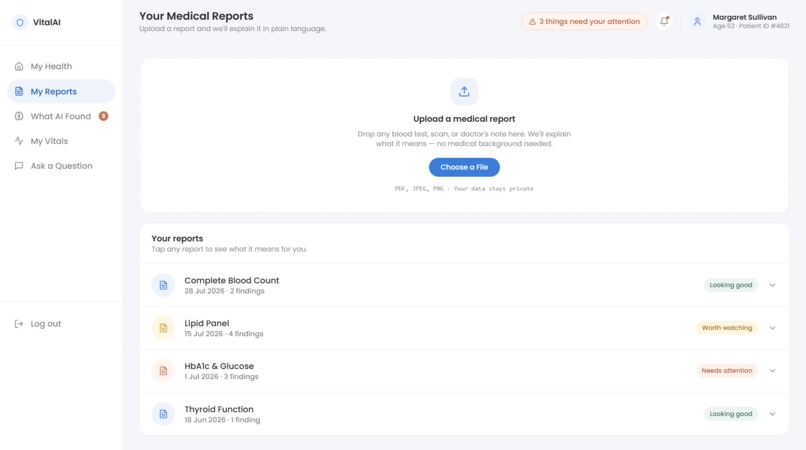
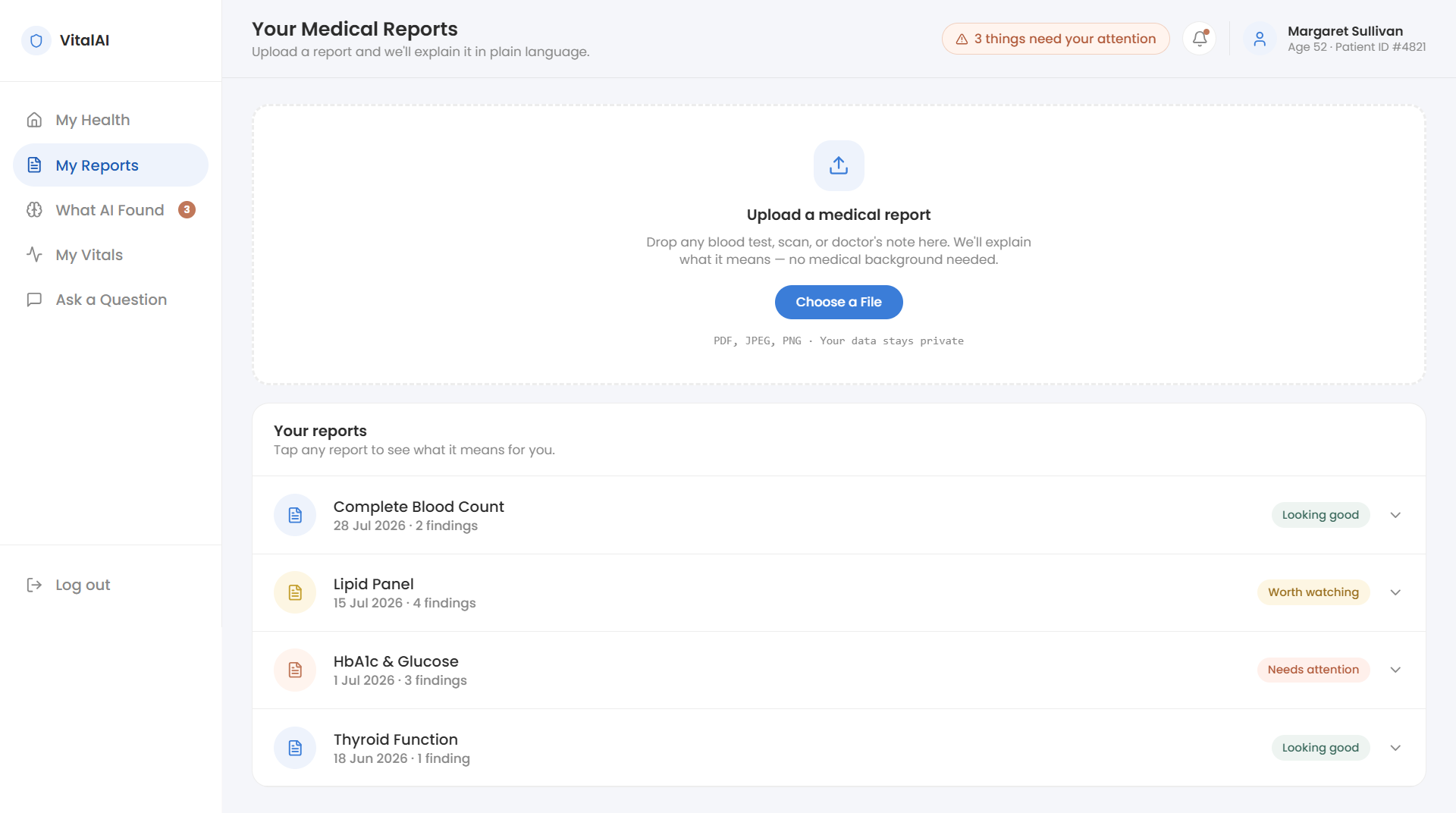
Reports Panel UI
-
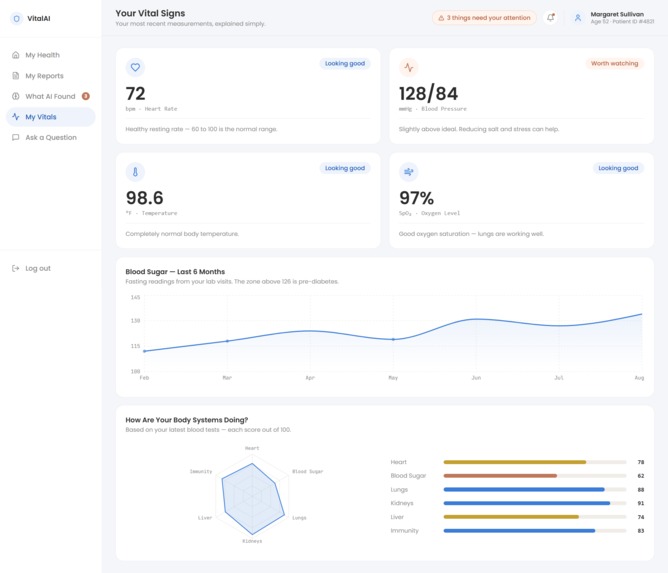
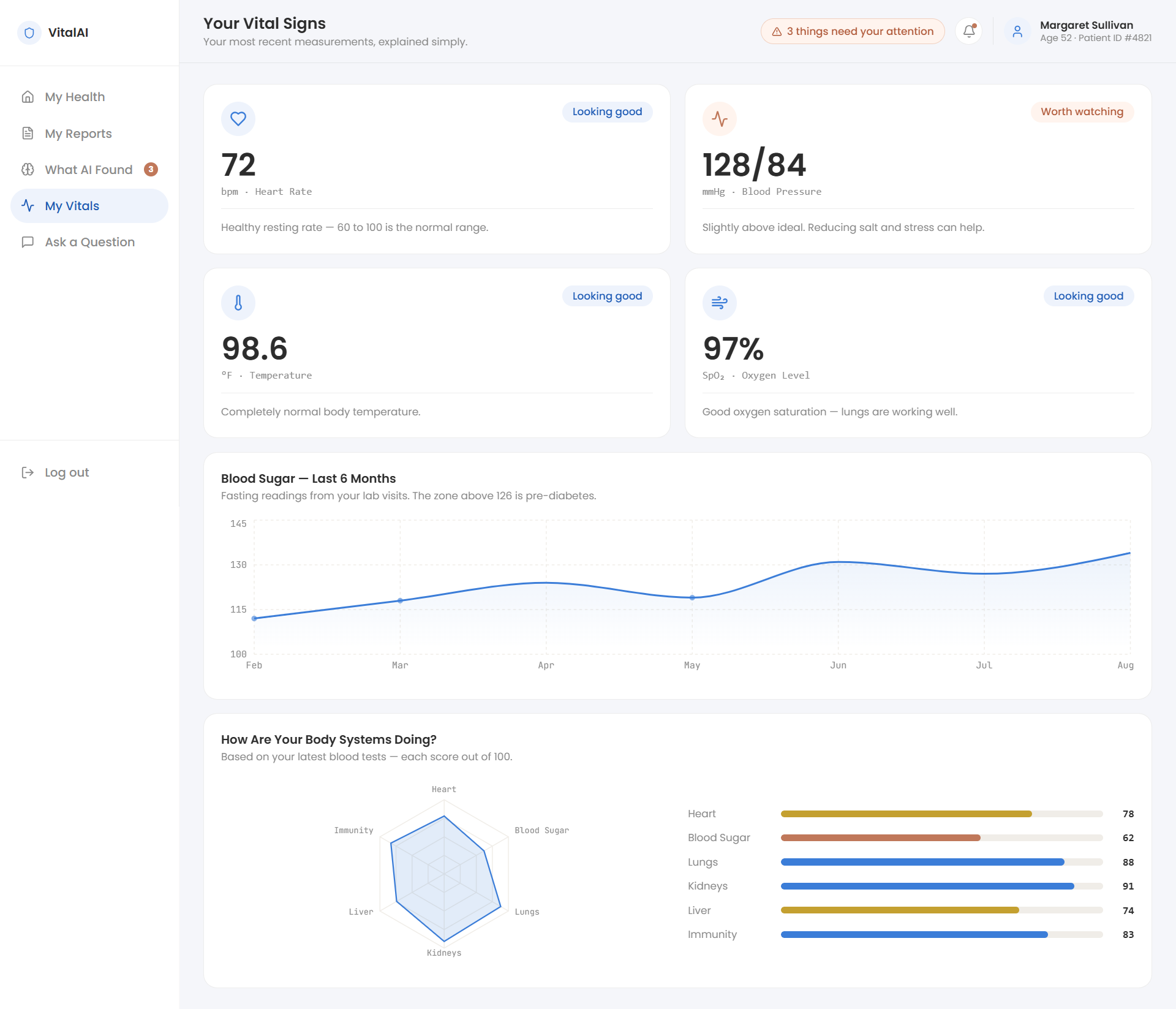
Vitals & Overall Health UI
-
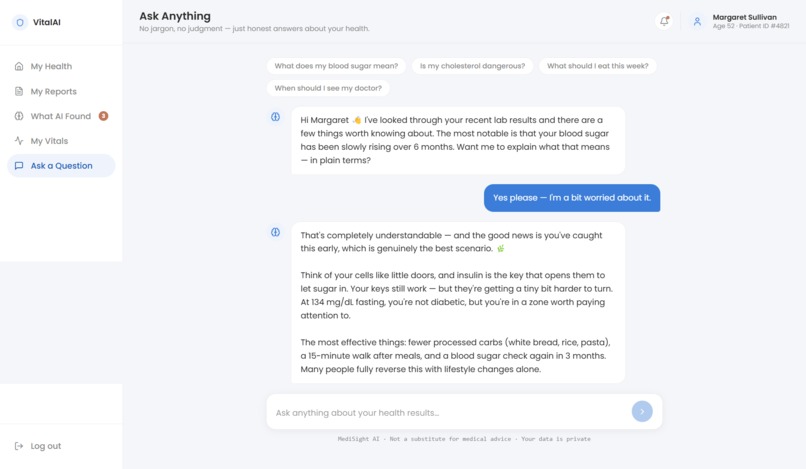
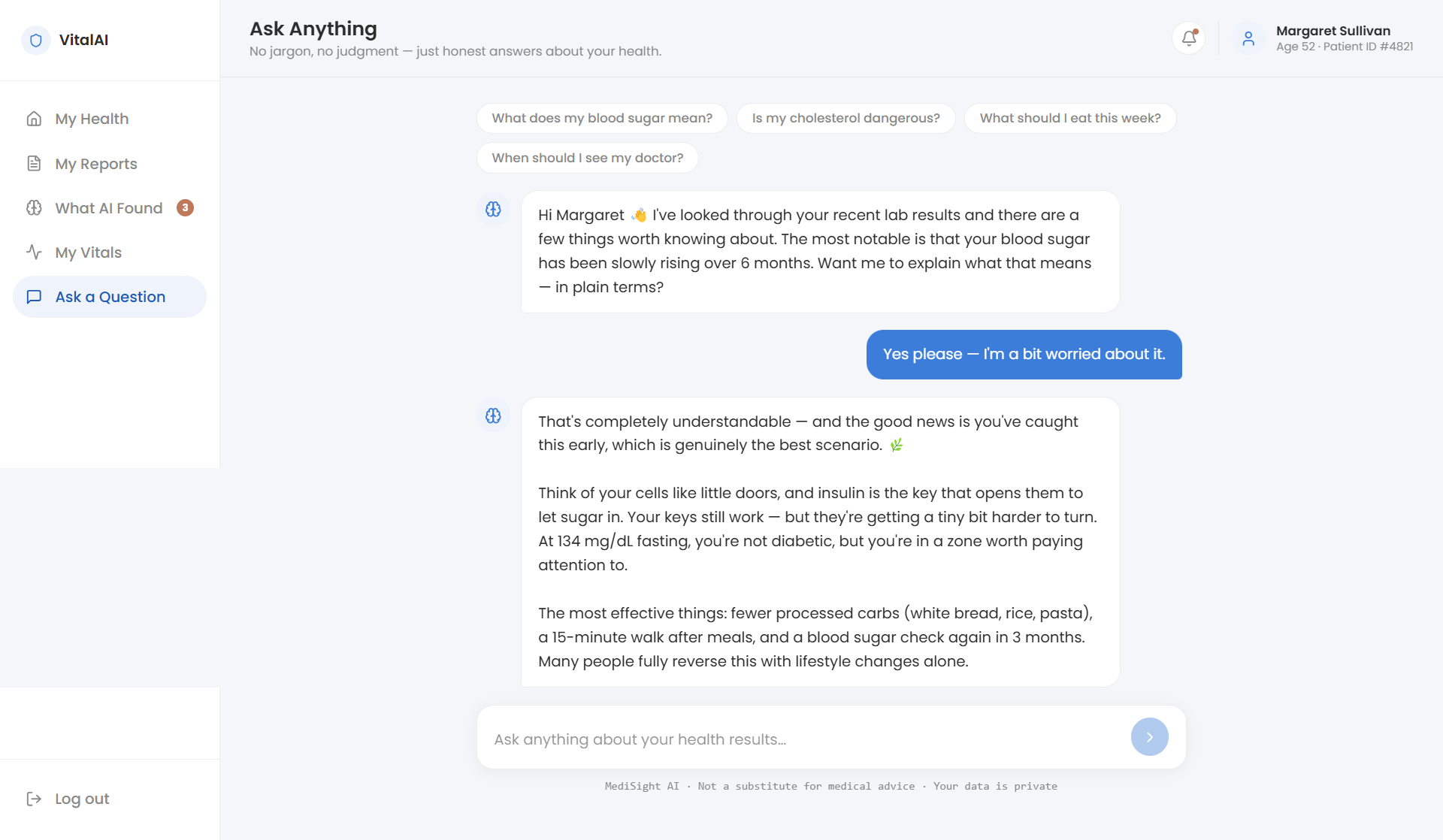
Ask AI Recommendation UI
-
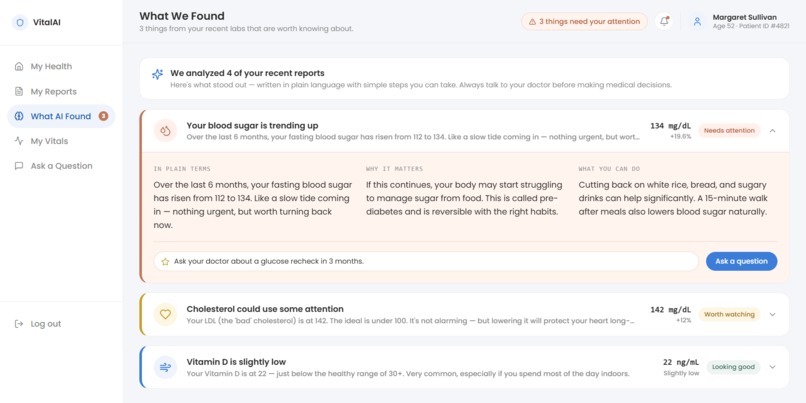
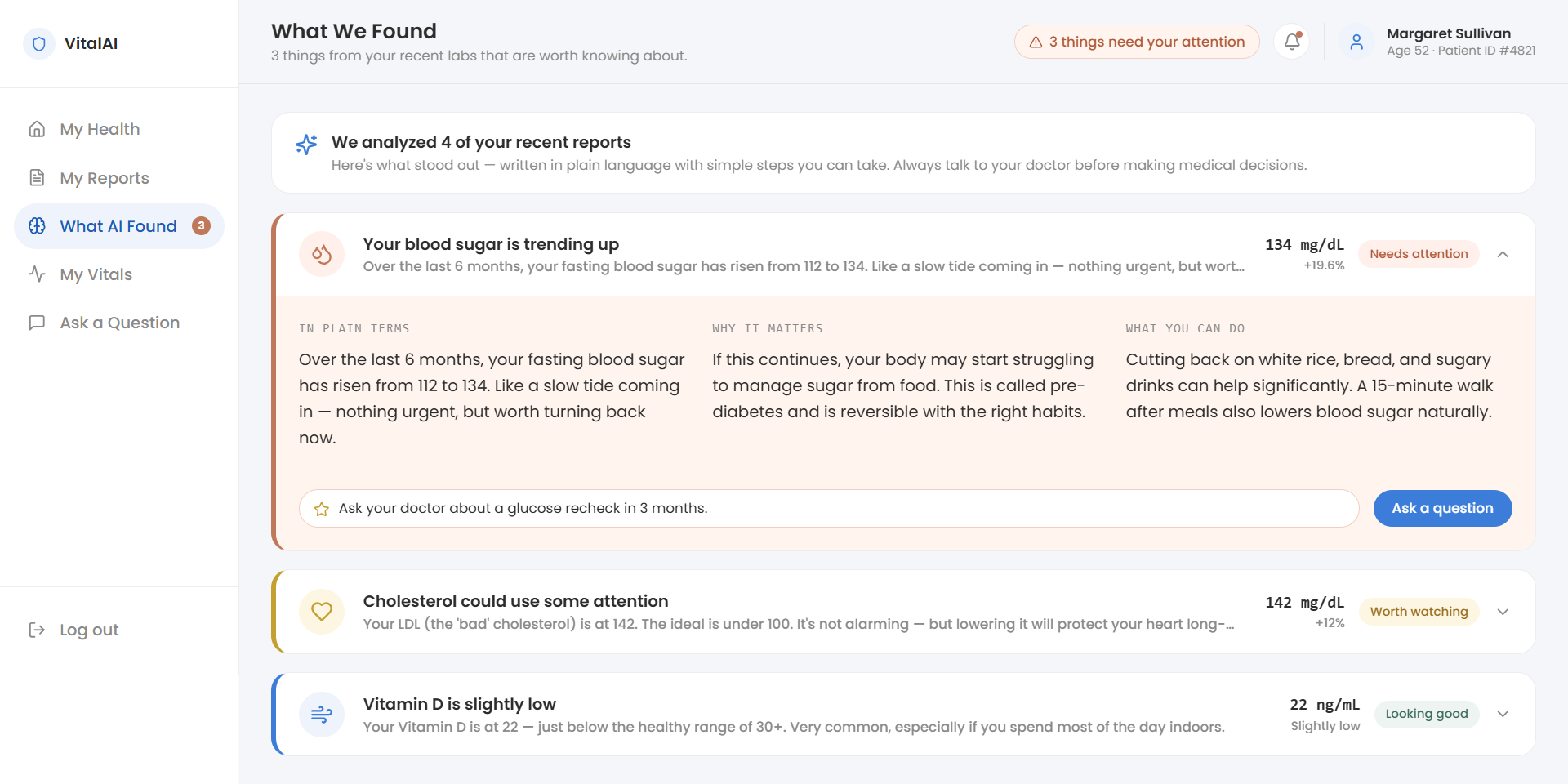
What AI Found UI
-
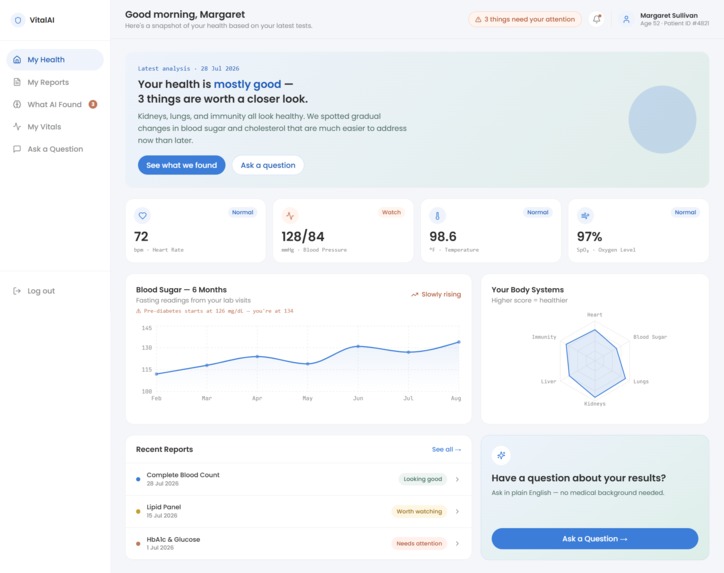
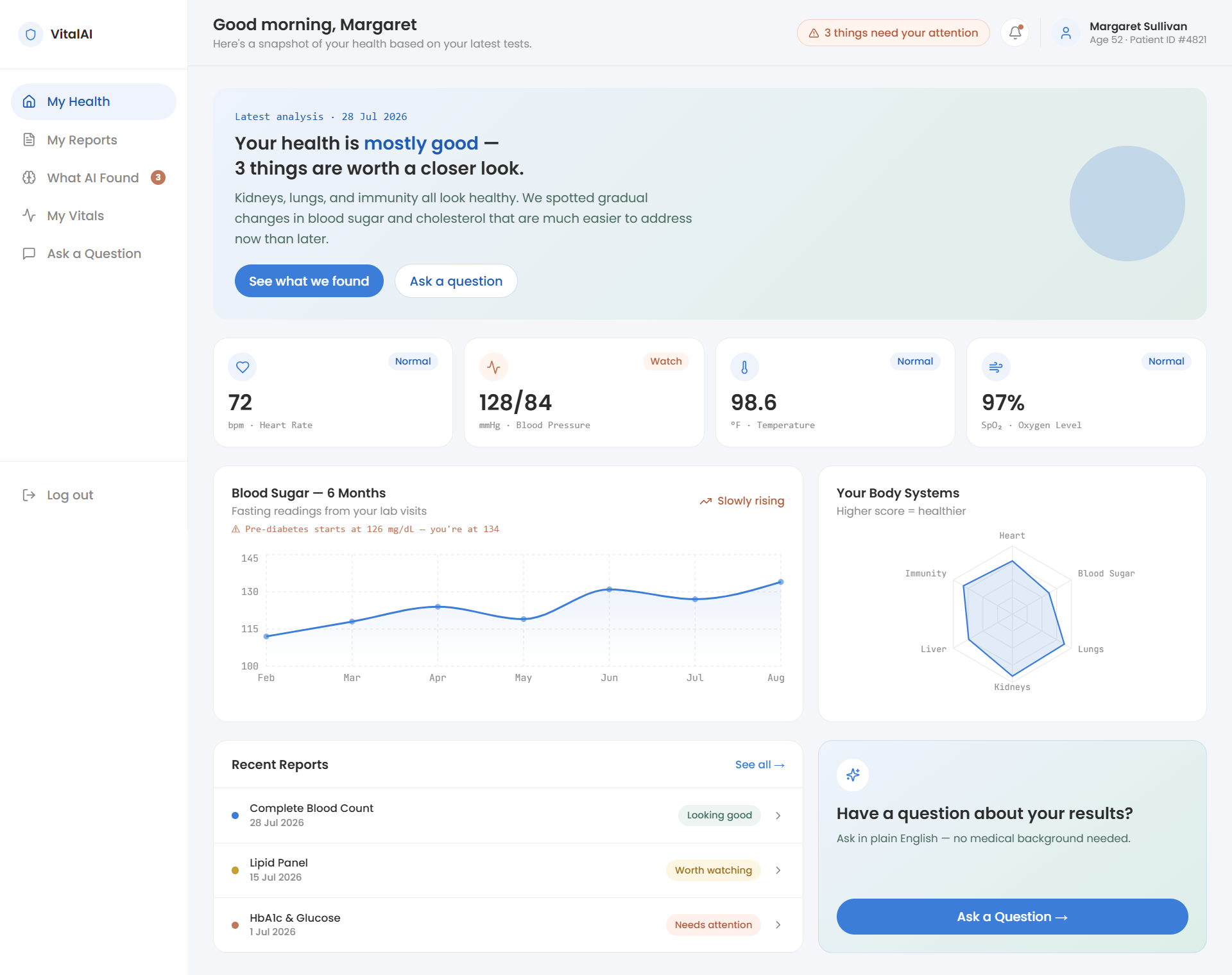
Dashboard UI
Inspiration
I built VitalAI during the Vitalatics AI Hackathon. The idea came from a simple problem: many people receive medical reports but don't understand the medical terms. I wanted to create an AI-powered application that explains medical reports in simple language so users can better understand their health.
What it does
VitalAI allows users to upload their medical reports and receive easy-to-understand AI insights. It highlights important values, explains medical terms, and presents the results in a clean and simple dashboard.
How I built it
I first designed the user interface in Figma. Then I developed the frontend using React, TypeScript, and Redux Toolkit. I used C# (.NET) for the backend and planned the application so it can support AI-powered medical report analysis.
Challenges I ran into
One of the biggest challenges was designing a healthcare application that was simple but still showed important medical information. I also had to plan how AI insights should be displayed in a way that is easy for users to understand.
Accomplishments that I'm proud of Designed the complete UI in Figma. Built a modern full-stack application using React, TypeScript, Redux Toolkit, and C#. Created a clean and user-friendly healthcare dashboard. Turned my hackathon idea into a working prototype. What I learned
This project helped me improve my skills in UI/UX design, React, TypeScript, Redux Toolkit, and C#. I also learned how to design an AI-powered healthcare application and build a full-stack project within a hackathon.
What's next for VitalAI | Medical Report Analyzer
Next, I plan to integrate a real AI model to analyze medical reports more accurately. I also want to add PDF report uploads, personalized health insights, report history, and secure user authentication to make VitalAI ready for real-world use.
Built With
- c#
- claude
- figma
- openai
- react
- redux
- typescript

Log in or sign up for Devpost to join the conversation.