🏥 Inspiration
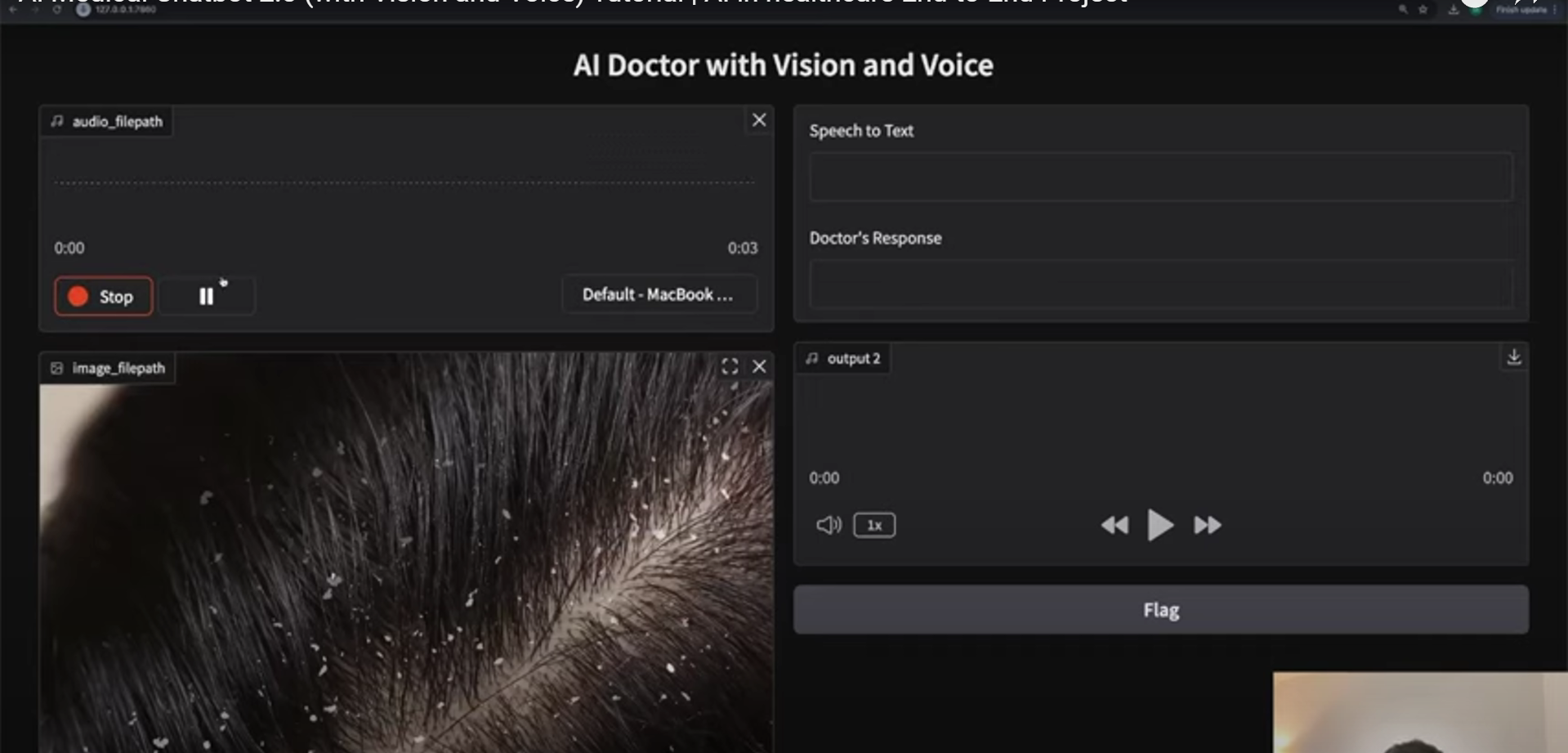
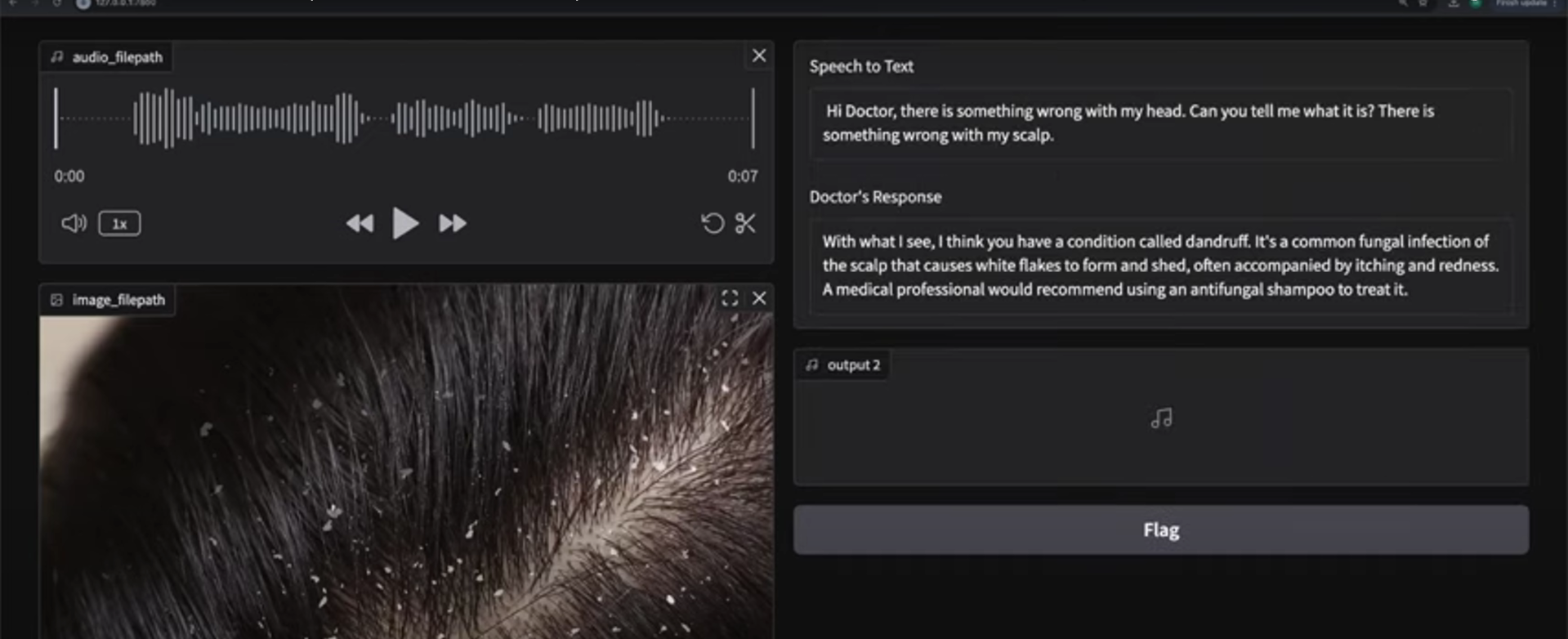
With the growing demand for accessible and efficient healthcare solutions, we were inspired to develop an AI Medical Chatbot 🤖 that integrates both vision 👁️ and voice 🎙️ capabilities. The goal is to assist patients with basic medical inquiries, symptom analysis, and healthcare guidance, reducing the burden on healthcare professionals while improving patient experience.
💡 What it does
The AI Medical Chatbot is designed to:
🩺 Answer medical queries based on a vast database of medical knowledge.
📊 Analyze symptoms and provide preliminary advice using AI-driven diagnosis.
🗣️ Support voice interactions, making it accessible to visually impaired users.
📷 Process images to identify common skin conditions and medical documents.
👨⚕️ Connect with healthcare professionals if advanced medical intervention is needed.
🛠️ How we built it
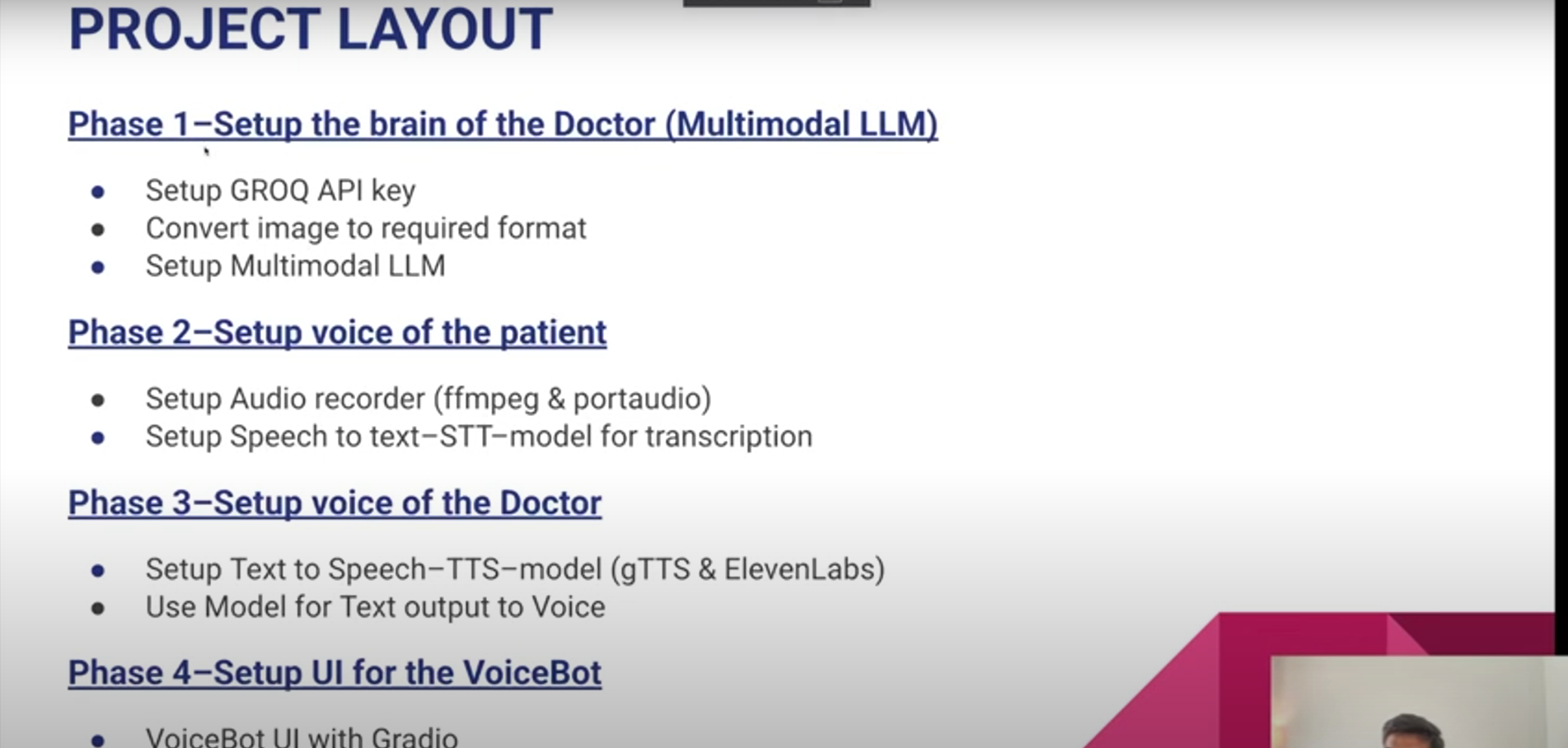
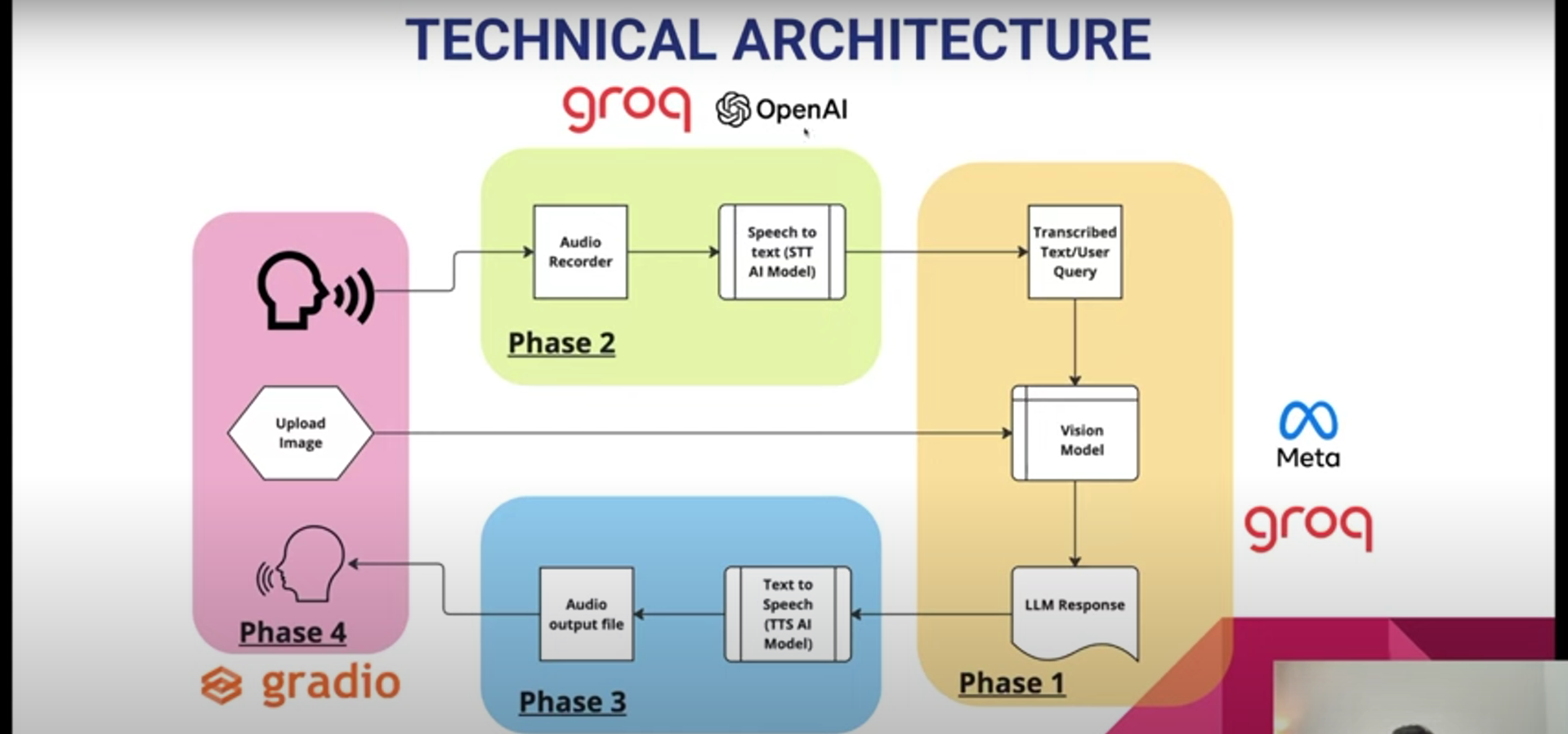
🎨 Frontend: Developed using React.js for a smooth UI experience.
🖥️ Backend: Implemented using Python (Flask/Django) for chatbot logic.
🤖 AI/ML Models:
📖 Natural Language Processing (NLP): Uses OpenAI/GPT models for conversational AI.
📸 Computer Vision: Integrated with TensorFlow/PyTorch to analyze medical images.
🎤 Speech-to-Text & Text-to-Speech: Utilized Google’s Speech API for voice interactions.
💾 Database: Uses MongoDB/PostgreSQL to store patient interactions and historical data.
🔗 API Integrations: Connected with medical APIs like WebMD and Mayo Clinic for validated medical advice.
⚠️ Challenges we ran into
✅ Medical Accuracy: Ensuring responses align with verified medical guidelines.
🕒 Real-time Voice Processing: Implementing efficient voice-to-text and text-to-voice conversions.
📷 Image Recognition: Training an accurate model for medical image analysis with limited dataset availability.
🔐 Compliance & Data Security: Adhering to HIPAA and other privacy regulations for handling medical data.
🏆 Accomplishments that we're proud of
Successfully implemented multimodal AI 🤖 (text, vision, and voice) for an inclusive experience.
Achieved high accuracy 📊 in symptom analysis through AI-driven decision-making.
Developed an intuitive UI/UX 🎨 for seamless user interaction.
Ensured data privacy 🔒 and encryption, making the chatbot secure and trustworthy.
📚 What we learned
The importance of ethical AI ⚖️ in healthcare applications.
Optimizing machine learning models 🤖 for medical diagnosis.
Handling real-time voice interactions 🎙️ with minimal latency.
Implementing user-friendly interfaces 🖥️ for non-technical users.
🚀 What's next for AI Medical Chatbot (with vision and voice)
📈 Expanding the medical image database for better diagnostic accuracy.
🗣️ Adding multilingual support to serve a wider audience.
⌚ Integrating with wearable devices to monitor real-time health vitals.
🎯 Enhancing AI personalization to provide more tailored healthcare advice.
📱 Deploying as a mobile app for greater accessibility.


Log in or sign up for Devpost to join the conversation.