-
-
LOGO
-
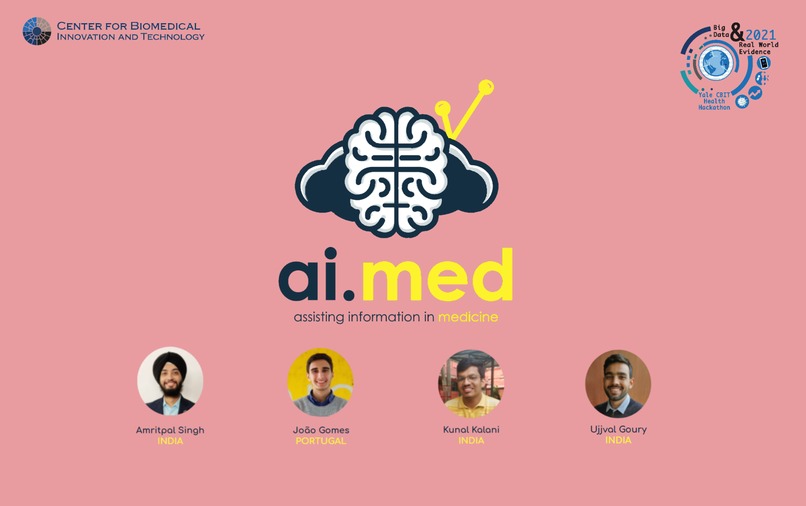
banner with the team members
Inspiration
In the time of Covid-19 Pandemic, the healthcare workers are the most overburdened people. The recommended ratio of nurses to patient in an ICU setting is 1:2 as per the American Nurses Association, but the situation is far worse than this which leads to burning out of the healthcare workers. Monitoring each and every movement of the patient along with any visitor from outside is a task in itself further adding to the burden and compromising the healthcare services provided by them.
What it does
We have created an AI-based platform that will use video input from the CCTV which are in the ICUs (or other isolated medical rooms if privacy concerns stand over this possibility) to track who, for how long and where is an individual, whether its a patient, doctor or a visitor and track the patient’s position. With all this data, any event that requires attention of the attending doctor, he will be informed along with centralised intranet platform which will take care of alert in his absence. Patient’s privacy and data security as per the GDPR guidelines are protected. Aiming at this, the recordings should not be stored and information should be generated in the source (through an incorporated GPU system).
How I built it
We have used a deep neural network to detect and track the number of people, which can later be recognised as doctors, patients or Health care workers. We also developed another piece of software that detects patient faces, which can be used to identify their activity. We have used OpenCV, caffe and tensorflow. This can be used to further produce custom triggers/alarms.
Challenges I ran into
The biggest chalhenge we ran into was definitely patient's data privacy. If no video recordings are stored and these images are directly processed live, as they are recorded, the system will be able to comply with the established norms. All of this should be happening in an intranet system, without external communication over the internet as a potencial data breach point.
Accomplishments that I'm proud of
The impact our solution will create will be on the workload of the healthcare workers whose one part of job is active monitoring of the patients. Since it will reduce the workload, it will help them to manage the healthcare services they provide well and may enhance too. The reduced workload, will reduce the burnout of the workers physically, emotionally and mentally which acts as a hindrance between them and their maximum efficiency to work. A better healthcare system will be the end result.
What I learned
Our team consisted of four medical related people with a little knowledge about Machine Learning and Deep Learning. After the introduction of the challenge we just knew what we are supposed to do and then we began working on it.
What's next for AI.Med
In our future projections, along with it, we may need to be able to integrate other sensor systems to enhance the capabilities of our AI platform, to better detect and correlate it with the Electronic Health Record of the patient. We wish to upgrade our AI platform by including wearable sensors such as accelerometers, ECG tracker, temperature, pulse sensors, or thin film sensors under mattresses, which will provide more data related to patient’s health and with this we aim to provide a statistical analysis of how patient is evolving, how much physical support he needs. Position detection and regular updates are areas we are working on. We wish to achieve a positive change in the healthcare workers jobs by reducing their burden and decreasing the burnout.
Built With
- caffe
- opencv
- tensorflow


Log in or sign up for Devpost to join the conversation.