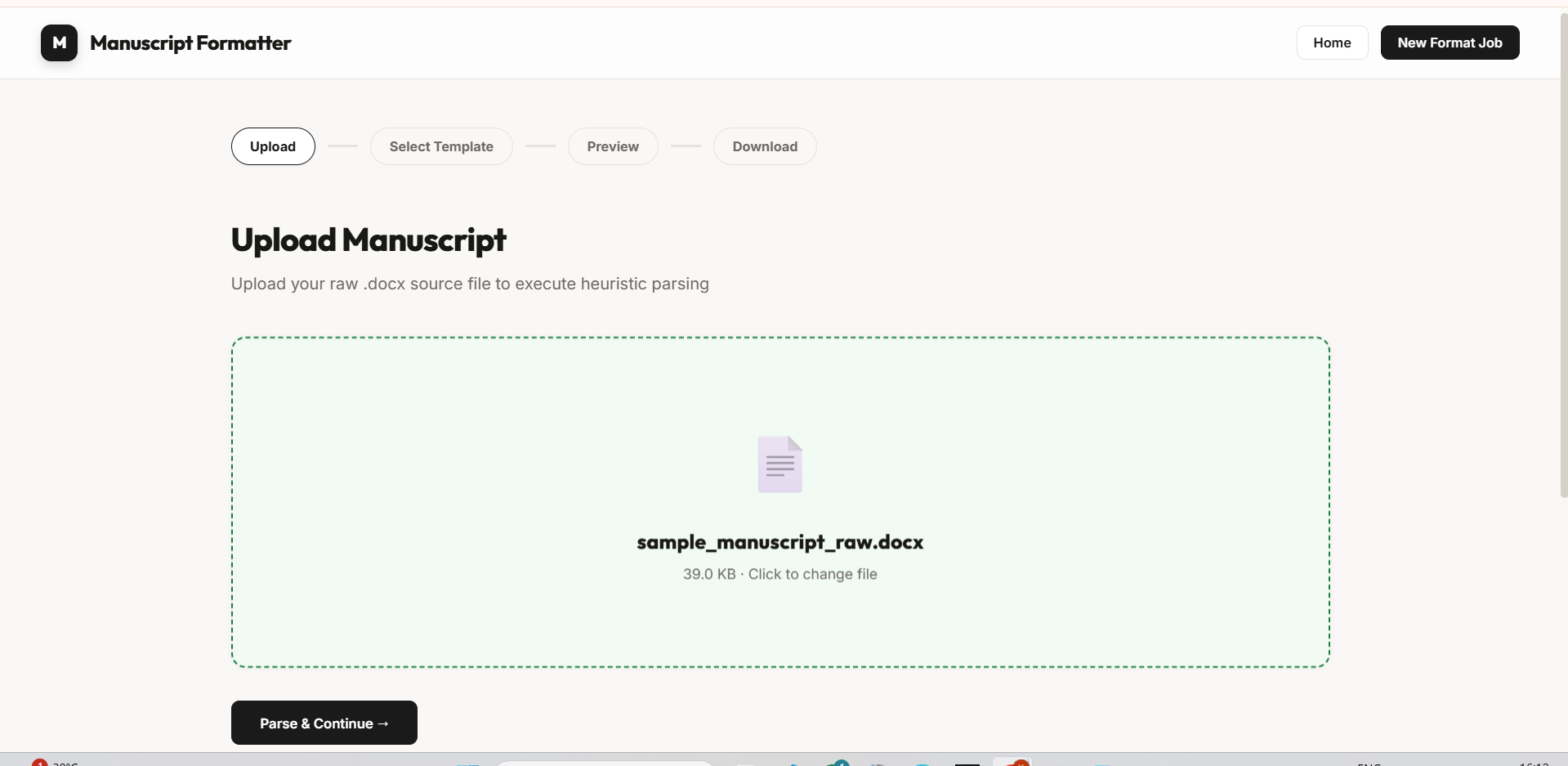
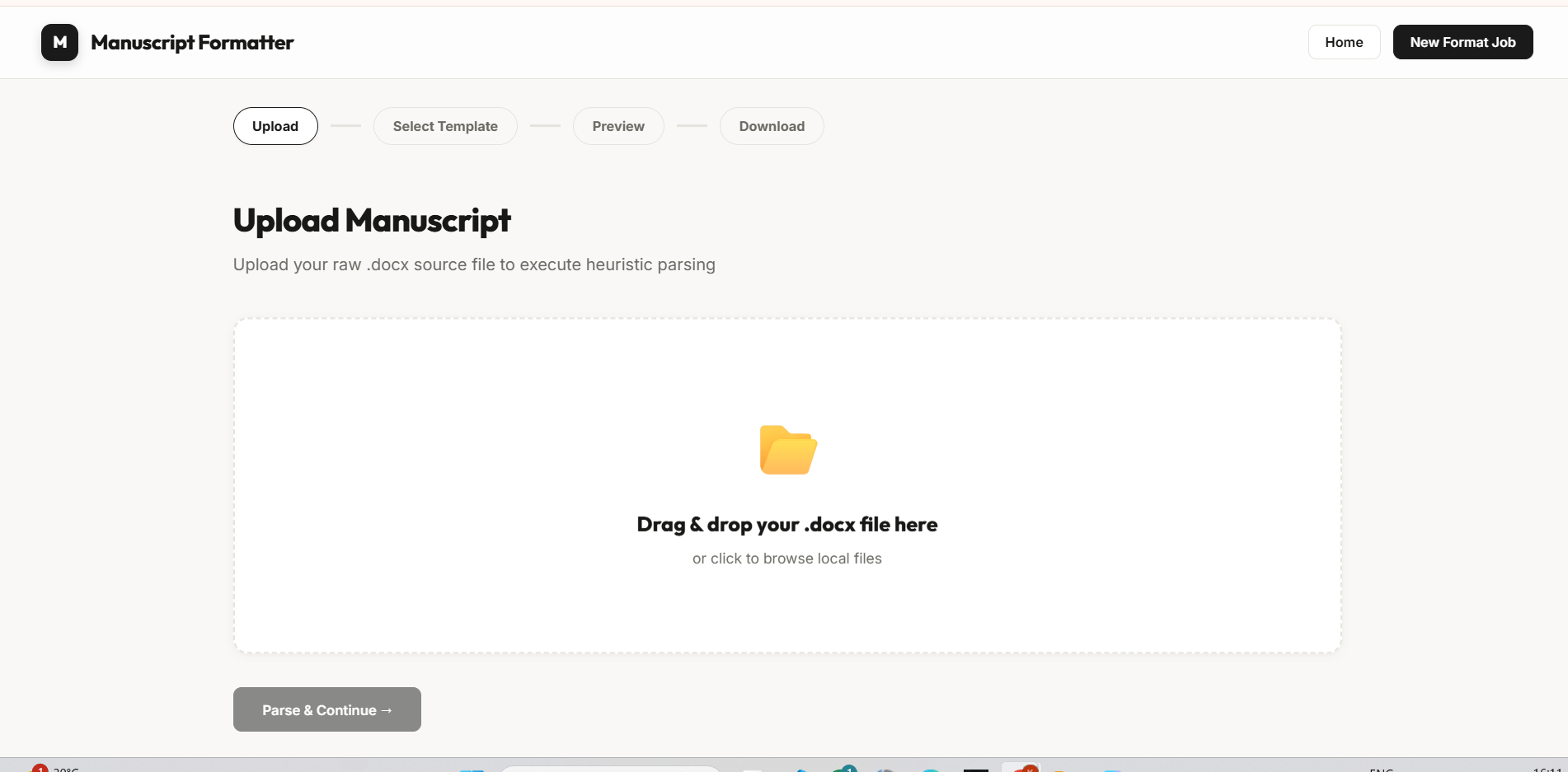
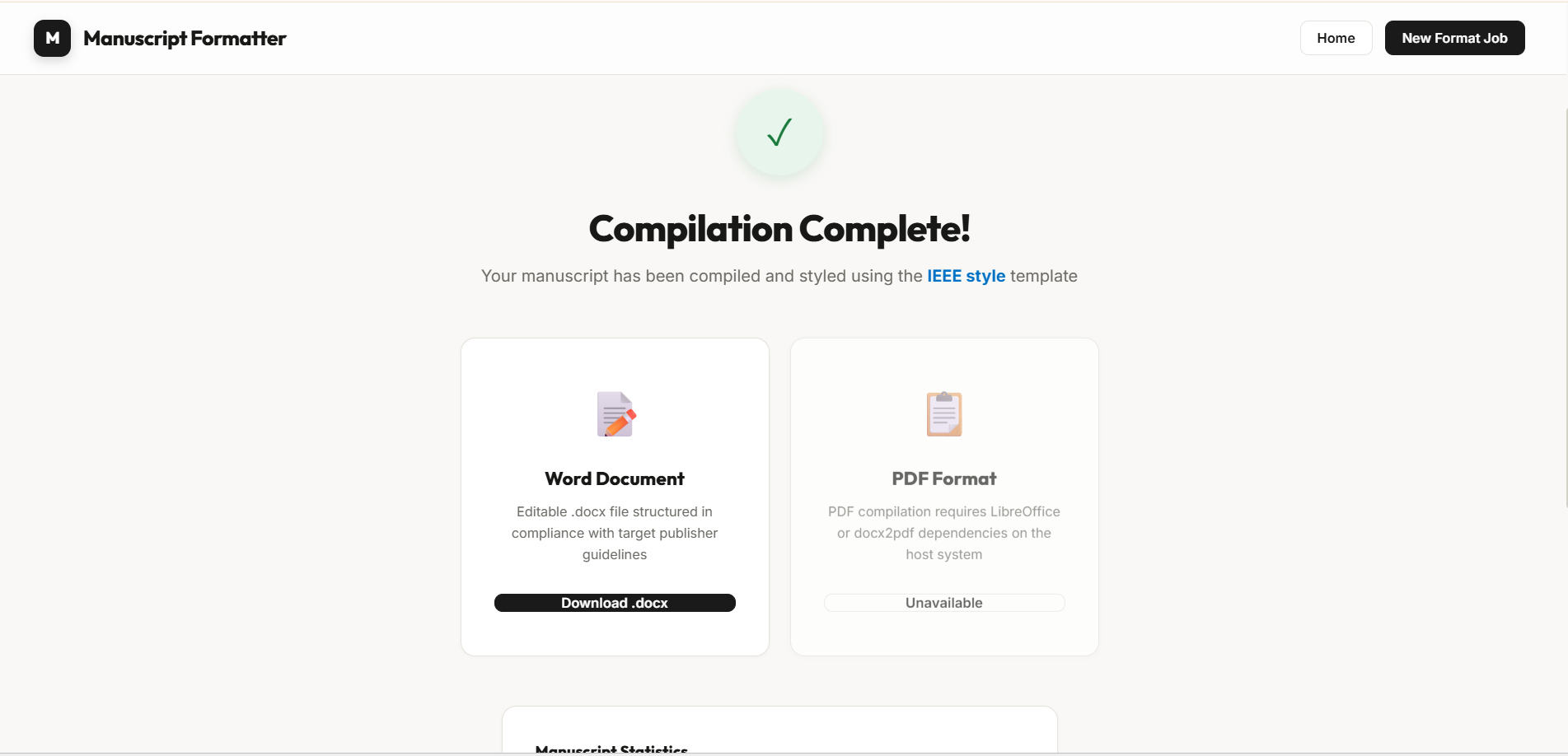
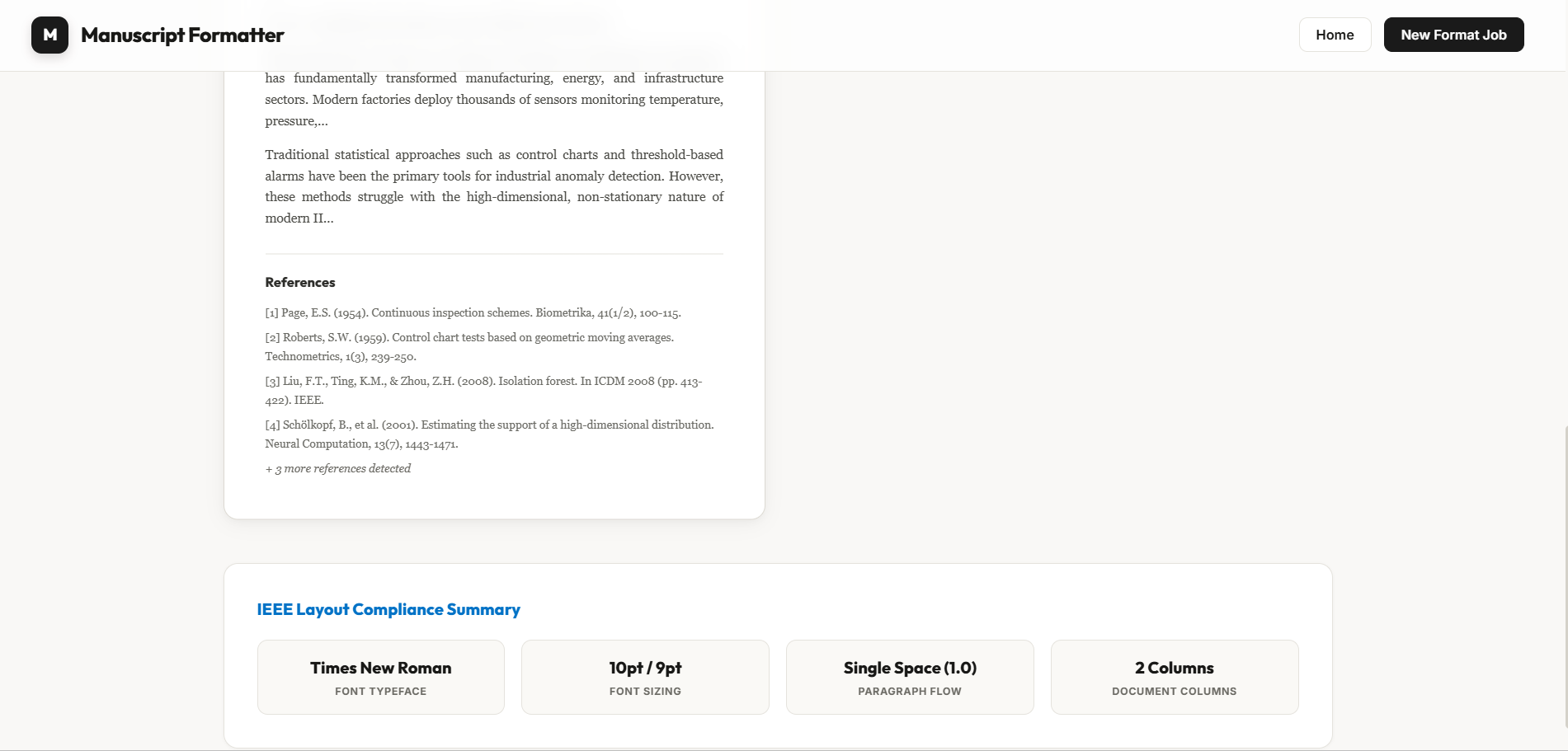
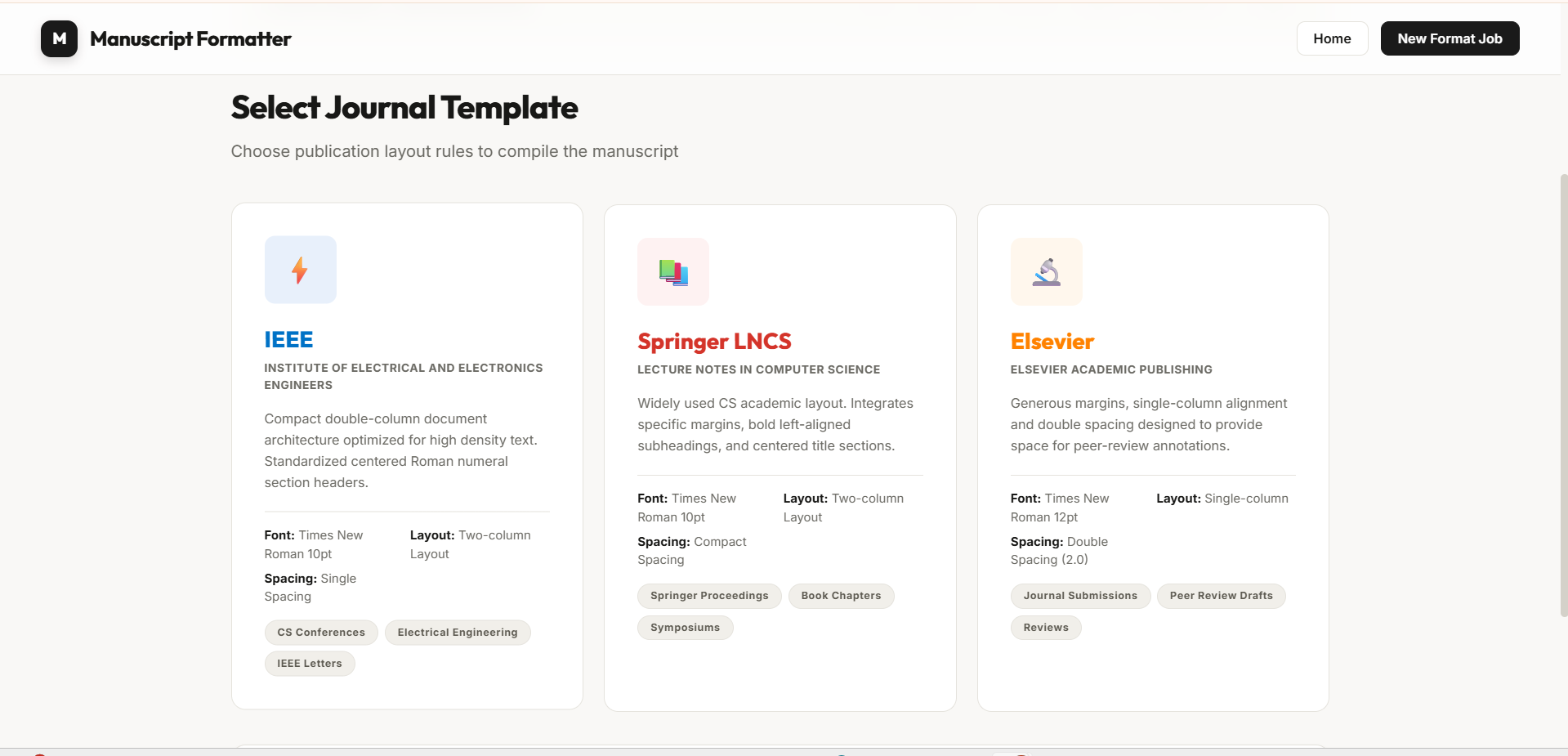
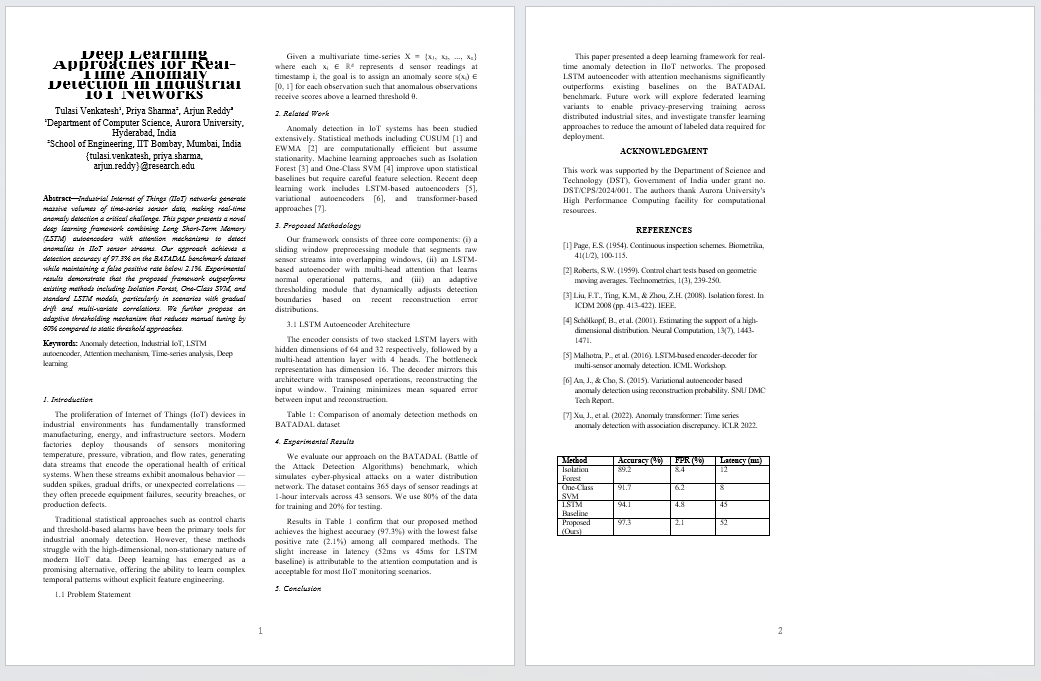
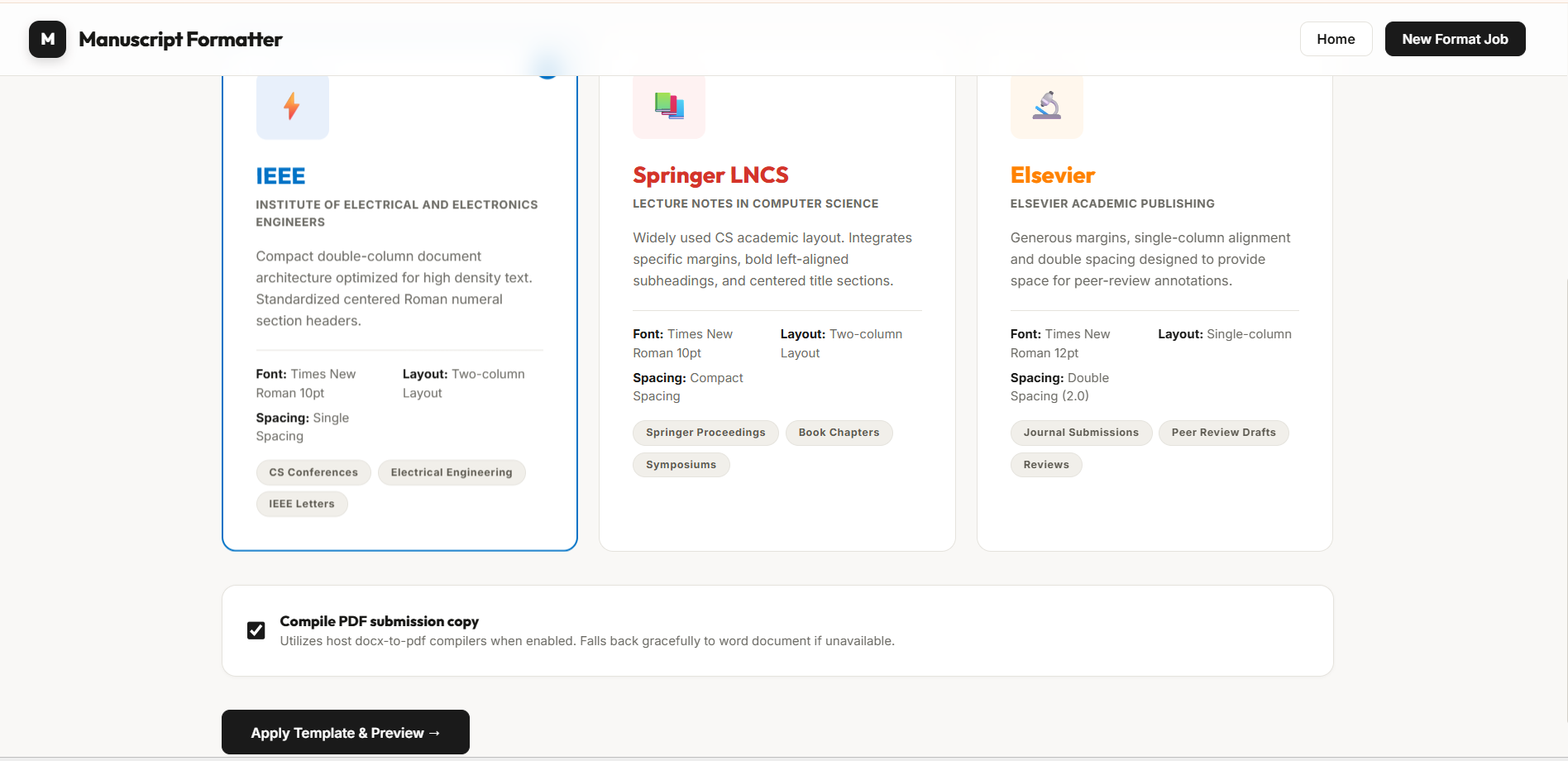
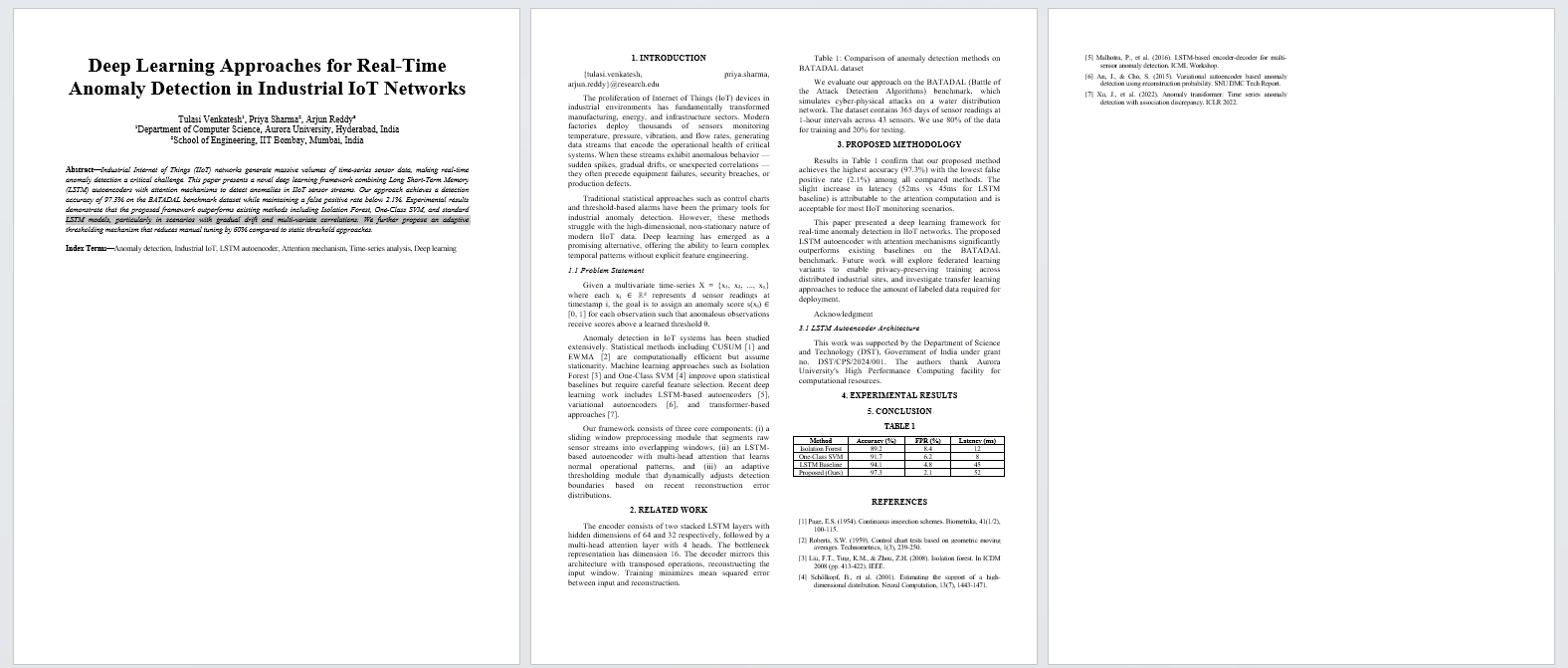
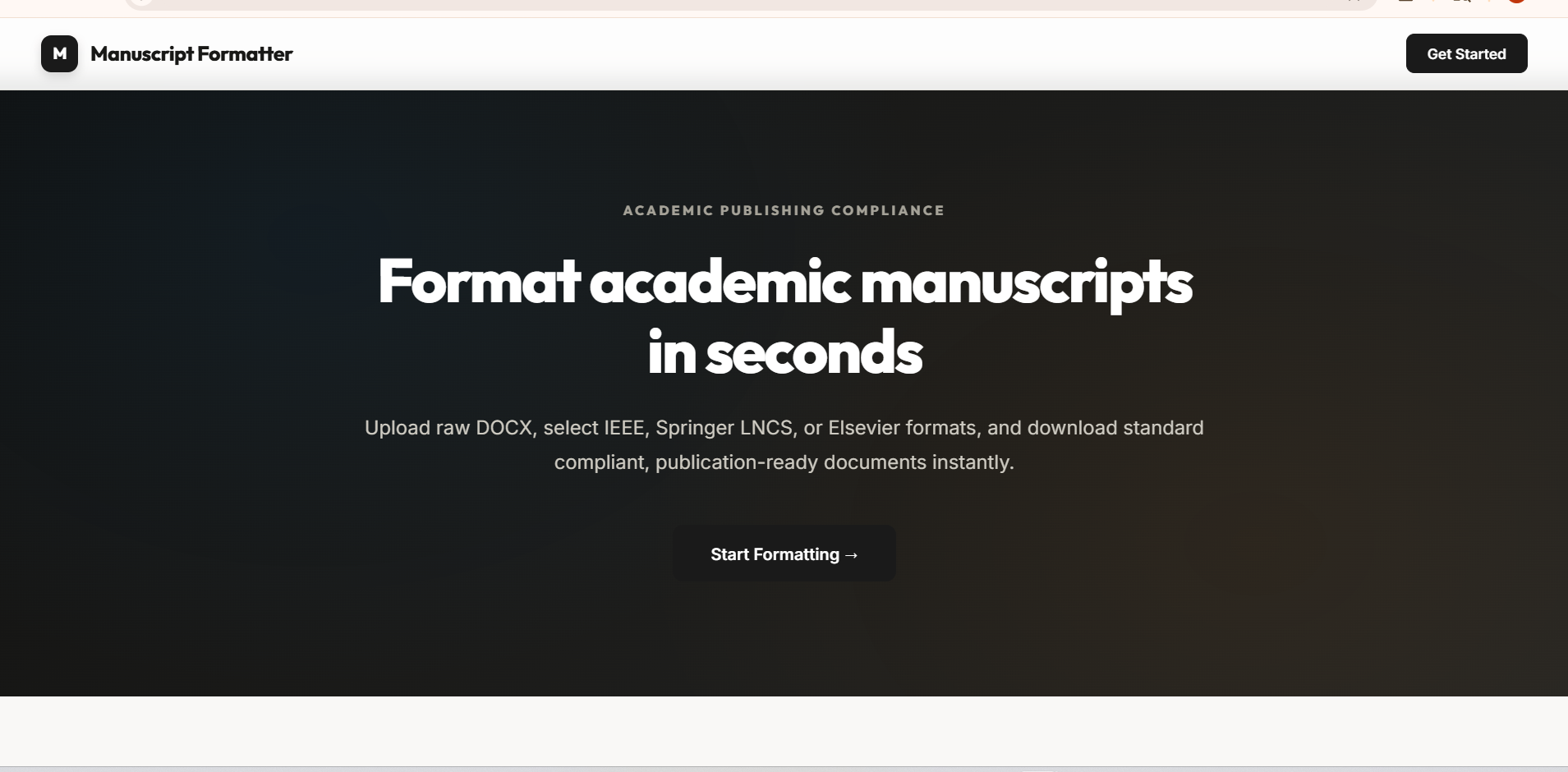
About the Project Inspiration Academic publishers and conference organizers often receive research manuscripts in poorly formatted DOCX files. Editorial teams spend a significant amount of time manually correcting formatting issues such as headings, references, spacing, tables, figures, page layouts, and citation styles before publication. We were inspired to solve this real-world problem by creating a system that automates manuscript formatting and reduces the workload of editorial teams. Our goal was to build a smart and scalable solution that converts raw manuscripts into publication-ready documents with minimal manual intervention. What It Does FormatAI is an AI-assisted manuscript formatting platform that transforms unstructured DOCX research papers into professionally formatted publication-ready documents. The system:
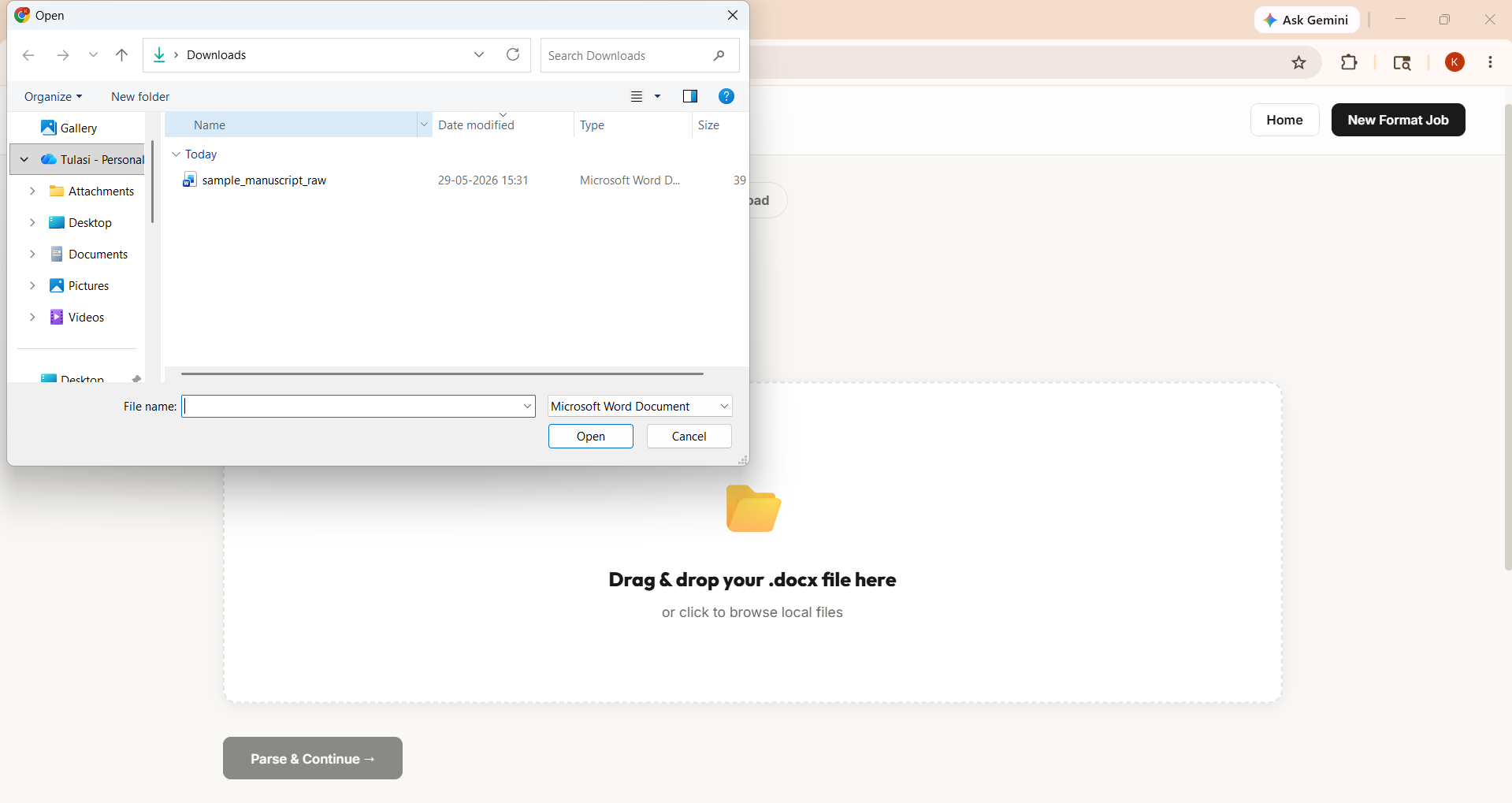
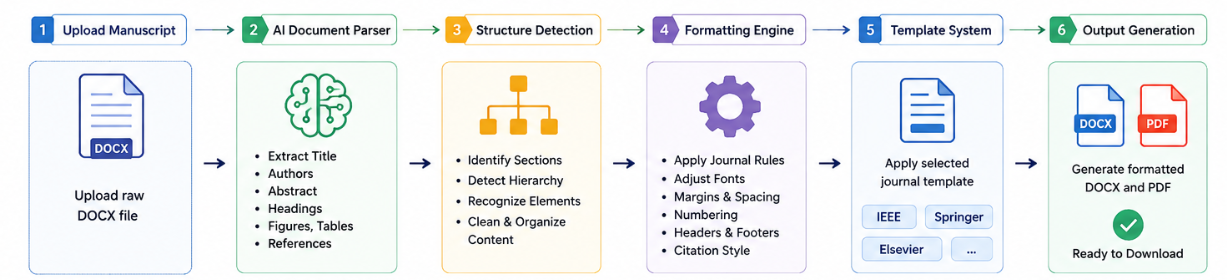
- Accepts raw DOCX uploads
- Detects document structure automatically
- Identifies titles, authors, abstracts, headings, references, tables, and figures
- Applies predefined journal and conference formatting templates
- Generates properly formatted DOCX and PDF outputs The platform helps improve:
- Formatting consistency
- Publishing efficiency
- Editorial productivity
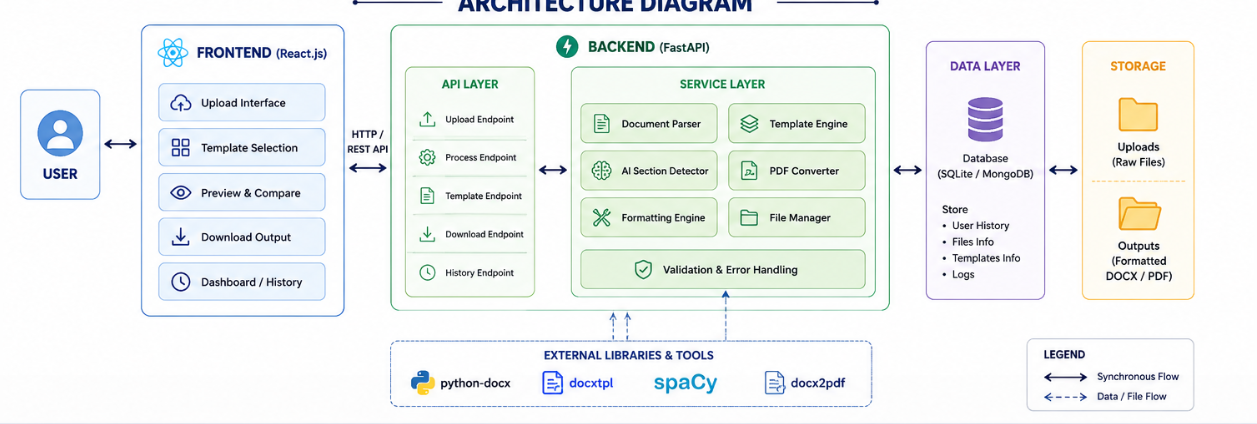
- Document quality How We Built It We designed the application using a full-stack architecture. Frontend We used:
- React.js
- Tailwind CSS The frontend provides:
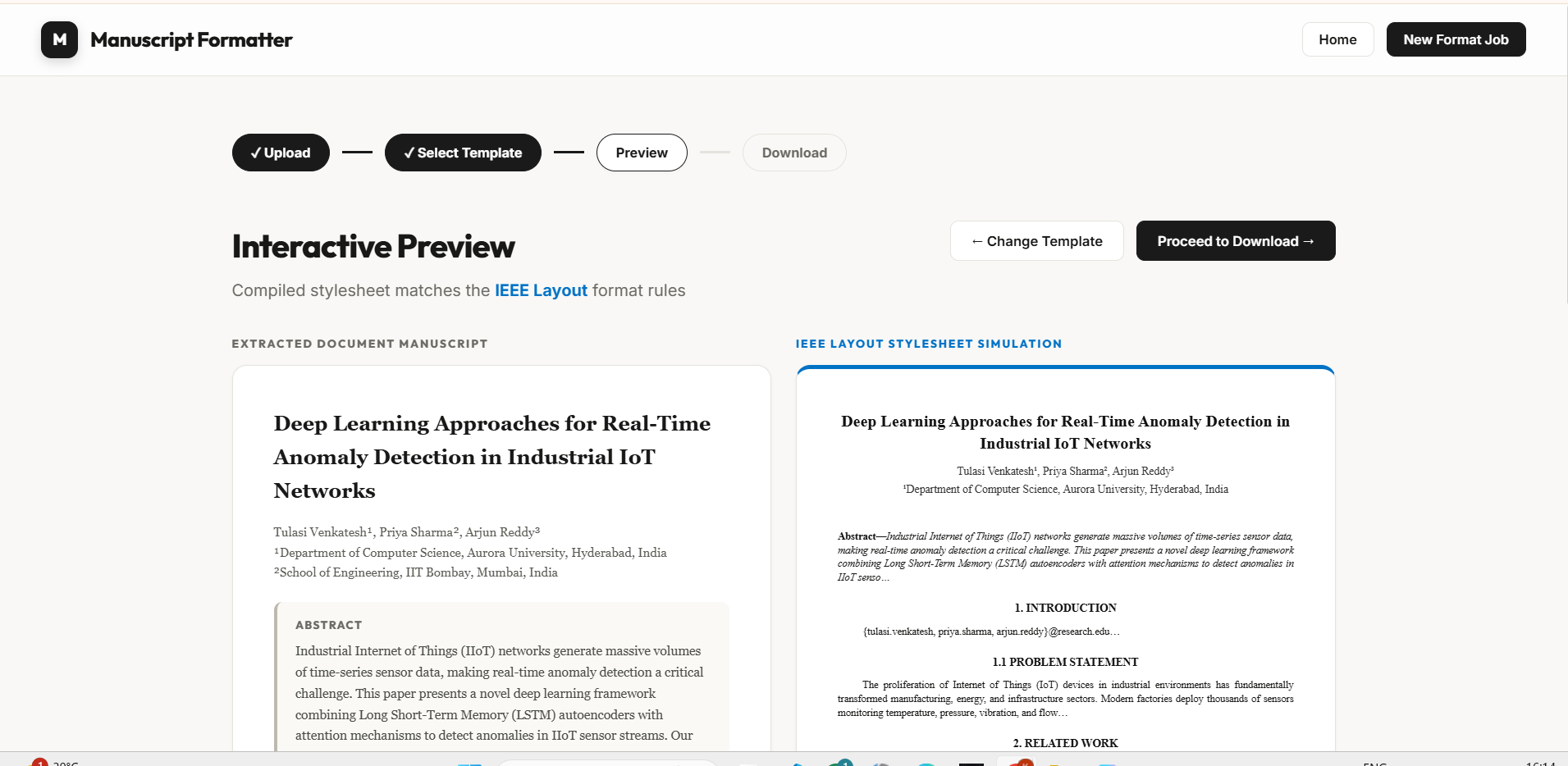
- File upload interface
- Template selection
- Preview section
- Download functionality Backend We used:
- Python
- FastAPI The backend handles:
- DOCX parsing
- Formatting logic
- Template processing
- Output generation Document Processing We used:
- python-docx
- docxtpl
- docx2pdf These libraries help:
- Read manuscript content
- Detect formatting structure
- Apply journal templates
- Export formatted files AI-Assisted Features We used rule-based formatting combined with AI-assisted section detection using NLP techniques. The system detects:
- Title
- Authors
- Abstract
- Headings
- References
- Tables and figures Challenges We Faced One of the biggest challenges was identifying document structure from inconsistent manuscript formatting. Different authors use:
- Different heading styles
- Random spacing
- Mixed fonts
- Incorrect references
- Unstructured layouts Another challenge was handling tables, captions, and references while maintaining consistent formatting across different templates. We also worked on designing a scalable formatting engine that can support multiple journal formats such as IEEE, Springer, and Elsevier. What We Learned Through this project, we learned:
- Full-stack application development
- DOCX document processing
- AI-assisted text structure detection
- Template-based automation
- Backend API integration
- Workflow optimization for publishing systems We also understood how automation and AI can significantly reduce repetitive manual tasks in academic publishing. Future Scope In the future, we plan to add:
- Multiple journal template support
- Grammar correction
- Citation validation
- Plagiarism detection
- Real-time collaborative editing
- Cloud-based deployment
- AI-powered formatting suggestions Our vision is to create a complete intelligent publishing assistant for academic institutions and publishers.

Log in or sign up for Devpost to join the conversation.