-
-
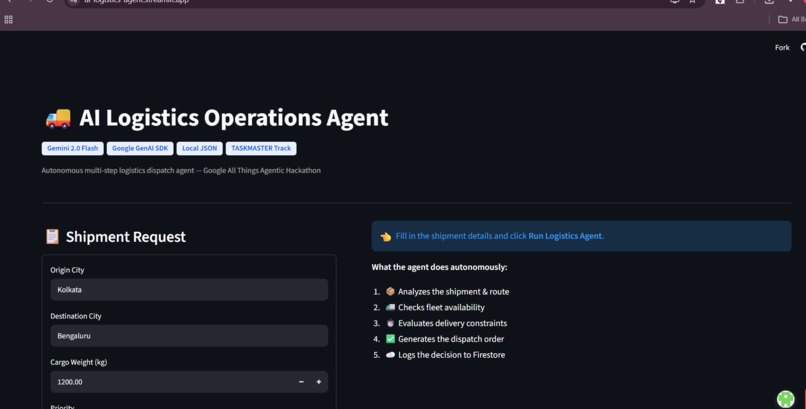
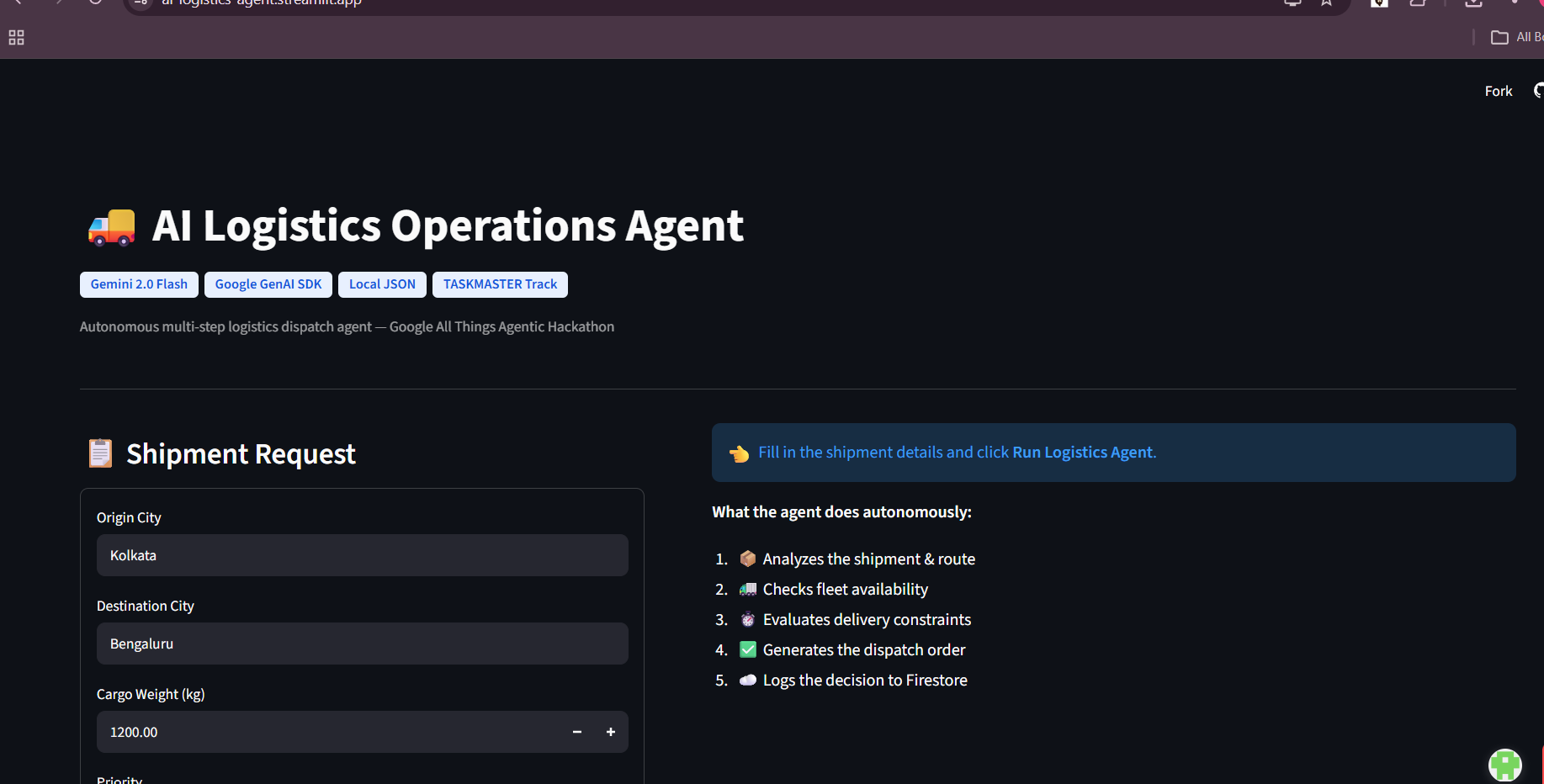
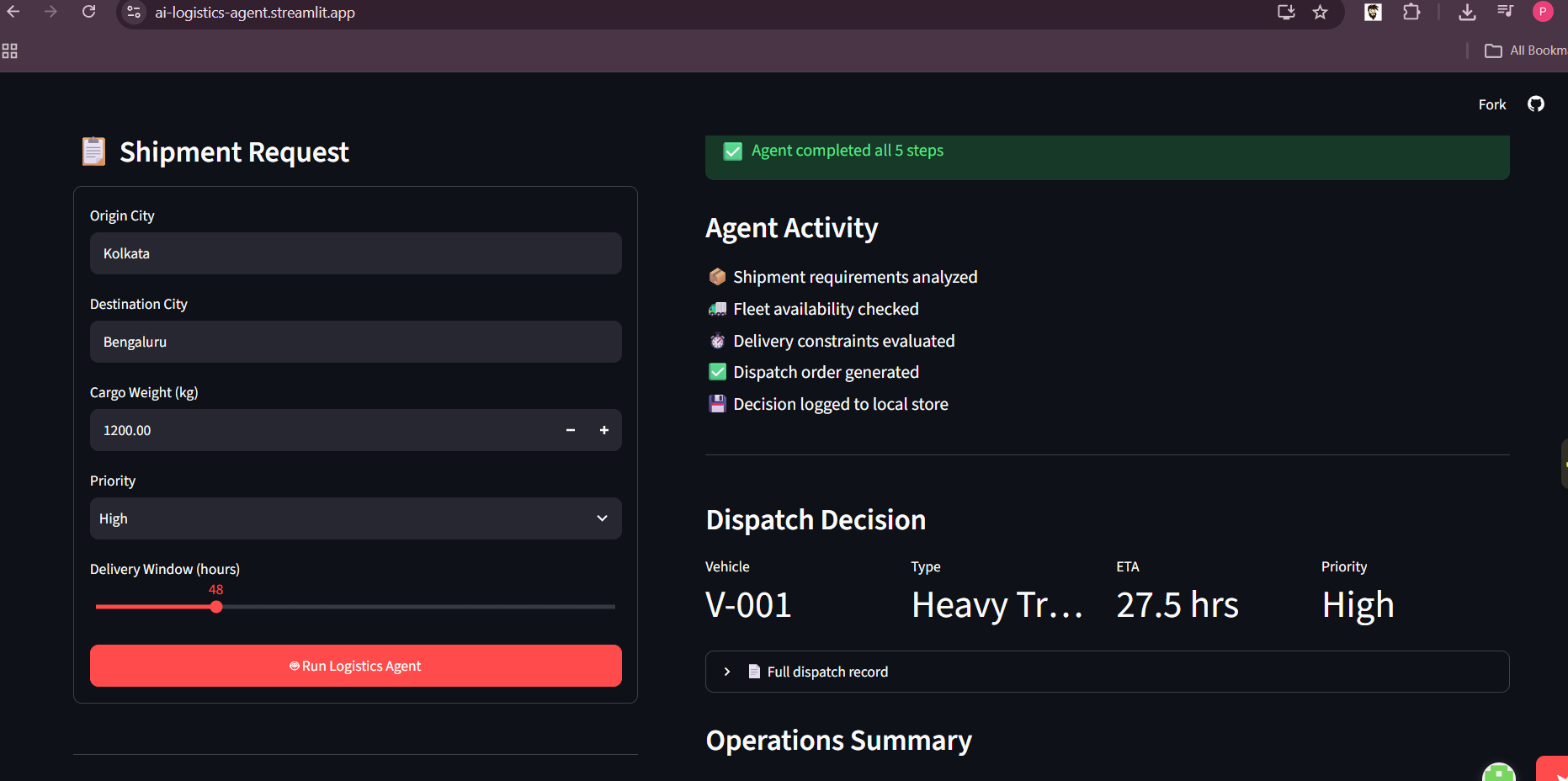
Image of the AI Tool at the start
-
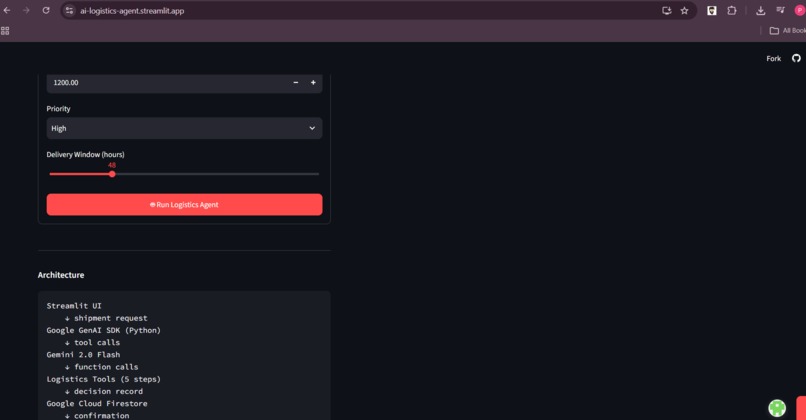
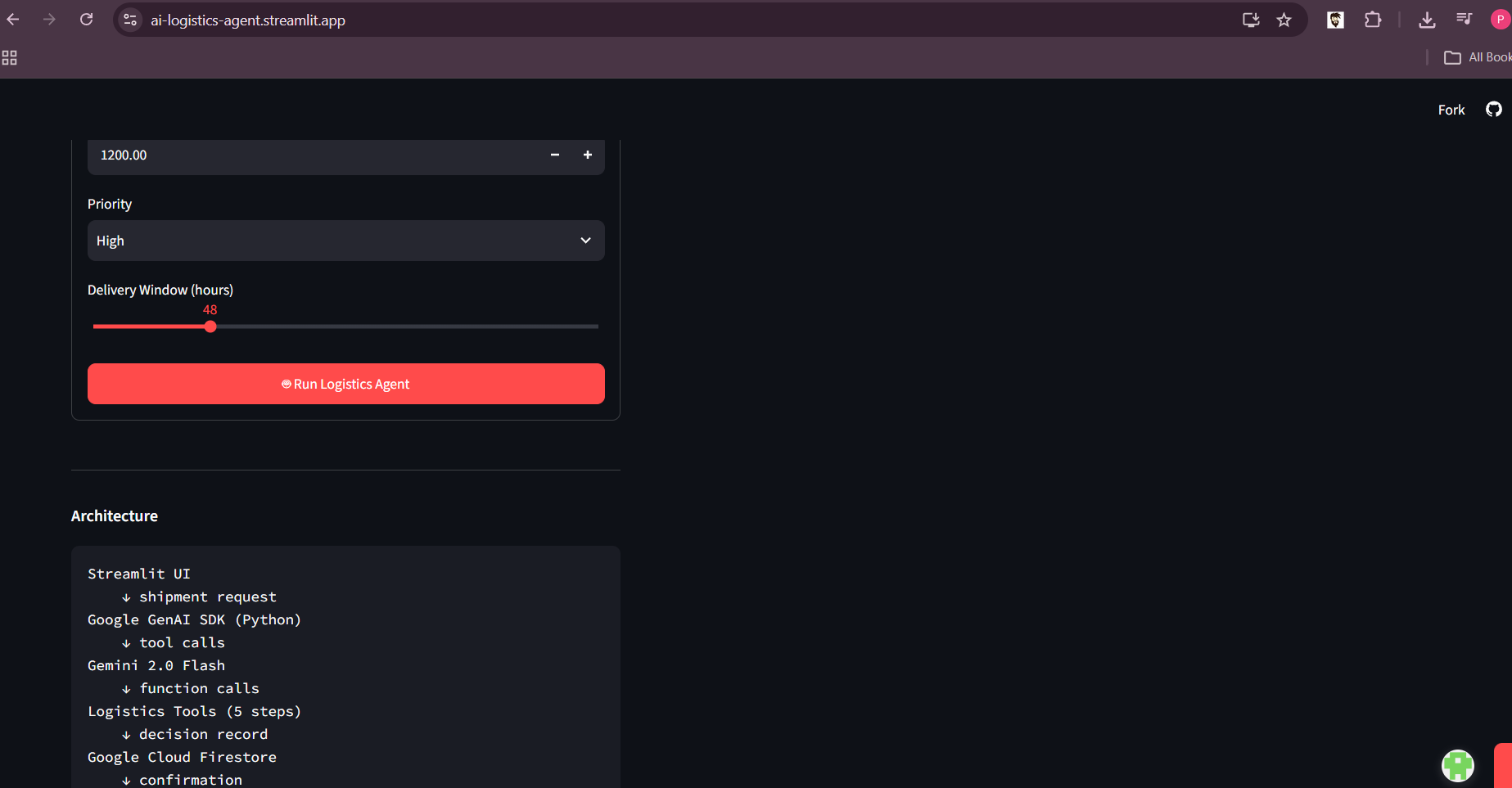
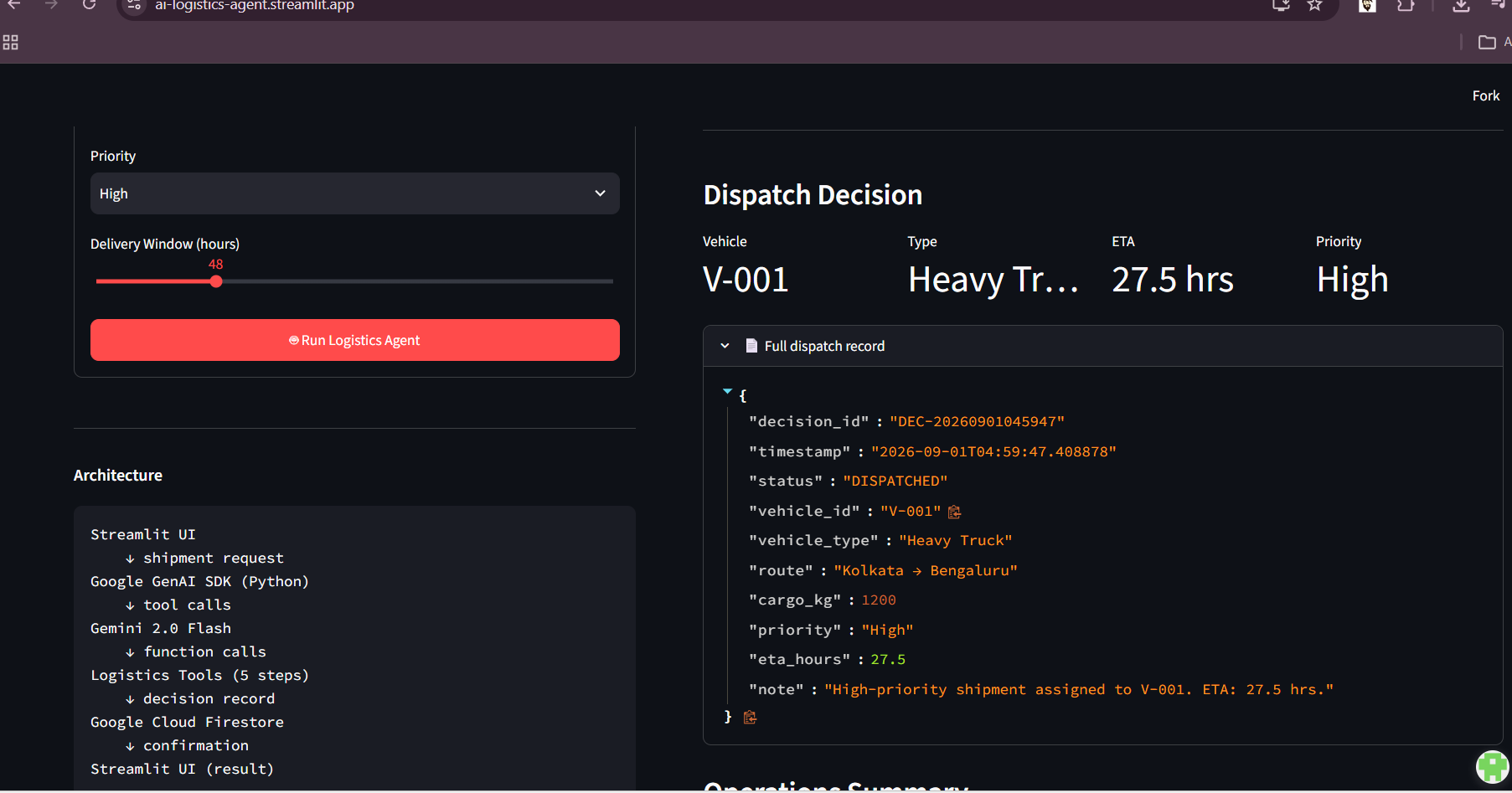
Bottom part of the starting page
-
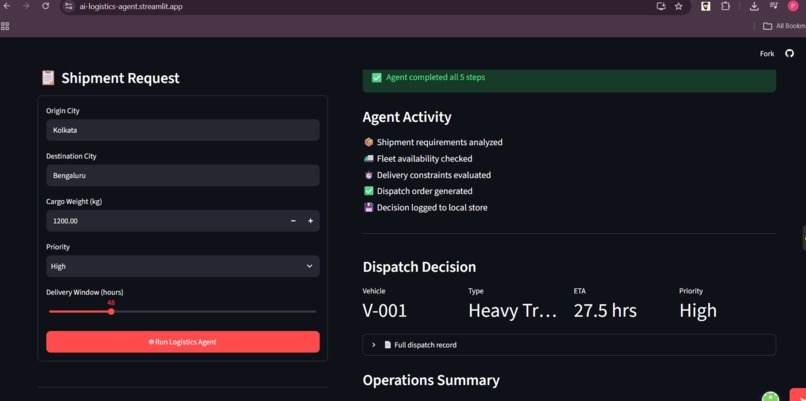
After running the Logistics agent and the Agent going through all 5 Agent activity as shown
-
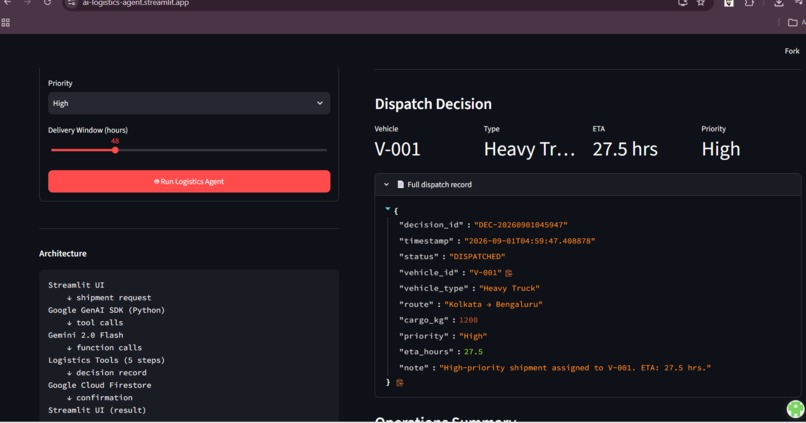
Dispatch decision with the full Dispatch record
-
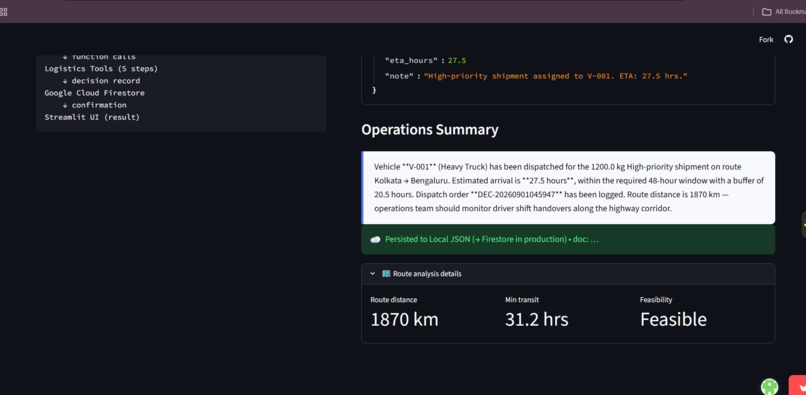
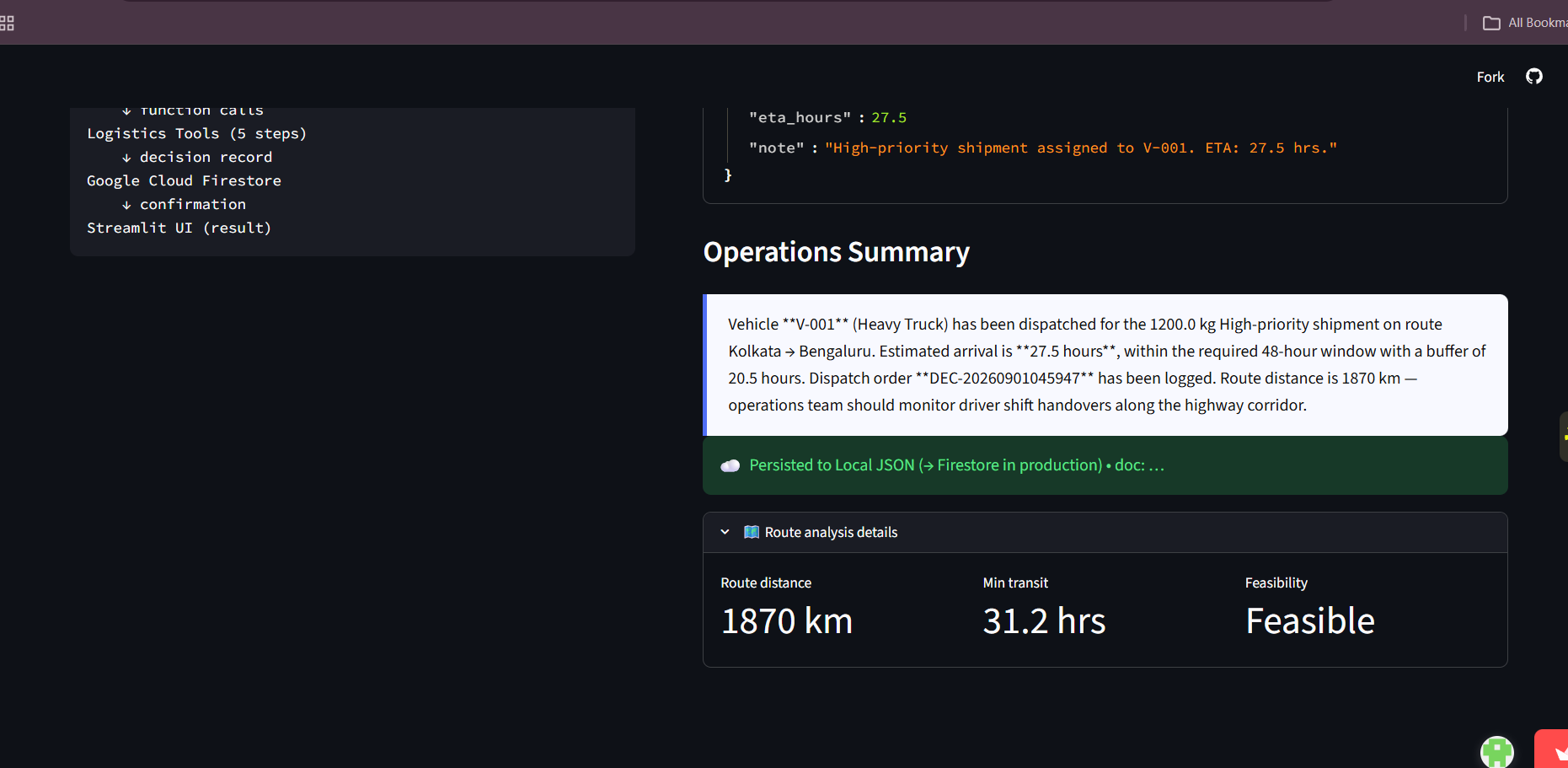
Operations summary with the Route Analysis details
-
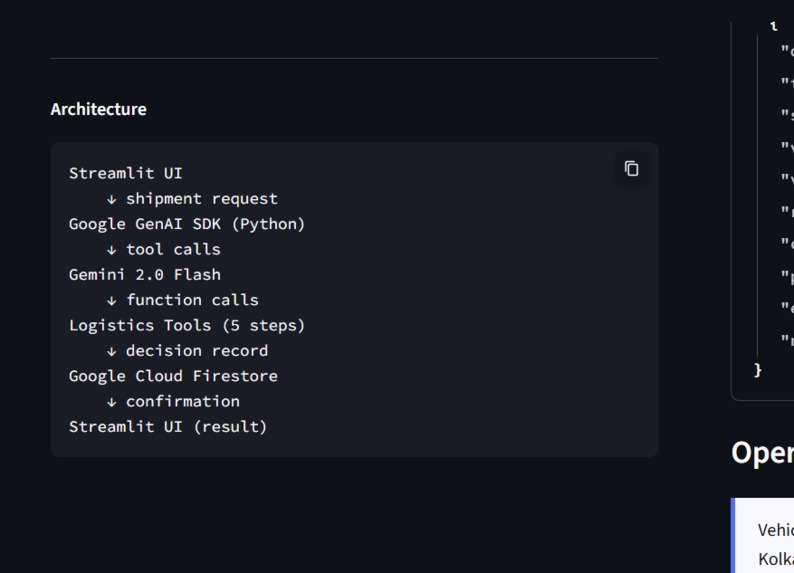
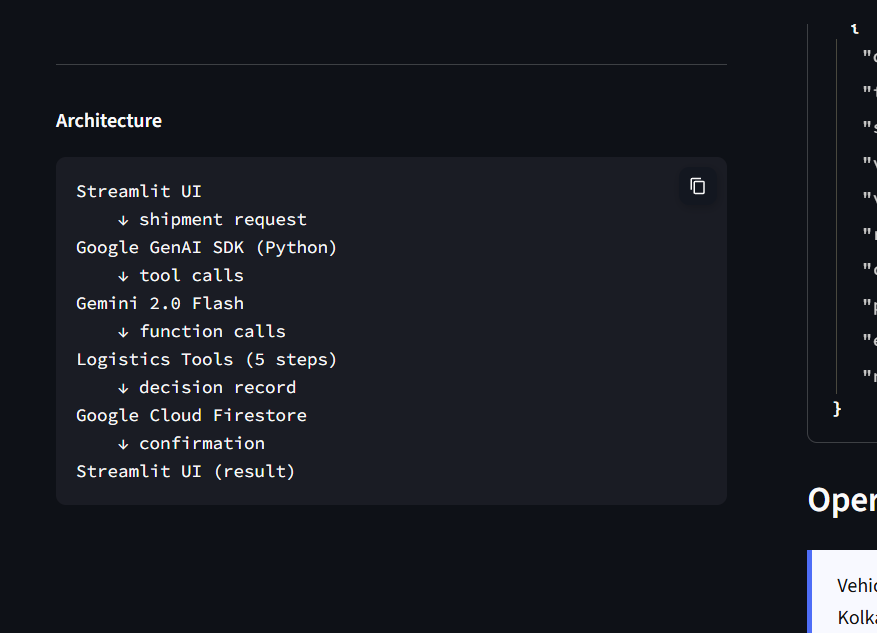
Architecture flow of the Logistics AI Agent
Inspiration
Inspiration
Freight dispatch is one of the highest-stakes, most time-sensitive workflows in logistics operations. A wrong vehicle assignment or a missed delivery window can cost thousands of dollars and break SLAs. I wanted to show that a Gemini-powered agent can own that entire decision loop autonomously — no human clicks required.
What it does
The AI Logistics Operations Agent takes a shipment request (origin, destination, cargo weight, priority, delivery window) and autonomously dispatches it through 5 sequential tool calls:
- analyze_shipment — computes route distance and minimum transit feasibility
- check_fleet_availability — finds vehicles with sufficient capacity
- evaluate_delivery_constraints — checks whether the best vehicle meets the SLA
- generate_dispatch_order — creates the official dispatch record with decision ID
- log_to_persistent_store — persists the decision to Google Cloud Firestore
After all 5 steps, the agent writes a 3–5 sentence operations summary for the ops team. No human is in the loop — the agent decides, acts, and logs autonomously.
How I built it
- Gemini 3.6 Flash via the Google GenAI SDK (
google-generativeai) withenable_automatic_function_calling=True— Gemini drives the entire tool-call sequence - Google Cloud Firestore (Native mode) for persistent decision logging, with an automatic local JSON fallback when credentials aren't configured
- Streamlit for the browser UI — shipment form on the left, live agent activity log + dispatch metrics on the right
- The 5 tool functions are plain Python callables passed directly to
GenerativeModel(tools=[...])— the GenAI SDK handles the function-call loop
Challenges I ran into
- Getting Gemini to strictly respect the 5-step tool order required careful system prompt engineering ("MUST call IN EXACT ORDER" with numbered steps)
- Handling API quota limits gracefully — implemented a demo-mode fallback that runs all 5 tools directly when the Gemini API is unavailable, so the agent workflow is always demonstrable
- Firestore credential configuration across local dev and Streamlit Cloud deployment required a robust optional-import pattern with silent fallback
Accomplishments I'm proud of
This is a genuine TASKMASTER agent — not a chatbot wrapper. Every run produces a real operational action: a timestamped dispatch order with a unique decision ID, persisted to cloud storage. The agent's reasoning is fully visible through the live activity log in the UI.
What I learned
- How Google's automatic function calling differs from manual tool-use loops — the SDK manages the chat turn cycle internally, which simplifies multi-step agentic workflows dramatically
- Firestore Native mode's document-based model maps cleanly onto audit-log patterns for agentic decision records
What's next
- Real fleet data via a Firestore-backed fleet registry
- Multi-agent coordination: a separate route-optimization agent feeding into dispatch
- Webhook notifications to drivers on assignment ## What it does
