-
-
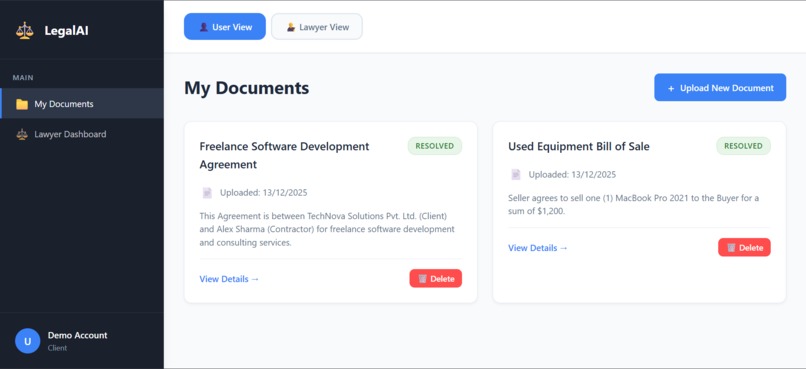
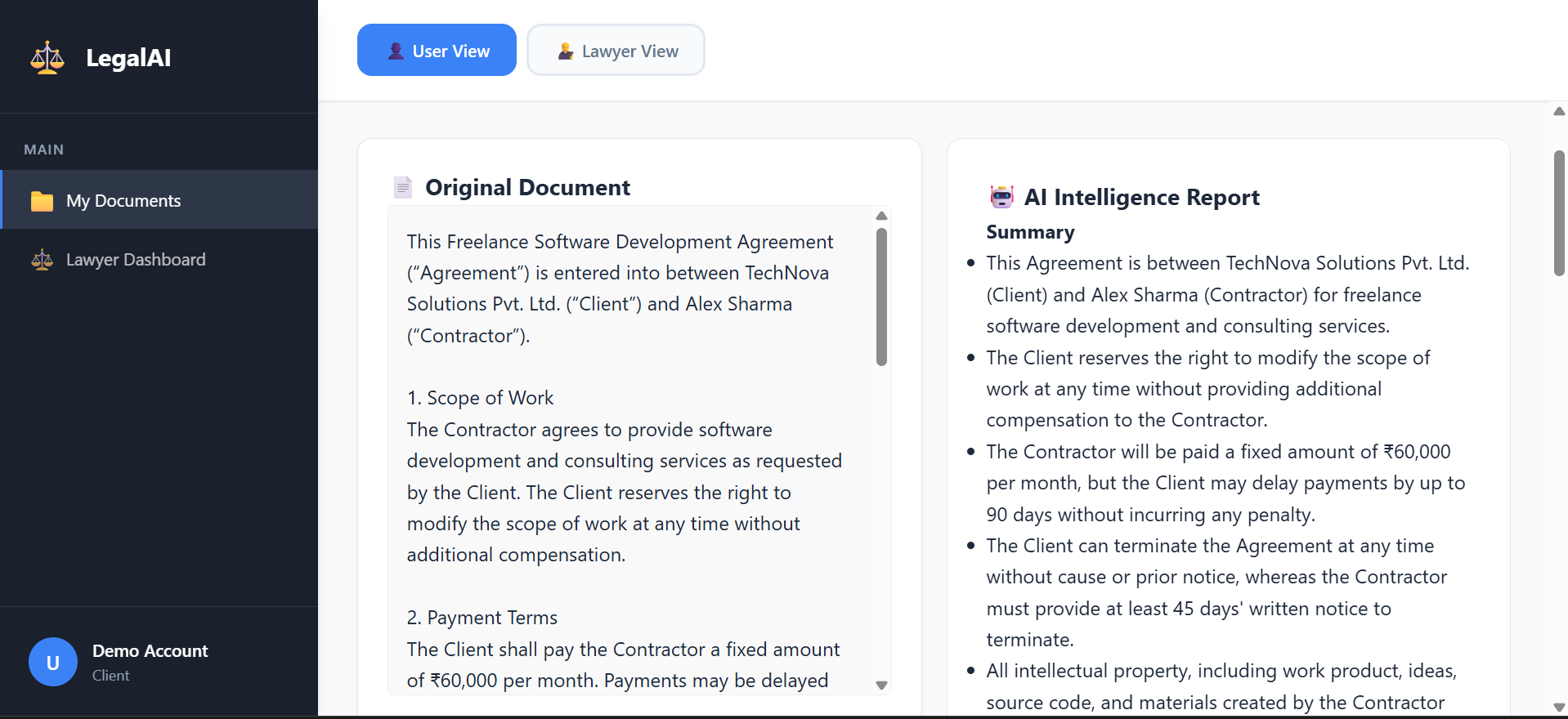
User Page
-
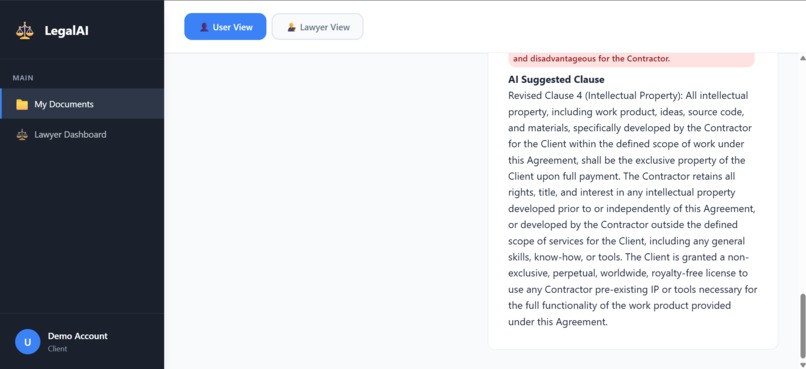
User Page analyzed
-
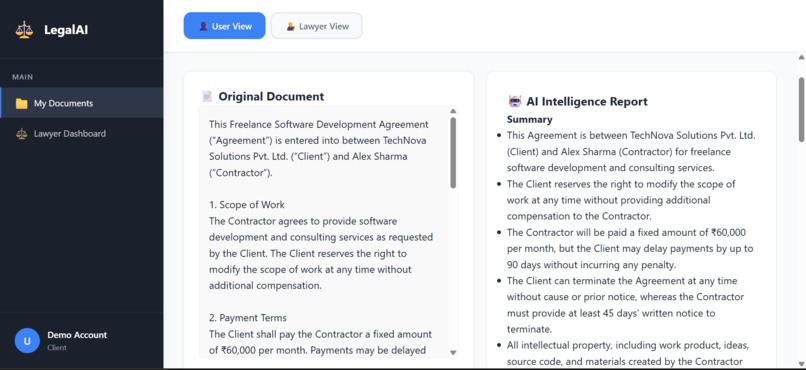
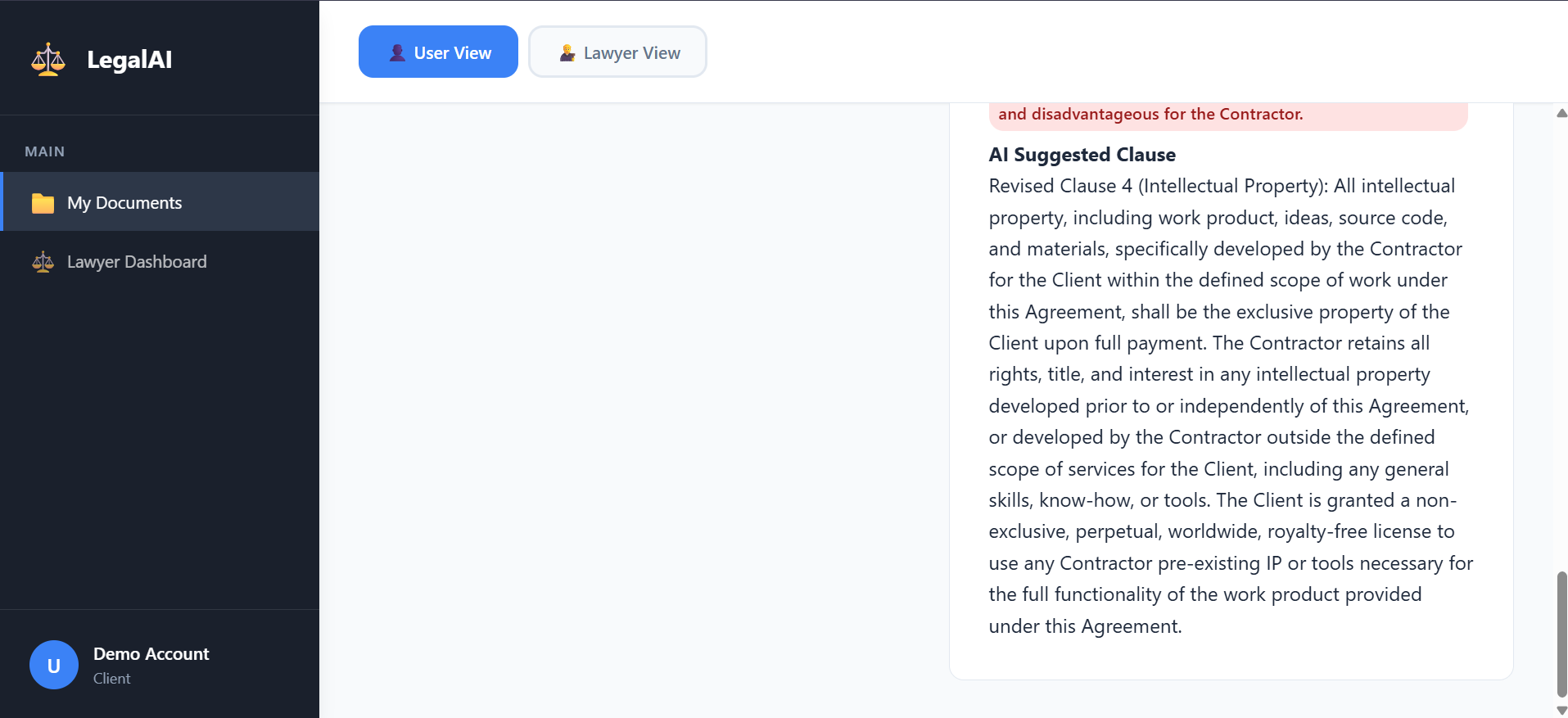
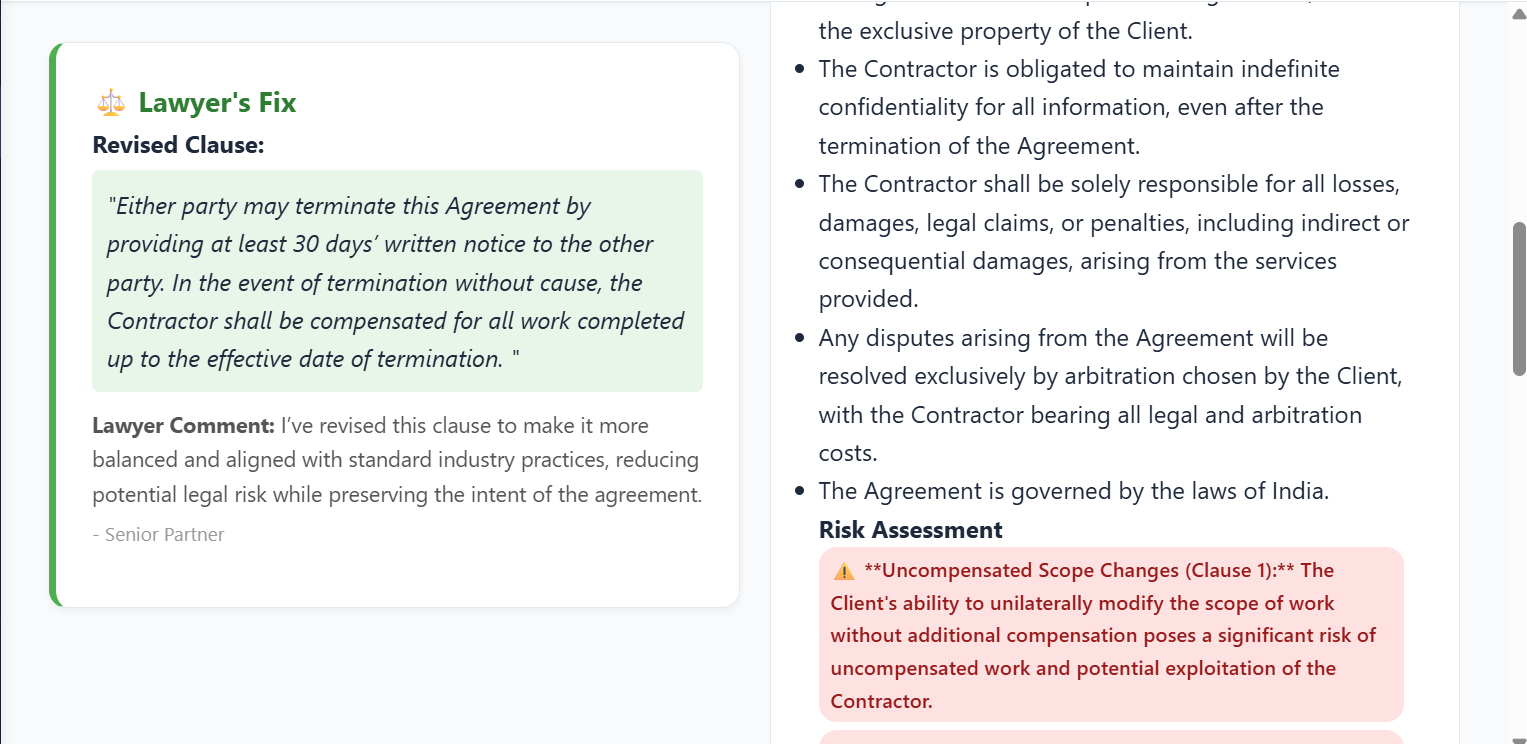
complete Analysis through Gemini API
-
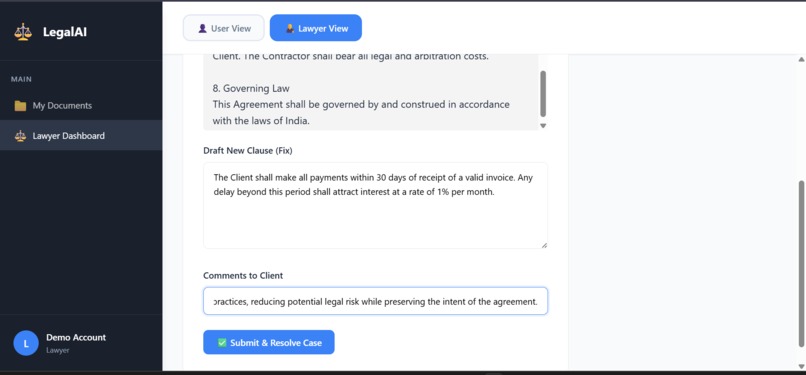
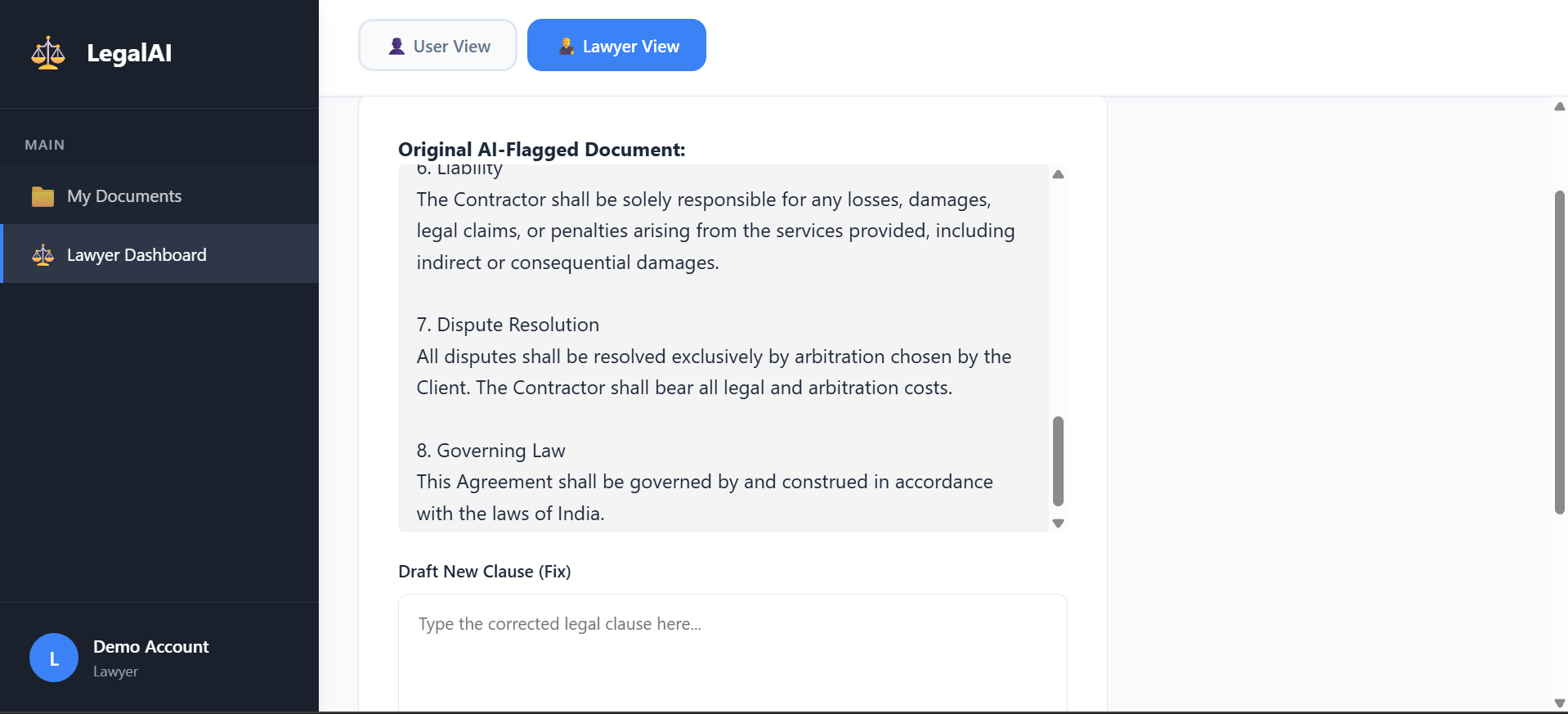
Lawyers Page
-
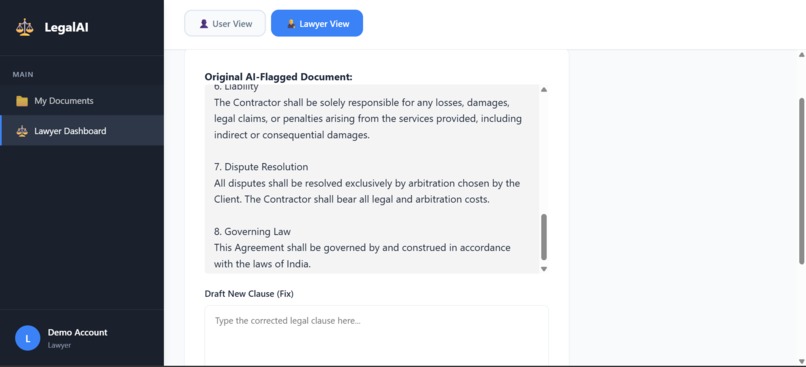
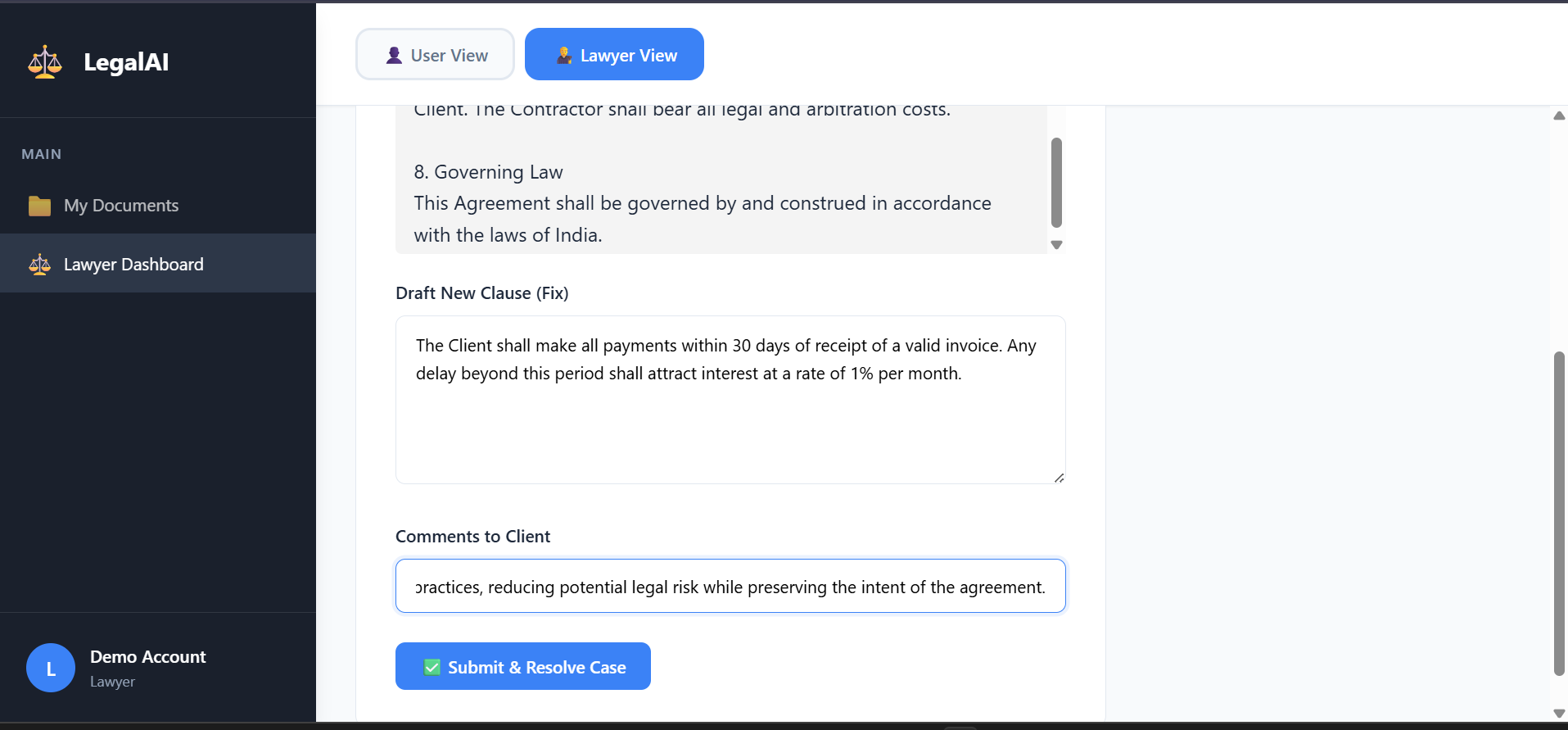
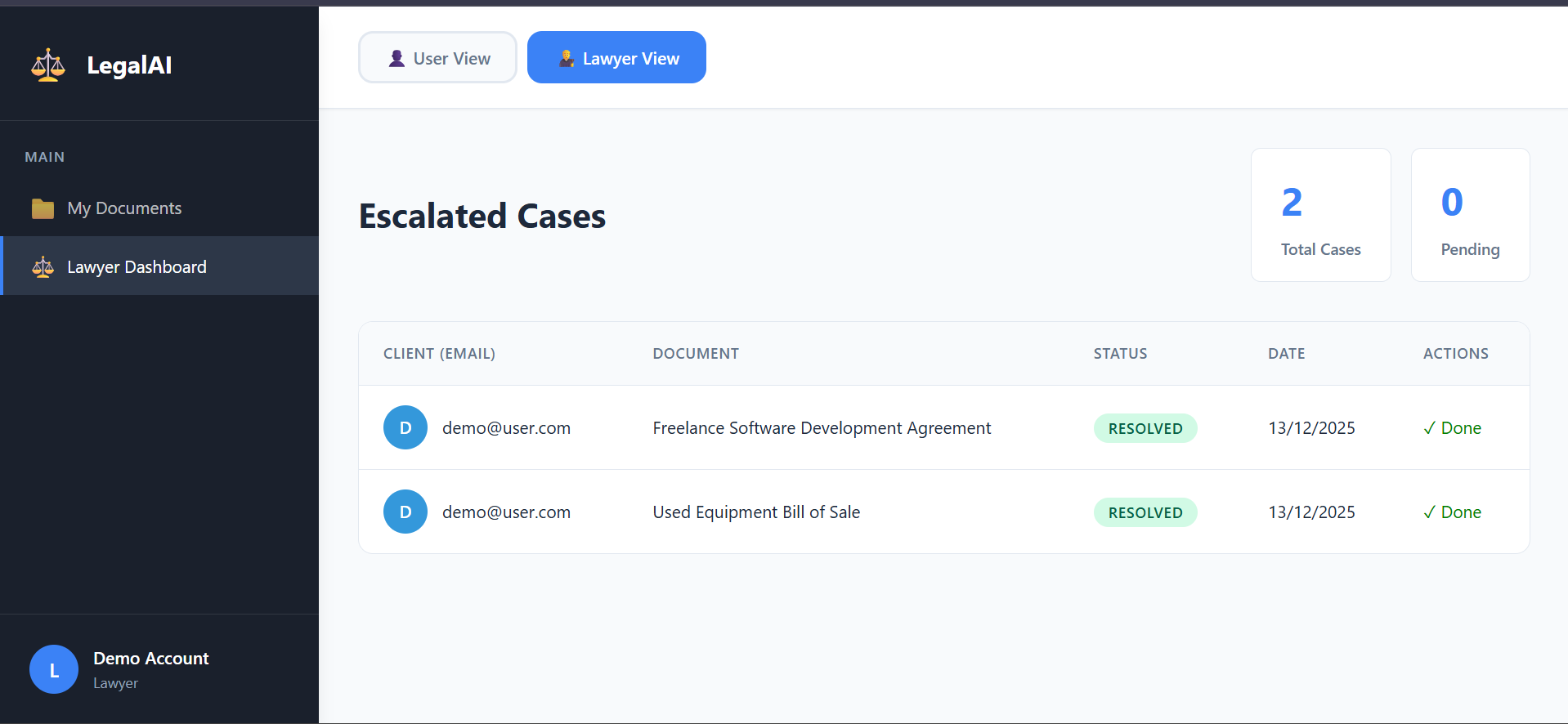
Lawyers Page
-
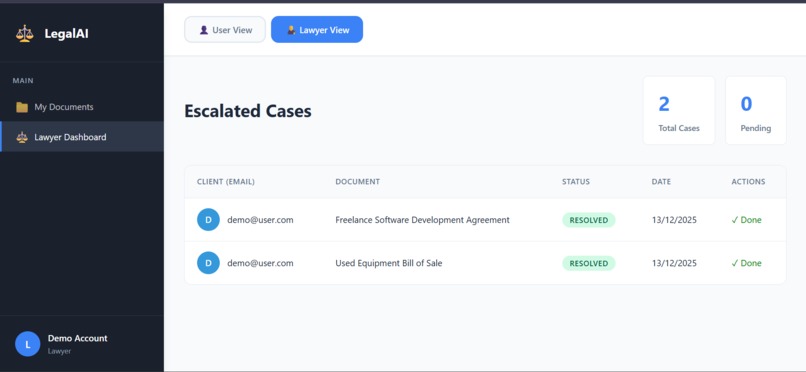
Pending or Approved law suits
-
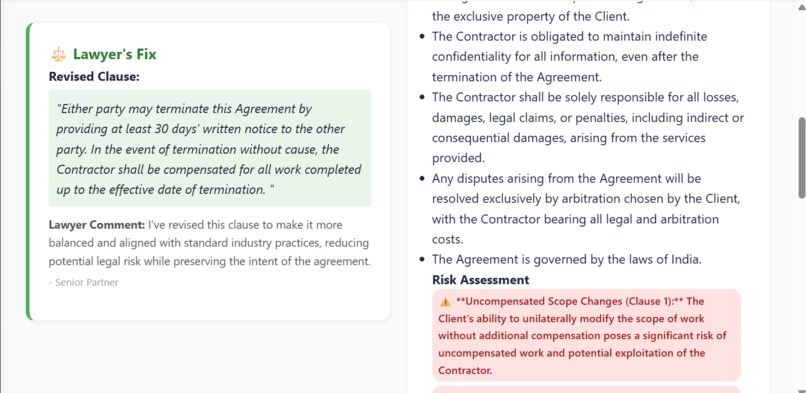
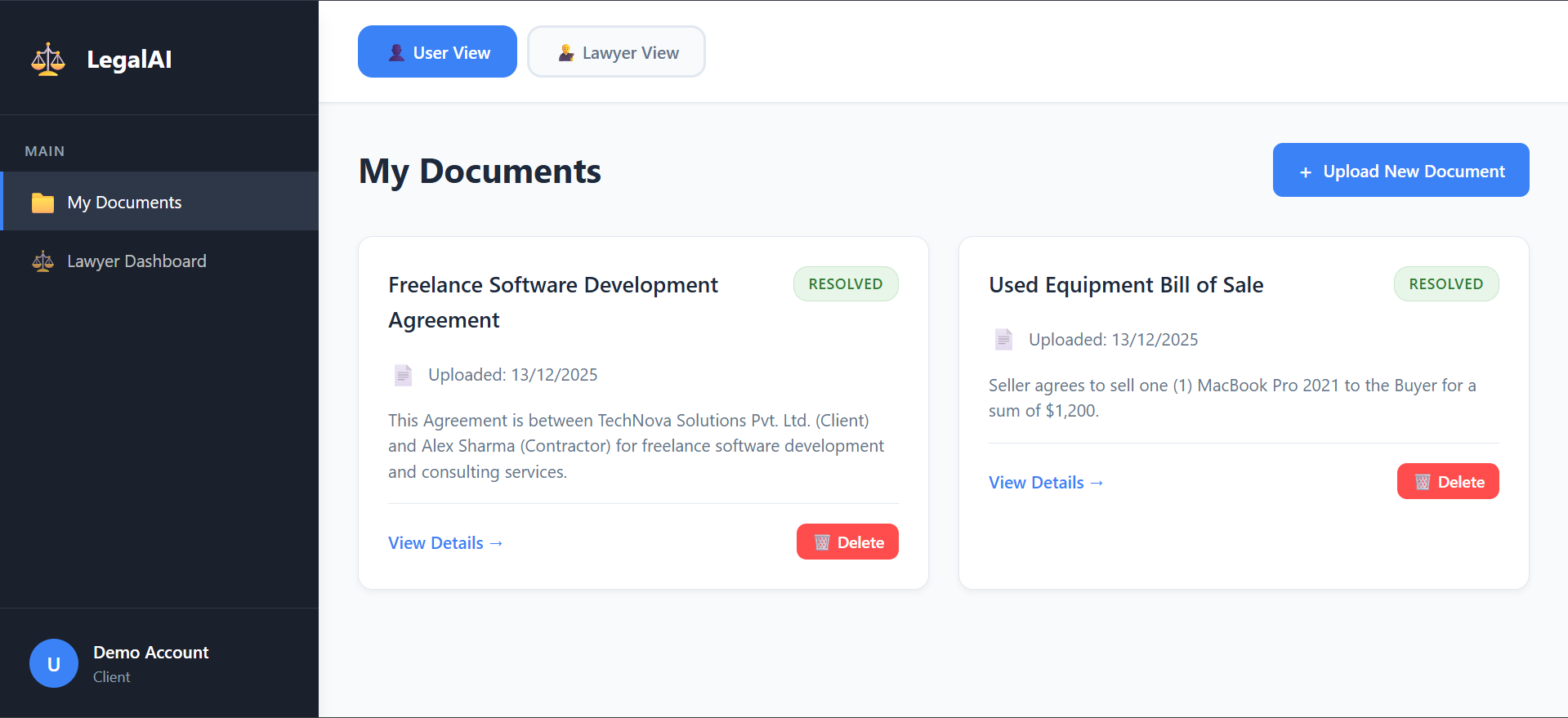
Final Users Page
🧠 About the Project
💡 Inspiration
Most people don’t read legal documents because they can’t—not because they don’t want to. Contracts, rental agreements, and terms of service are often long, dense, and intimidating. We’ve all clicked “I agree” without fully understanding what we were signing.
The idea for AI-Legal-Assistant came from this everyday problem: important decisions are being made without clarity. Legal help is often expensive, time-consuming, and inaccessible for routine document review. We wanted to explore how AI could act as a first line of understanding—something that explains, flags risks, and empowers users before they commit.
Rather than replacing lawyers, our goal was to create a system where AI does the heavy lifting of analysis, while humans provide judgment. This balance between automation and trust became the core inspiration behind the project.
📚 What We Learned
While building this project, we gained hands-on experience in:
- Designing an agentic AI workflow that can autonomously analyze documents while still involving human oversight.
- Integrating large language models (Gemini API) for structured legal analysis, summarization, and clause drafting.
- Building a full-stack system with a clean separation between frontend and backend.
- Managing real-world data flow using MongoDB Atlas and REST APIs.
- Understanding the importance of human-in-the-loop AI, especially in high-risk domains like law.
🛠️ How We Built It
The project follows a modular full-stack architecture:
- Frontend: Built with React and custom CSS to provide an intuitive, user-friendly interface for uploading documents, viewing AI insights, and interacting with suggested fixes.
- Backend: Developed using Node.js and Express to orchestrate API requests, manage AI workflows, and handle authentication.
- AI Layer: Uses the Google Gemini API to analyze legal text, detect potential risks, explain clauses in plain language, and generate improved clause suggestions.
- Database: MongoDB Atlas stores documents, analysis results, and lawyer feedback securely.
- Human Review: A lawyer dashboard allows legal professionals to review AI-flagged clauses, refine suggestions, and add contextual comments for users.
This design balances AI autonomy with human control, making the system both powerful and trustworthy.
⚙️ Challenges Faced
Some of the key challenges included:
- Structuring AI outputs to be consistent, explainable, and useful rather than generic.
- Handling edge cases in legal language where clauses are ambiguous or context-dependent.
- Managing frontend–backend integration and ensuring reliable API communication.
- Designing the system to clearly communicate that it assists rather than replaces legal professionals.
Overcoming these challenges helped us better understand responsible AI design and real-world system integration.
🌍 Impact
AI-Legal-Assistant shows how AI can improve access to legal understanding without removing human accountability. By simplifying legal language, highlighting risks early, and enabling lawyer review when needed, the project empowers users to make more informed decisions with confidence.
Built With
- express.js
- google-gemini-api
- javascript
- jwt-authentication
- mongodb-atlas
- node.js
- react
- rest-apis
- vercel


Log in or sign up for Devpost to join the conversation.