-
-
LOGO 1
-
LOGO 2
-
TUMBNAIL
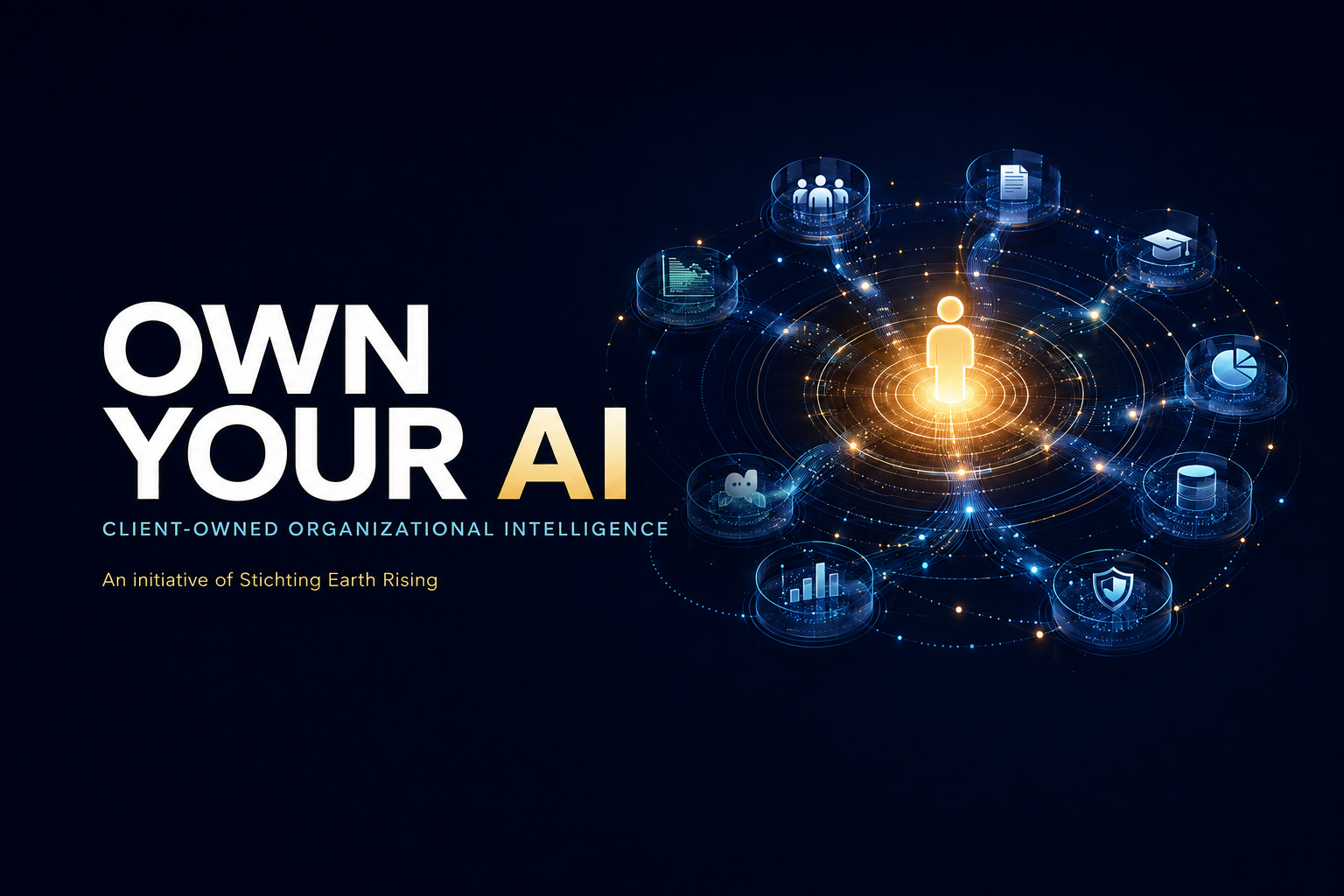
Own Your AI: Technology Should Adapt to People
Inspiration
Artificial intelligence is entering organizations faster than most people can understand its consequences.
Companies are adopting new tools without always knowing what happens to their data, who remains accountable for automated decisions, how different systems interact, or which processes should remain human. Smaller organizations face an additional problem: responsible AI adoption requires expertise in strategy, workflows, privacy, security, governance, compliance, and workforce development—expertise many cannot access or afford.
After decades of working where technology, communication, entrepreneurship, and organizational change meet, I kept encountering the same contradiction:
AI gives organizations extraordinary capabilities, yet adopting it can make them more dependent on technology providers and less certain about their own data, decisions, and future.
I created Own Your AI to reverse that relationship.
The future of AI should not be determined by who collects the most data. It should be determined by who creates the greatest trust.
What Own Your AI Does
Own Your AI is an independent, AI-native professional service that helps organizations understand, design, and control their own AI ecosystem.
The first product is the AI Organization Scan: a paid, fixed-scope service that turns a complex organization into a clear, decision-ready AI roadmap.
The scan examines:
- organizational structure and workflows;
- existing AI tools and technology;
- repetitive work and operational bottlenecks;
- data flows, privacy, and security;
- governance and compliance requirements;
- opportunities for responsible automation;
- human skills and learning needs;
- strategic and commercial opportunities.
Specialist AI roles analyze the organization from different perspectives, compare findings, challenge weak conclusions, and identify priorities.
The result is not another generic AI report. It is:
- an organizational map;
- a set of prioritized findings;
- clearly assigned decisions and owners;
- a practical action plan.
AI performs the intensive analysis, routing, comparison, and synthesis. Humans provide context, exercise judgment, and approve consequential recommendations.
That distinction is fundamental:
AI supports decisions. People remain accountable.
How I Built It
I built the prototype as one coordinated application in Google AI Studio, using Gemini through a dedicated Google Cloud project.
Instead of creating a collection of disconnected chatbots, I designed a modular multi-agent architecture inside one product. Specialist intelligence modules cover areas such as:
- organizational analysis;
- strategy;
- workflows;
- governance;
- privacy and security;
- compliance;
- education;
- executive decision support.
The core workflow is:
- Collect structured organizational information.
- Map workflows, tools, data, and responsibilities.
- Route relevant issues to specialist AI roles.
- Compare and challenge findings across disciplines.
- Flag risks, missing evidence, and governance questions.
- Prioritize opportunities and required decisions.
- Apply human review and approval.
- Generate a clear report and action plan.
Gemini functions as the reasoning and orchestration layer, not simply as a conversational interface. It helps determine which specialist perspective is needed, brings different findings together, and turns large amounts of organizational information into structured recommendations.
I deliberately focused the prototype on one strong commercial workflow rather than trying to launch the entire future ecosystem at once. The architecture is modular, so additional capabilities can be added without turning each one into a separate product.
Challenges
Turning a Large Mission into a Focused Product
Own Your AI addresses privacy, autonomy, governance, education, and organizational transformation. The first challenge was reducing that broad ambition to something customers could immediately understand and purchase.
The AI Organization Scan became the entry point because organizations need to understand their current reality before choosing tools or automating processes.
Combining AI Autonomy with Human Accountability
An AI-native company needs AI to do real operational work. At the same time, Own Your AI exists to protect human agency.
I therefore separated operational decisions from consequential decisions. AI can route work, analyze information, detect patterns, challenge findings, and prioritize opportunities. Decisions that materially affect people, rights, or organizational responsibility remain subject to human approval.
Creating Transparency Without Exposing Proprietary Intelligence
Customers should understand why recommendations are made and what information is used. However, the detailed prompts, scoring methods, escalation logic, and orchestration rules are part of the company’s intellectual property.
The solution was to make the workflow and governance principles explainable while protecting the proprietary implementation behind them.
Maintaining Clean Technical Boundaries
Working with multiple AI experiments made configuration discipline essential. System instructions, secrets, and API connections must belong to the correct product and Cloud project.
I introduced a clean-start protocol:
- Reset inherited system instructions.
- Verify the active Google Cloud project.
- Explicitly bind every secret and API key.
- Confirm the configuration before testing.
This technical lesson became part of the product philosophy itself:
Governance begins with configuration, not after deployment.
What I Learned
The most important lesson was that trust is not a message added to an AI product. It is an architectural decision.
Trust affects:
- what data is collected;
- what the system may decide;
- when it must escalate;
- how conclusions are explained;
- who remains accountable.
I also learned that AI-native operations do not require removing people. The strongest model is a deliberate division of intelligence:
- AI provides speed, scale, consistency, and pattern recognition.
- Humans provide context, values, responsibility, and judgment.
Finally, education cannot be separated from implementation. Organizations should become more capable through AI adoption, not more dependent on consultants, platforms, or opaque systems.
Business Model and Impact
The AI Organization Scan is the commercial entry product. It can lead to:
- AI ecosystem design;
- implementation services;
- ongoing monitoring;
- governance support;
- education and workforce development;
- a recurring AI Evolution subscription.
Own Your AI remains vendor-independent. It does not recommend technology because a particular vendor benefits. It recommends what best serves the organization.
This positions Own Your AI within Professional Services Access: it gives smaller organizations access to a coordinated, multidisciplinary expert function that would traditionally require several separate consultants.
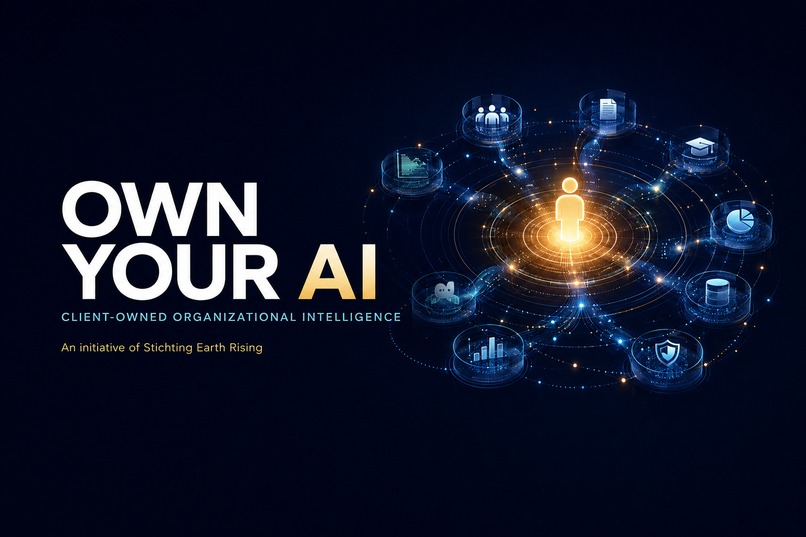
Own Your AI is an initiative of Stichting Earth Rising. Commercial success creates the engine for wider societal impact, including AI literacy, education, research, community development, and responsible innovation.
The long-term ambition is to build one of the world’s most trusted ecosystems for responsible AI adoption—an ecosystem in which organizations remain owners of their data, their decisions, and their future.
The Vision
Own Your AI. Own Your Future.
Built With
- and-gemini-powered-ai-agent-workflows.-the-project-combines-prompt-engineering
- firebase
- google-cloud
- google-gemini-api
- html/css
- javascript
- node.js
- readiness-assessment-logic
- responsible-ai-checks
- workflow


Log in or sign up for Devpost to join the conversation.