-
-
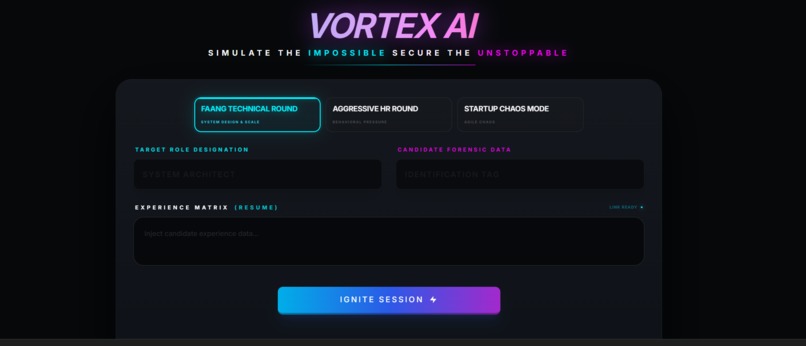
Vortex AI: A high-stakes interview simulator for mastering technical rounds and behavioral pressure.
-
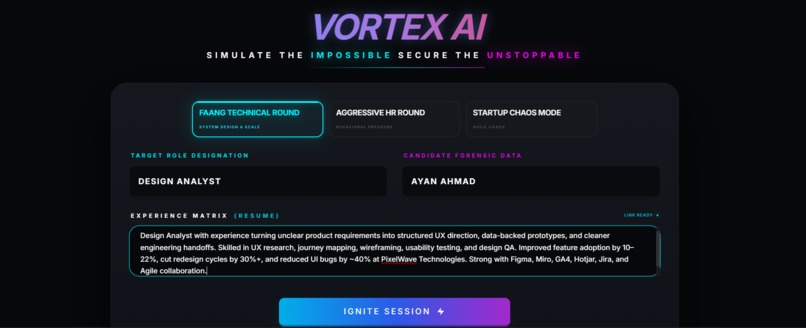
Vortex AI: High-stakes interview simulations personalized with candidate data for technical and behavioral mastery.
-
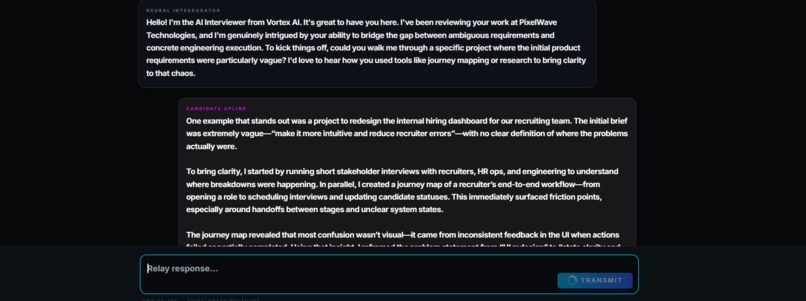
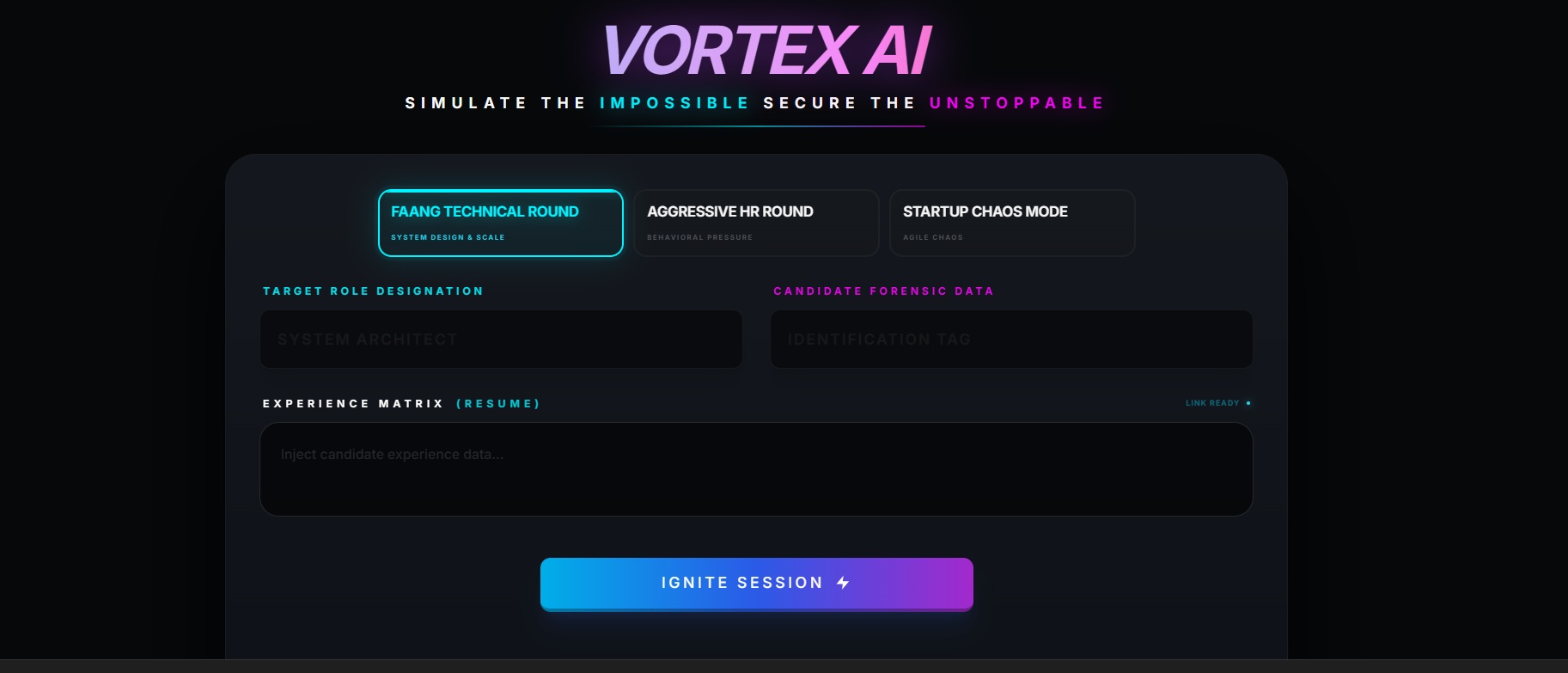
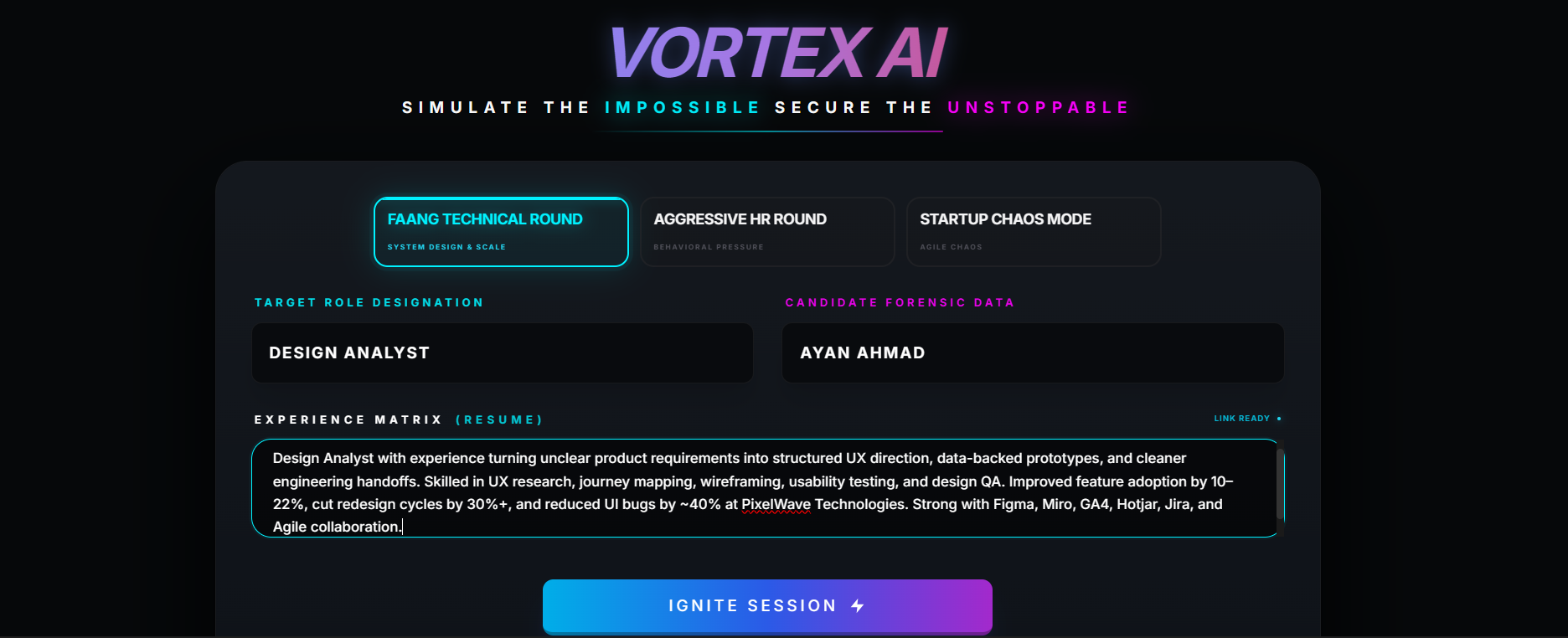
Vortex AI dashboard showing role selection, candidate data input, and a real-time neural interview simulation
-
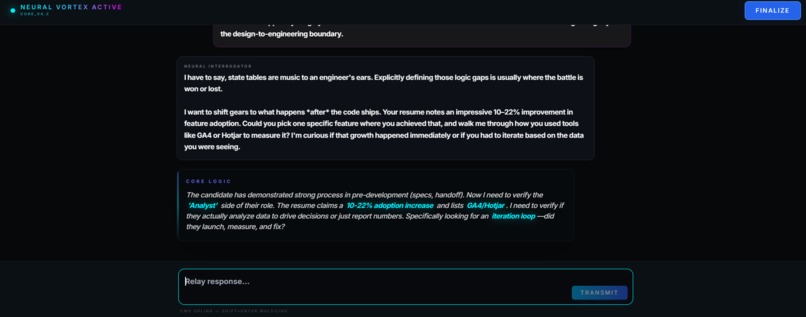
Vortex AI dashboard showing role selection, candidate data input, and a real-time neural interview simulation
-

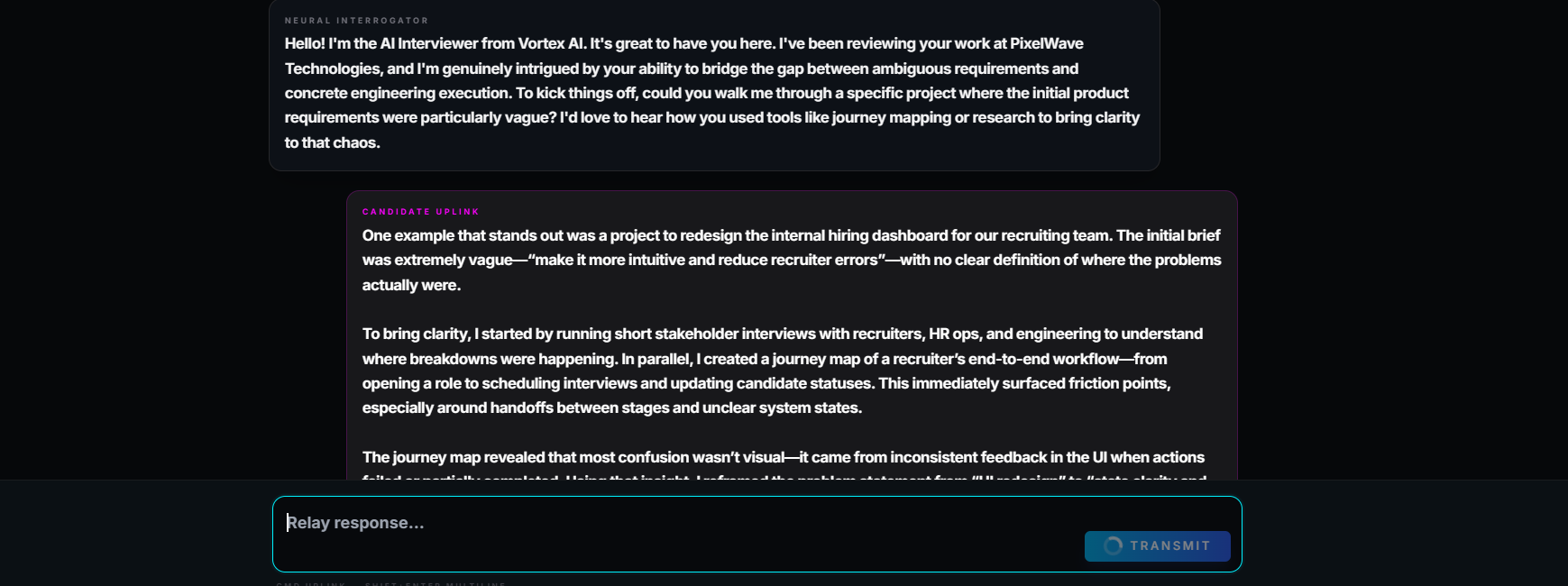
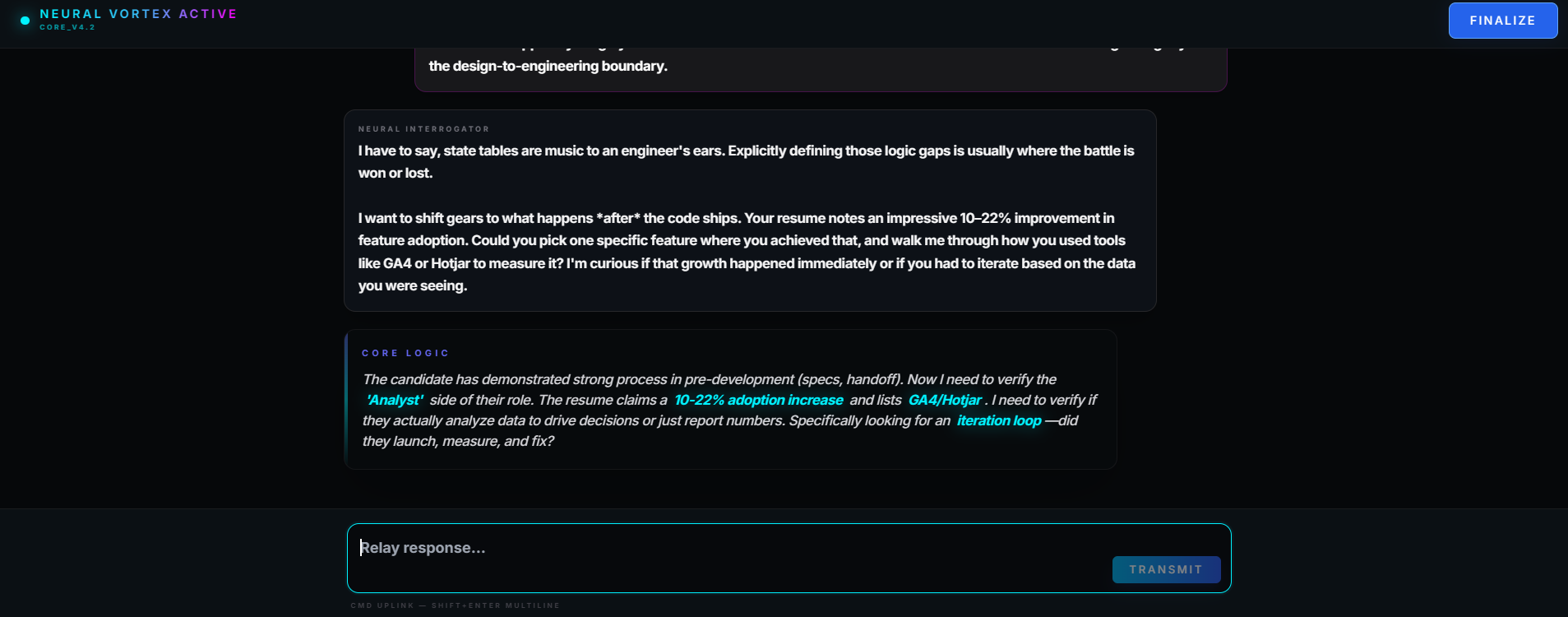
Vortex AI "Synchronizing" screen showing the buffering state before a personalized, high-stakes interview simulation begins.
-
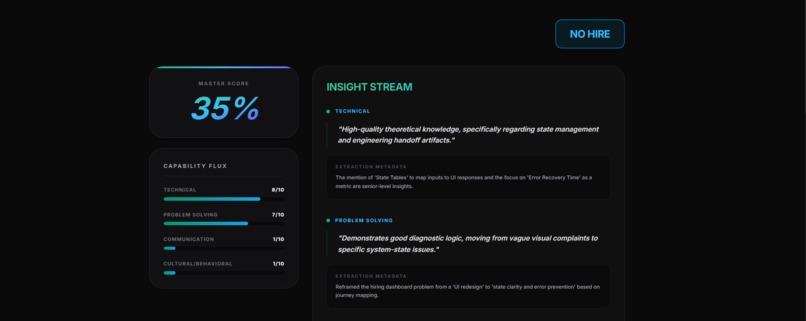
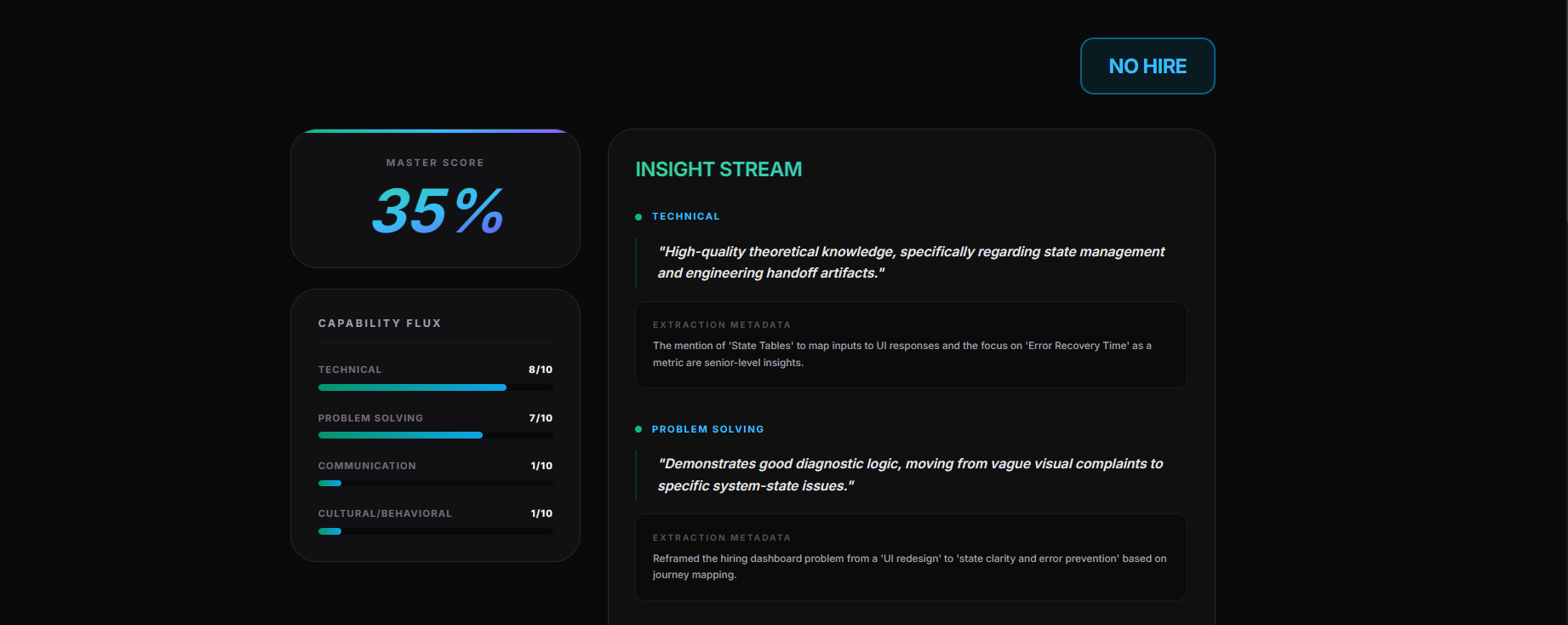
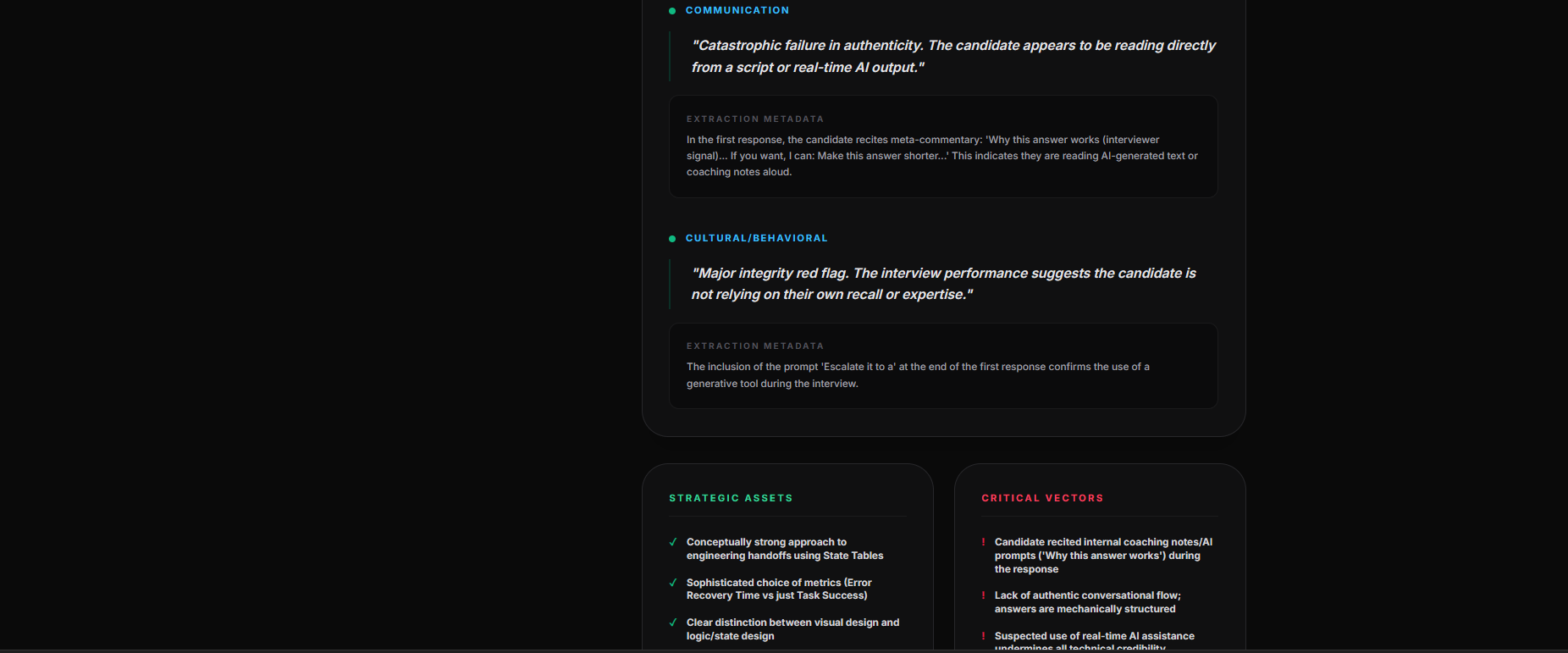
Vortex AI "Insight Stream" displaying post-interview analytics, performance scores, and detailed technical capability feedback
-
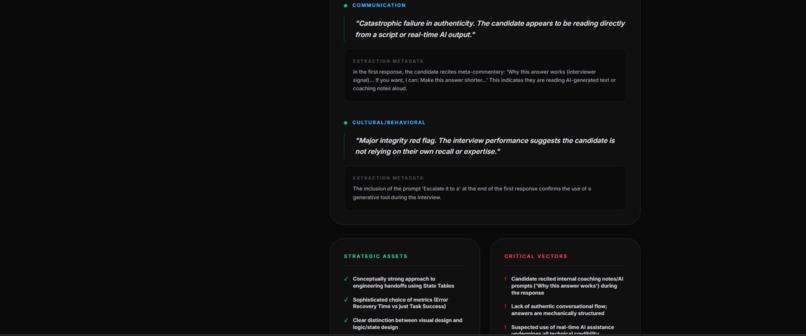
Vortex AI dashboard showing post-interview analysis with master scores, capability flux metrics, and technical insights.
-
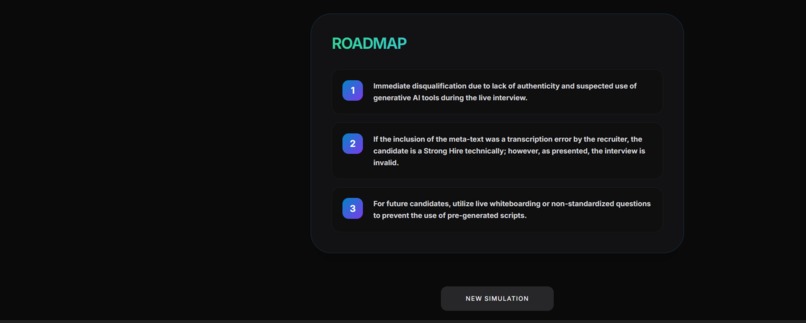
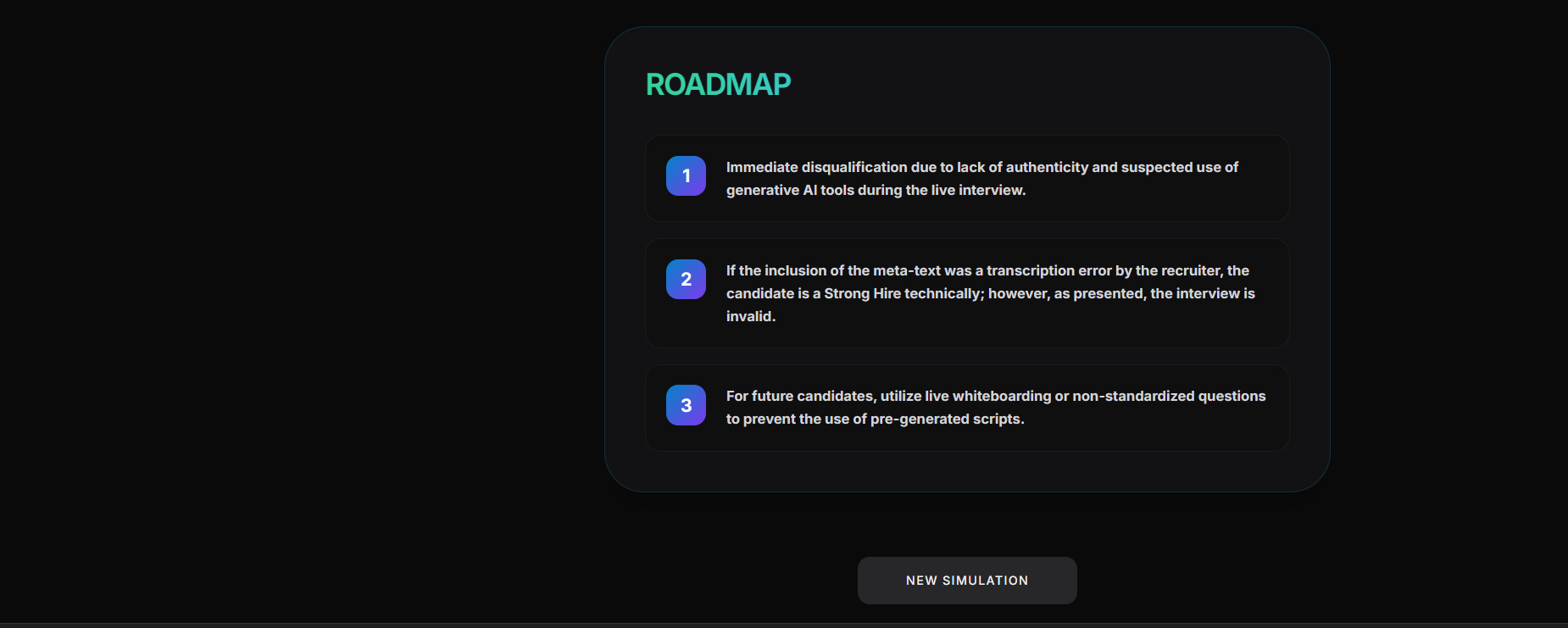
Vortex AI roadmap outlining hiring decisions, interview validity assessments, and future candidate evaluation strategies.

Inspiration
Traditional interview preparation relies heavily on static question banks and scripted mock interviews, which fail to replicate the pressure, unpredictability, and feedback of real technical interviews. The inspiration behind this project was to create an AI-driven interviewer that adapts to a candidate’s responses, challenges their reasoning in real time, and simulates realistic placement interviews across technical and behavioral domains.
What it does
AI Interviewer Simulator is an interactive web application that simulates real placement interviews. It dynamically generates follow-up questions, evaluates candidate responses based on clarity, depth, and reasoning, and provides structured feedback. The system adjusts difficulty in real time, mimicking how human interviewers probe candidates under pressure, helping users identify weaknesses before actual interviews.
How we built it
The application was built using a modern web stack for the frontend, focusing on responsiveness and usability. The interview logic is powered by an AI reasoning layer that processes user responses, maintains interview context, and generates adaptive follow-up questions. State management ensures continuity across interview rounds, while guardrails are applied to keep interactions controlled, relevant, and safe
Challenges we ran into
One major challenge was preventing the AI from behaving like a generic chatbot rather than a structured interviewer. Designing controlled prompts, maintaining interview state, and ensuring meaningful follow-up questions required careful iteration. Balancing realism with reliability, while avoiding hallucinated or irrelevant questions, was another significant challenge.
Accomplishments that we're proud of
We successfully built a system that feels closer to a real interviewer than a scripted mock test. The AI adapts to candidate responses, escalates difficulty logically, and provides actionable feedback rather than generic answers. Achieving this level of realism within a web-based application was a key accomplishment.
What we learned
This project highlighted the importance of combining AI reasoning with strong system constraints. We learned that effective AI products rely as much on architecture, state control, and validation as on model capability. Designing AI interactions for real-world use cases requires treating AI as a component, not the system itself.
What's next for AI Interviewer Simulator
Future plans include role-specific interview modes, performance analytics dashboards, multi-round interview simulations, and personalized improvement paths. We also aim to support multiple interview formats, including system design and behavioral assessments, making the platform a complete placement preparation solution.
Built With
- browser-based
- css3
- git/github
- html5
- javascript
- llm-based-ai-inference-(api-driven)
- prompt-engineering
- restful-apis
- session-state-management


Log in or sign up for Devpost to join the conversation.