-
-
2
-
4
-
3
-
6
-
5
-
7
-
1
Inspiration
I’ve seen how one interview question can make a student doubt everything they know.
You can spend weeks learning DSA, DBMS, Python, or system concepts. But in an interview, knowing the answer is only half the battle. You also need to explain it clearly, stay relevant, structure your thoughts, and communicate under pressure.
The problem is that most students don't get enough chances to practice that part.
I wanted to build something where a student could make mistakes before the real interview — not during it.
That became AI Interview Coach.
The idea was simple: give me an interview question, let me answer it, tell me where I went wrong, and let me try again.
What it does
AI Interview Coach is a practice environment for students and job seekers preparing for technical interviews.
A user chooses a role and difficulty, answers interview questions, and gets an evaluation of the response.
The application looks at multiple aspects of an answer, including:
Relevance to the question Important keywords and concepts Content similarity Answer structure Response quality Overall performance
It also includes a resume analyzer that extracts skills from a candidate's resume and a dashboard that keeps track of interview attempts, scores, and weaker areas.
The important part is that the application isn't designed to stop at "Your score is 7/10."
It is designed to help answer the more useful question:
"What should I improve before my next interview?"
How we built it
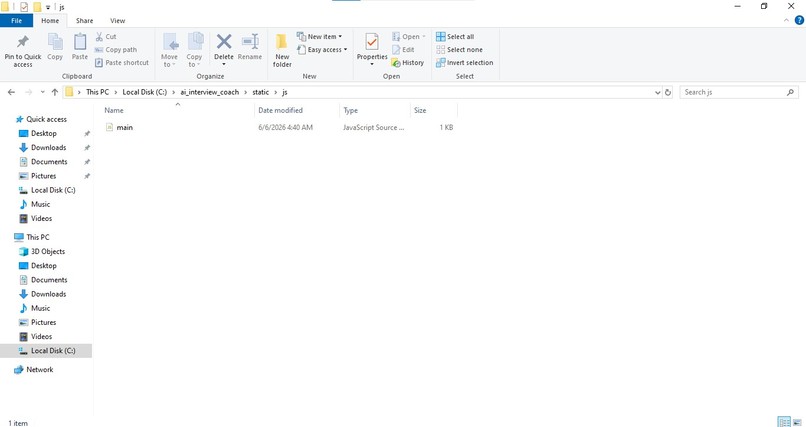
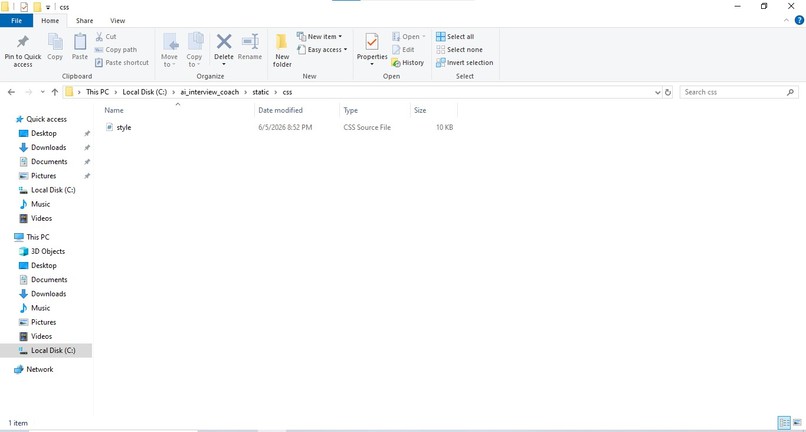
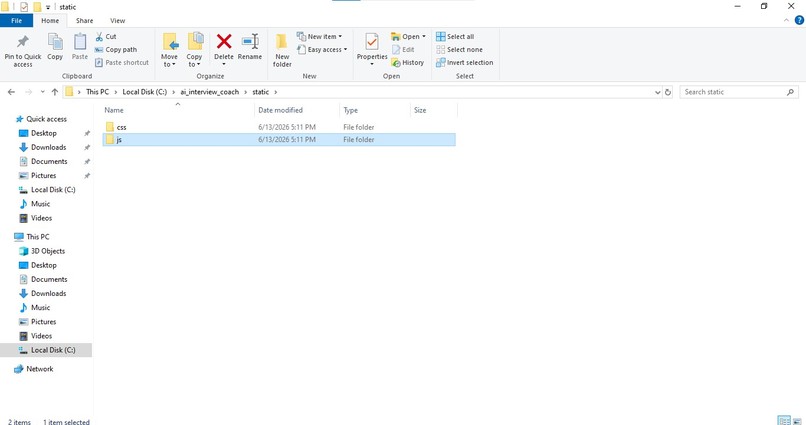
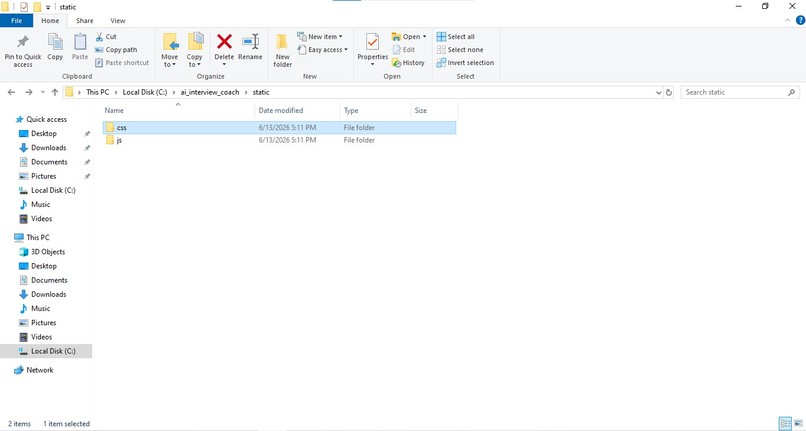
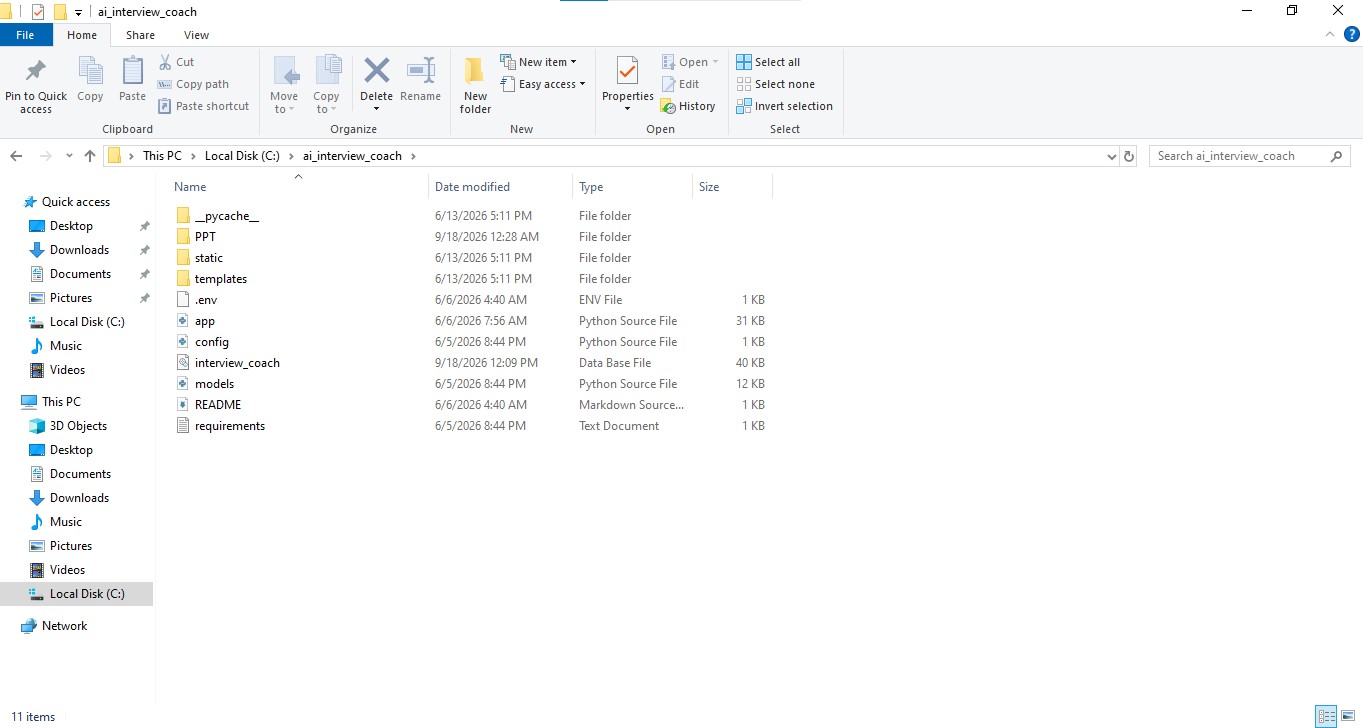
We built the application with Python and Flask and connected the interview experience to an NLP-based evaluation pipeline.
For answer analysis, we experimented with TF-IDF, cosine similarity, keyword detection, and scoring logic to evaluate different parts of a response.
We used:
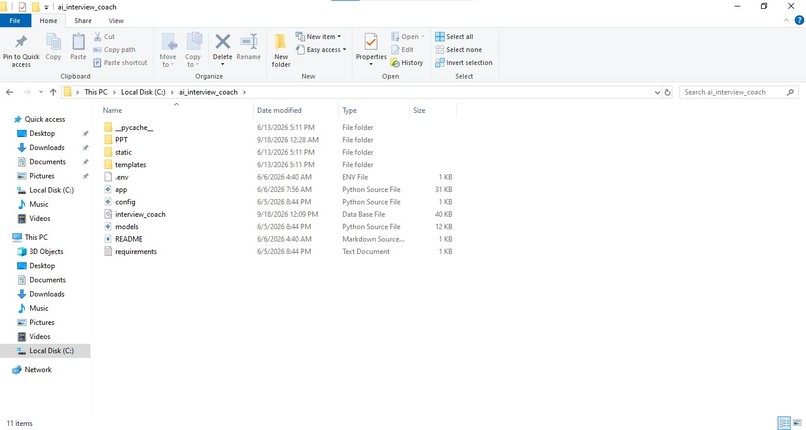
Python · Flask · Scikit-learn · NLP · PyPDF2 · SQLite · Bootstrap · Chart.js
SQLite stores the interview history and results, while Chart.js turns that history into performance insights.
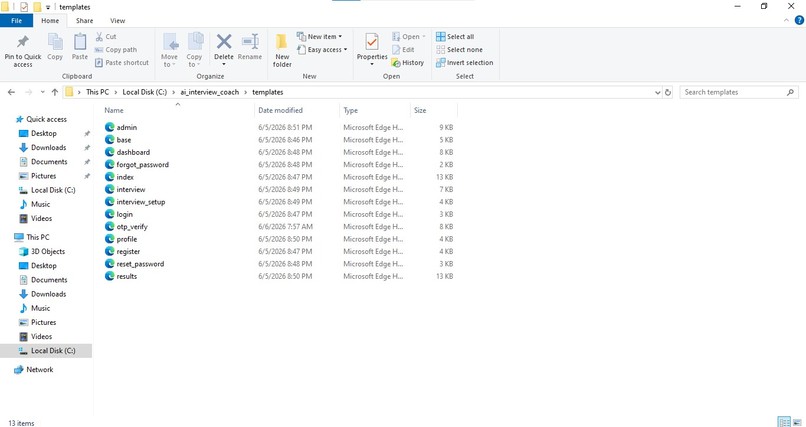
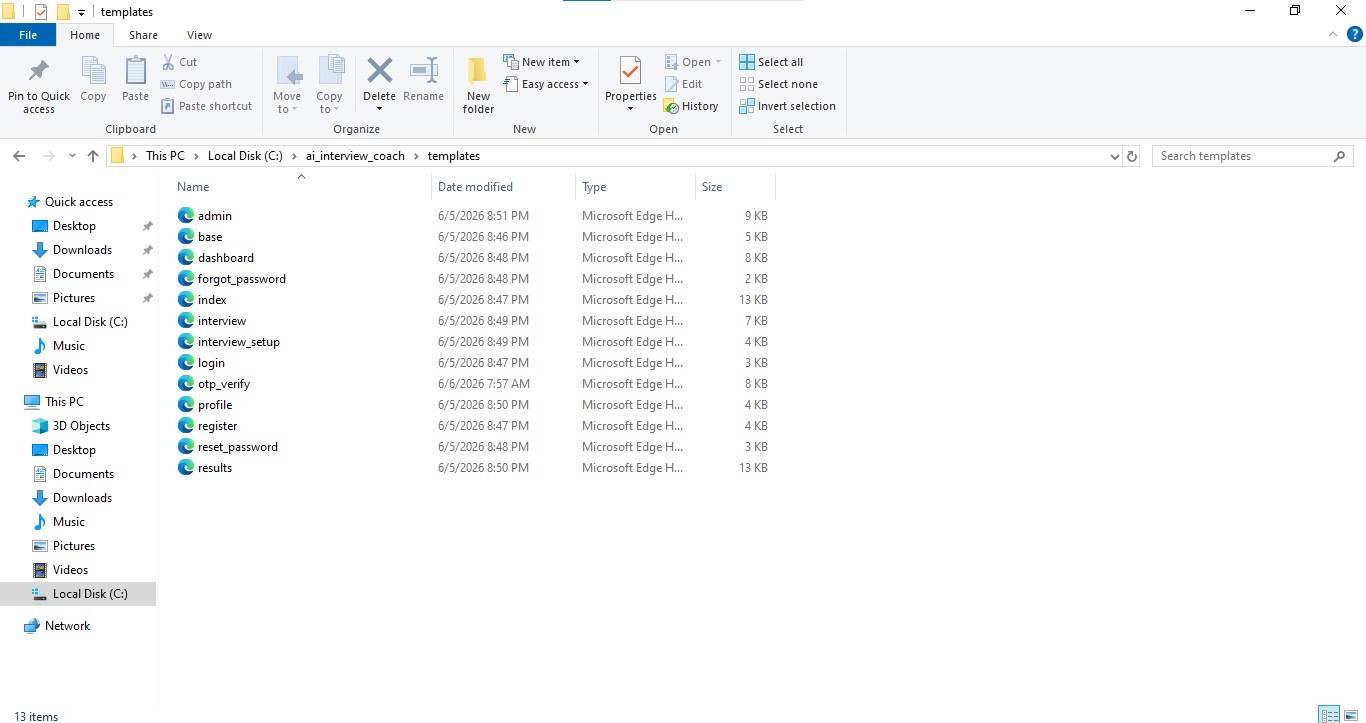
The project was built as a complete application rather than just a standalone AI model — from authentication and interview selection to answer evaluation, result storage, resume analysis, and analytics.
Challenges we ran into
The hardest part wasn't making the application accept an answer.
It was deciding what makes an interview answer good.
Two candidates can answer the same question using completely different words and still both be correct. A simple keyword match would fail badly.
We therefore had to combine multiple signals instead of trusting a single metric.
We also had to think about the difference between a technically relevant answer and a well-communicated answer. That made the scoring system one of the most challenging parts of the project.
Another challenge was connecting the different pieces into one smooth workflow. NLP evaluation, resume extraction, database storage, authentication, scoring, and analytics all had to work together.
Accomplishments that we're proud of
The biggest accomplishment for us is that AI Interview Coach became a usable product, not just an idea or a model sitting in a notebook.
A candidate can come into the application, choose an interview path, answer questions, receive an evaluation, save the result, and come back later to see their progress.
We're particularly proud of experimenting with our own multi-factor evaluation approach instead of simply displaying an LLM-generated response.
More importantly, the project solves a problem we actually understand as students:
You don't always need another tutorial. Sometimes you need someone — or something — to tell you why your answer wasn't good enough.
That's what we wanted this project to become.
What we learned
We learned that building an AI product is very different from building an AI demo.
A demo can produce an impressive output once.
A product has to work repeatedly, handle different inputs, store information correctly, and give users something useful every time.
We also learned that NLP isn't magic. Similarity scores and keywords can help, but they don't automatically understand everything about communication. Designing the scoring system made us think much more carefully about what we were actually measuring.
Most importantly, we learned to build around the user's problem first and the technology second.
What's next for AI Interview Coach
We want to take the project from an interview practice tool to a more complete personal interview preparation system.
The next version will focus on:
More personalized feedback based on the candidate's resume Better role-specific questions Adaptive difficulty based on previous performance Deeper analysis of recurring weaknesses More realistic interview sessions Better progress tracking over time
Eventually, we want the application to understand a candidate's preparation journey — not just one answer.
The goal isn't to help someone memorize better answers.
It's to help them become better at answering.
Built With
- css
- flask
- html
- java
- javascript
- jinja
- python
- python-dotenv
- pythonanywhere
- sqlalchemy
- sqlite

Log in or sign up for Devpost to join the conversation.