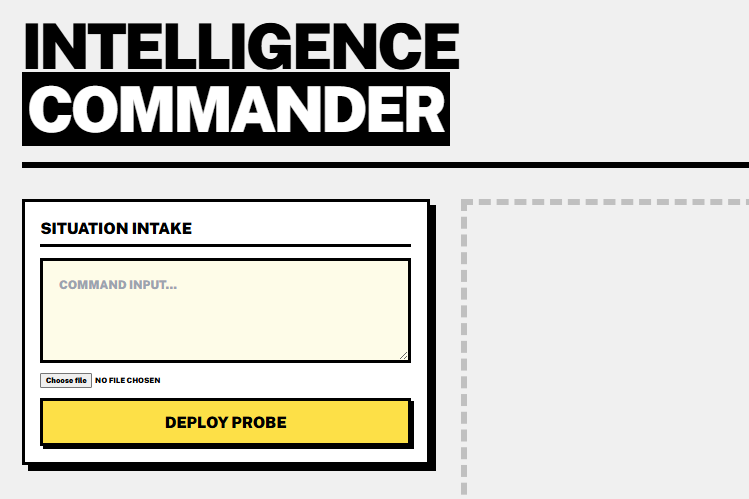
AI Incident Intelligence & Decision Engine
💡 Inspiration
This project was inspired by the critical need for rapid, AI-driven incident response in complex systems. We leveraged Gemini 3’s advanced reasoning and multi-modal capabilities to create a platform that transforms raw incident data into actionable intelligence. In high-stakes scenarios where every second counts, our goal was to bridge the gap between "data overload" and "decisive action."
🚀 What it does
The engine analyzes incidents in real-time by ingestion of:
- Multimodal Input: Text, images, video, and live voice.
- Core Outputs: Generates risk assessments, root-cause analysis, and remediation steps.
- Advanced Features: Creates visual simulations of scenarios and provides multi-speaker audio debriefings to keep response teams aligned and informed.
🛠️ How we built it
We focused on a high-performance stack to handle real-time streaming:
- Frontend: React with Vite, featuring a Neo-Brutalist UI for maximum information clarity.
- Core Intelligence: *
Gemini 2.5-Flashfor deep forensic analysis (Extended Thinking).Gemini 3-Flashfor processing high-velocity streaming logs.
- Media Generation:
Veo-3.1for incident video simulations and Google’s TTS models for audio debriefings. - Connectivity: Real-time multimodal streaming via the Gemini Realtime API.
🚧 Challenges we ran into
- Data Integrity: Parsing AI-generated JSON reliably while ensuring strict schema validation.
- Concurrency: Managing multiple model calls simultaneously without hitting bottlenecks.
- Streaming Stability: Building real-time voice and video pipes with graceful degradation for low-bandwidth environments.
- Token Optimization: Balancing "extended thinking" depth with strict token budgets.
- Lifecycle Management: Handling complex audio context lifecycles across a persistent application state.
🏆 Accomplishments we're proud of
- Seamless Integration: Fusing text, image, video, and voice into a single cohesive platform.
- Deep Analysis: Successfully leveraging Gemini’s extended reasoning for forensic-level detail.
- Actionable Tools: Implementing functional tool calls for direct infrastructure control.
- Contextual Awareness: Integrating geolocation-aware analysis for physical incident response.
📖 What we learned
- Thinking > Speed: Extended thinking significantly boosts analysis quality for non-linear problems.
- UX of Real-time: Streaming output is non-negotiable for user trust; waiting for full responses kills momentum.
- Context Matters: Incident response requires a shift away from "conversational" AI toward "action-oriented" visual summaries.
🔮 What's next
- Incident Memory: Detecting long-term patterns across historical reports.
- Automated Remediation: Workflows that allow AI to fix issues with human-in-the-loop approval.
- Enterprise Integration: Connecting directly with SIEM systems (Splunk, Sentinel).
- Mobile Response: Native apps for on-call engineers.
- Compliance: Auto-generating regulatory-standard reports (SOC2, GDPR).

Log in or sign up for Devpost to join the conversation.