-
-
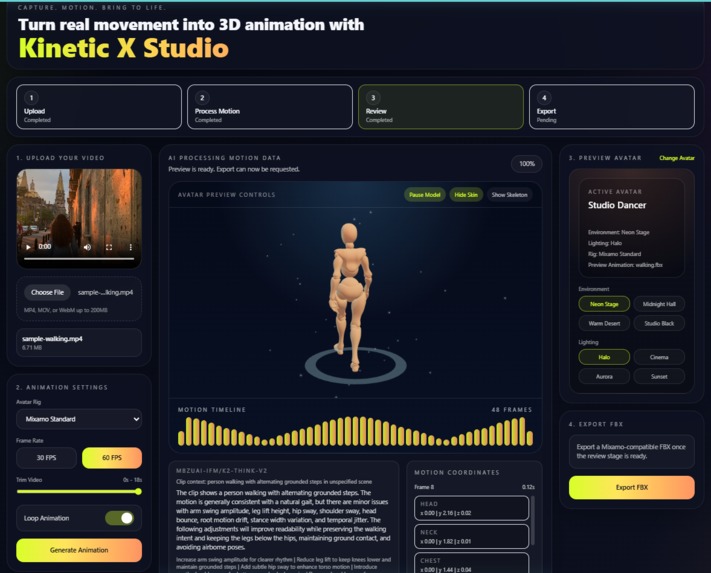
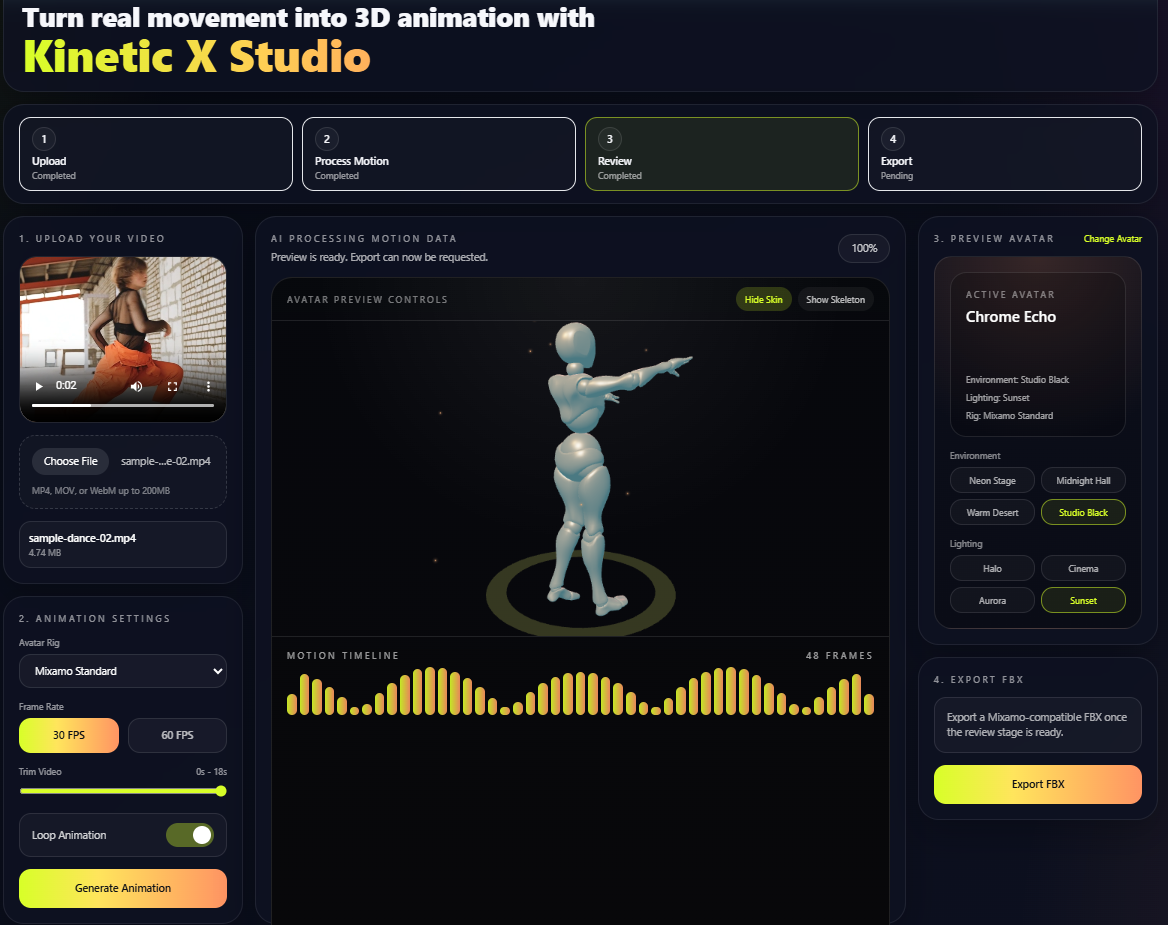
After processing pose model
-
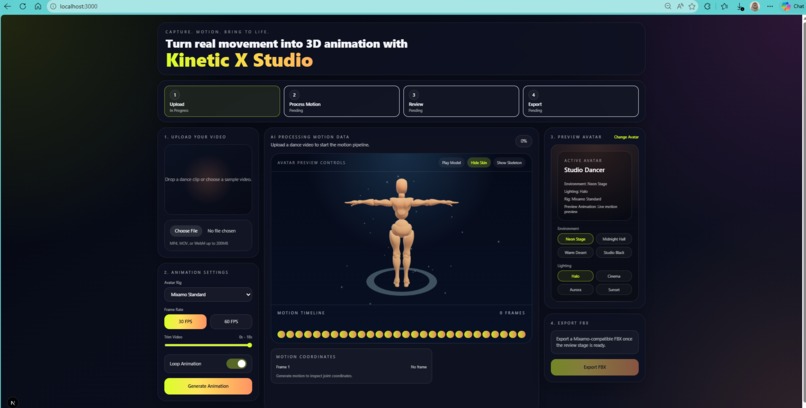
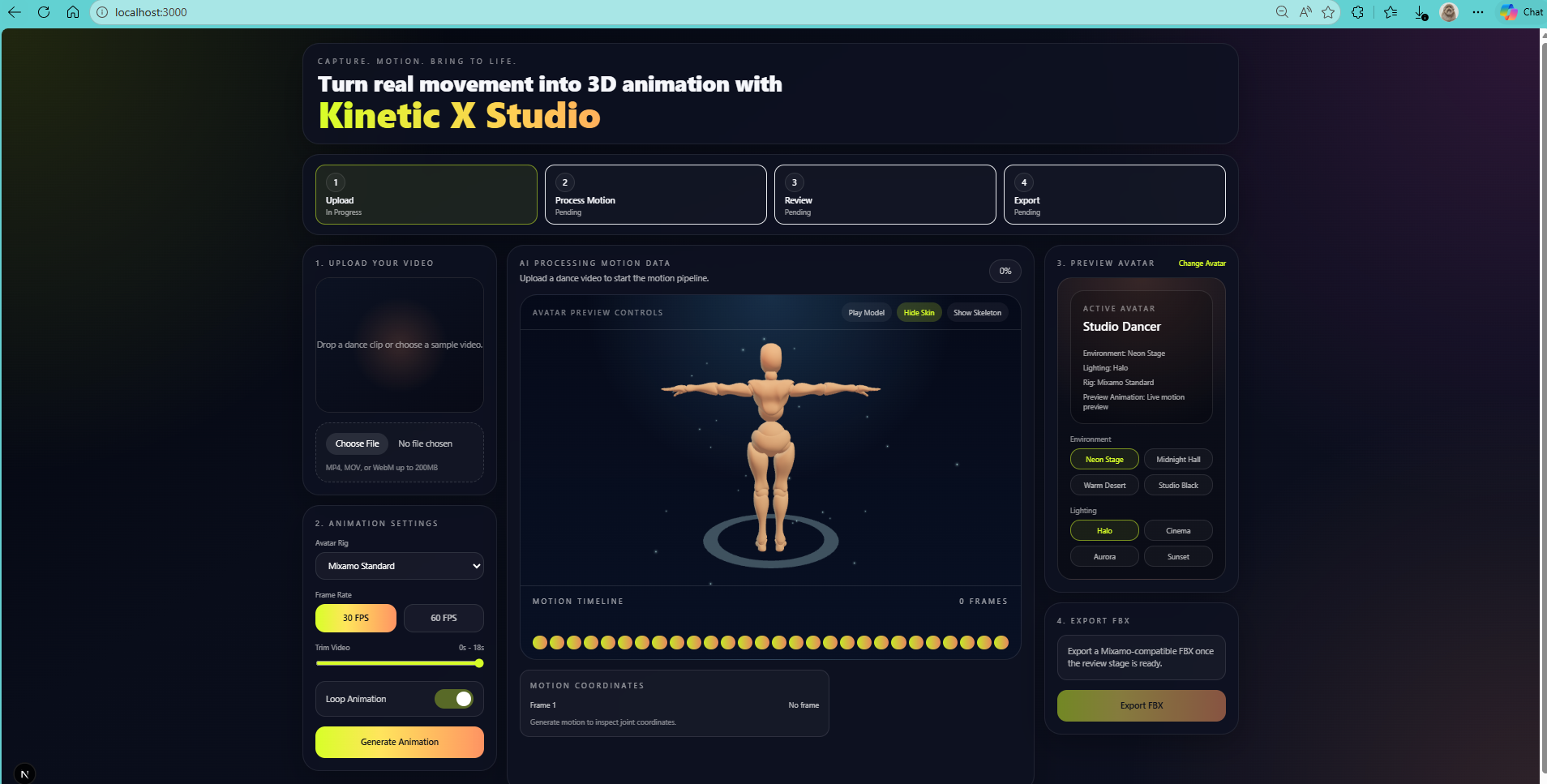
Before processing post model
-
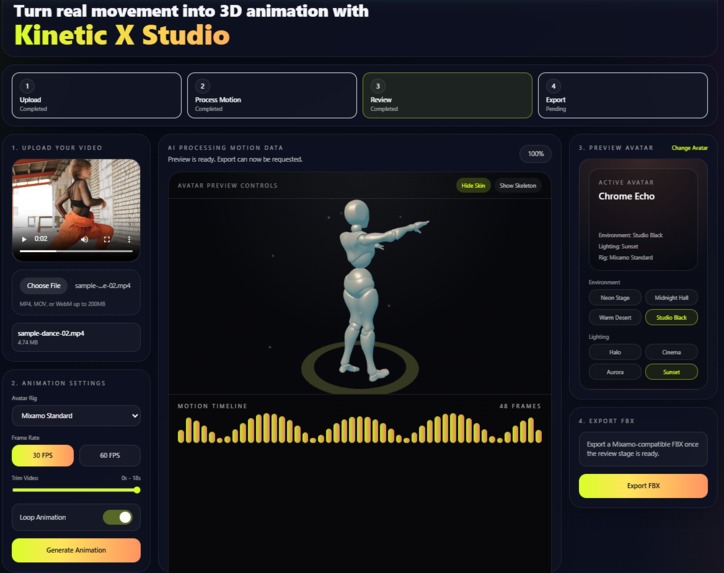
Video to motion pipeline (initial concept)
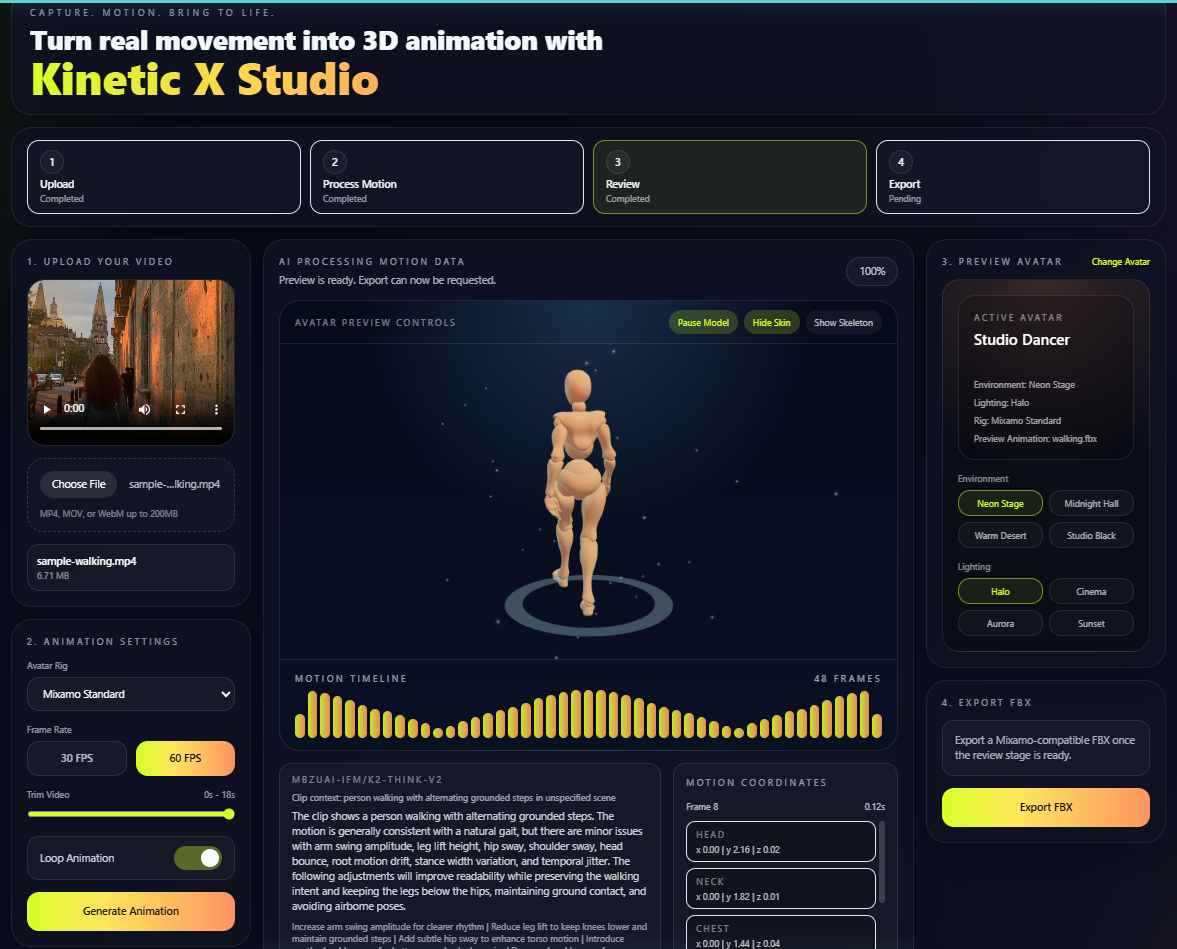
Kinetic X Studio
Web AI Humanoid Animator - Turn any video into a reusable humanoid FBX animation clip 🕺💃
- Project Setup and Implementation details: PROJECT.md
- Project Credits: CREDIT.md
Team
- Kelly Lwin ([email protected])
Inspiration
I do game development and Blender modeling as a hobby, but creating character animations takes a lot of time. Tools like Mixamo have useful presets, but they are limited when I need custom motions like specific dances. I also do not have strong animation skills for manual keyframing. I wanted a faster way to turn real human movement into reusable animation files. That inspired me to build this project: Kinetic X Studio.
What it does
Kinetic X Studio allows users to upload a short dance or movement video through a simple web application. The system analyzes the human motion, extracts body pose data, and converts it into a humanoid animation sequence. It then retargets that motion onto a standardized rig and exports it as a reusable FBX animation file compatible with Blender, Unity, and Unreal Engine. This helps creators, VTubers, and indie game developers generate custom animations faster without manual keyframing or expensive motion capture.
How we built it
Built the frontend with Next.js, React, Tailwind CSS, and React Three Fiber to handle video upload, live 3D avatar preview, and animation controls. Developed the backend with FastAPI, Python, FFmpeg, and MediaPipe to process uploaded videos, extract pose motion, and prepare structured joint data. Used K2 Think V2 for motion reasoning and Blender Python API with Mixamo rigs to retarget animations and export reusable FBX files. ChatGPT and Codex were used for coding and development throughout the project.
Challenges we ran into
FBX export kept failing because Blender was exporting only the armature without the actual mesh. This caused downloaded files to open with missing models or no animation at all.
The avatar preview looked broken because bones were collapsing, legs merged into the body, and motion looked unnatural. Retargeting and bone rotation logic had to be rebuilt to make the model move like a real human.
MediaPipe pose extraction was not running correctly because the backend used the wrong Python environment. This forced the system into synthetic fallback motion, making animations stiff and inaccurate instead of using real video movement.
K2 Think V2 reasoning kept failing because the API response was empty or invalid JSON. This prevented the reasoning layer from improving pose cleanup, spatial logic, and occluded joint prediction.
Time was a major challenge because this was built during a short hackathon as a solo developer, requiring rapid decisions, constant debugging, and heavy reliance on Codex and ChatGPT to move fast enough while still delivering a working MVP.
Accomplishments that we're proud of
Built a reliable hackathon MVP that maps curated sample videos to matching pre-made Mixamo animations and previews them on a 3D avatar. Integrated K2 Think V2 as a reasoning layer that summarizes the uploaded motion context and supports the demo narrative with intelligible motion labels. Delivered an end-to-end workflow with video upload, matched animation preview, controlled playback, and Blender-based FBX export in one operational pipeline.
What we learned
- Keeping scope small is important
- FBX export is harder than it looks
- Retargeting motion is the hardest part
- Real pose tracking is better than fallback motion
- Small backend bugs can break the whole pipeline
What's next for Kinetic X Studio
- Cloud storage and animation showcase gallery for managing saved FBX exports
- FBX sharing, collaboration, and reusable animation library support
- More avatar options, better environments, and expanded rig support for Unity, VRM, and humanoid pipelines
- Improved motion accuracy through stronger pose estimation, retargeting, and reasoning models
- More polished UX with better interactions, music, and creator-focused workflow improvements


Log in or sign up for Devpost to join the conversation.