Inspiration
Modern smart homes are filled with IoT devices like cameras, smart locks, and connected appliances, but most lack enterprise-grade security. Traditional consumer firewalls and antivirus tools are passive and struggle to detect sophisticated local or network attacks targeting smart home ecosystems. We were inspired to build AI Home Shield—an agentic, AI-powered Security Operations Center (SOC) designed specifically for consumer networks to monitor, detect, and respond to threats in real time.
What it does
AI Home Shield acts as an intelligent home network security appliance. Key capabilities include:
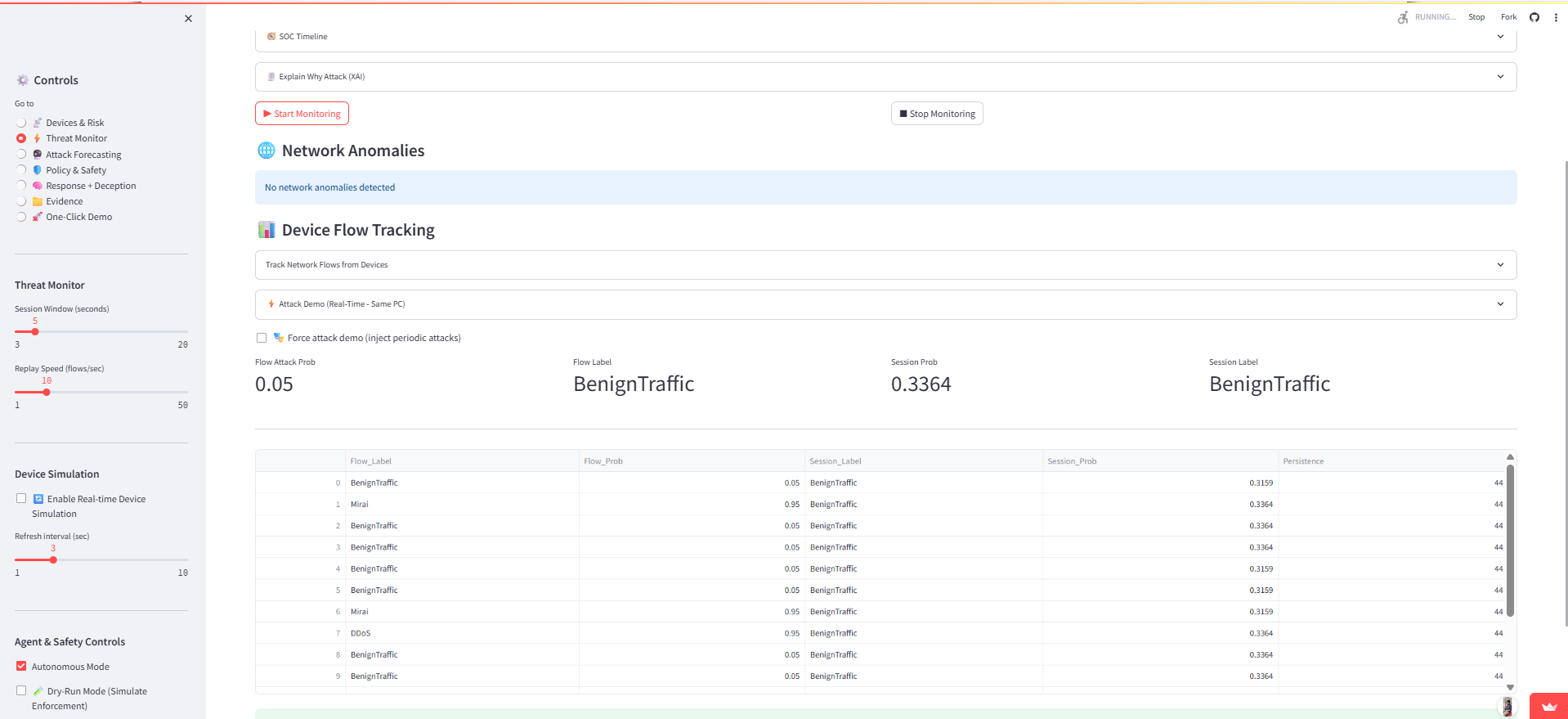
- Real-Time Traffic Analysis & Anomaly Detection: Continuous monitoring of network traffic using ML models to flag suspicious activity, unauthorized port scans, or data exfiltration.
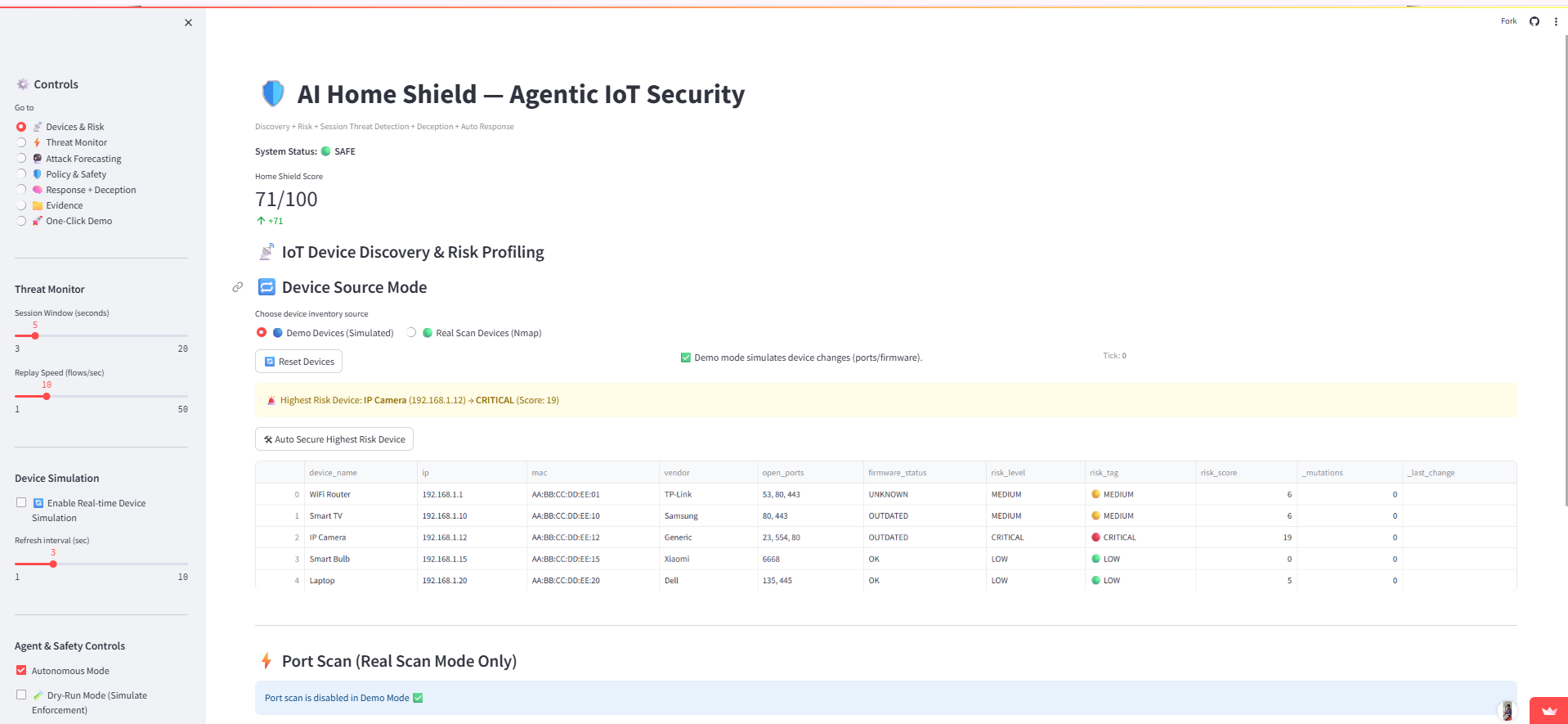
- Agentic AI SOC Analyst: Autonomous AI agent that analyzes threat signals, conducts risk profiling, and formulates response strategies.
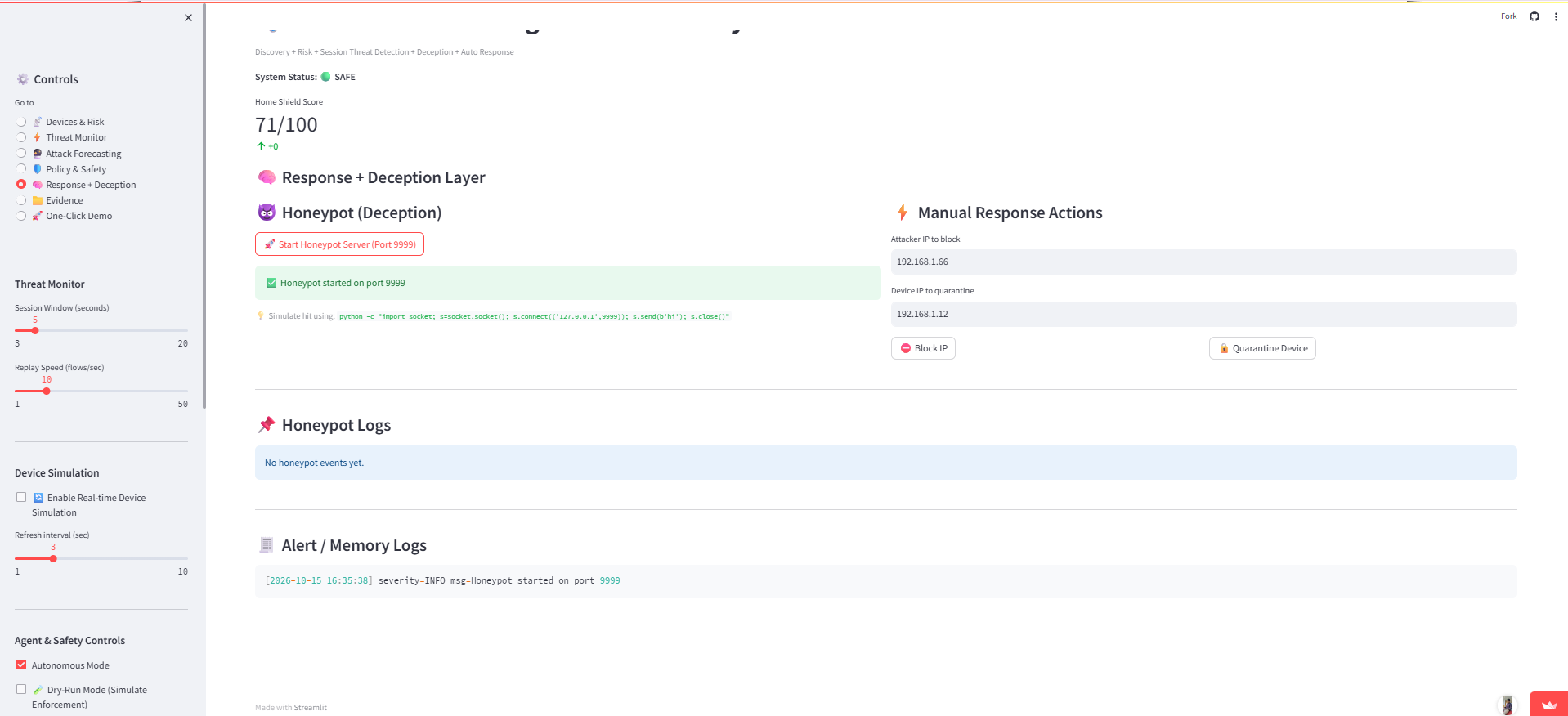
- Deception & Honeypots: Dynamically deploys honeypots across the network to lure and isolate attackers.
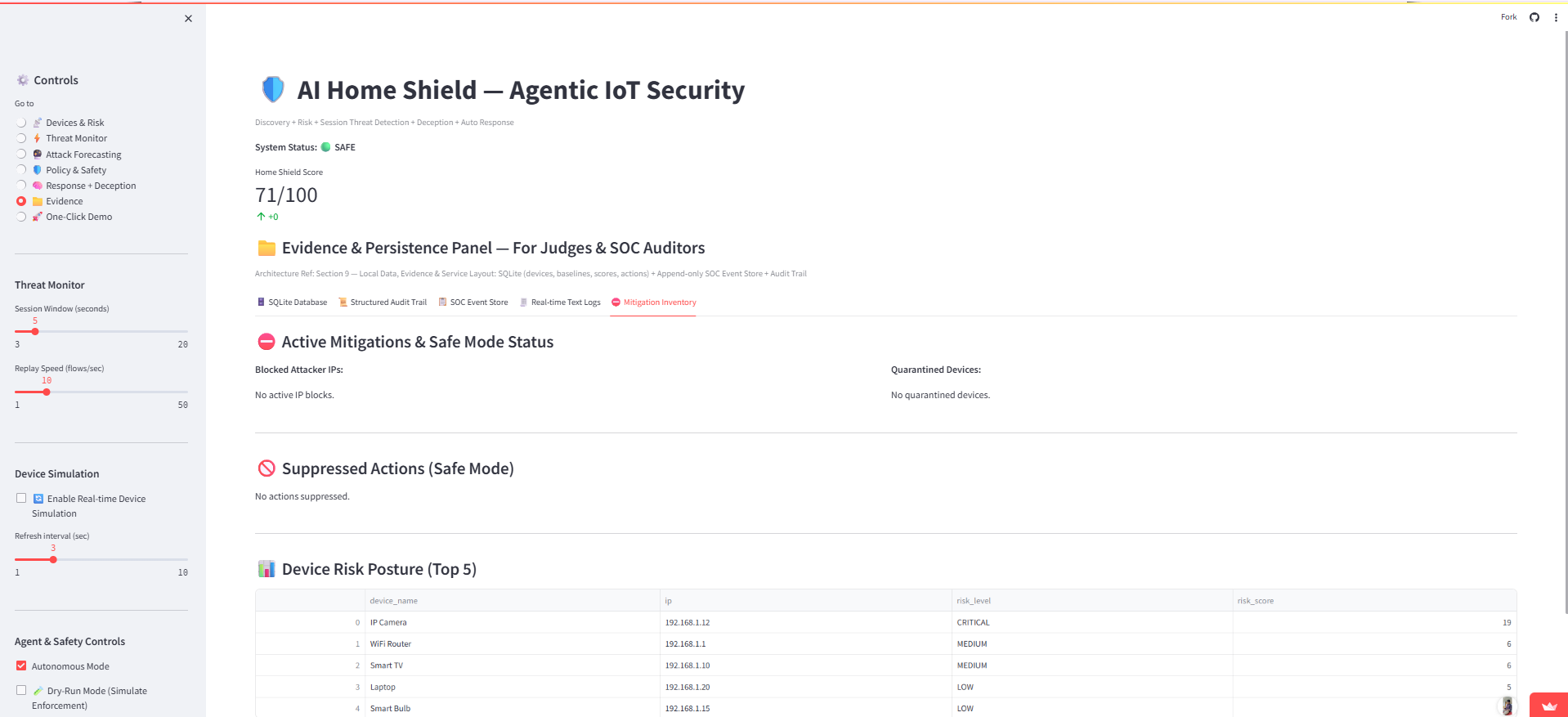
- Automated Firewall Response: Automatically executes defensive actions such as isolating compromised IoT devices and dynamically updating firewall rules.
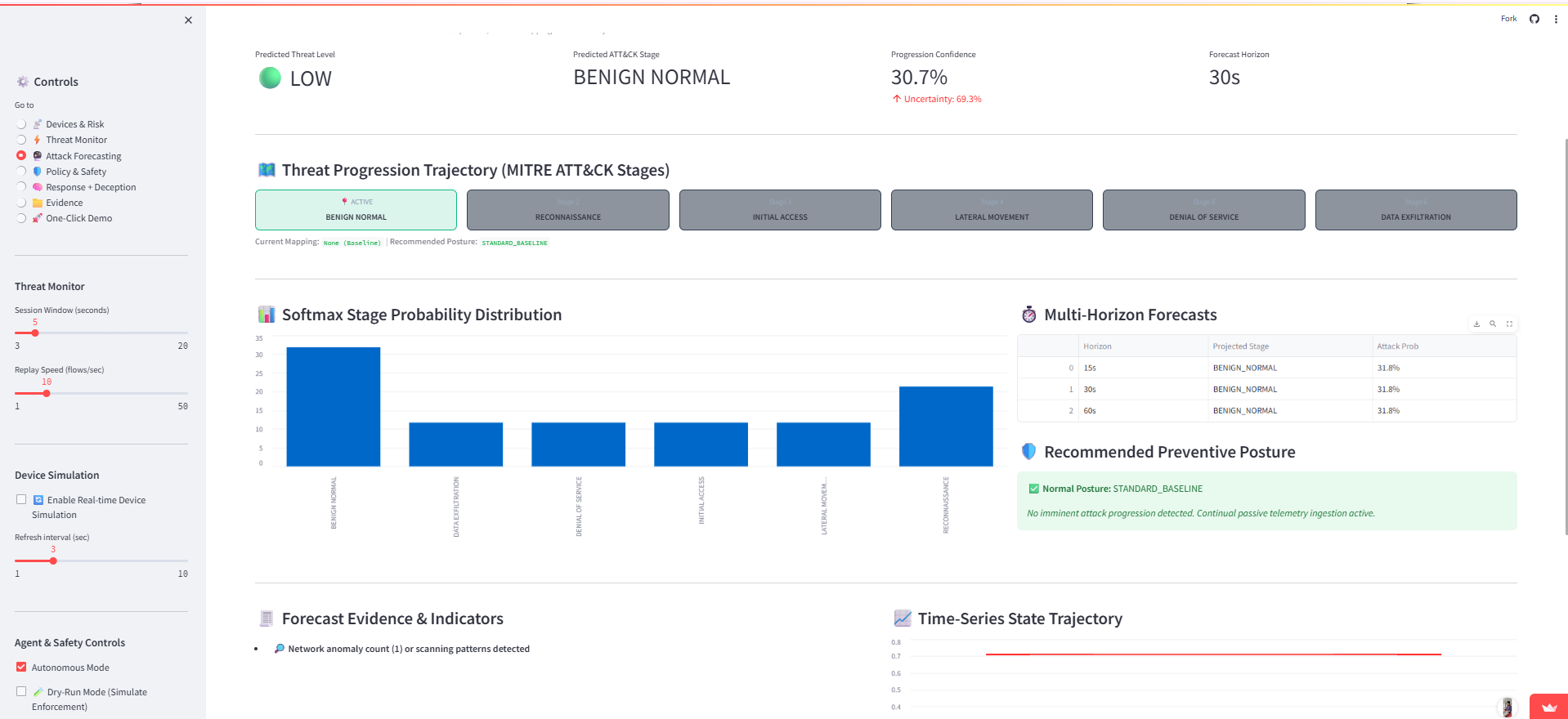
- Interactive Dashboard: Provides real-time network visibility, threat logs, device risk scores, and security alerts for homeowners.
How we built it
- Core Engine & Backend: Built with Python, leveraging network packet inspection libraries (
scapy,pyshark) and firewall controls (iptables/Windows Firewall scripts via PowerShell & Batch/Shell scripts). - Machine Learning Models: Trained custom anomaly detection models using
scikit-learnfor identifying baseline device behavior and traffic anomalies. - Agentic AI Logic: Integrated LLM-driven decision engines to act as an automated security analyst for triaging alerts and orchestrating defensive actions.
- Dashboard & Monitoring: Developed a responsive Web UI/Dashboard for monitoring active connections, device inventory, honeypot hits, and threat resolution status.
Challenges we ran into
- Low-Latency Packet Processing: Processing high-throughput home network traffic in real time without causing packet drops or latency issues.
- Reducing False Positives: Distinguishing between benign IoT device updates/heartbeats and genuine security threats.
- Cross-Platform Firewall Automation: Creating reliable execution scripts across PowerShell, Batch, and Linux Shell to seamlessly update network rules and isolate devices.
- Honeypot Decoy Realism: Crafting realistic IoT deception endpoints that effectively trick scanners without introducing vulnerabilities to the real network.
Accomplishments that we're proud of
- Successfully built an autonomous, end-to-end consumer SOC that seamlessly detects, profiles, and mitigates threats in real time.
- Implemented real-time deception honeypots that successfully distract and log intruder activity.
- Achieved fast automated response times for network isolation and threat mitigation.
- Recognized as 3rd Prize Winner at IIT Delhi hackathon.
What we learned
- Deepened our understanding of IoT network protocols, traffic profiling, and packet-level anomaly detection.
- Mastered building agentic AI workflows that balance autonomous security decision-making with explainability.
- Learned best practices for safe automated firewall orchestration and device isolation on heterogeneous home networks.
What's next for AI-Home-Shield
- Hardware Appliance Integration: Packaging AI Home Shield into a plug-and-play Raspberry Pi / custom router firmware.
- Expanded Protocol Support: Adding native support for Zigbee, Z-Wave, and Matter protocol security analysis.
- Community Threat Intelligence: Implementing federated threat sharing so home shields across networks learn collectively about emerging threats.
- Enhanced Mobile App & Notifications: Delivering instant mobile push alerts with 1-click action approvals for homeowners.
Built With
- artificial-intelligence
- batchfile
- cybersecurity
- iot
- machine-learning
- powershell
- python
- shell

Log in or sign up for Devpost to join the conversation.