-
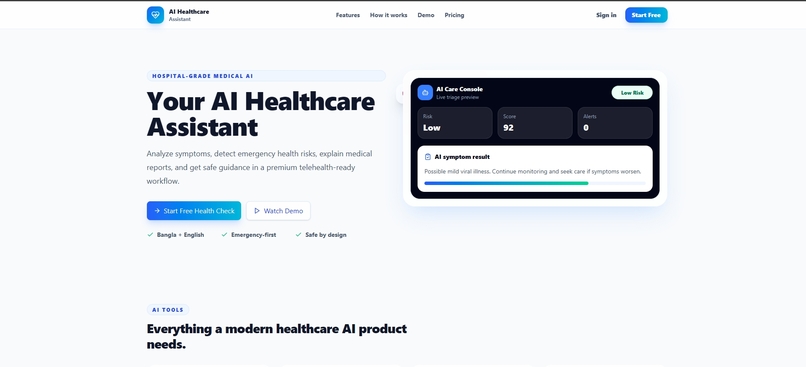
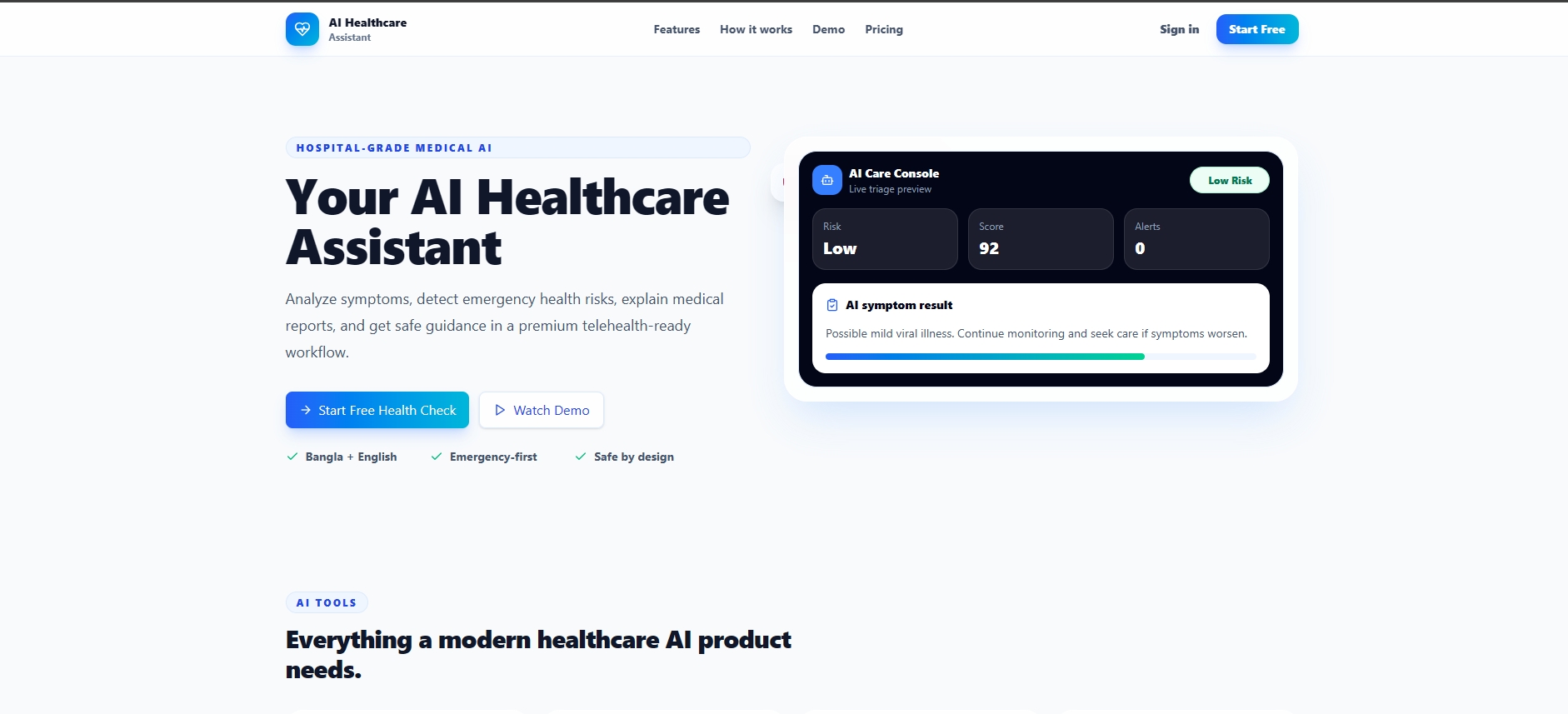
Landing Page
🧠 Inspiration
In many communities, especially in developing regions like Bangladesh, people often struggle to understand their health symptoms and decide whether they need medical attention. Many rely on random internet searches, which can lead to misinformation or unnecessary panic.
This inspired me to build an AI-powered healthcare assistant that provides safe, structured, and easy-to-understand health guidance. The goal is not to replace doctors, but to act as a first step for awareness, early risk detection, and better health decisions.
🩺 What it does
AI Healthcare Assistant BD is a full-stack AI-powered healthcare support platform that helps users:
Describe their symptoms in Bangla or English Get AI-based analysis of possible conditions Receive risk level classification (Low / Medium / High) Get emergency warnings for critical symptoms Access a chat-based healthcare assistant Store and view previous health checks
It also includes a modern dashboard for managing health history and interacting with the AI system in a simple and user-friendly way.
⚙️ How we built it
We built this project using a modern full-stack architecture:
Frontend: React / Next.js with Tailwind CSS for a clean healthcare dashboard UI Backend: Node.js and Express.js for handling API requests and AI communication Database: MongoDB for storing user history and health logs Authentication: Firebase Authentication (Google + Email/Password login) AI Engine: OpenAI API for symptom analysis, risk detection, and medical guidance
The system uses carefully engineered prompts to ensure safe responses, structured outputs, and emergency detection behavior.
🚧 Challenges we ran into
One of the biggest challenges was ensuring that the AI provides safe and responsible health responses without acting like a medical professional.
Other challenges included:
Designing accurate emergency detection logic through prompt engineering Structuring AI responses in a consistent format (condition, risk, advice, emergency
Built With
- express.js
- firebase
- https://github.com/samshawon10/ai-health-care-bd
- mongodb
- node.js
- react
- tailwind

Log in or sign up for Devpost to join the conversation.