-
-
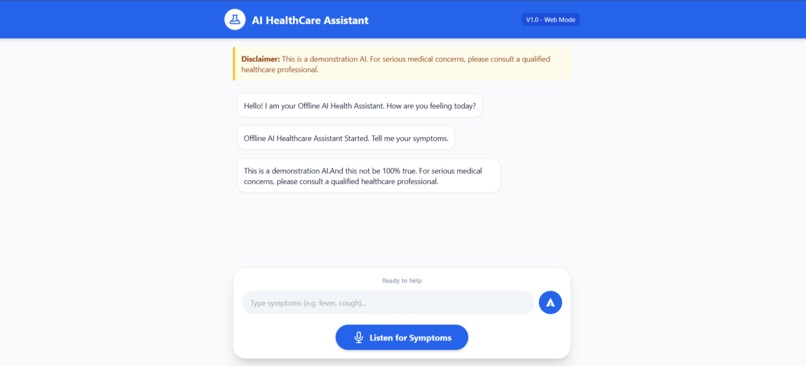
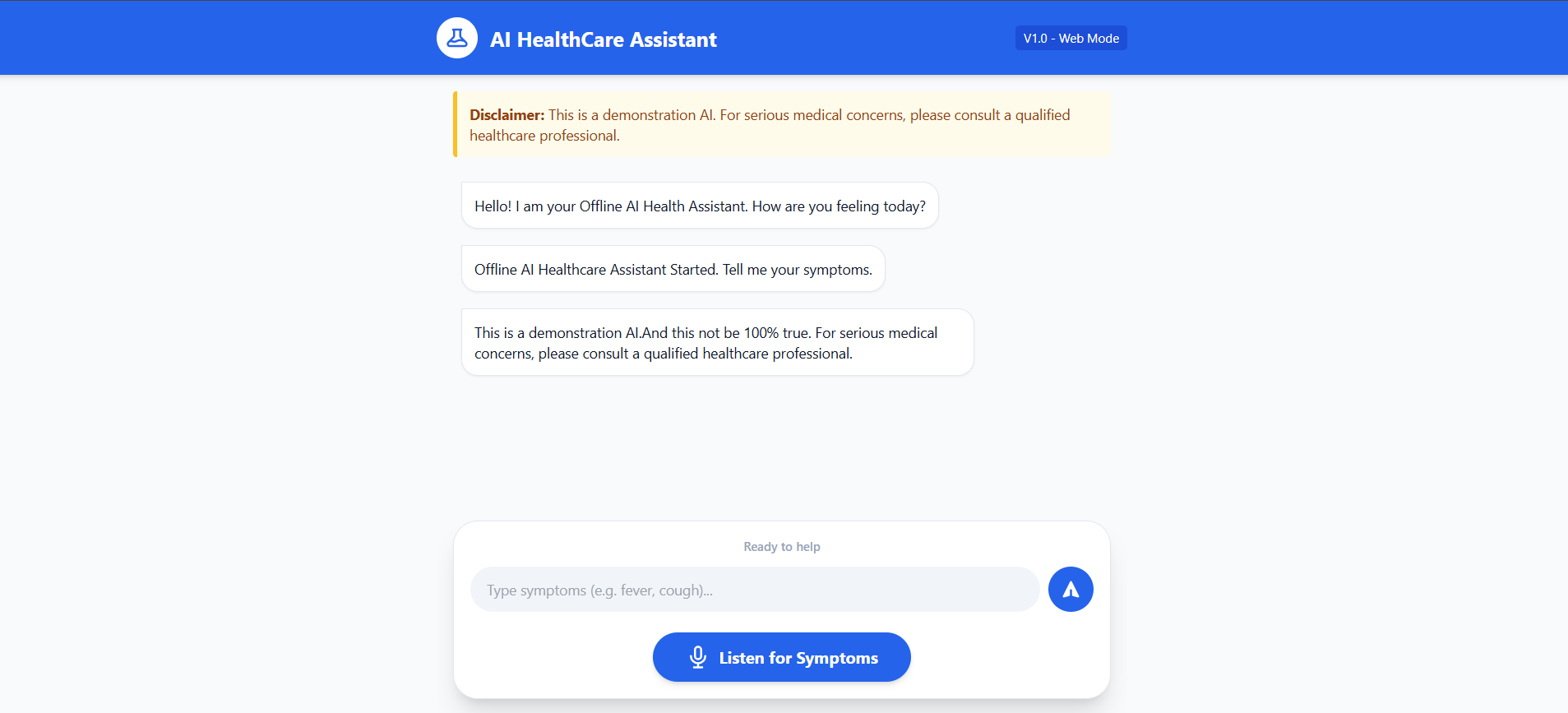
This is an interface of AI Healthecare Assistant using HTML that run on web.
-
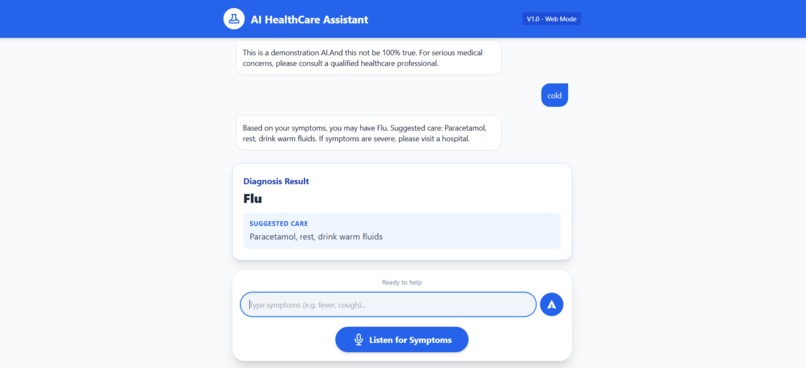
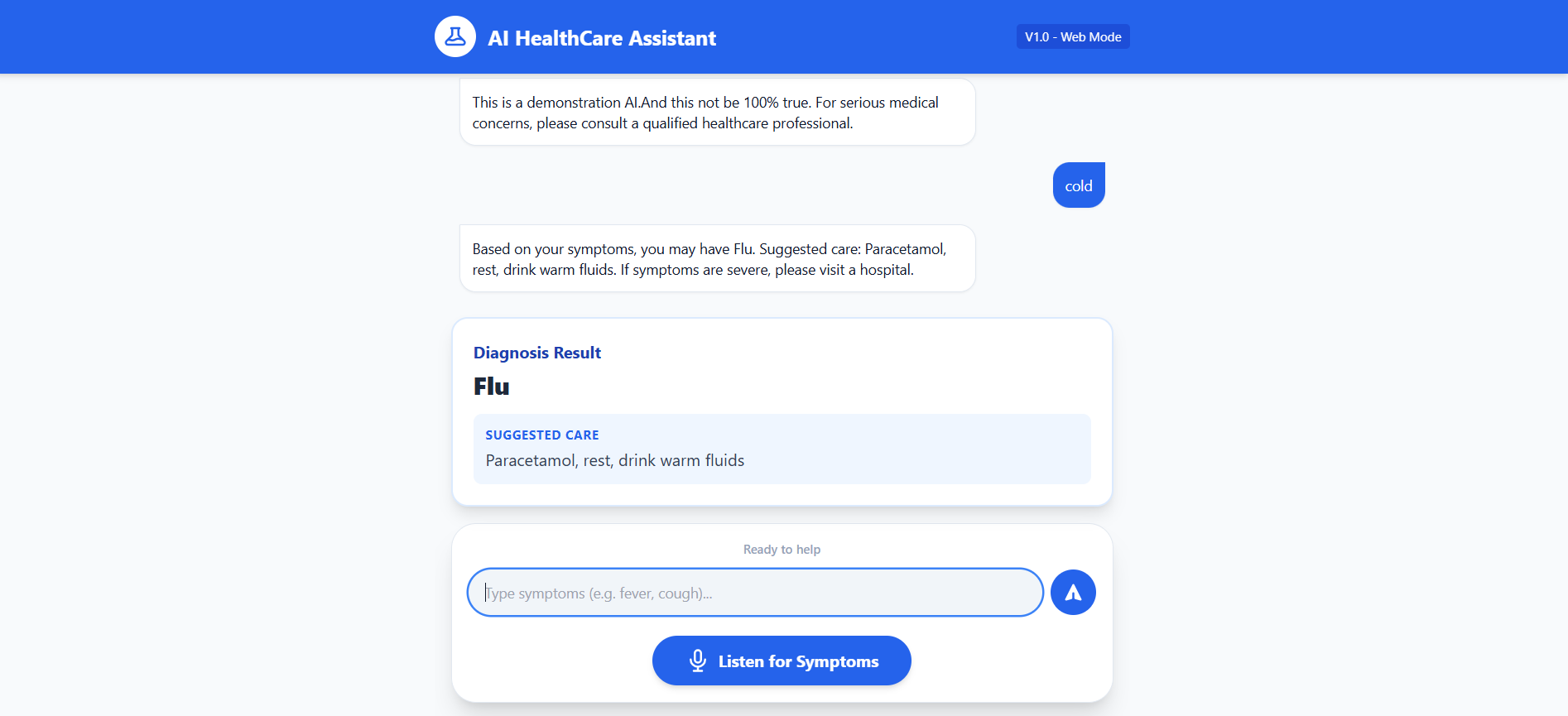
This is an example for using an interface.
Inspiration: Many rural areas lack quick access to doctors due to distance, cost, and poor internet. We wanted to create a solution that provides basic medical guidance anytime without needing connectivity.
What it does: The assistant allows users to describe symptoms through voice or text in local languages. It looks at the input, predicts possible illnesses, suggests safe over-the-counter medicines, and advises when to see a doctor.
How we built it: We used a lightweight machine learning model trained on symptom-disease data, combined with offline speech recognition and text-to-speech. The system works entirely on the device, ensuring privacy and usability without internet access.
Challenges: Achieving reliable predictions with limited data was hard. Supporting offline voice interaction while keeping the application fast and lightweight was another major hurdle. We also had to ensure that the medical guidance was safe.
Accomplishments: We created a fully offline healthcare assistant that operates on low-cost devices and can help people in remote locations.
What we learned: We figured out how to design AI for real-world limitations, integrate various components, and consider ethical responsibility in healthcare tools.
What’s next: Future plans include adding more diseases, regional language support, image-based diagnosis, emergency alerts, and connections to nearby healthcare services.


Log in or sign up for Devpost to join the conversation.