
AI Health Scorecard: Enhancing Healthcare with Social Determinants of Health
Inspiration
Our project was inspired by the profound impact that social determinants of health (SDOH) have on individual and community well-being. Recognizing that health disparities are deeply rooted in social and economic factors, we aimed to create a tool that not only identifies these determinants but also provides actionable insights to healthcare providers and patients. We envisioned a proactive model that leverages data science to bridge the gap between social needs and healthcare interventions, ultimately promoting health equity and improving outcomes.
What it does
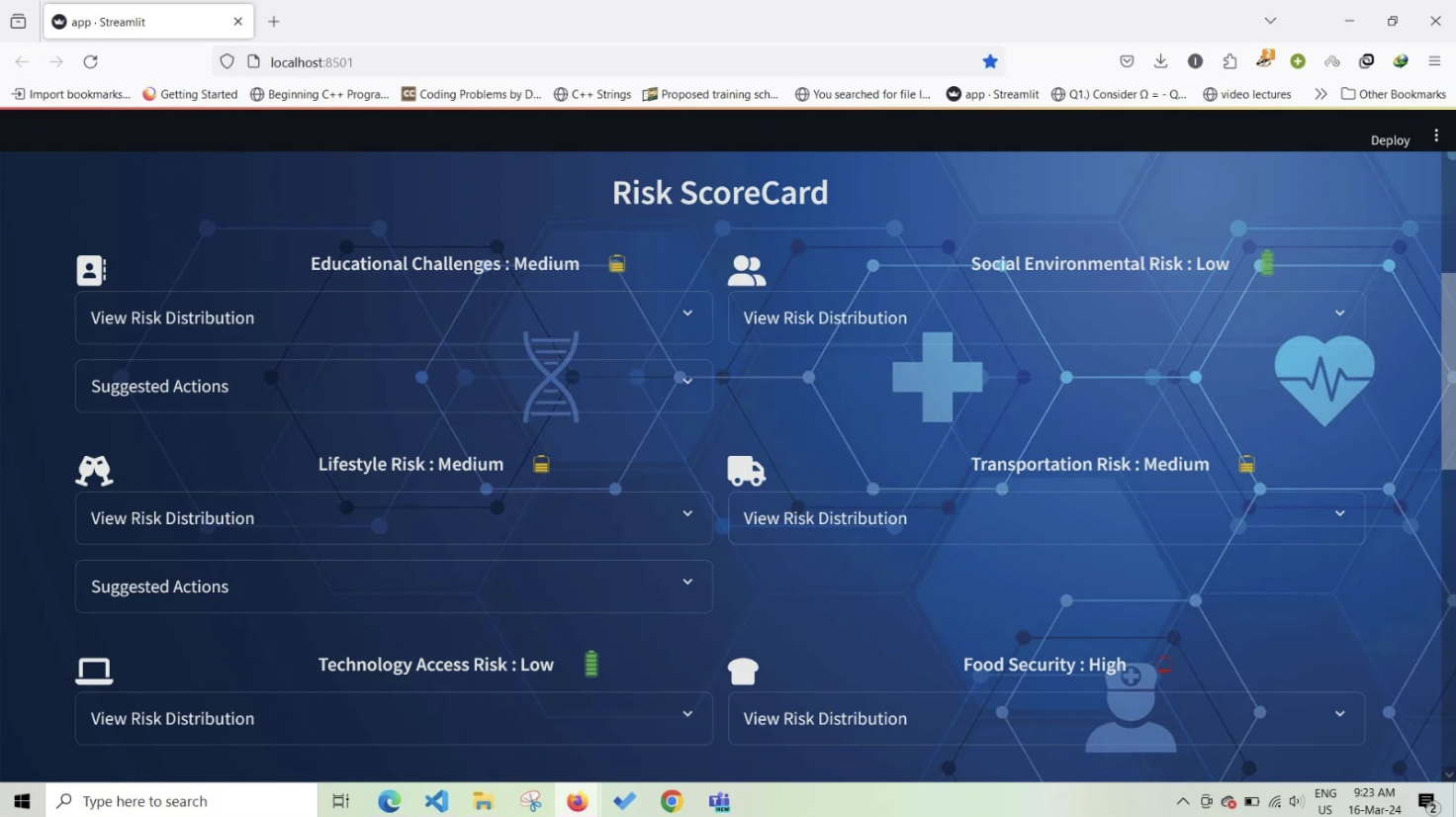
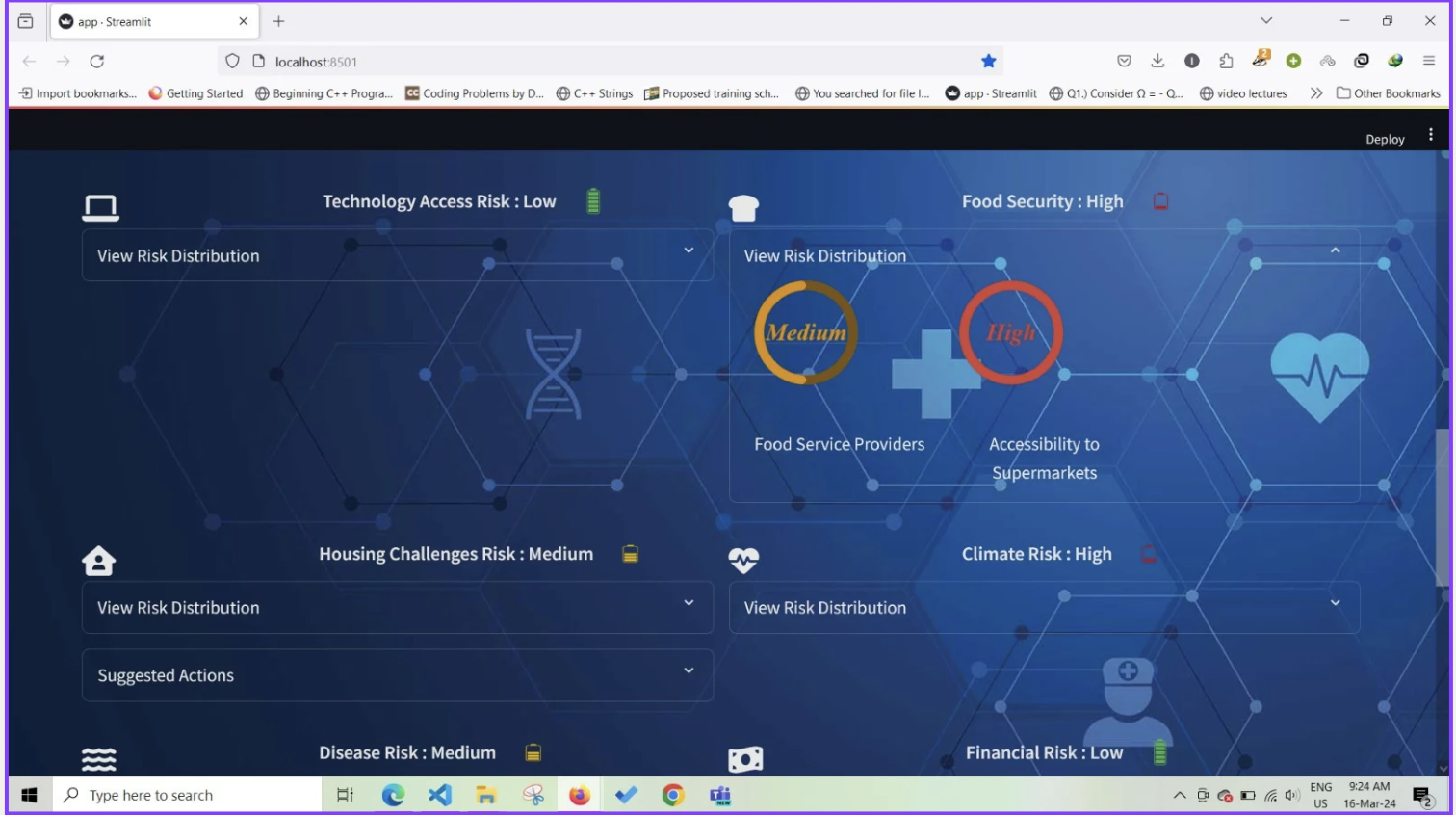
The Social Care Scorecard is a comprehensive tool that assesses an individual's social risk factors and provides actionable insights for healthcare providers and patients. By using predictive modeling, it generates a preliminary risk profile based on limited information such as zip code, age, and income. The scorecard offers a detailed assessment of various social determinants like transportation, healthy food access, and healthcare utilization. Additionally, it connects individuals with community support resources, offering specific recommendations based on identified needs.
How we built it
Understanding SDOH and Designing the Scorecard We started by examining common SDOH questionnaires like PRAPARE and Health Leads to identify critical parameters linked to healthcare outcomes. We designed an initial scorecard to include these parameters and provide detailed, actionable insights.
Data Curation and Normalization We curated data from various sources, including census tract data, demographic information, and health outcomes. We normalized this data to create a clean superset for analysis and used clustering techniques to group data based on key parameters such as income, education, race, and geographic diversity.
Predictive Modeling Using the curated data, we developed a predictive model at the census tract level. This model generates a preliminary risk profile for various social determinants based on user information, adapting as more data becomes available.
Role-based Social Action Scorecard We built a role-based version of the scorecard to assist clinical staff in making informed decisions. This version translates insights into actionable steps, such as planning appointments, providing education, or coordinating support services.
Connecting People with Resources We integrated a database of community support resources into the scorecard. This section highlights up to three suggestions based on identified social needs, ensuring that the scorecard not only identifies risks but also connects patients with essential support services.
Visualization and User Interface We designed two interfaces for sharing findings and recommendations: one for patients and families, and another for physicians and organizations. We used a react dashboard to visualize the scorecard and demonstrate various scenarios.
Challenges we ran into
Data Availability and Quality Obtaining high-quality data for all relevant social determinants was a significant challenge. Ensuring data accuracy and completeness was crucial for the reliability of our predictive model. Integrating data from different sources and normalizing it for analysis required careful handling.
Complexity of Social Interdependencies Modeling the interdependencies between various social determinants was complex. Factors like transportation, income, and education are interconnected, and addressing one often influences the others. Capturing these nuances in our model and providing accurate, actionable insights posed a significant challenge.
Balancing Specificity and Generalizability Creating a scorecard that is both specific enough to provide meaningful insights and generalizable across different regions and populations was difficult. We had to balance the inclusion of detailed parameters with the need for a model that can adapt to diverse contexts.
Accomplishments that we're proud of
We are proud of developing a comprehensive tool that addresses the complexities of social determinants of health. Our predictive model and role-based scorecard offer actionable insights, helping healthcare providers and patients navigate social factors that influence health. By integrating a database of community support resources, we ensure that individuals receive tailored recommendations to address their specific needs.
What we learned
We learned about the profound impact of social determinants on health outcomes and the limitations of current approaches. Our project highlighted the potential of predictive modeling and data integration in creating a comprehensive and actionable social care scorecard. We gained insights into the complexities of social interdependencies and the importance of contextualizing interventions to respect individual circumstances.
What's next
Refining the Model We plan to refine our predictive model by incorporating more data sources and enhancing the accuracy of our risk assessments.
Expanding the Database We aim to expand our database of community support resources to include more regions and services, ensuring comprehensive coverage for diverse populations.
User Testing and Feedback We will conduct user testing with healthcare providers and patients to gather feedback and improve the usability and effectiveness of the scorecard.
Scaling the Solution We intend to scale our solution to broader regions and potentially integrate it with electronic health records (EHR) systems for seamless implementation in healthcare settings.
Exploring Global Applications Given the unique healthcare challenges in countries like India, we plan to brainstorm innovative data sources and adapt our predictive system to make a lasting impact on a global scale.
Built With
- ai
- llm
- machine-learning
- python
- pytorch
- tensorflow
- verbapi
- web

Log in or sign up for Devpost to join the conversation.