Inspiration
Healthcare systems worldwide are overwhelmed, and patients often struggle to get timely guidance between doctor visits. Many people—especially elderly patients—lack easy access to medical advice, reminders, and emotional support. Inspired by the need for an accessible, reliable, and affordable healthcare assistant, we created AI Health Companion – a virtual “doctor’s assistant” that empowers patients to better manage their health daily.
What it does
AI Health Companion is an AI-powered assistant that:
- Provides personalized health advice based on symptoms and patient history.
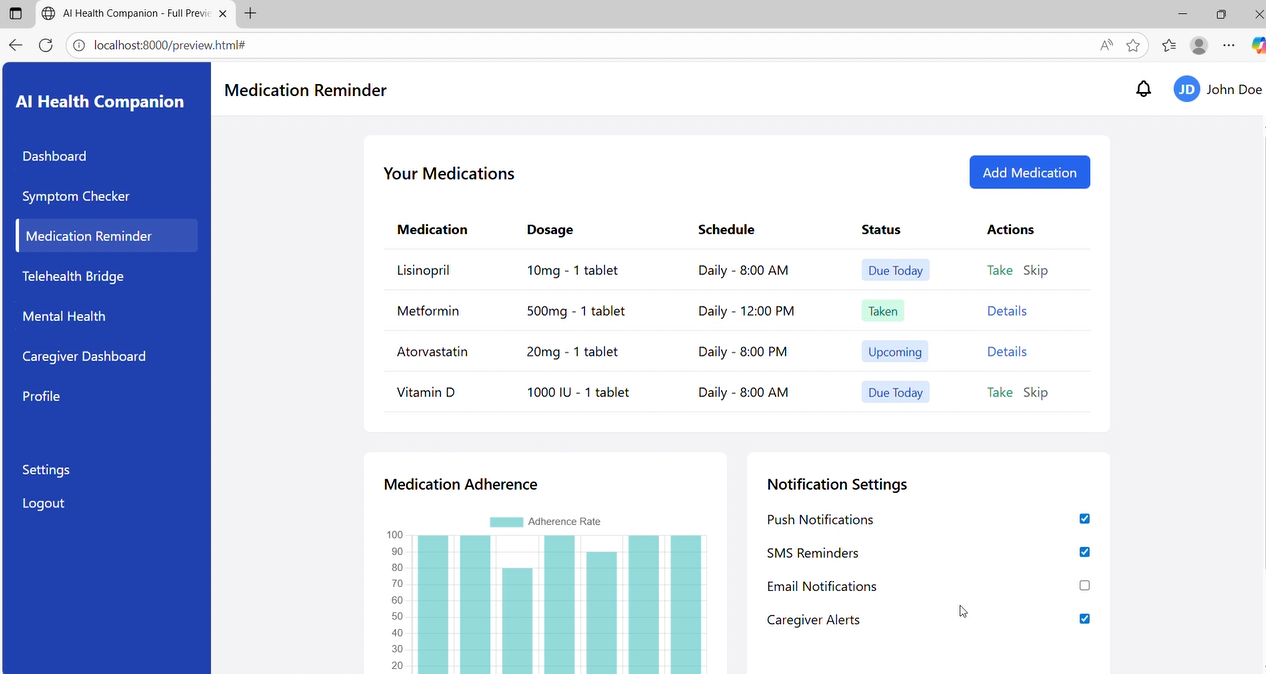
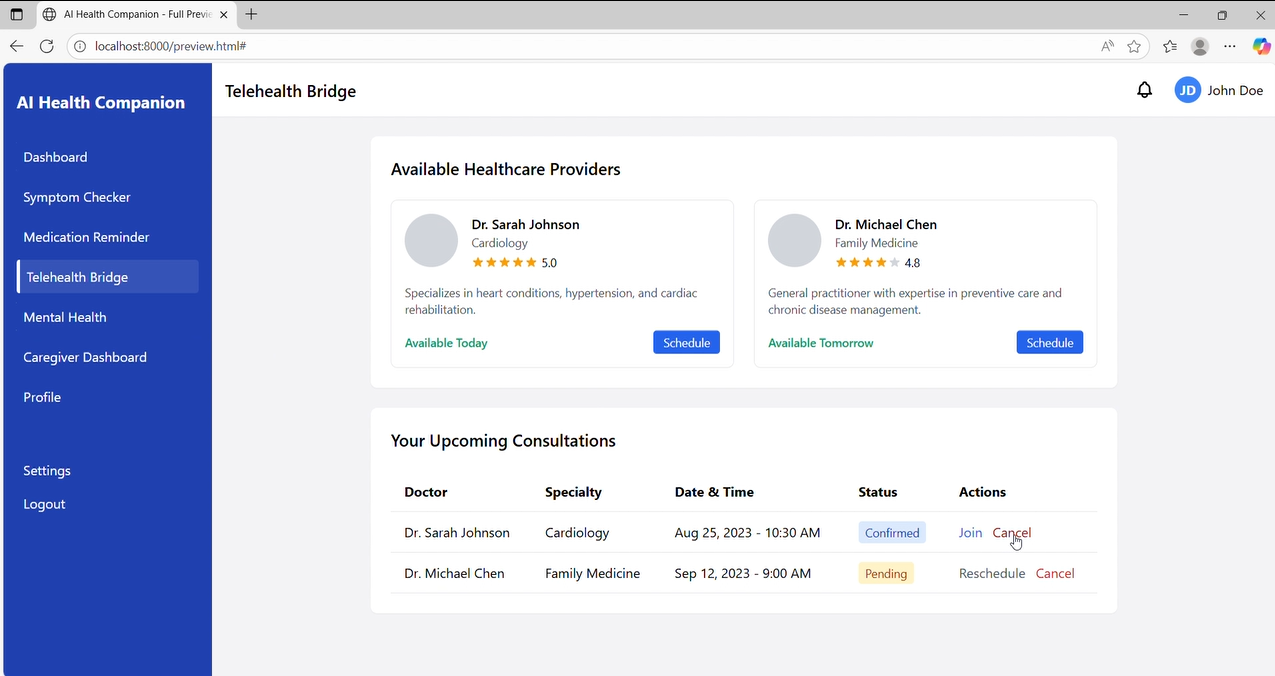
- Reminds patients about medications, doctor appointments, and daily wellness habits.
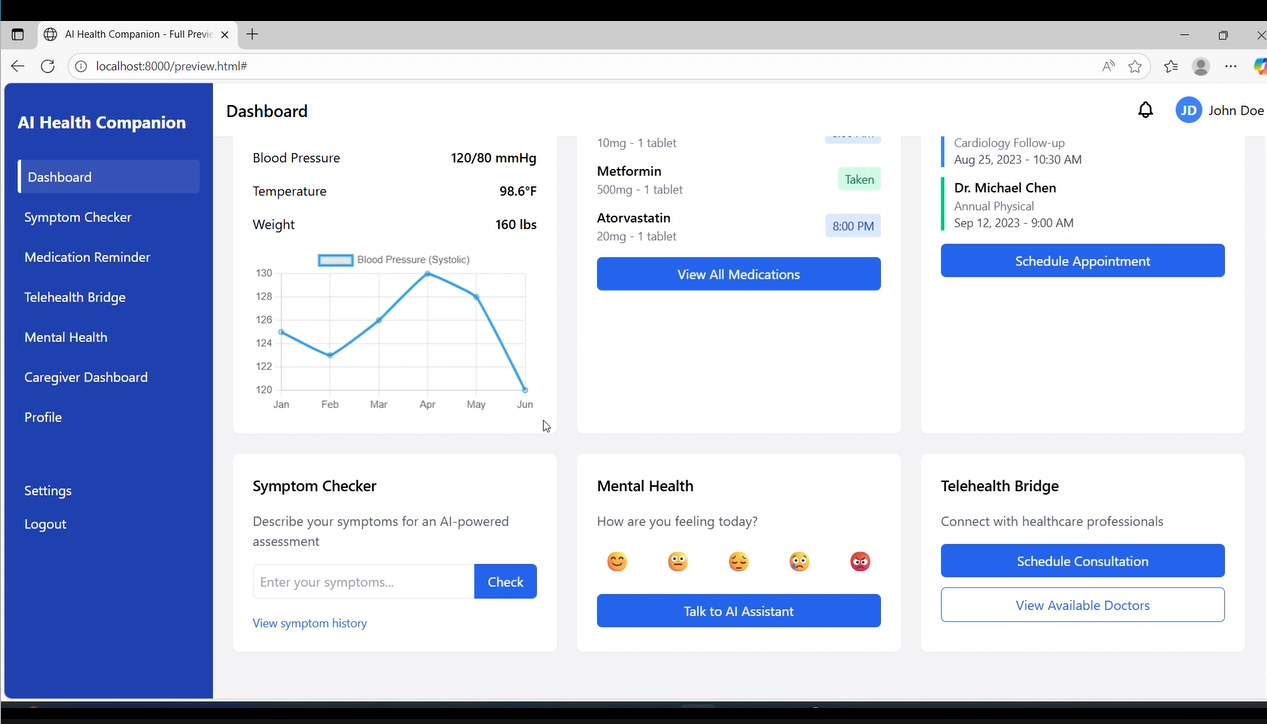
- Tracks vitals (when integrated with IoT devices/wearables).
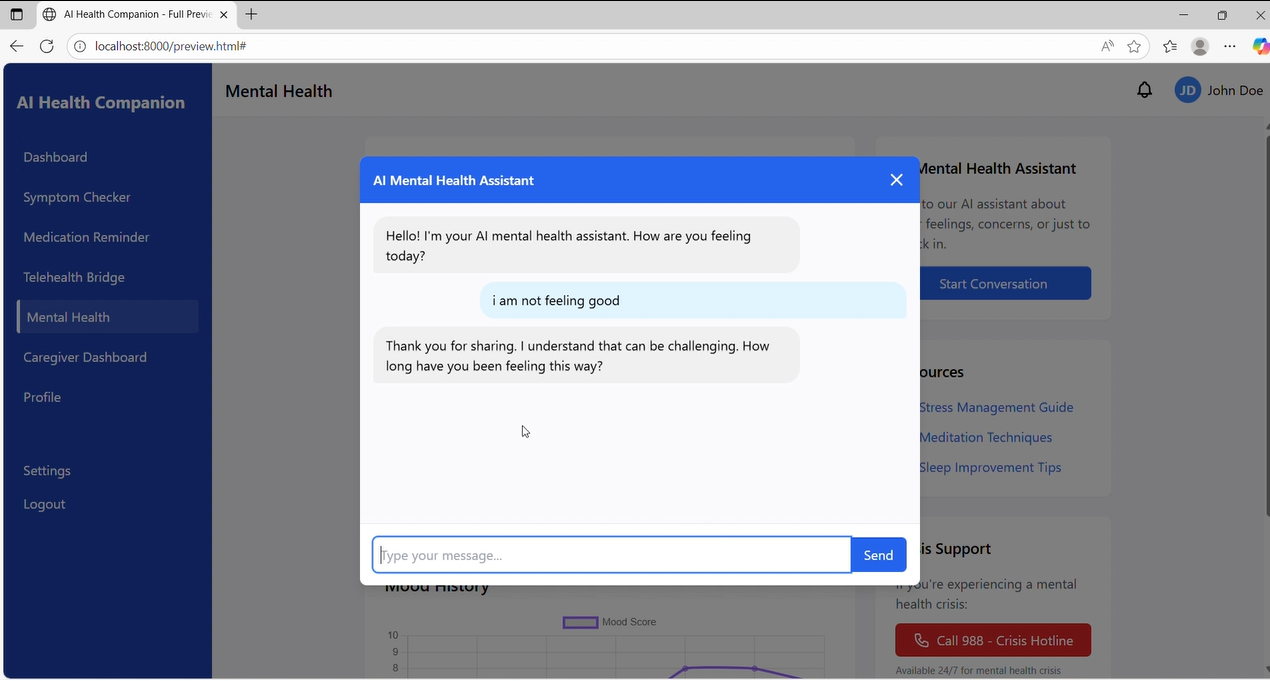
- Offers 24/7 conversational support to answer patient queries.
- Generates reports that doctors can review for more informed consultations.
How I built it
- AI/ML Layer: GPT-powered conversational AI trained with medical knowledge (symptom checker, health FAQs, care routines).
- Frontend: Responsive web app built with HTML5, Tailwind CSS, and JavaScript.
- Backend: Node.js + Python (Flask/FastAPI) for AI integration and patient data processing.
- Database: PostgreSQL/Supabase for secure storage of user profiles and health records.
- IoT/Wearables Integration: Optional connection with smartwatches and sensors for vitals tracking (heart rate, SpO₂, etc.).
- Security: End-to-end encryption for sensitive health data following HIPAA/GDPR standards.
Challenges I faced
- Ensuring data privacy and compliance while handling medical information.
- Designing an AI that provides useful suggestions without replacing professional medical advice.
- Building real-time integration with IoT devices.
- Creating a simple UI that is accessible to elderly patients with minimal tech literacy.
What I learned
- Best practices in AI + healthcare integration.
- The balance between automation and human oversight in medical contexts.
- How to ensure usability, accessibility, and trust in a healthcare assistant.
- Importance of secure architecture when dealing with sensitive data.
What’s next for AI Health Companion
- Deeper integration with hospital systems & EHRs.
- Multi-language support for broader accessibility.
- Advanced predictive analytics for early disease detection.
- Partnerships with healthcare providers for real-world adoption.
- Mobile app version for on-the-go patient support.
Built With
- amazon-web-services
- chart.js
- css3
- express.js
- fastapi
- flask
- gcp
- github
- html5
- iot-device-integration-(esp8266-/-arduino-/-wearables)
- javascript
- node.js
- openai-api
- postgresql
- python
- render
- supabase
- tailwind-css
- tensorflow
- vercel


Log in or sign up for Devpost to join the conversation.