Inspiration
The inspiration for AI Health Check came from recognizing a critical challenge faced by elderly patients and their caregivers - medication adherence. Research shows that approximately 50% of medications for chronic diseases are not taken as prescribed, leading to poorer health outcomes and increased healthcare costs. We realized that technology could bridge this gap by providing automated, consistent, and personalized medication reminders without requiring technical expertise from the elderly users themselves.
What it does
AI Health Check is an automated medication monitoring system that uses voice calls powered by Claude AI to check if elderly patients have taken their medications. The system makes scheduled outbound calls to patients, engages them in natural conversation to verify medication adherence, analyzes their responses, and sends structured reports to caregivers or healthcare providers. If a patient hasn't taken their medication or doesn't respond to calls, the system escalates by sending alerts to designated contacts.
How we built it
We built AI Health Check using a stack of modern technologies:
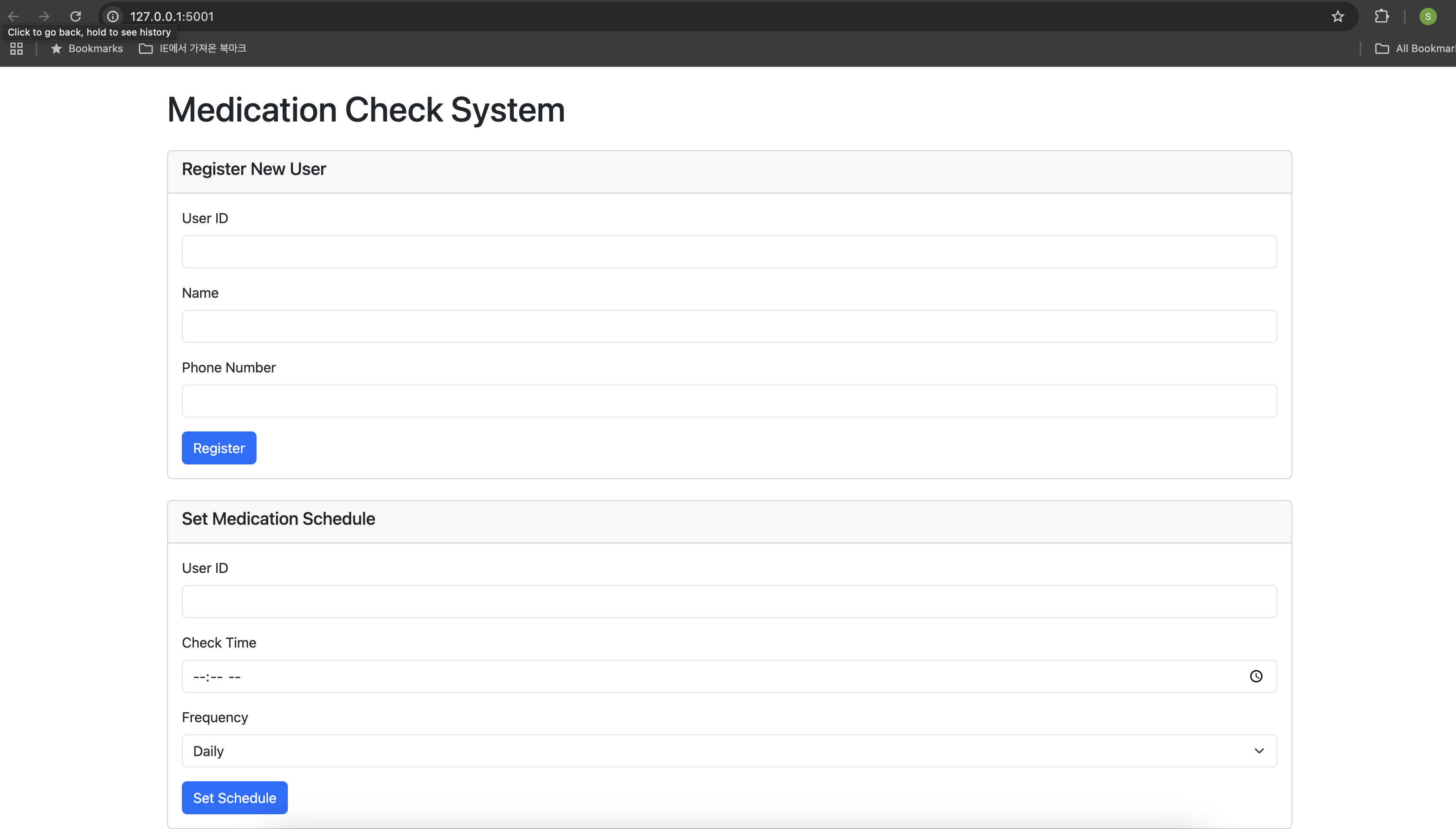
Voice Interface: We integrated VAPI.ai to handle voice calls, using Claude's conversational AI capabilities to create natural, empathetic interactions with elderly users. Backend Architecture: The system is built with Python Flask for the API and web interface, with Temporal for workflow orchestration to manage scheduled checks and follow-ups. Scheduling System: We implemented APScheduler to manage medication check schedules with configurable frequency (daily, weekly, or hourly). Notification System: For alert escalation, we integrated Twilio SMS to notify caregivers when patients miss medications or don't respond to calls. Analytics: We built reporting capabilities using Pandas and Plotly to visualize medication adherence patterns over time. Web Dashboard: A simple Bootstrap-based dashboard allows caregivers to register patients, set medication schedules, view adherence data, and trigger immediate check calls.
Challenges we ran into
Voice API Integration: Configuring VAPI to work properly with outbound calls required several attempts, as we encountered authentication issues and format requirements that needed careful debugging. Conversation Design: Creating an AI assistant prompt that was both efficient at extracting medication information and empathetic enough for elderly users required multiple iterations. Asynchronous Workflows: Managing asynchronous communication between the voice calls, data processing, and notification systems introduced complexity in error handling and state management. Response Analysis: Ensuring accurate interpretation of patient responses about medication adherence, especially with potential background noise or unclear speech, remained challenging.
Accomplishments that we're proud of
Creating a system that successfully bridges the technology gap for elderly patients by using voice interface rather than requiring them to interact with complex apps or devices. Developing a fully automated workflow that not only checks medication adherence but also provides appropriate escalation when needed. Building a solution that can potentially improve health outcomes while reducing the burden on caregivers through intelligent automation. Implementing a flexible system that can be easily extended to support different languages, medication types, and schedules.
What we learned
The importance of user-centered design when creating healthcare technology, particularly for elderly users. How to effectively combine AI conversational capabilities with traditional communication channels (voice calls) to create accessible solutions. Techniques for designing conversational AI prompts that are both task-efficient and emotionally appropriate. Strategies for building reliable asynchronous systems that can handle real-world communication challenges.
What's next for AI Health Check
Multi-language Support: Expanding beyond English to support medication checks in multiple languages. Integration with Electronic Health Records: Connecting with healthcare systems to automatically update medication adherence information. Smart Scheduling: Implementing machine learning to determine optimal calling times based on patient response patterns. Expanded Health Checks: Going beyond medication adherence to include other health parameters such as symptom checking and wellness monitoring. Mobile Companion App: Developing a companion app for caregivers to receive real-time updates and manage patients on the go. Voice Biometrics: Adding voice authentication to ensure patient identity and detect potential health issues through voice pattern analysis.

Log in or sign up for Devpost to join the conversation.