-
-
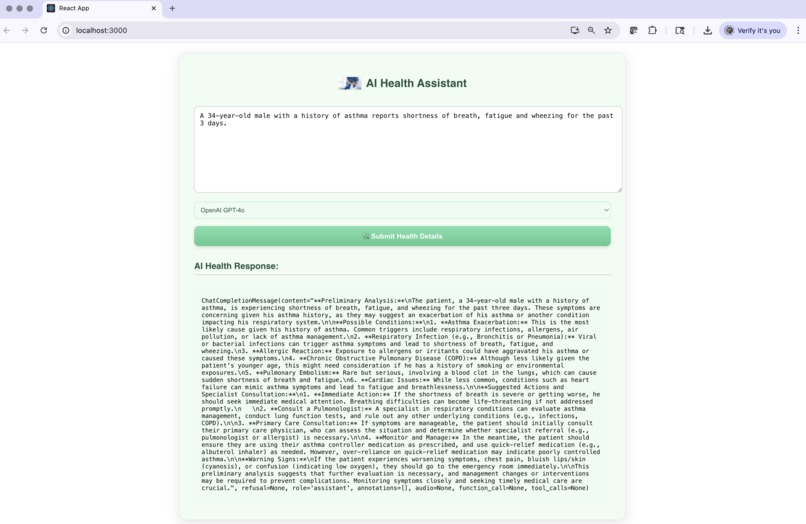
final_output
-
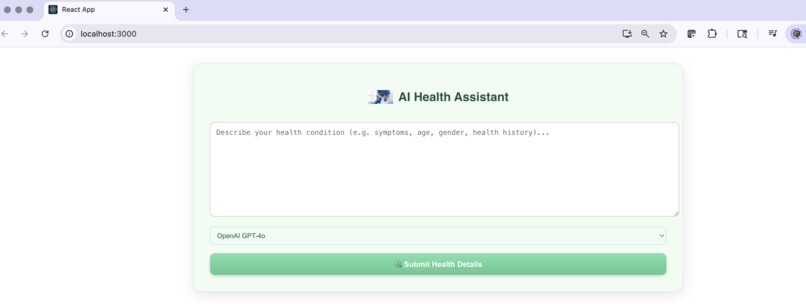
landing_page
-
-
Inspiration
I wanted to create an accessible, easy-to-use tool that empowers people to understand their health symptoms better without waiting for a doctor’s visit — especially useful in today’s fast-paced world and limited healthcare access.
What it does
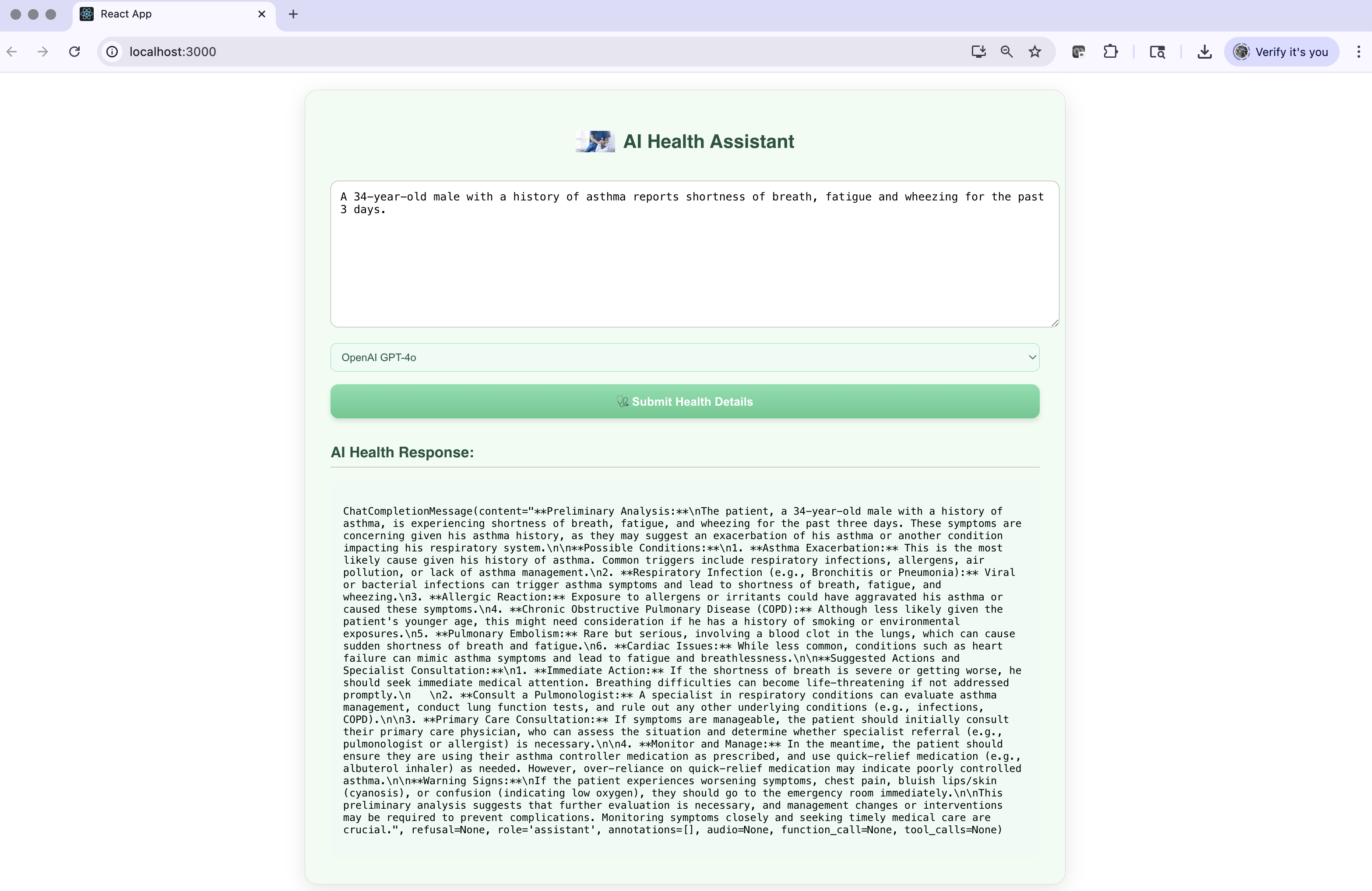
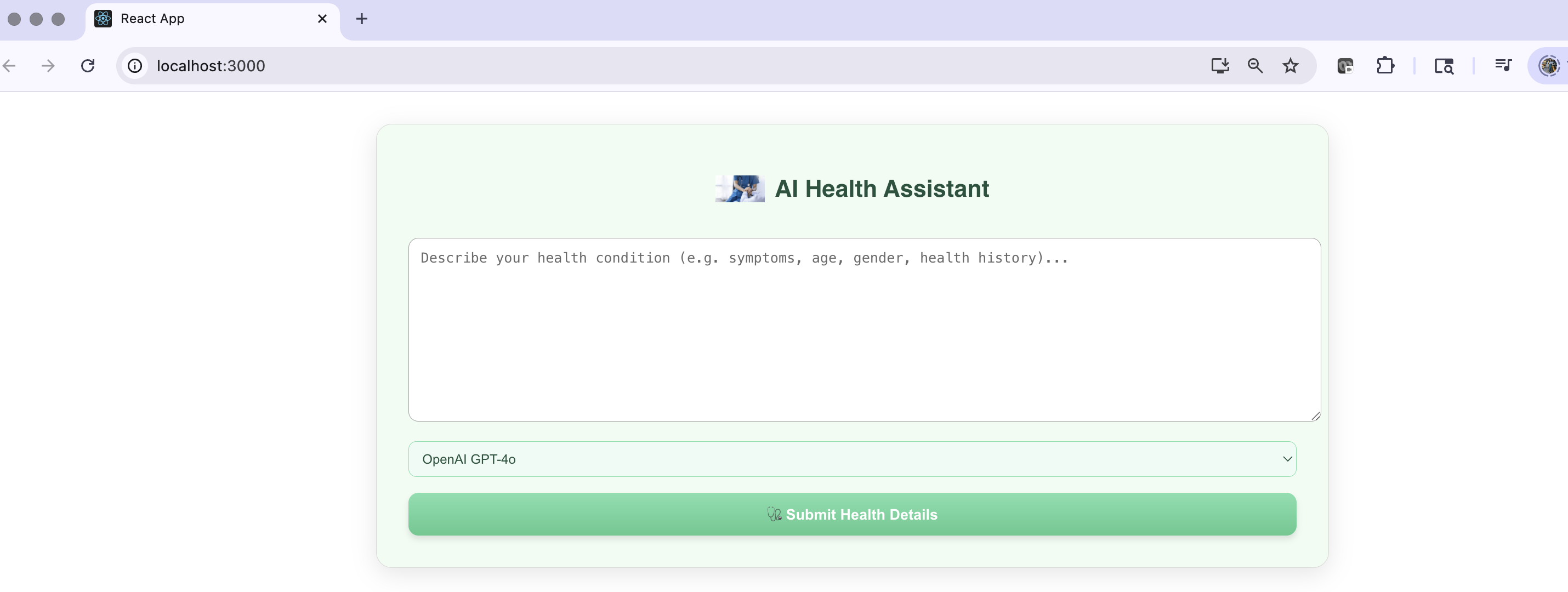
AI Health Assistant takes your health details, analyzes symptoms using advanced AI models and provides preliminary insights about possible conditions along with recommendations on next steps. It helps users decide when to seek medical care, offering timely guidance.
How we built it
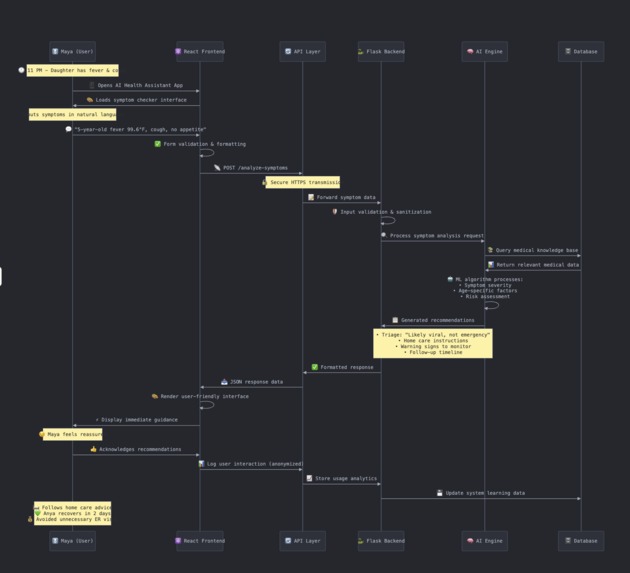
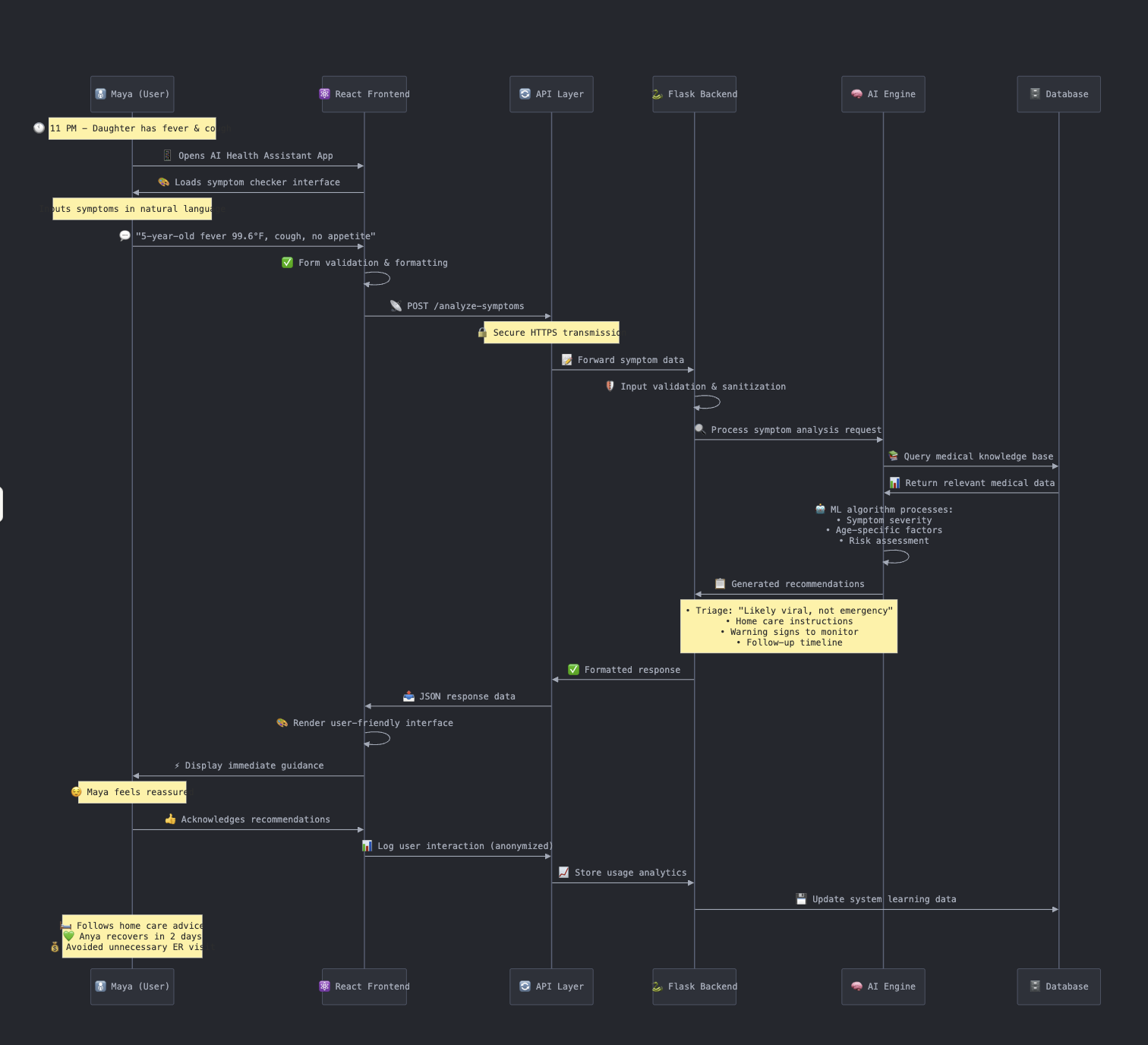
The app is built with React for a clean, responsive frontend and Flask as the backend API server. It integrates OpenAI and other language models to process user inputs and generate medically-informed responses dynamically.
Challenges we ran into
Handling sensitive health data responsibly, designing clear and reassuring UI for medical information, and integrating multiple AI models to produce accurate, understandable health advice were key challenges.
Accomplishments that we're proud of
We successfully created a smooth, interactive user experience that combines AI-powered analysis with an empathetic approach, delivering valuable health insights in seconds. Our modular backend allows easy addition of new AI models and features.
What we learned
The importance of clear communication in healthcare apps, balancing AI capabilities with disclaimers for medical safety and the technical complexity of building a robust AI-powered health assistant.
What's next for AI Health Assistant
We plan to add personalized health tracking, integrate real-time data from wearable devices and improve AI accuracy with more medical domain training — making it an even smarter, more reliable health companion.


Log in or sign up for Devpost to join the conversation.