-
-
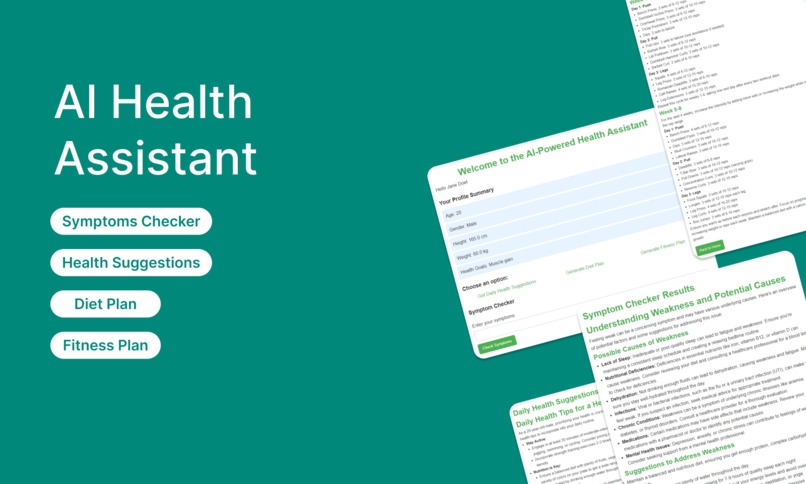
Introduction
-
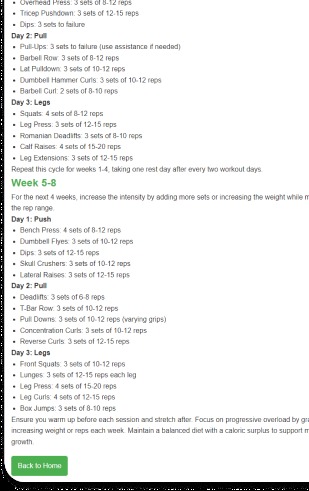
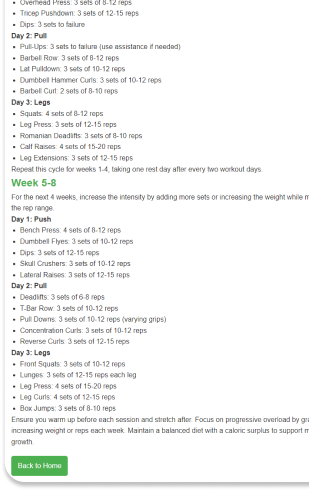
Fitness Plan Example
-
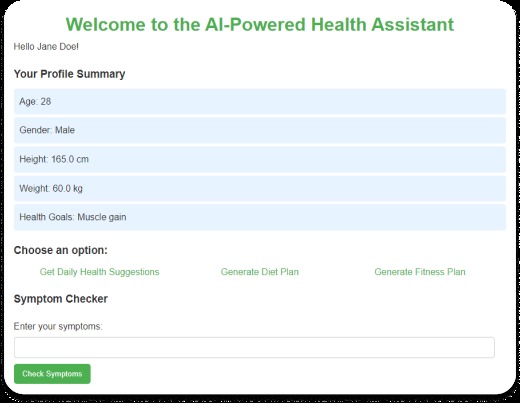
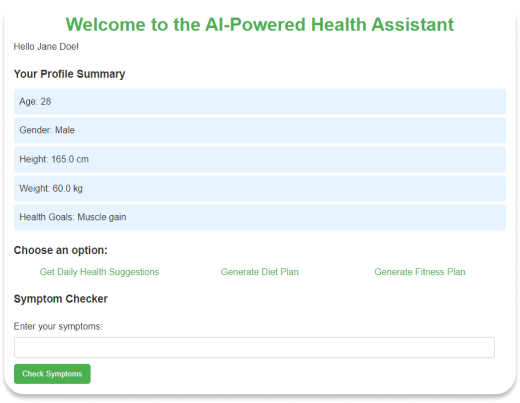
Home
-
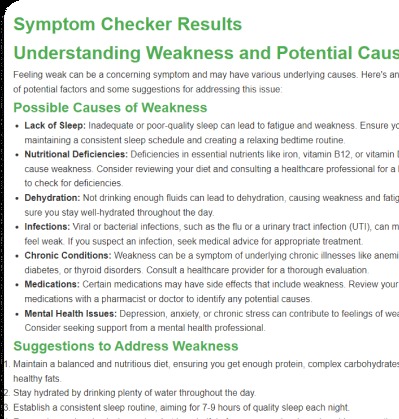
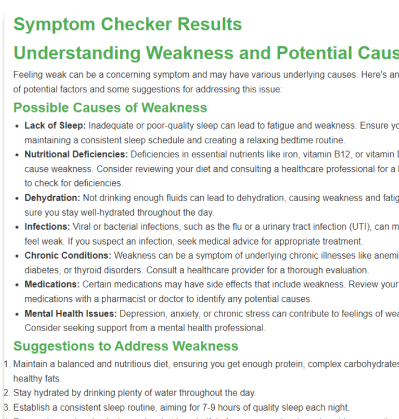
Symptom Checker Example
-
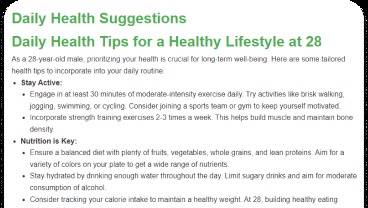
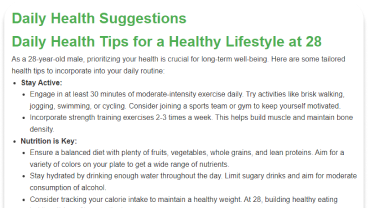
Daily Health Suggestion
Inspiration
The inspiration behind the AI Health Assistant stems from the increasing demand for accessible healthcare solutions in today's fast-paced world. Recognizing the potential of AI to provide personalized health insights and dietary recommendations, we aimed to create a user-friendly platform that empowers individuals to take charge of their health.
What it does
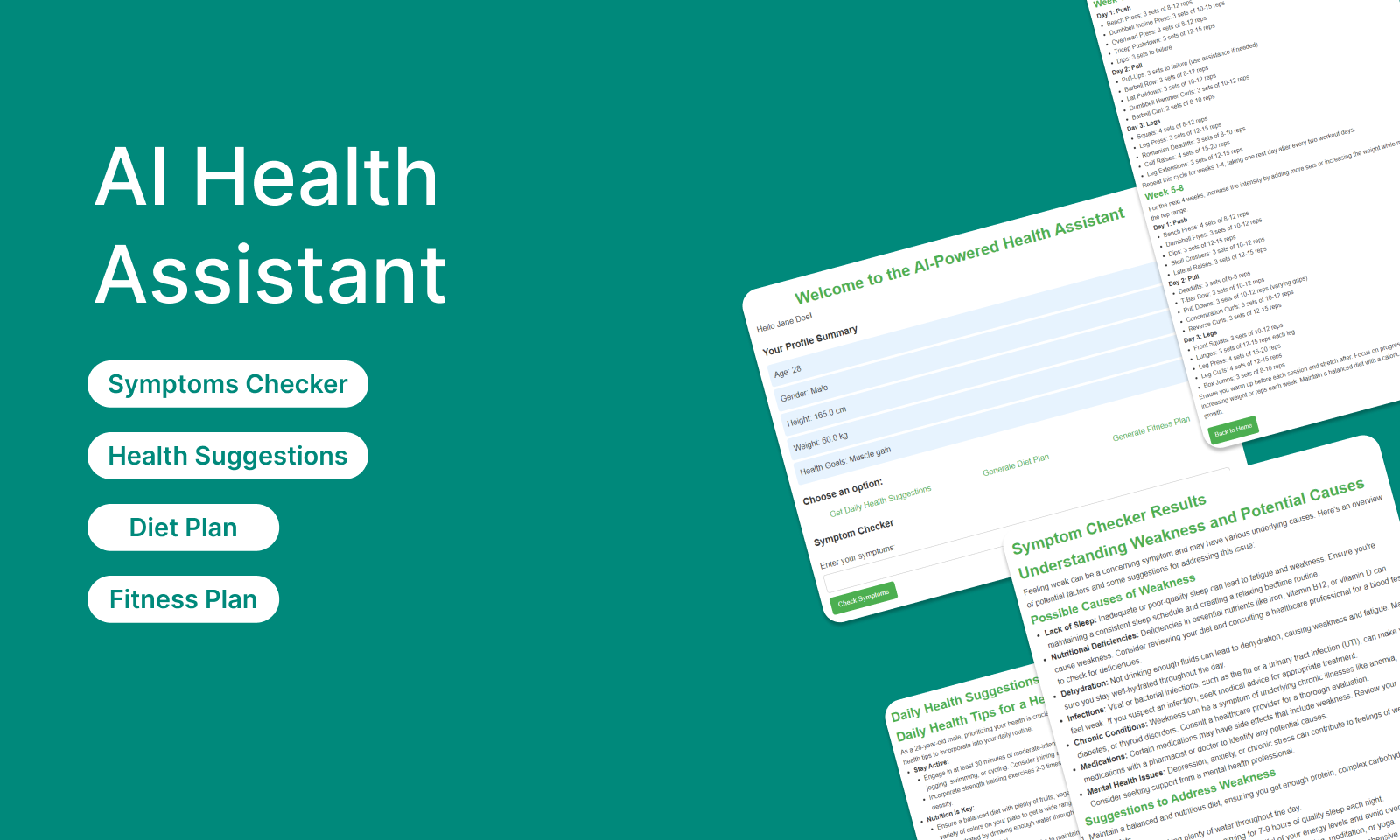
The AI Health Assistant offers a comprehensive set of features, including personalized diet and fitness plans, daily health suggestions, and a symptom checker that provides insights based on user inputs. By leveraging machine learning models, the application generates tailored recommendations to help users achieve their health goals effectively.
How we built it
We built the AI Health Assistant using Flask for the backend, which serves the web application and handles API requests. The frontend is developed with HTML and CSS for a responsive user interface. We integrated various modules, including DietPlan, FitnessPlan, HealthInsights, and SymptomChecker, to encapsulate the logic for generating health plans and insights. Additionally, we utilized the Langchain library to incorporate AI functionalities, connecting to the Cohere API for natural language processing tasks.
Challenges we ran into
Throughout the development process, we encountered several challenges, including:
- Integrating AI models effectively and ensuring they provided accurate results.
- Managing user inputs and ensuring data validation for the symptom checker.
- Designing a seamless user interface that delivers an intuitive experience while maintaining functionality.
Accomplishments that we're proud of
We are proud to have successfully implemented a fully functional AI-driven health assistant that not only meets user needs but also provides valuable health insights. Achievements include:
- The development of an accurate symptom checker that offers preliminary health assessments.
- Creation of dynamic diet and fitness plans tailored to individual user profiles.
- Establishing a robust backend infrastructure capable of handling multiple user requests simultaneously.
What we learned
This project taught us valuable lessons about:
- The importance of user-centered design in developing applications that cater to diverse needs.
- The intricacies of integrating AI with real-world applications, including the challenges of data accuracy and interpretation.
- The significance of effective collaboration and communication within the team to overcome obstacles.
What's next for AI Health Assistant
Looking ahead, we plan to enhance the AI Health Assistant by:
- Expanding the range of health insights and recommendations based on user feedback and additional research.
- Integrating more advanced machine learning algorithms to improve the accuracy of the symptom checker and personalized plans.
- Developing a mobile application version to make our services more accessible to users on the go.


Log in or sign up for Devpost to join the conversation.