-
-
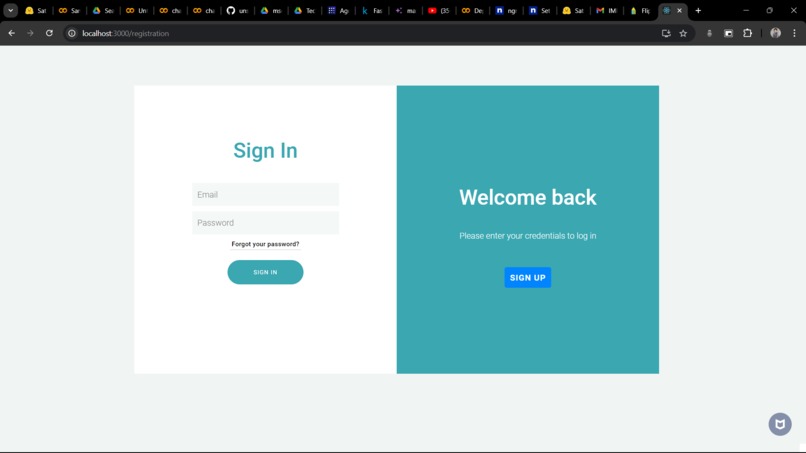
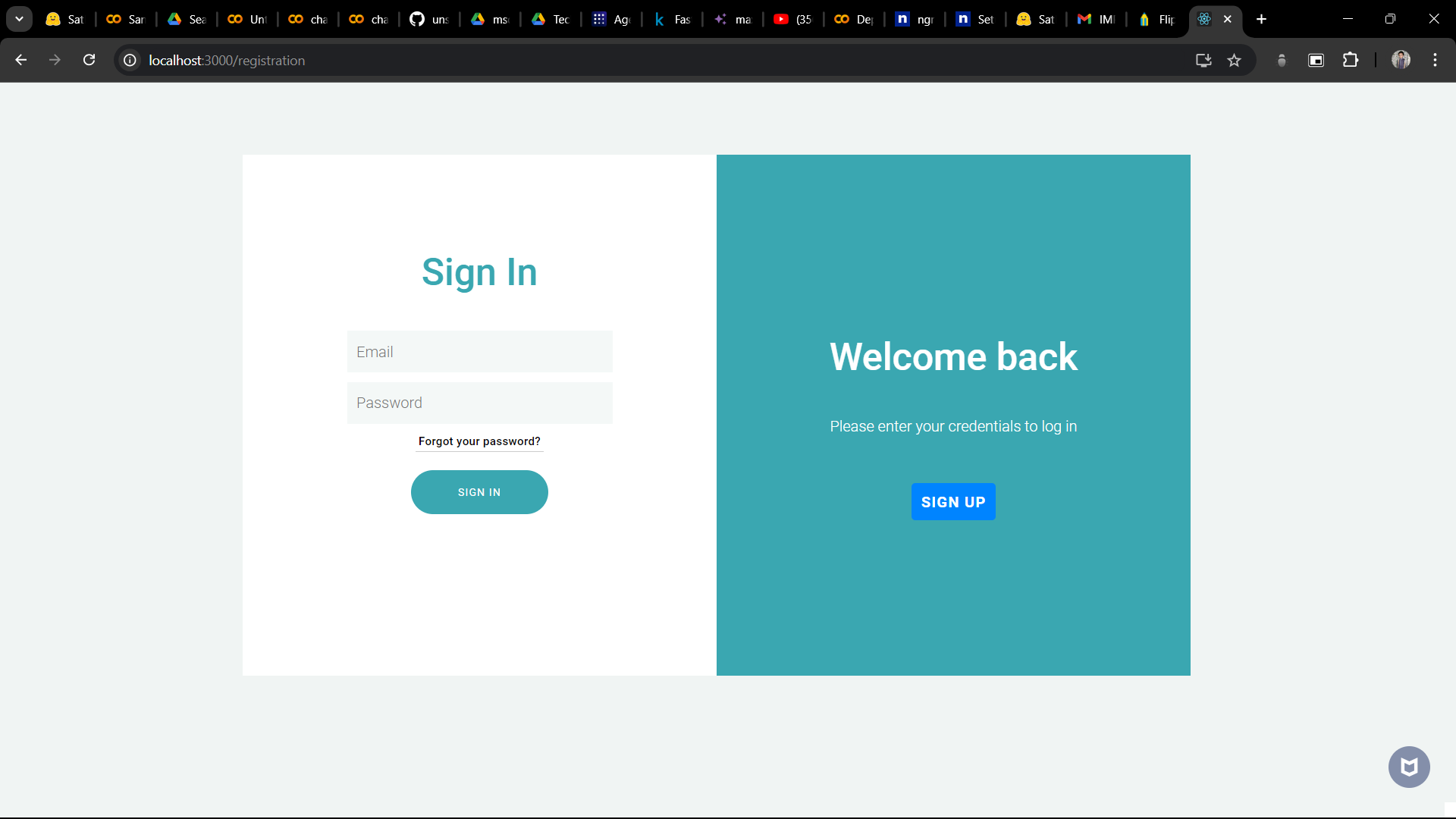
Log in and sign up page
-
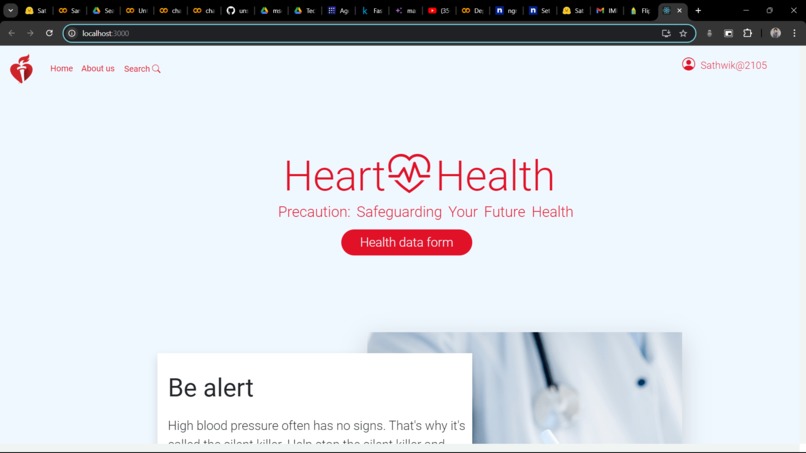
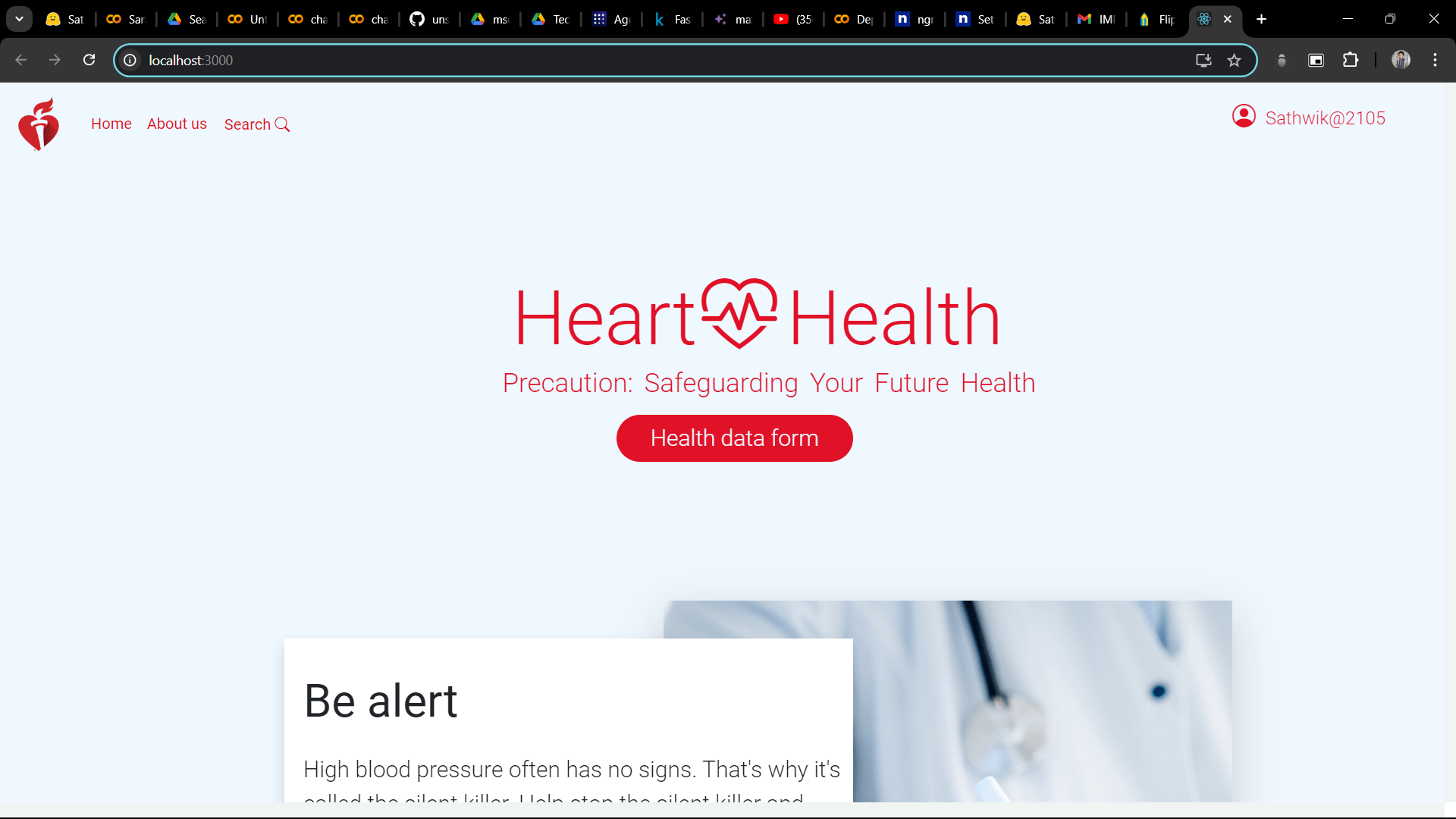
Home page
-
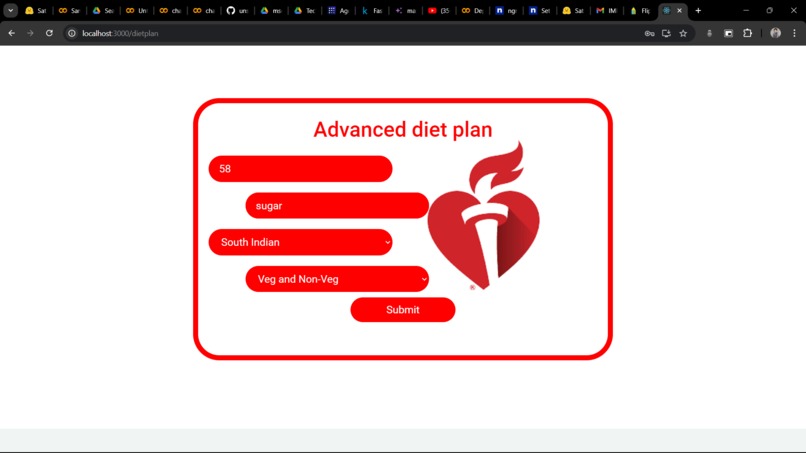
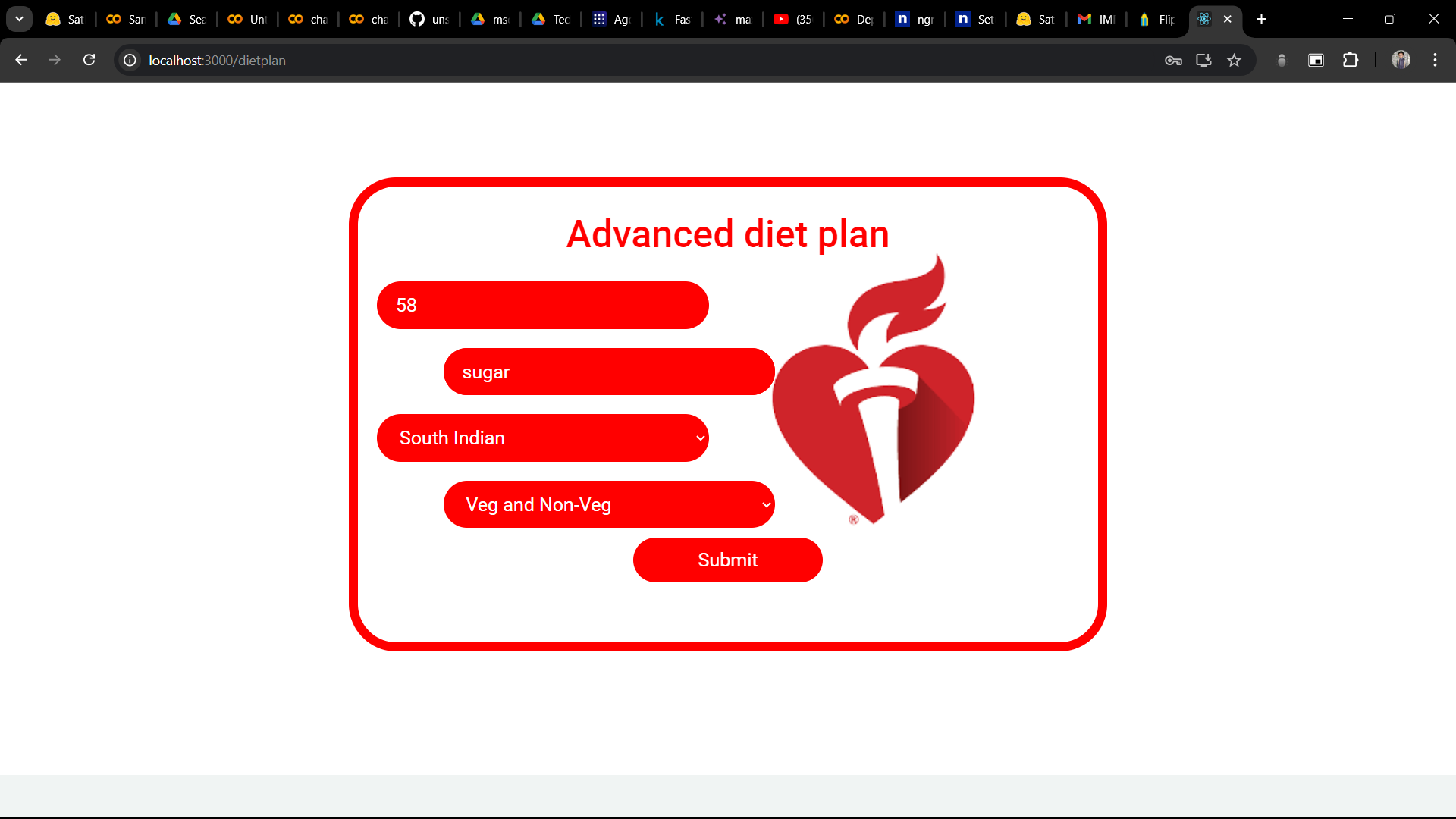
Diet Plan input page
-
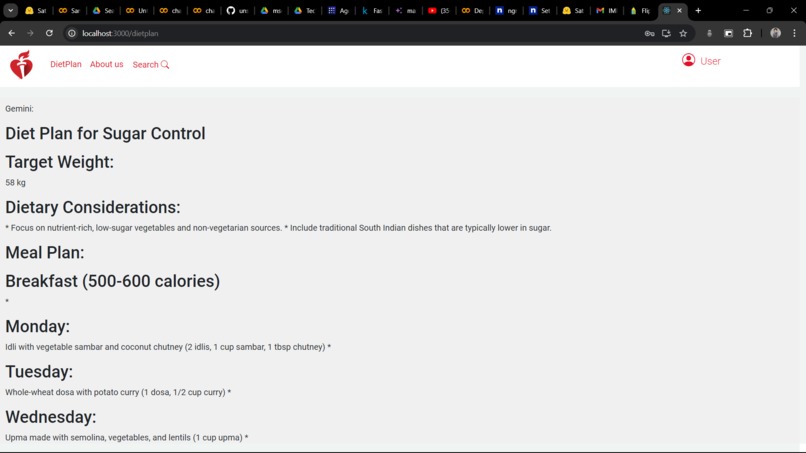
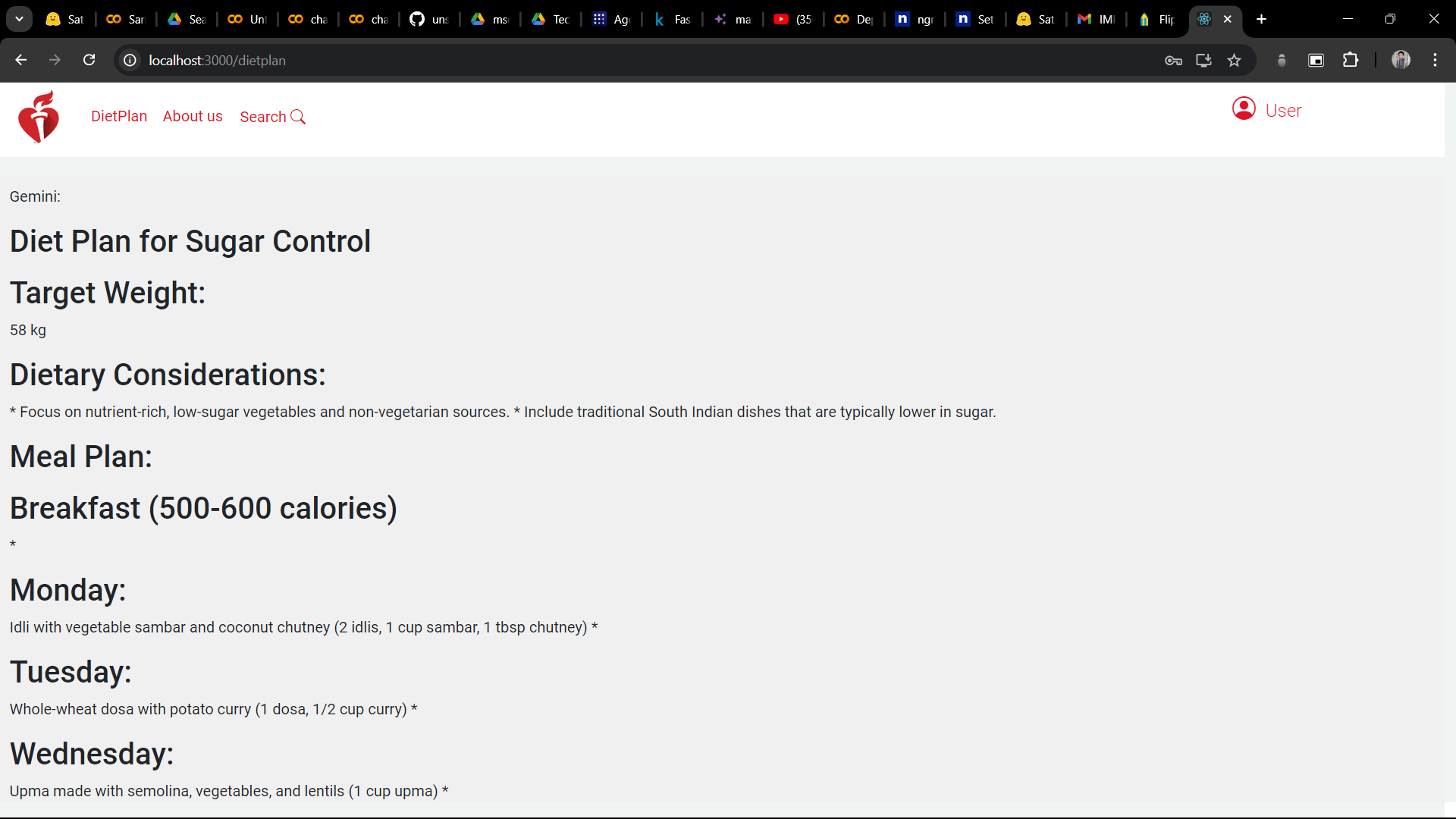
Diet plan page
-
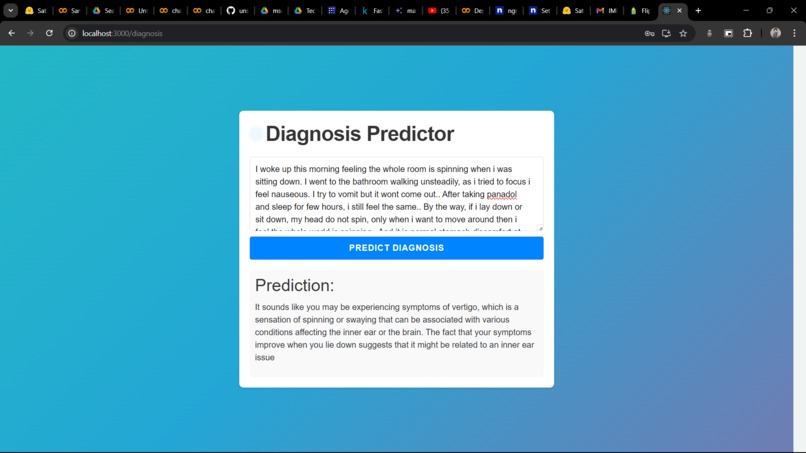
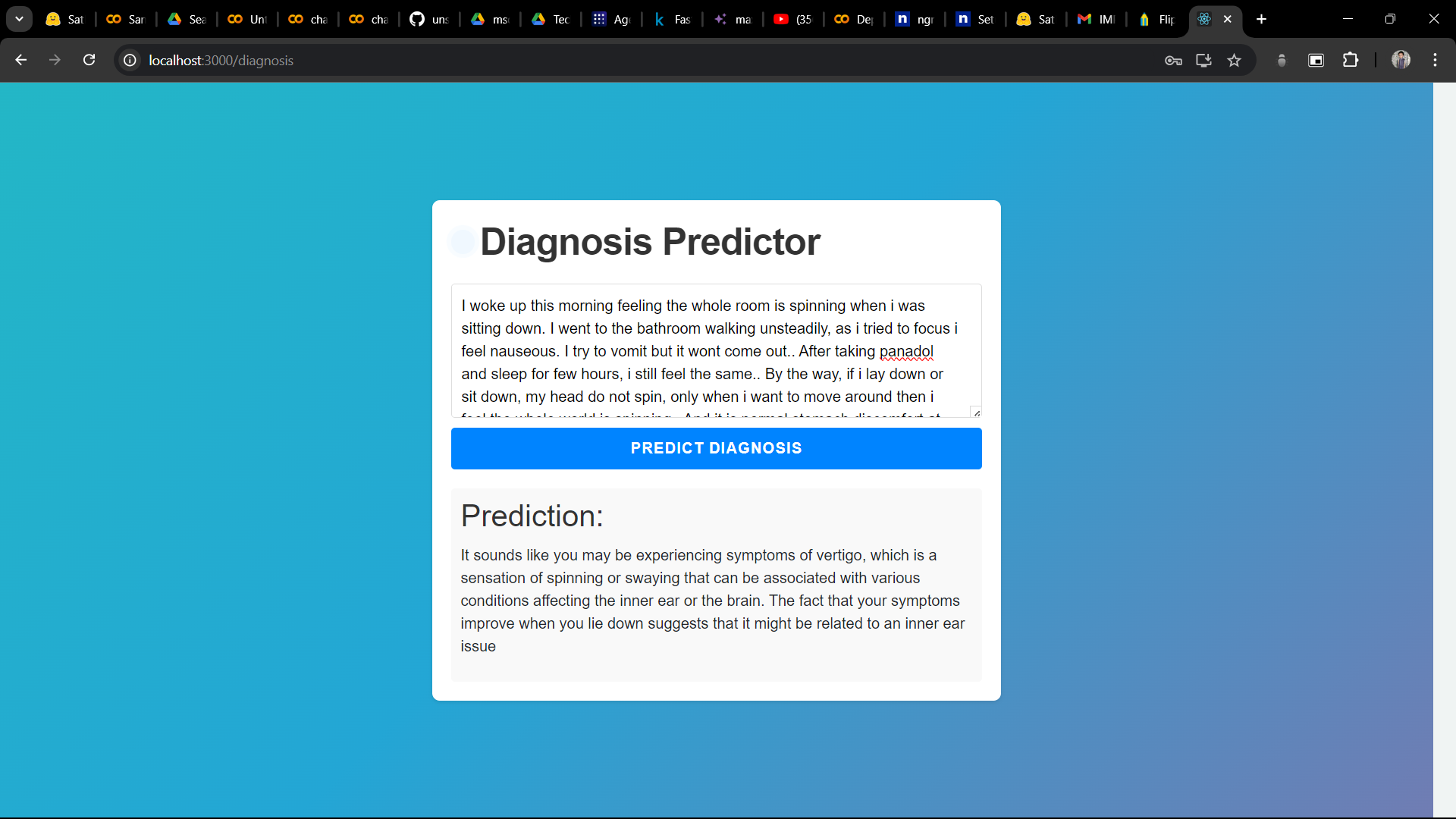
Diagnosis Predictor
-
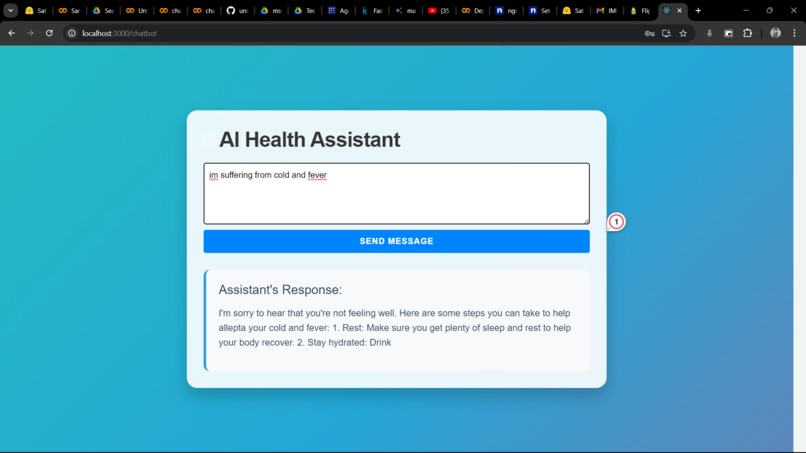
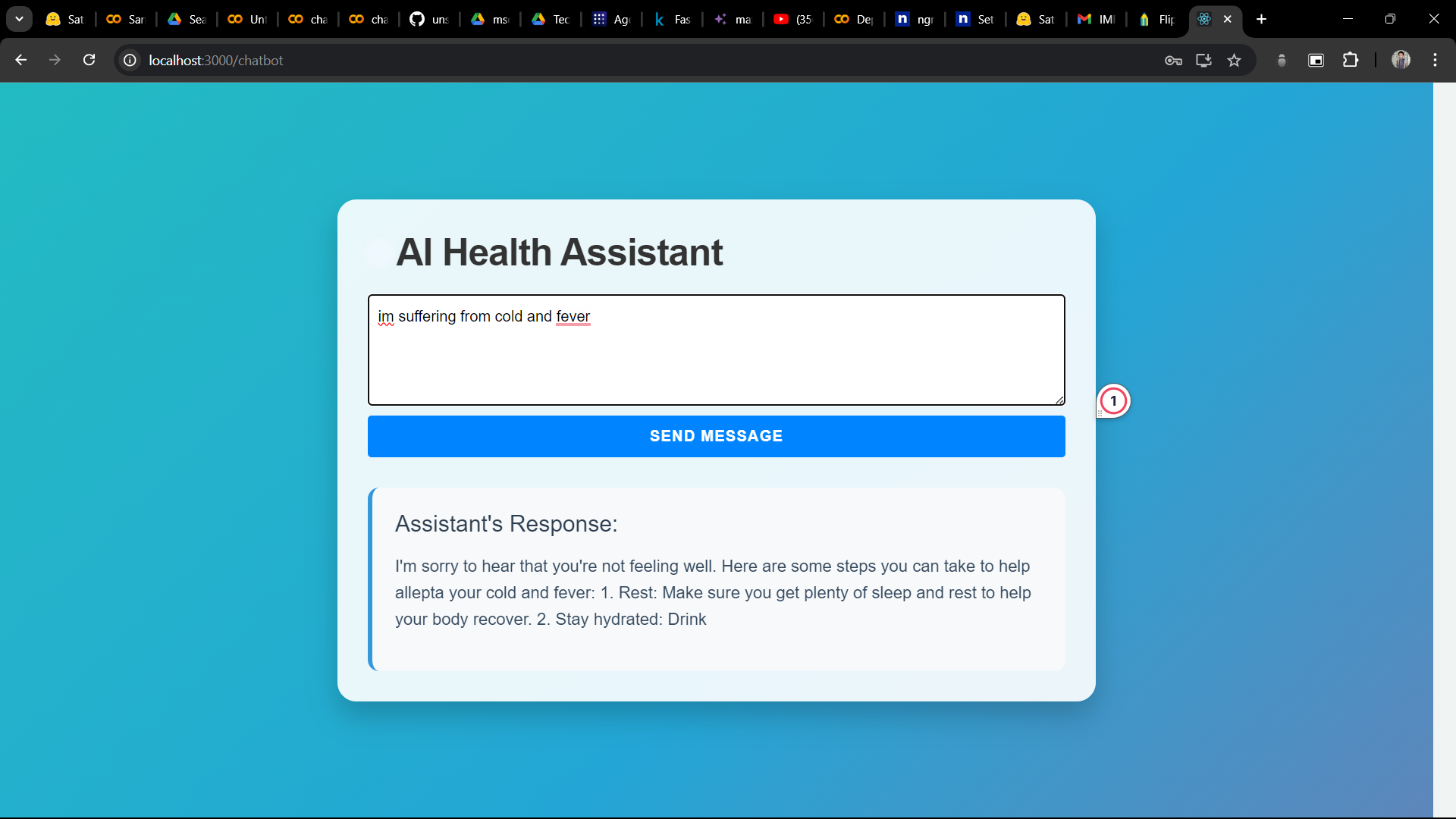
Health Assisstant
-
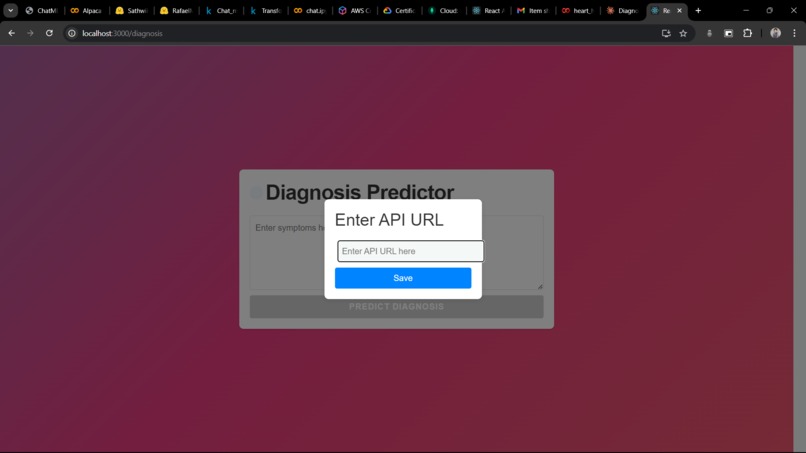
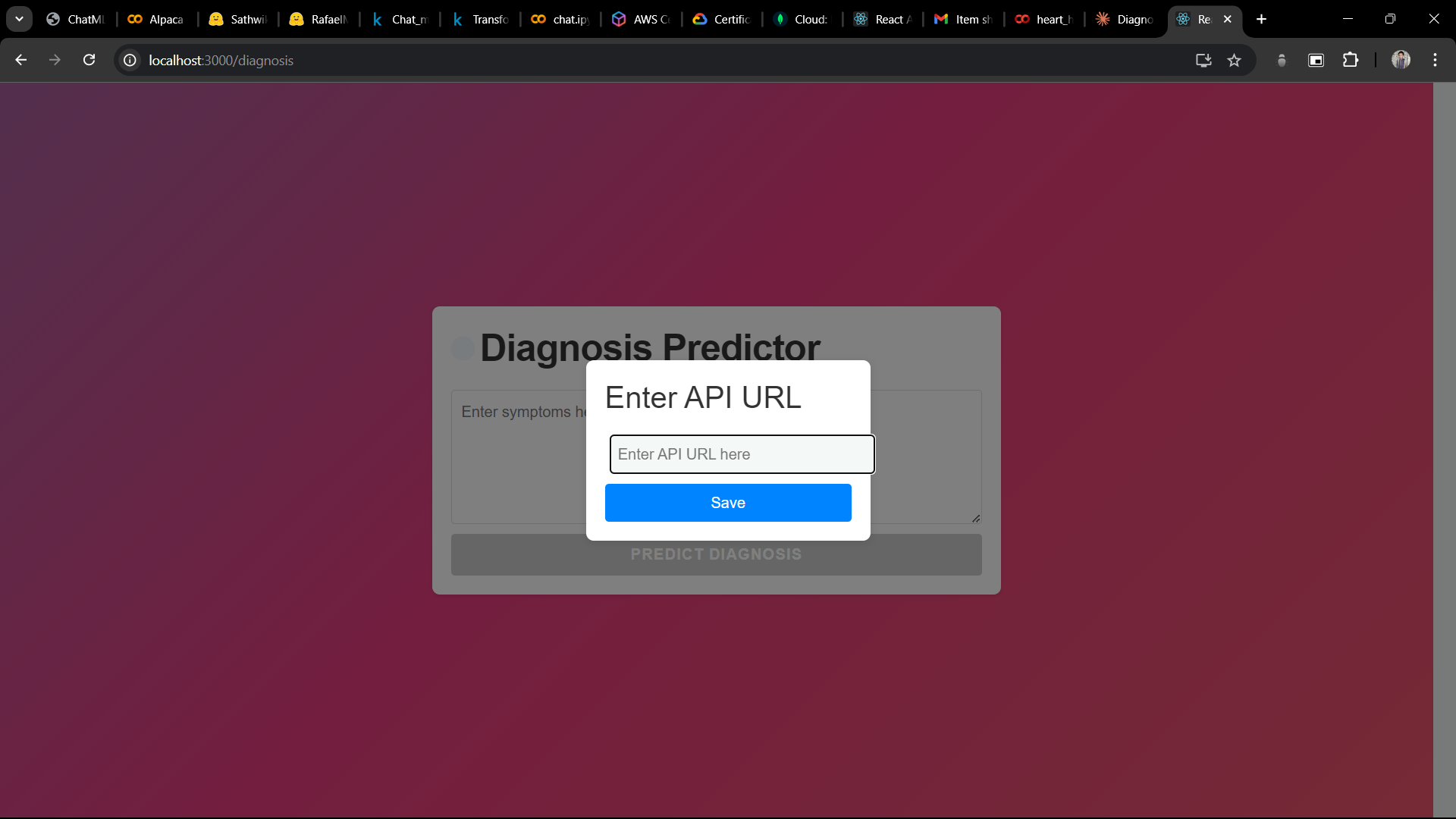
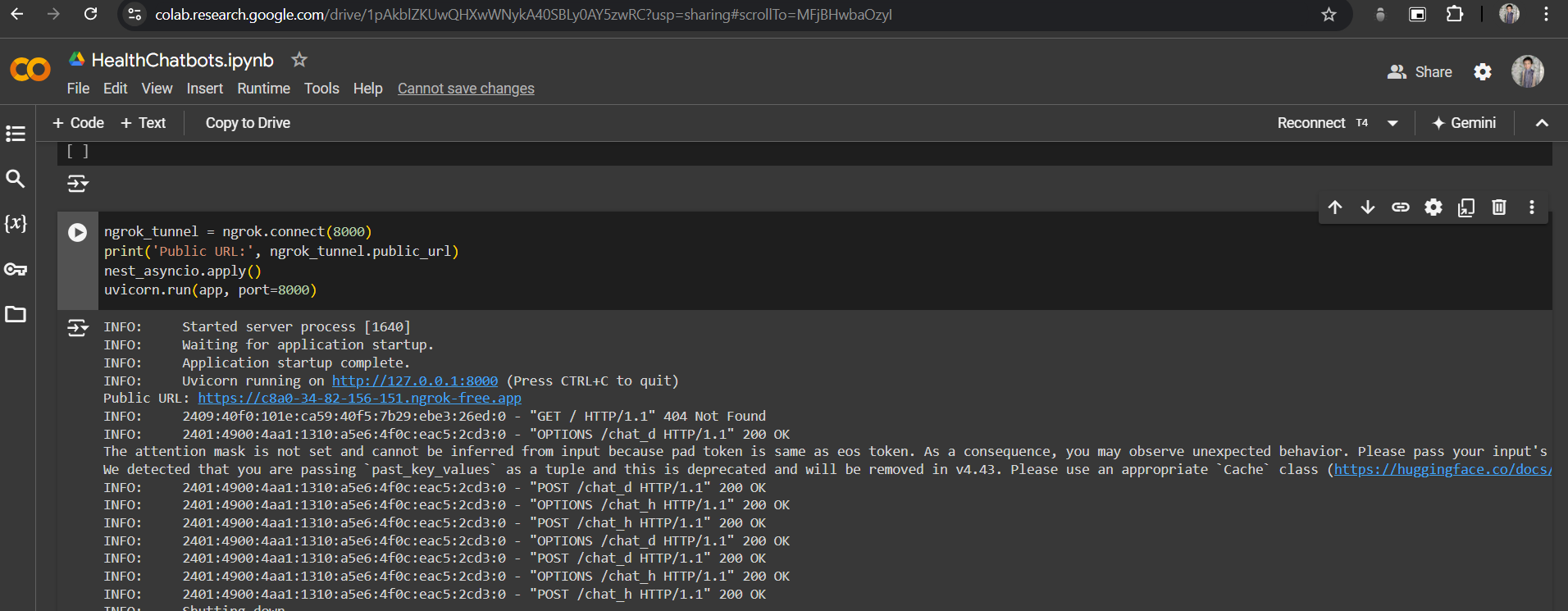
Url generated by colab
-
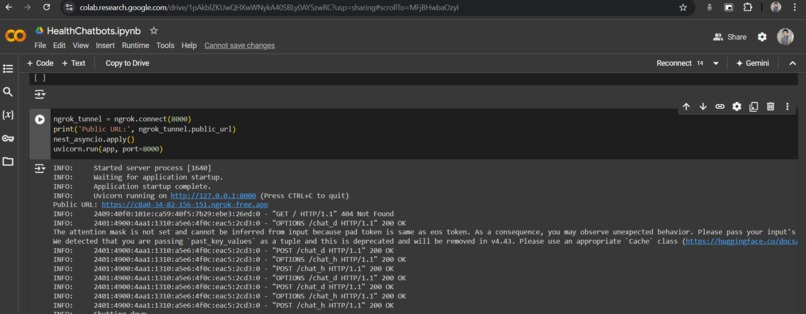
Colab
Inspiration
The inspiration behind the AI-Health-Agent Project stemmed from the growing need for accessible and personalized healthcare solutions. With the rise of chronic diseases and the increasing importance of preventive care, I wanted to create a tool that empowers users to take control of their health. The idea of integrating AI and ML into healthcare intrigued me, especially in terms of providing personalized insights that could significantly improve a user's quality of life. Additionally, the rapid advancements in large language models (LLMs) opened up new possibilities for creating intelligent health assistants that could offer timely advice and support.
What it does
The AI-Health-Agent Project offers a range of AI-powered features designed to help users manage and monitor their health effectively:
Personalized Diet Plans:
The application generates customized diet plans tailored to the user's health goals, dietary preferences, and nutritional needs. By analyzing the user's health data and goals (e.g., weight loss, muscle gain, or managing a specific condition), the AI recommends daily meal plans, complete with nutritional breakdowns and recipes.
Health Condition Diagnosis:
Users can input their symptoms or concerns into the application, and the AI-powered diagnostic tool will analyze the information to provide possible health conditions. While this feature is not a substitute for professional medical advice, it can guide users on when to seek medical attention or how to manage minor health issues.
Health Assistant Chat:
The health assistant chat feature is an intelligent chatbot powered by large language models (LLMs). Users can ask health-related questions, seek advice on lifestyle changes, or get explanations for medical terms. The chatbot provides responses that are informative and contextually relevant, helping users navigate their health queries with ease.
How we built it
The HealthCare Project was built using the MERN stack,uagents,colab,llm models which provided a solid foundation for developing a dynamic and scalable web application. Here's an overview of the development process:
Frontend: I used React.js to create a user-friendly interface that allows users to easily navigate through the different features of the application. The frontend communicates with the backend via RESTful APIs, ensuring smooth data flow. *Backend: **The backend was developed using Node.js and Express.js, with MongoDB as the database to store user data, health records, and AI-generated insights. I implemented various APIs to handle user authentication, data retrieval, and interactions with the AI models. *AI Integration:*We utilized the Gemini API through uAgents to predict health risks and generate personalized diet plans. Instead of traditional machine learning models, the Gemini API allowed us to leverage advanced AI capabilities to deliver accurate and personalized insights. I also integrated a large language model to power the health assistant chat feature, ensuring it could understand and respond to user queries effectively. *Testing and Deployment: After thorough testing to ensure the reliability and accuracy of the AI features, the application was deployed on a cloud platform for scalability and availability.
Challenges we ran into
Building the AI-Health-Agent Project came with its fair share of challenges:
Integrating uagents with the Frontend Application: Integrating uagents into the frontend was a complex process. Ensuring smooth communication between the agents and the user interface involved overcoming compatibility issues, managing asynchronous data flows, and optimizing for responsiveness. This required significant coordination between the backend and frontend teams.
Training LLM Models for Enhanced Accuracy: Training Large Language Models (LLMs) to deliver precise health-related insights posed a considerable challenge. We needed to fine-tune these models with diverse datasets to ensure they could handle a wide range of queries accurately. The challenge was to maintain a balance between general knowledge and the specific requirements of healthcare applications, while minimizing biases and inaccuracies.
Integrating collab with the Frontend Application: Integrating collab into the frontend added another layer of complexity. We faced challenges in ensuring that collaborative features, such as real-time updates and shared data processing, worked seamlessly within the application. Achieving smooth integration while maintaining a consistent user experience required careful planning and troubleshooting.
User Engagement and Retention: Maintaining user engagement and retention was another challenge. We prioritized creating an intuitive user interface and offering personalized insights that encouraged regular interaction. Ensuring the app's features were easy to navigate and consistently valuable was key to keeping users engaged over time.
Accomplishments that we're proud of
We are particularly proud of our ability to successfully integrate cutting-edge technologies like uagents and collab into our application. We are proud of the strong collaboration between our technical, design, and data science teams, which was crucial in overcoming the project's challenges. Our ability to work together effectively, share insights, and support each other through complex problems was a key factor in the successful delivery of the project. We successfully created an interface that is not only easy to navigate but also provides valuable, personalized insights that keep users coming back.
User-Centric Design: We’re proud of the intuitive and user-friendly interface that makes the HealthCare Project accessible to a wide audience. The design focuses on ease of use, ensuring that users can effortlessly navigate the various features and receive the information they need without confusion.
What we learned
We learned that putting the user at the center of the design process significantly enhances engagement and retention. By focusing on creating an intuitive, user-friendly interface and offering personalized insights, we were able to keep users engaged with the application. This experience reinforced the value of user feedback and testing in developing features that truly meet users' needs. The challenges of integrating multiple advanced technologies highlighted the importance of strong collaboration between different teams. Whether it was coordinating between the backend and frontend teams for integrating uagents and collab or working closely with data scientists to train LLM models, effective communication and collaboration were key to overcoming obstacles and achieving our project goals. Throughout the development process, we encountered various unexpected challenges, from integration issues to model training difficulties. We learned the importance of being flexible and adaptable, quickly adjusting our strategies and solutions as needed. This adaptability was key to navigating the complexities of the project and ensuring that we could deliver a high-quality application.
What's next for AI-Health-Agent
We plan to expand the feature set of AI-Health-Agent to include more advanced health monitoring tools. By incorporating more comprehensive health metrics, we aim to provide users with even more personalized and actionable insights. To improve the accuracy and reliability of the AI diagnostic tool, we intend to collaborate with healthcare professionals and incorporate more sophisticated medical datasets. We also plan to introduce machine learning algorithms that can learn from user feedback, continuously improving the tool's diagnostic capabilities and ensuring it stays up-to-date with the latest medical knowledge. To make AI-Health-Agent accessible to a broader audience, we aim to introduce multilingual support. By training our LLM models in multiple languages, we can provide health advice and insights to users around the world, breaking down language barriers and ensuring that more people can benefit from the application. n addition to personalized diet plans, we are considering the development of AI-powered wellness programs that include exercise routines, and lifestyle coaching. These programs would be tailored to individual health goals and conditions, providing a holistic approach to health management.
To support the expansion of AI-Health-Agent's capabilities, we plan to deploy our large language models (LLMs) using AWS SageMaker. This will allow us to scale our AI services efficiently, leveraging the power of SageMaker to train, deploy, and manage our LLMs. The deployment on AWS SageMaker will ensure that our AI models are robust, secure, and capable of handling the increasing demand as we expand the application’s feature set.
Built With
- express.js
- genai
- llm
- mongodb
- ngork
- node.js
- react
- uagents


Log in or sign up for Devpost to join the conversation.