Inspiration
The high cost of personal trainers and nutritionists motivated me to build an AI-powered fitness companion that makes professional health guidance accessible to everyone for free. I wanted one single app that could replace a personal trainer, dietitian, and wellness coach — powered entirely by AI.
What it does
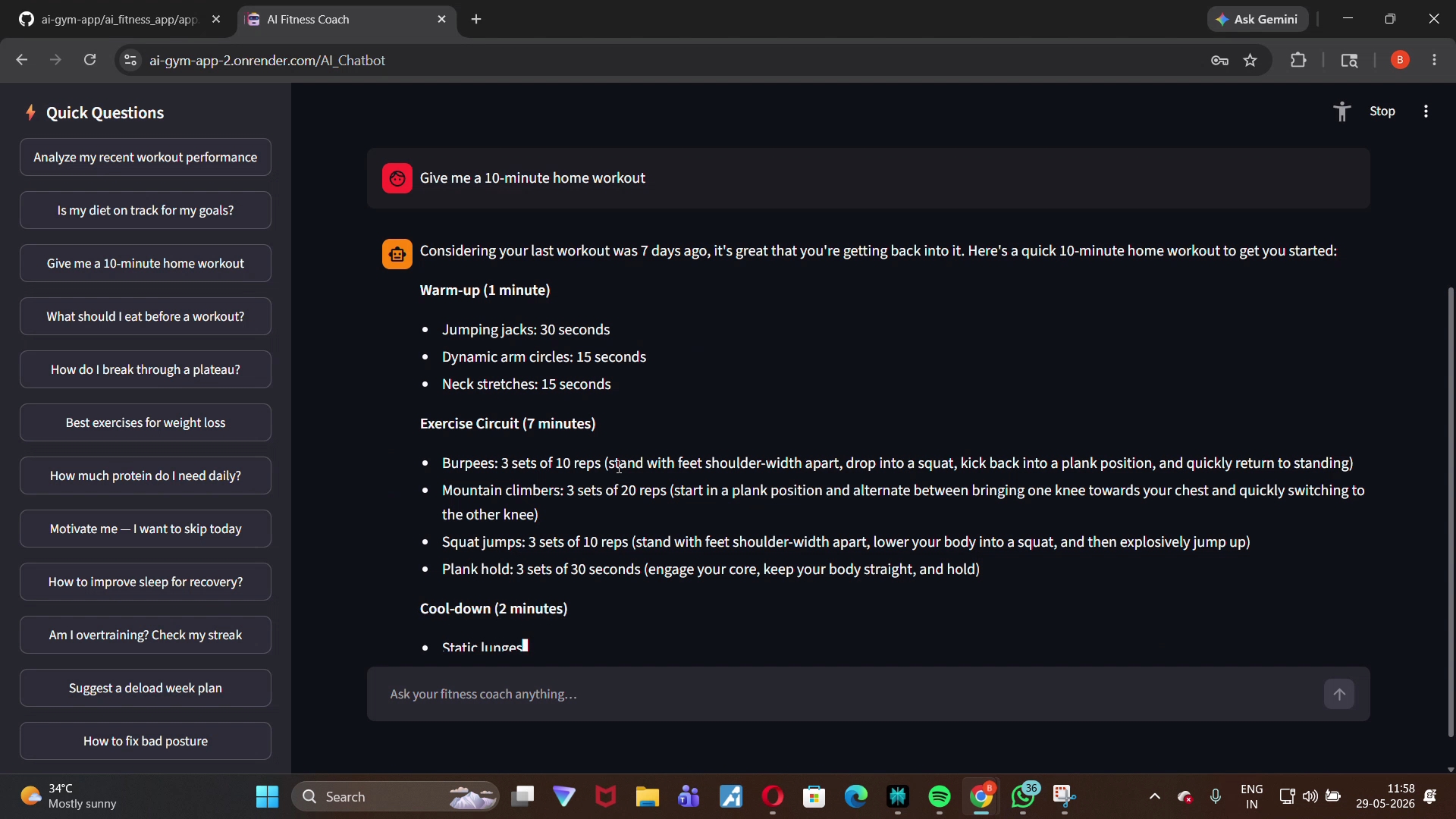
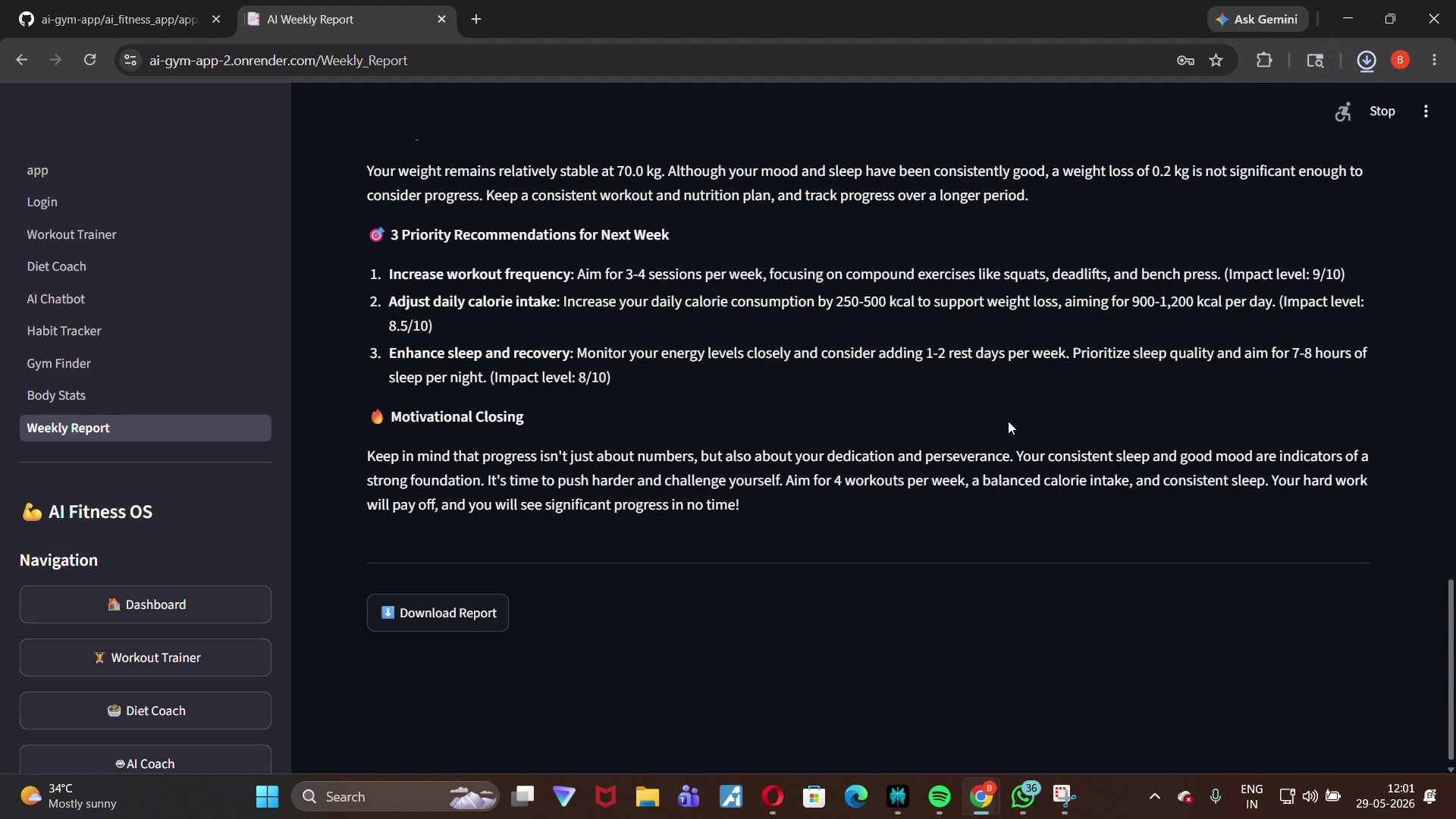
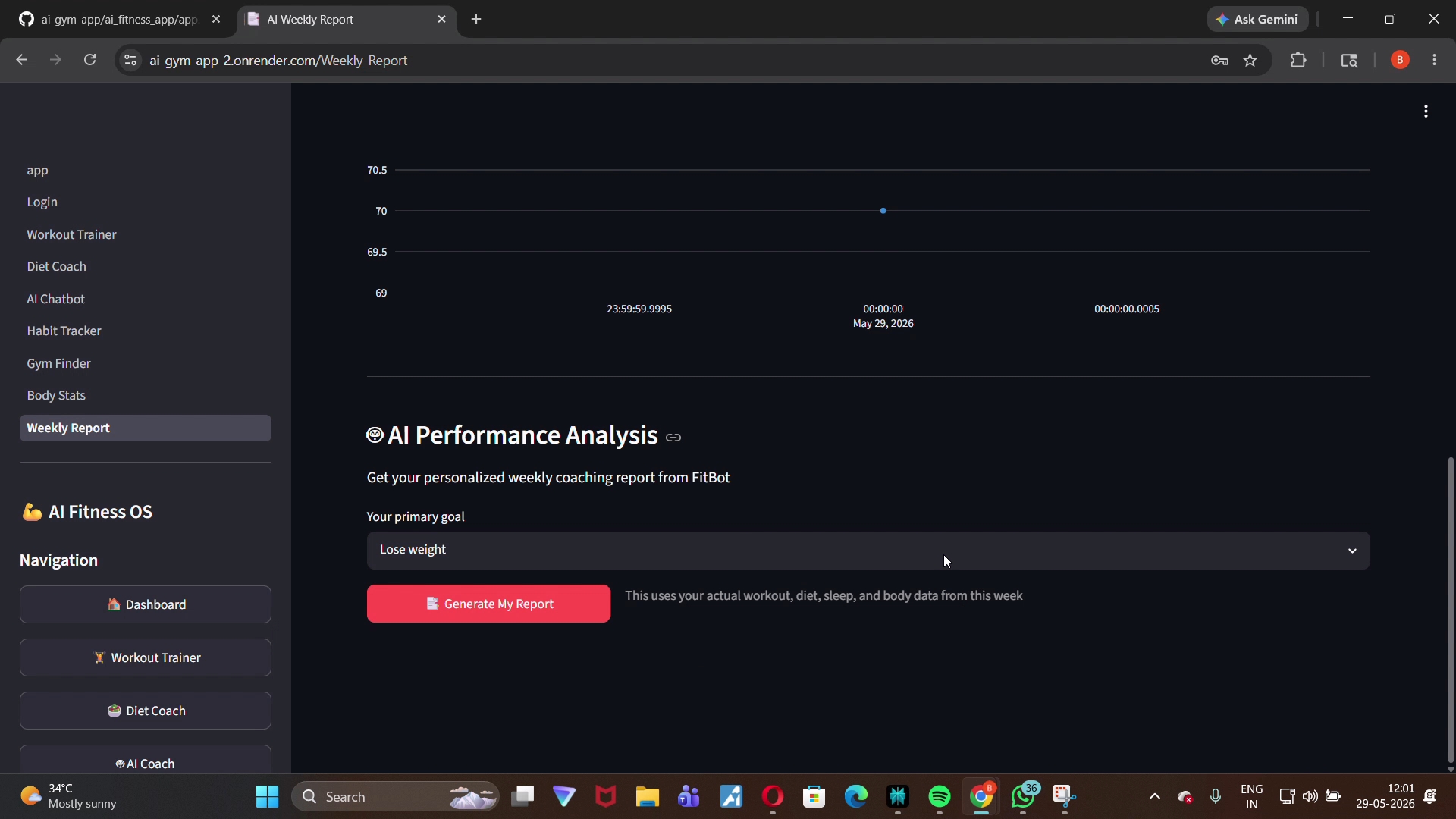
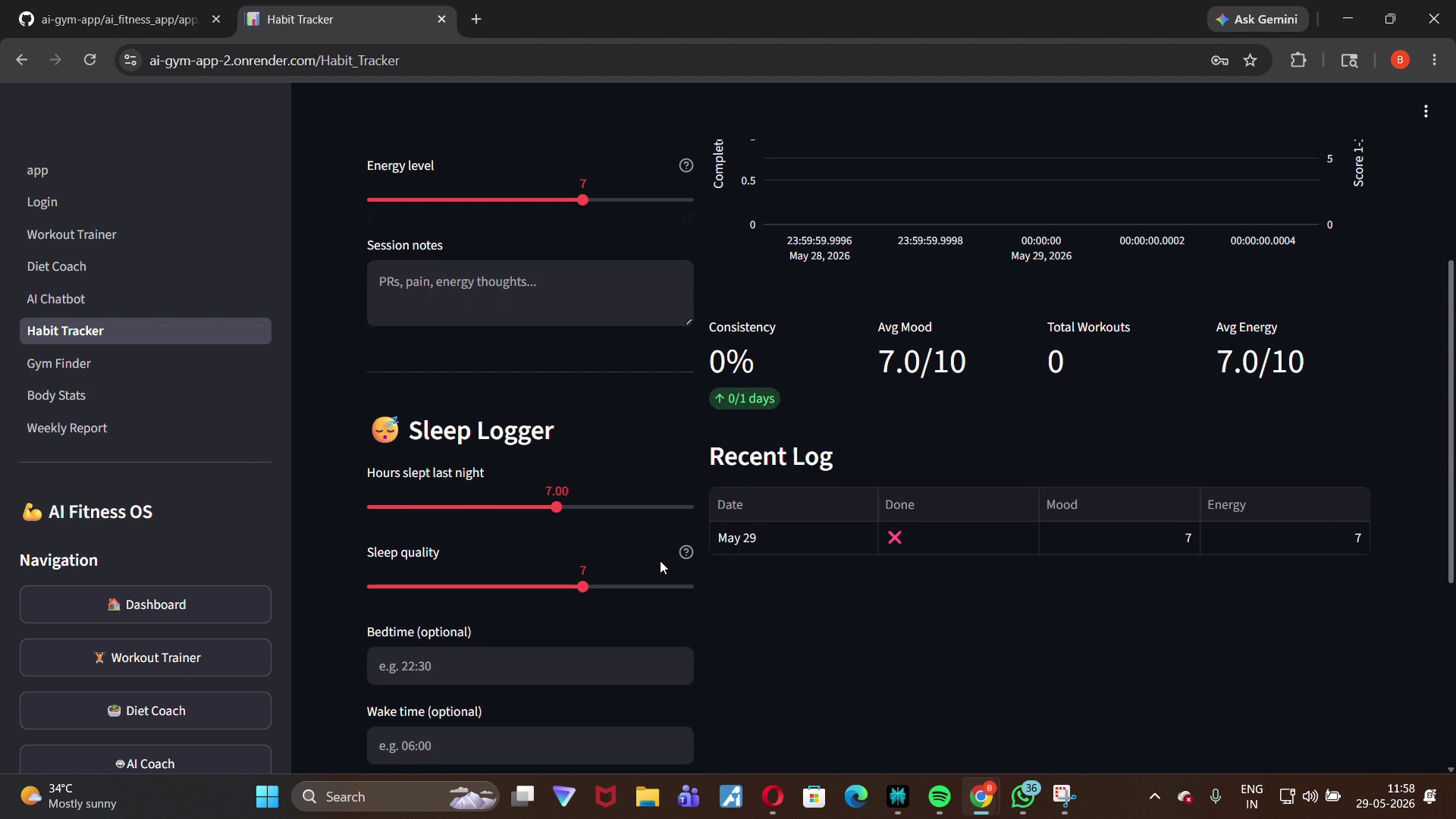
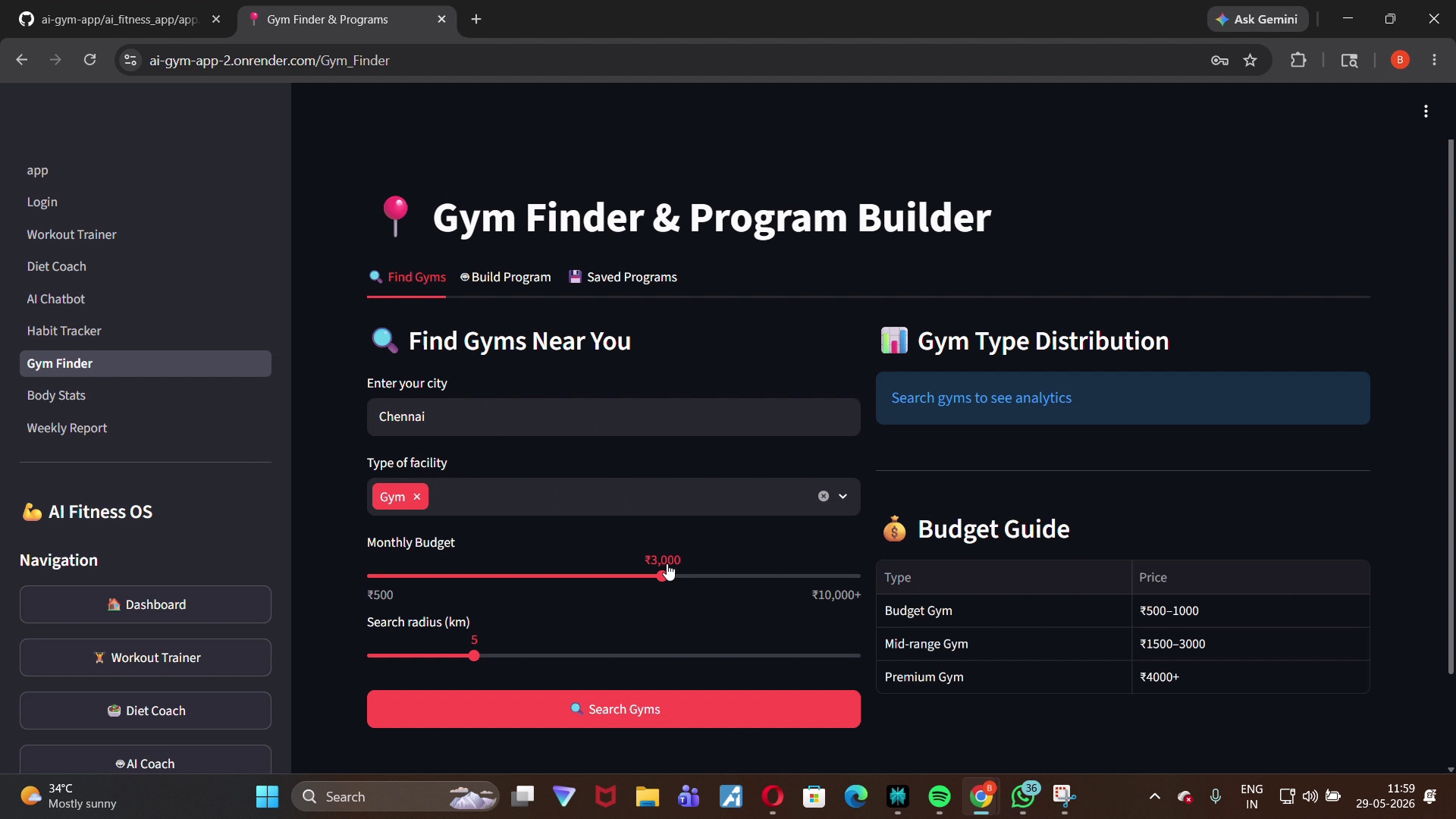
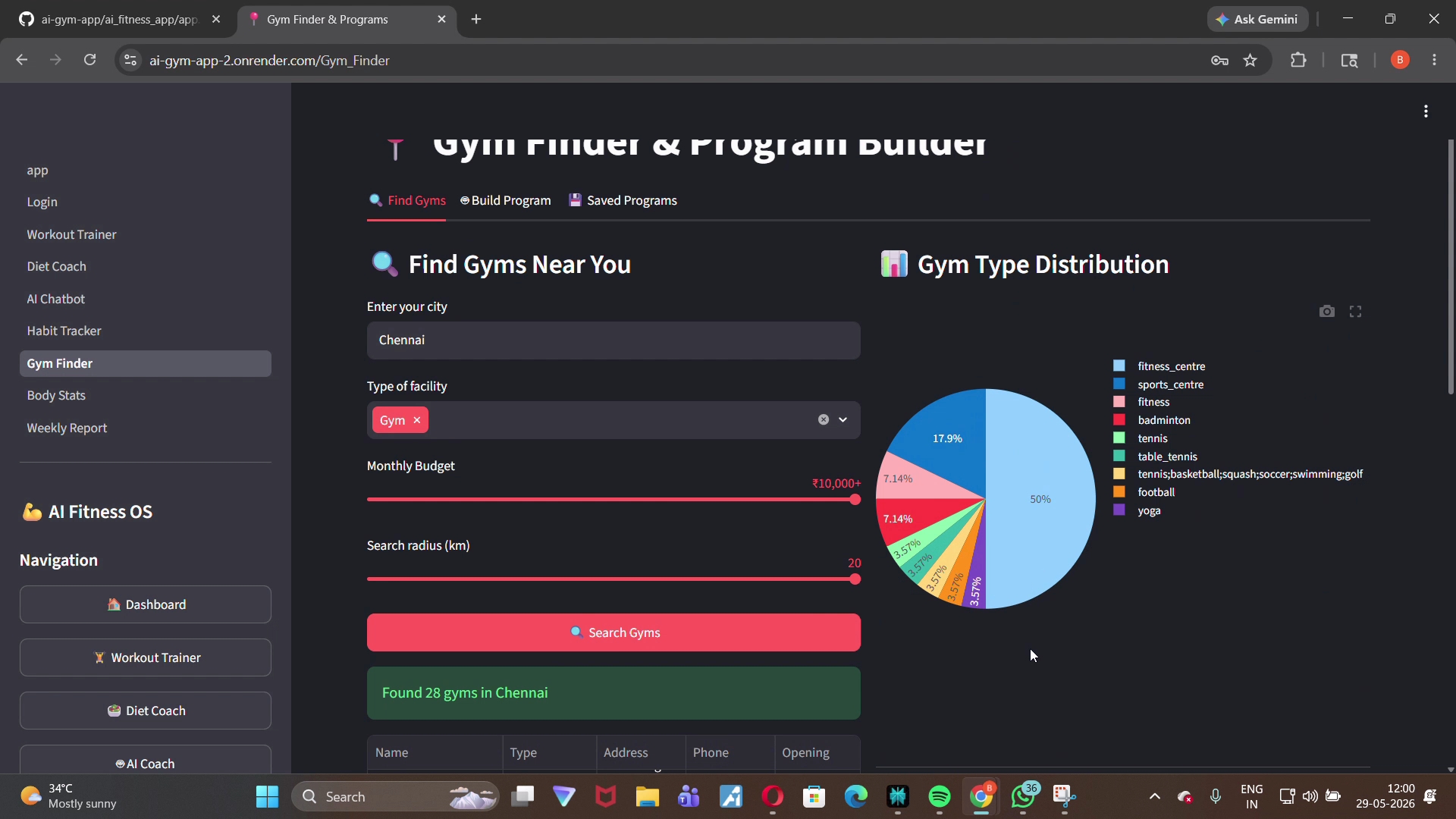
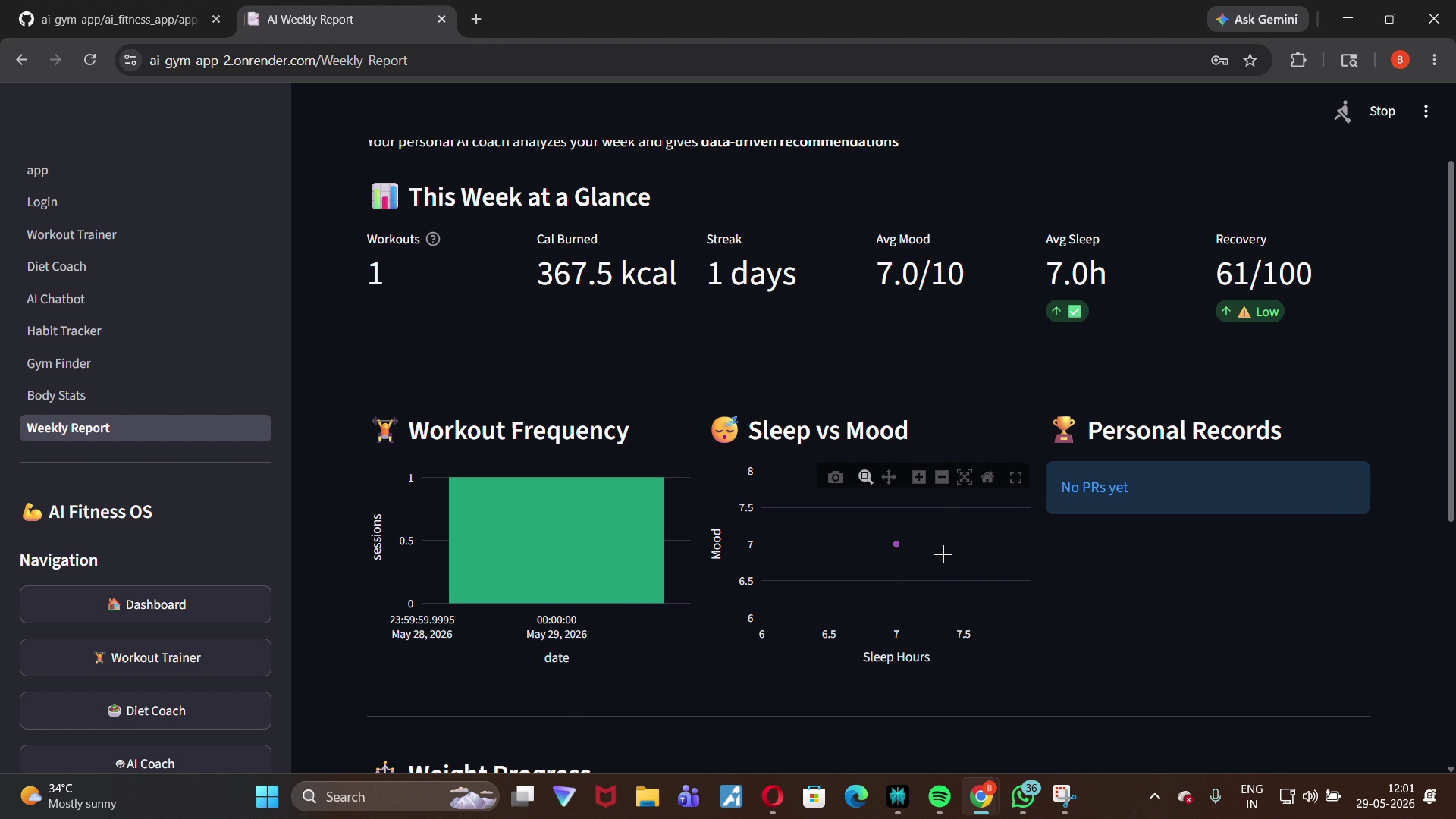
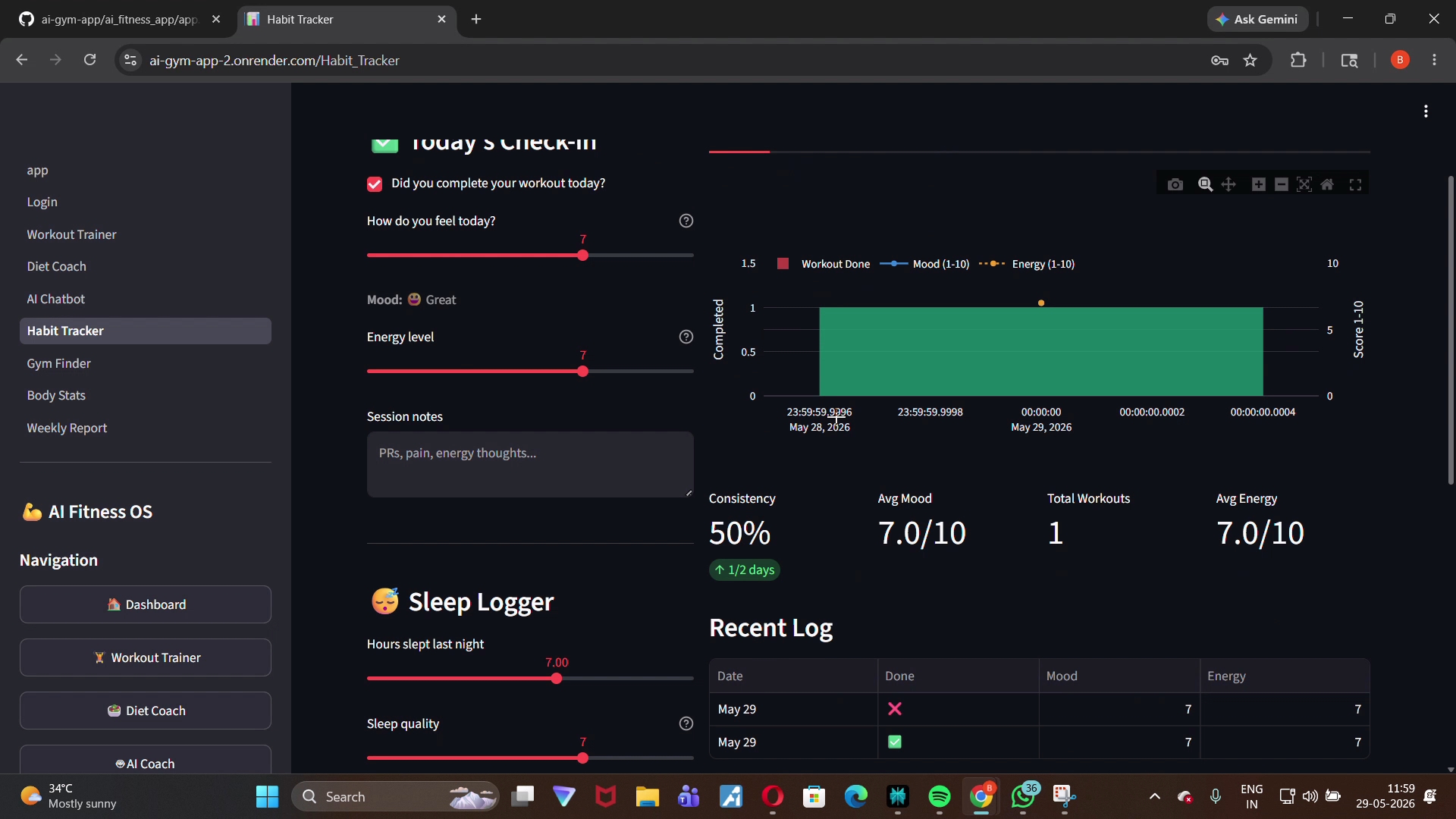
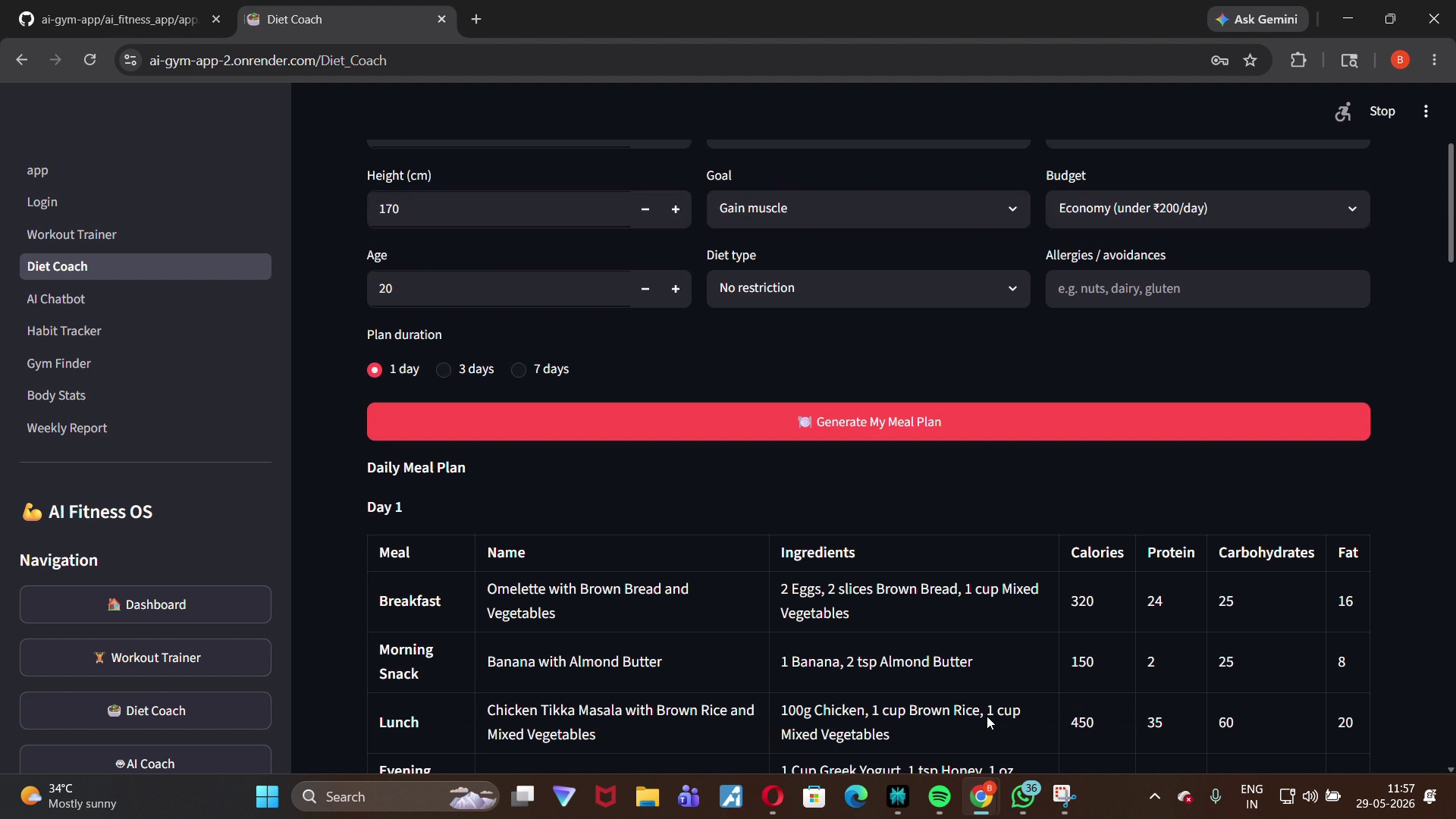
AI Fitness OS is a complete fitness ecosystem that helps users track workouts with a live AI rep counter, log meals and get personalized AI meal plans, chat with FitBot — a context-aware AI coach that knows their personal fitness data, find real gyms nearby, track daily habits, mood, sleep and energy, monitor body stats and BMI, and receive a weekly AI performance report with data-driven coaching recommendations.
How we built it
Built using Python and Streamlit as the core framework. MediaPipe and OpenCV power the computer vision rep counter. Groq LLM drives FitBot and the AI meal plan generator. SQLite handles all user data storage. Plotly renders interactive charts. The UI is custom styled with CSS for a clean modern dark theme. Deployed on Render with GitHub for version control.
Challenges we ran into
Getting MediaPipe to run reliably in a browser environment was the biggest challenge. Managing conflicting dependencies between MediaPipe, OpenCV, and Streamlit during deployment caused repeated failures. Building a context-aware chatbot that reads and understands the user's own fitness data in real time was technically complex. Connecting 8 different pages into one unified data ecosystem while keeping performance fast was also challenging.
Accomplishments that we're proud of
Successfully building a live AI rep counter that works directly in the browser using computer vision. Creating FitBot — a truly context-aware AI coach that gives personalized advice based on the user's actual data. Delivering a fully working 8-page fitness app with AI meal planning, gym discovery, habit tracking, body stats, and weekly AI reports — all connected to one database and deployed as a live web application.
What we learned
How to integrate computer vision into a web application. How to build context-aware AI chatbots using Groq LLM. How to manage complex Python dependencies in deployment. How to design a multi-page app with a shared database. How to combine multiple AI technologies into one seamless and user-friendly product.
What's next for AI-GYM-APP
Adding a mobile-friendly responsive design for phone users. Replacing MediaPipe with a more deployment-friendly computer vision solution. Adding push notifications for workout and water intake reminders. Introducing a social feature where users can share progress and compete on leaderboards. Expanding FitBot with voice interaction and deeper health insights using wearable device integration.

Log in or sign up for Devpost to join the conversation.