-
-
-
-
ui
-
-
Inspiration
International payments often look simple, but in reality, they hide multiple layers of cost. Fixed fees, percentage fees, FX markups, and settlement delays make it very hard for users to understand how much money they are actually losing. Most platforms focus on convenience but rarely explain the real trade-offs.
The inspiration for AI Global Payment & Cost Optimizer came from seeing how freelancers, expats, and small businesses regularly lose money due to unclear pricing and a lack of transparency. We wanted to build a tool that not only compares payment options, but also explains why one option is better than another in simple human language.
What it does
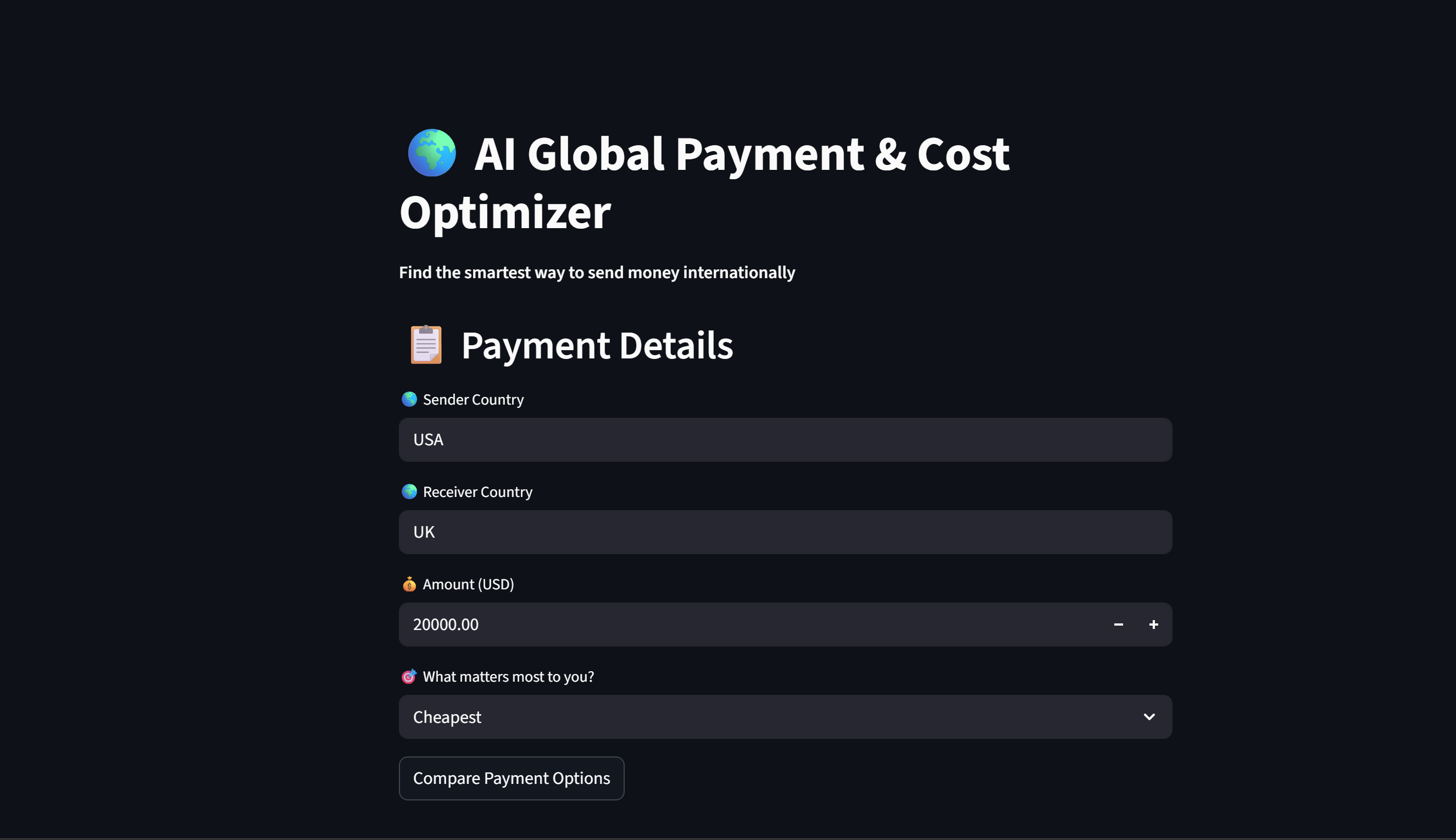
AI Global Payment & Cost Optimizer helps users find the smartest way to send money internationally.
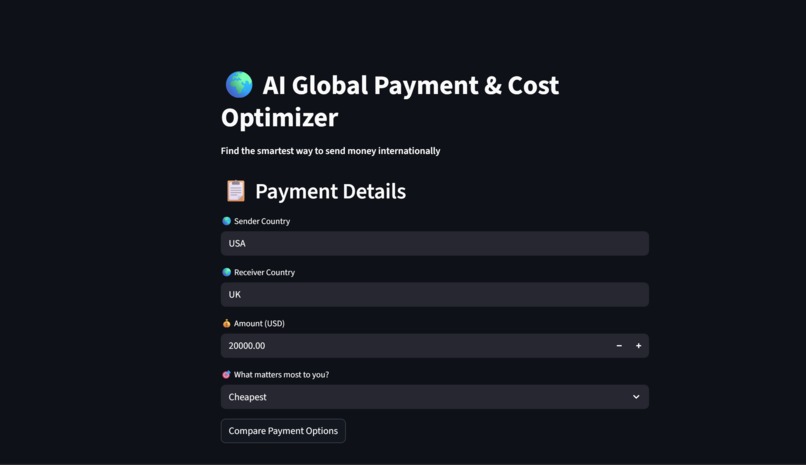
Users enter the sender country, receiver country, transfer amount, and their priority (cheapest, fastest, or balanced). The system then:
- Calculates real fees and FX losses using transparent, rule-based logic
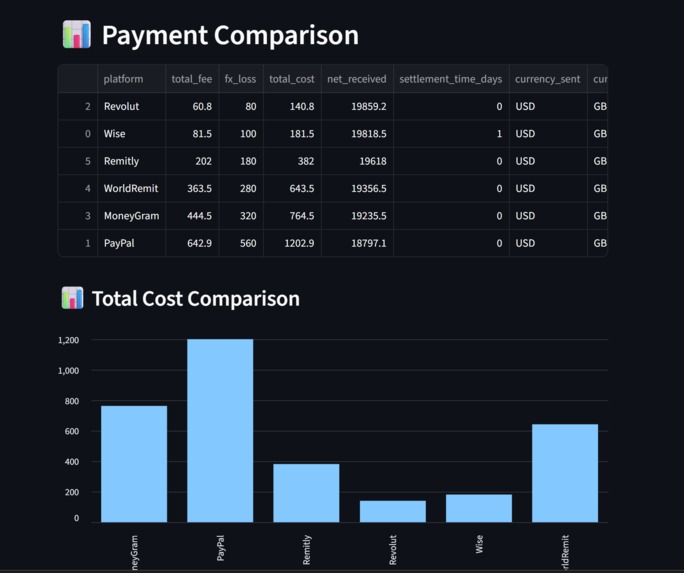
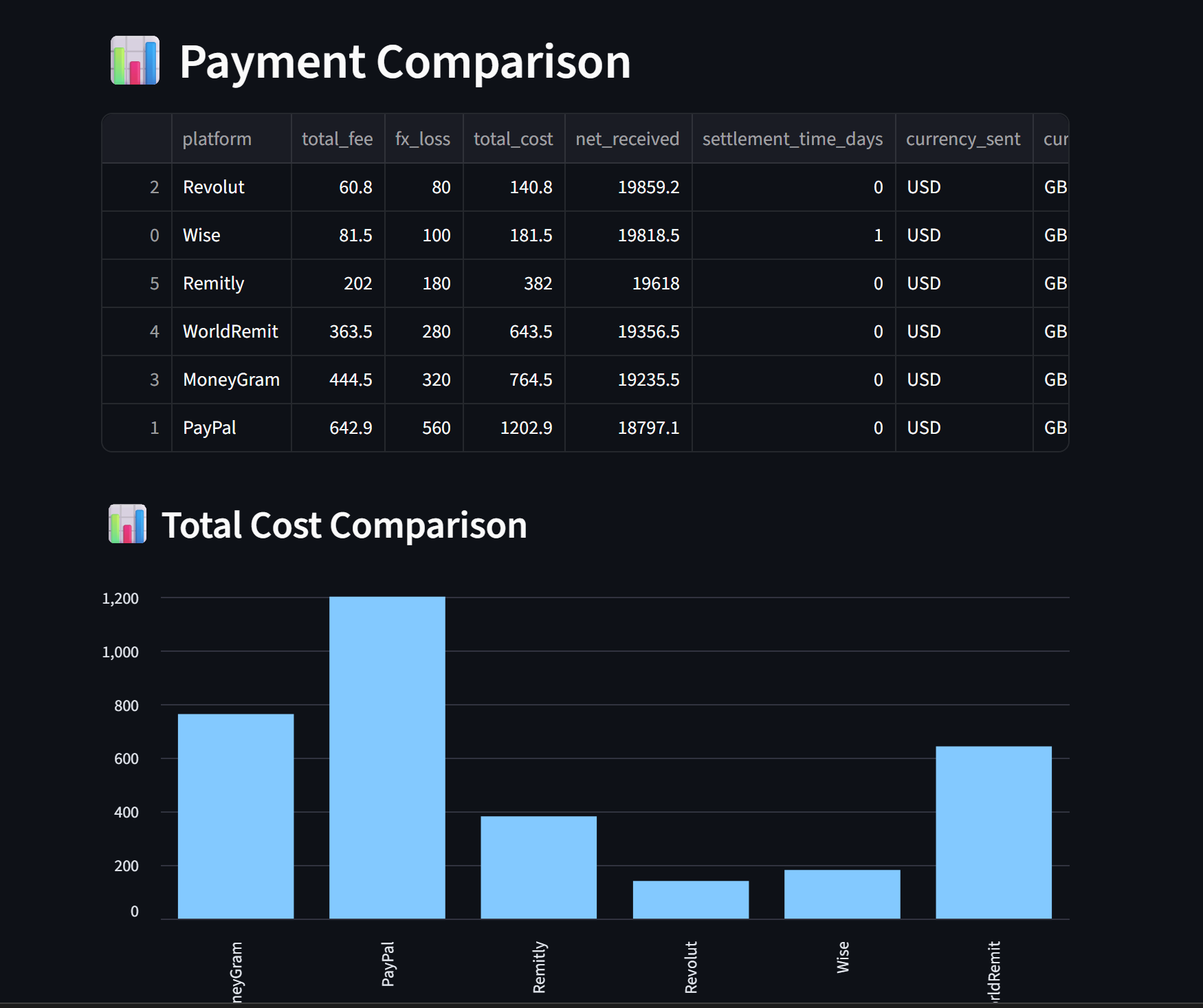
- Compares multiple payment platforms side by side
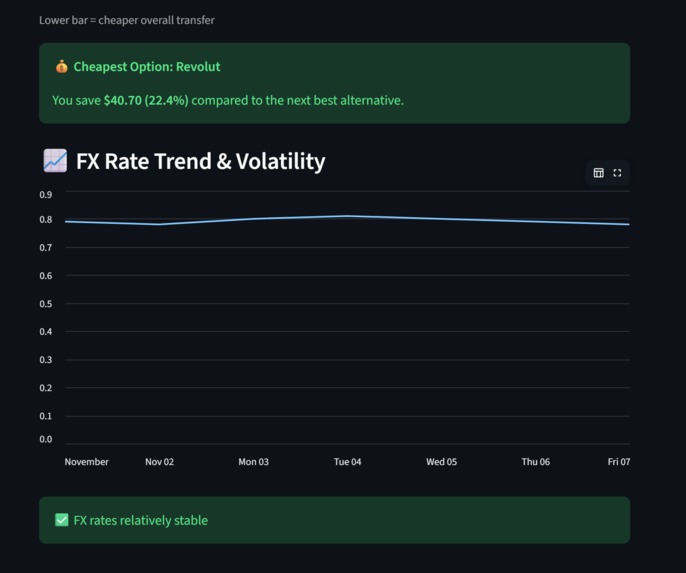
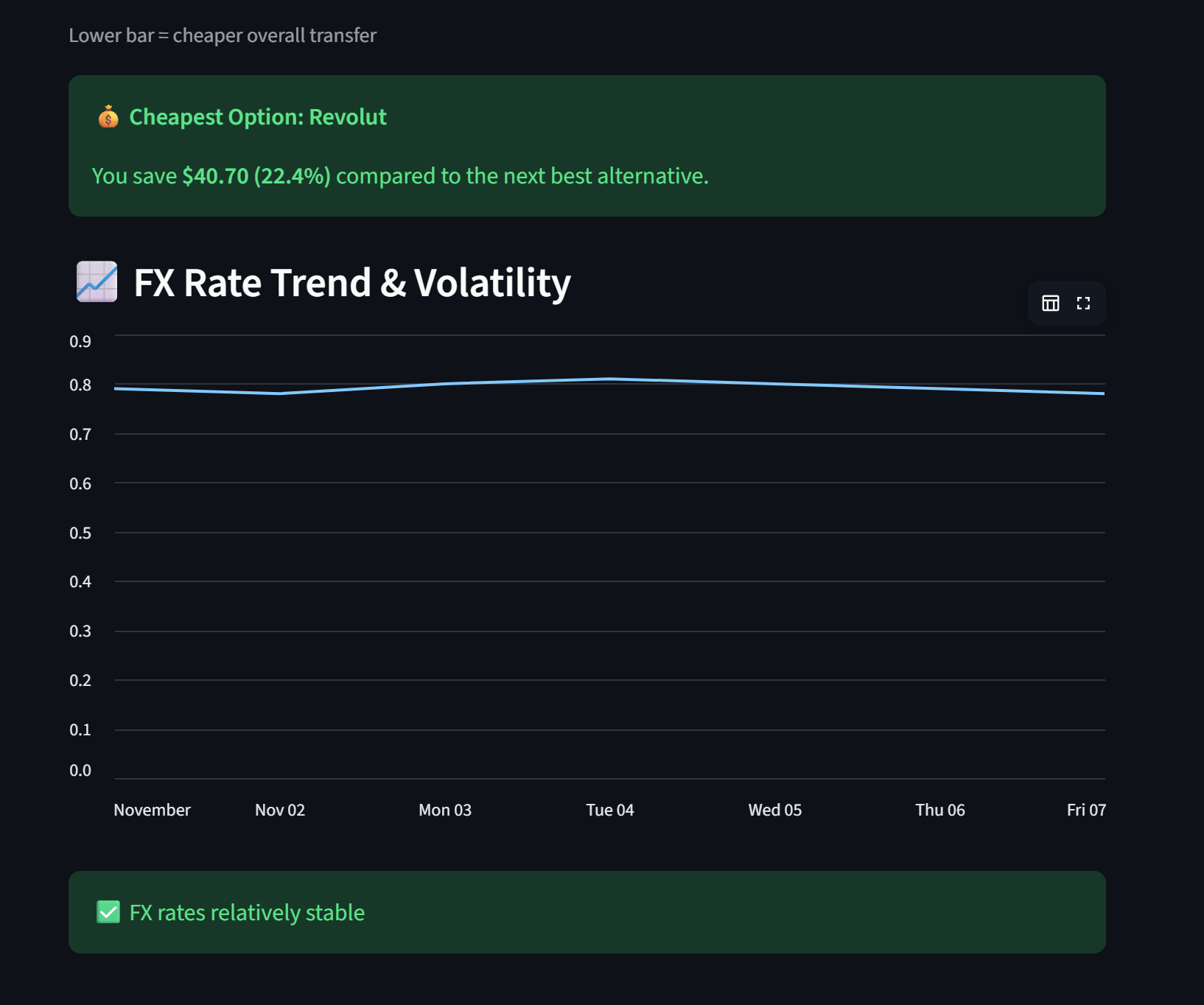
- Shows visual cost comparisons and estimated savings
- Analyzes FX trends and volatility
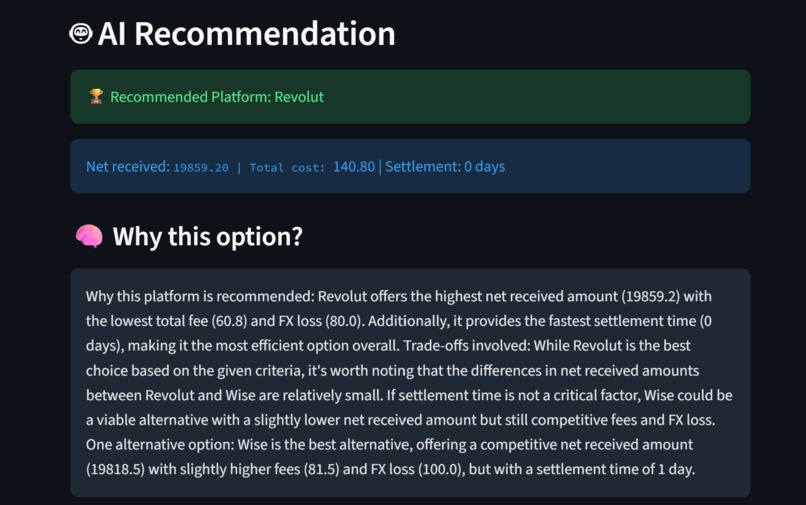
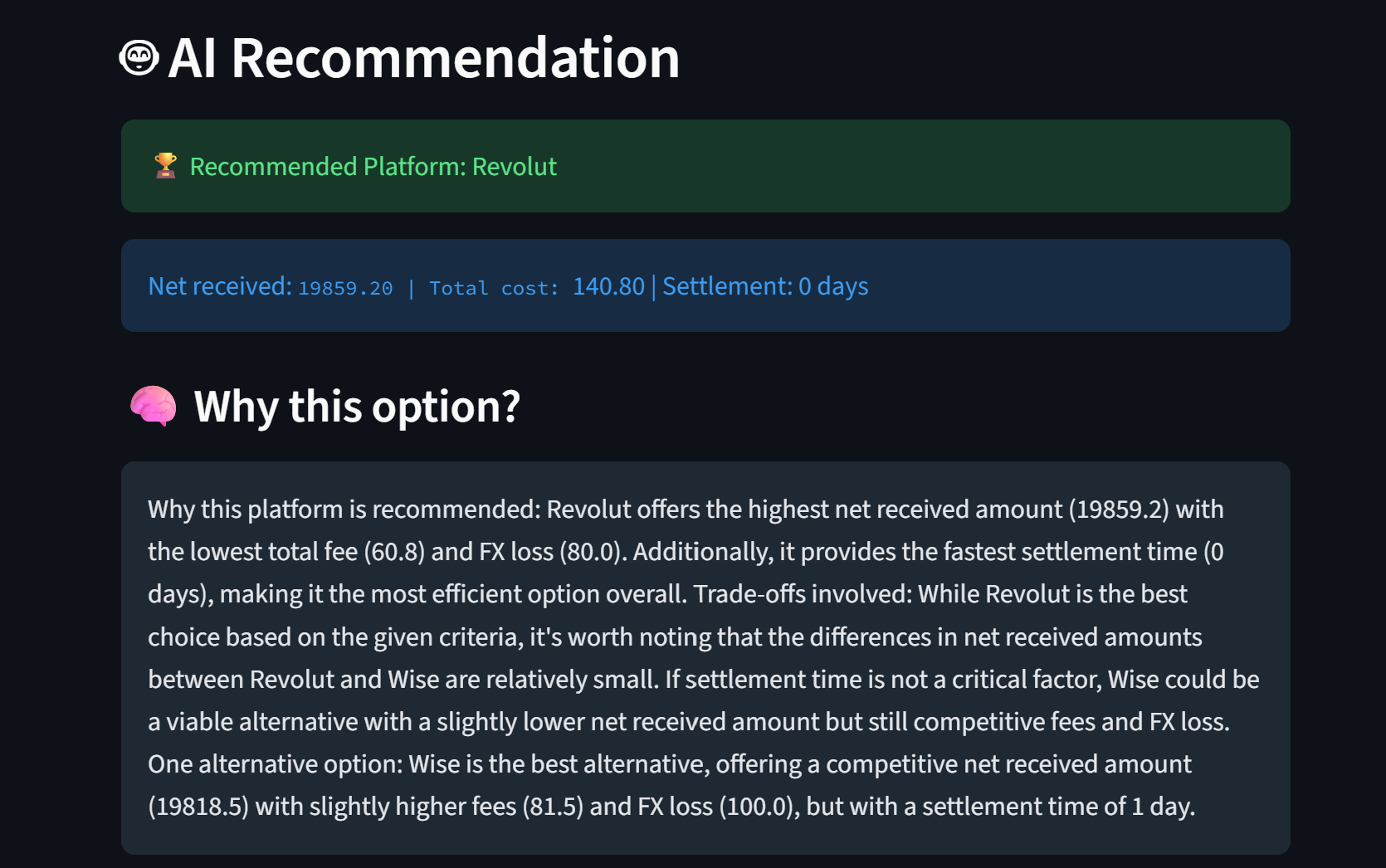
- Uses AI to explain the trade-offs and recommend the best option
The result is not just a calculation, but a clear decision with reasoning.
How we built it
The project is built using Python and Streamlit for a simple and interactive user interface. All financial calculations are deterministic and rule-based to ensure accuracy and transparency. Payment provider data is stored in editable CSV files, making the system easy to extend without changing code.
AI is integrated through OpenRouter and is used only for reasoning and explanation, not for calculations. The AI analyses pre-computed results and explains why one option is better based on cost, speed, and user preference.
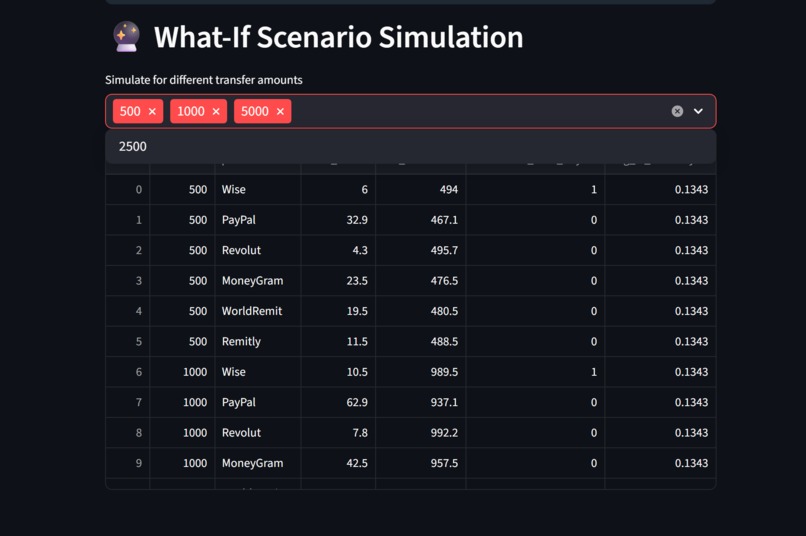
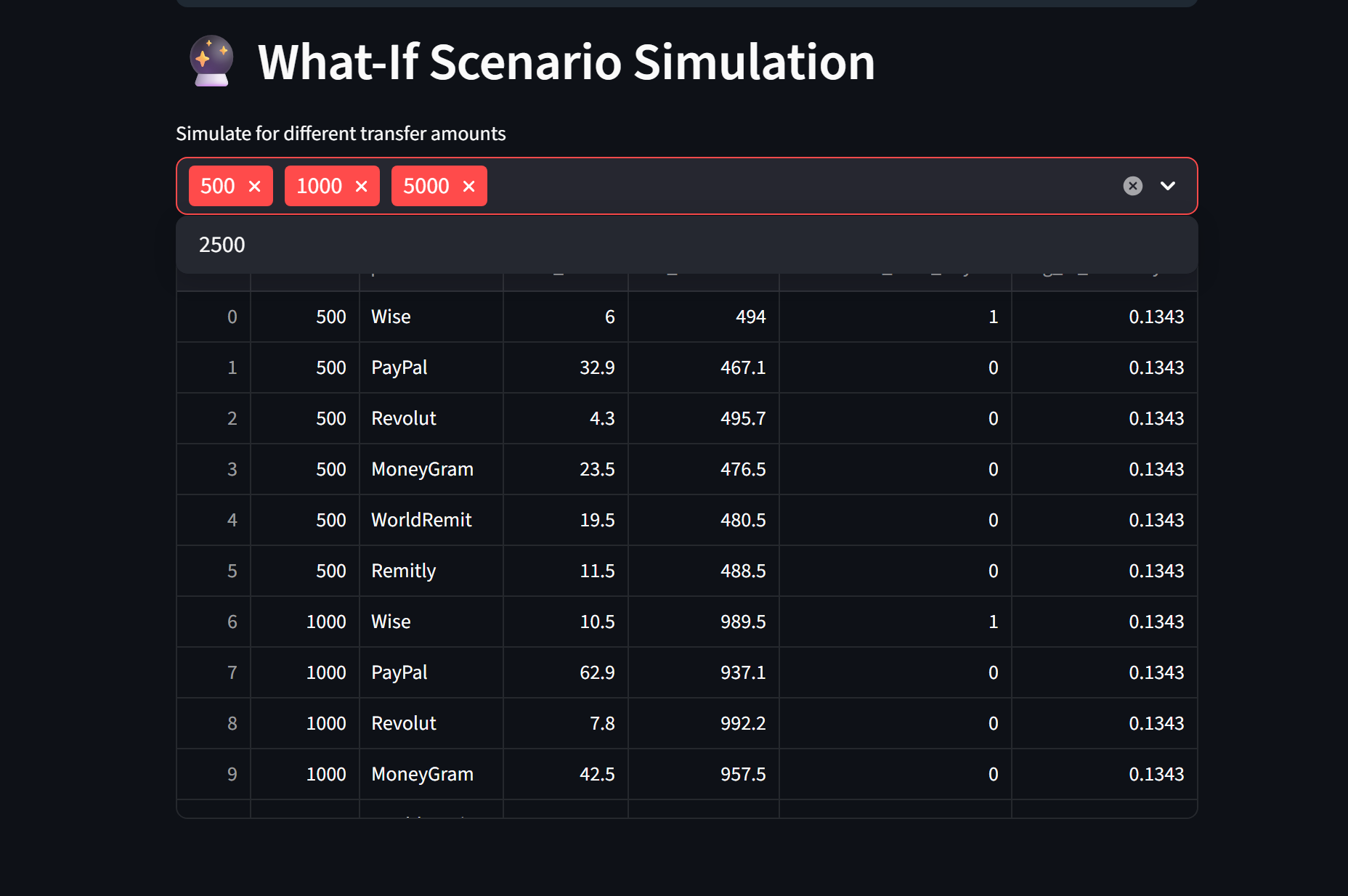
We also added scenario simulation and FX volatility insights to make the tool feel more realistic and decision-oriented, even without live APIs.
Challenges we ran into
One major challenge was balancing realism with hackathon constraints. Using live FX APIs would increase complexity and cost, so we focused on realistic historical data while clearly designing the system to support live data in the future.
Another challenge was ensuring the AI produced meaningful explanations instead of generic responses. This required careful prompt design and structuring of input data so the AI focused on reasoning rather than repeating numbers.
Managing multiple features while keeping the codebase clean and modular within a limited time was also a significant challenge.
Accomplishments that we're proud of
- Built a transparent and explainable fintech decision tool
- Combined rule-based calculations with AI reasoning in a responsible way
- Added preference-based personalisation without hiding logic
- Created visual insights and scenario simulations for better decision-making
- Designed an architecture that can scale to real-world fintech use cases
What we learned
We learned that AI adds the most value when it explains decisions rather than replaces logic. Separating calculation from reasoning builds far more trust than black-box automation.
We also learned the importance of clear data modelling and UI clarity in fintech applications, where small differences can have a large financial impact. Most importantly, we learned how to design systems that are both hackathon-ready and production-minded.
What's next for AI Global Payment & Cost Optimizer
Future improvements include:
- Integrating live FX rates and real payment provider APIs
- Expanding coverage to more countries and payment corridors
- Adding confidence scores and risk indicators
- Supporting recurring payment optimization for freelancers and businesses
- Enhancing AI personalisation based on usage patterns
- Deploying a scalable backend for production use


Log in or sign up for Devpost to join the conversation.