-
-
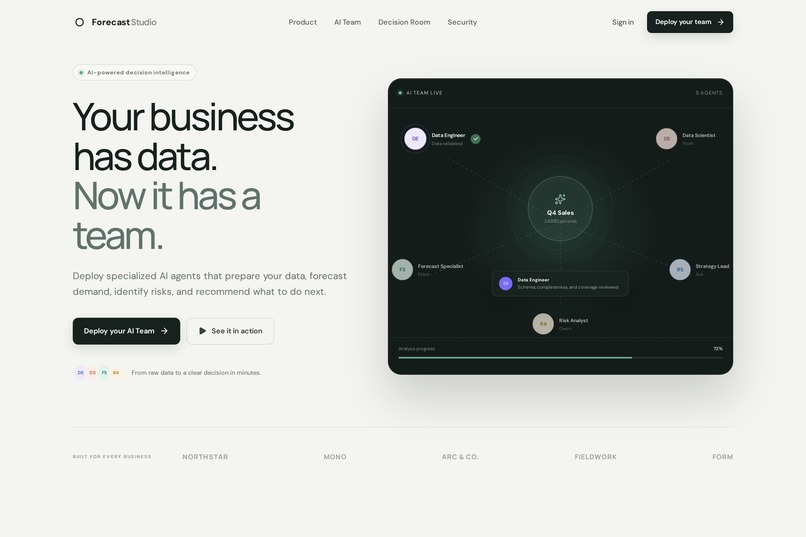
Landing
-
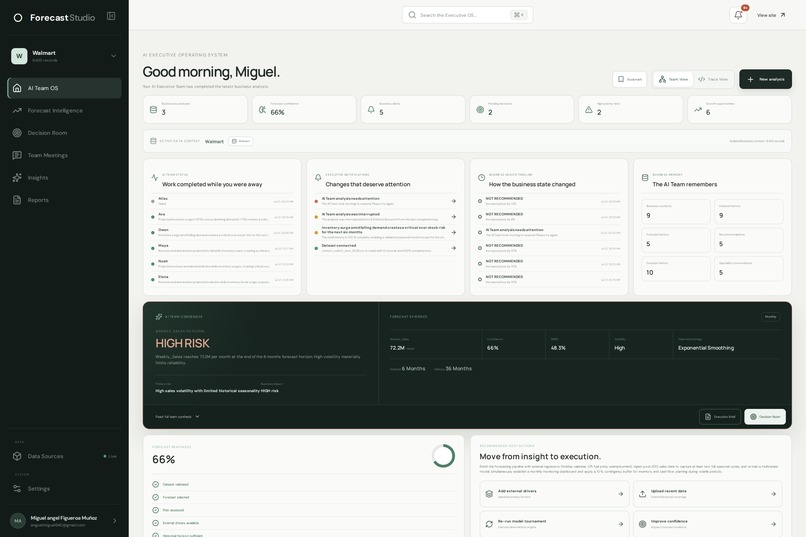
AI Team OS
-
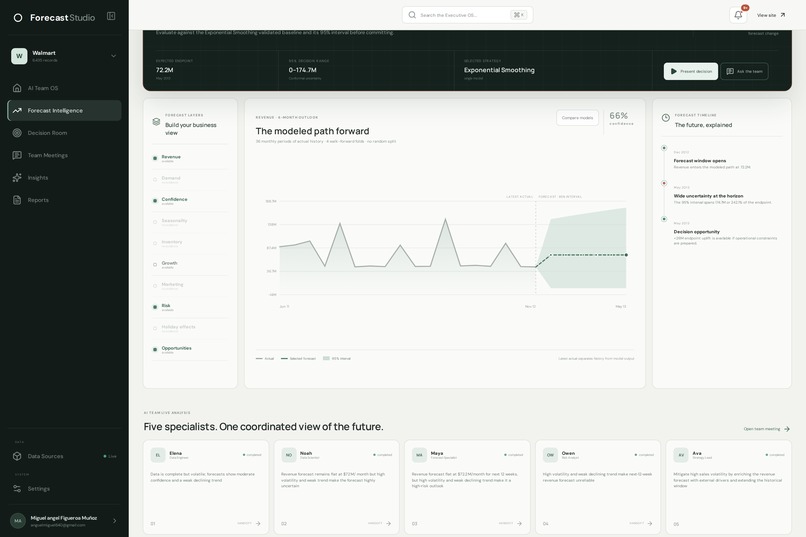
Forecast Intelligence
-
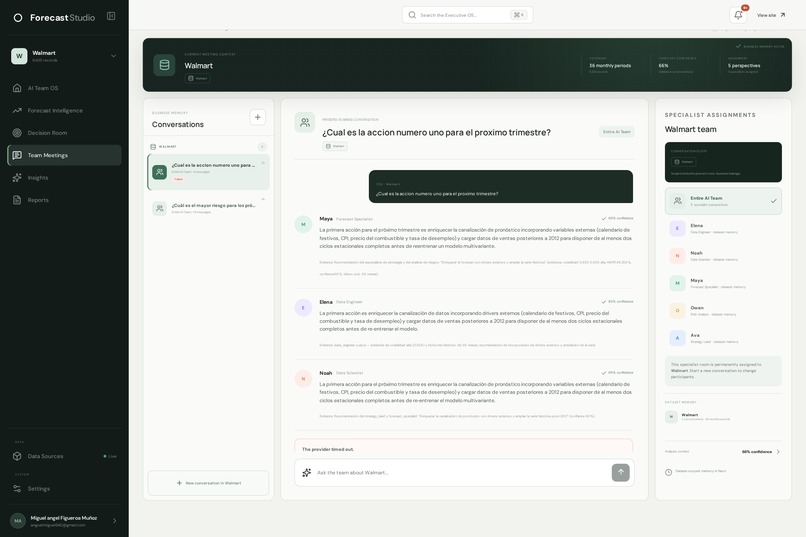
Team Meetings
-
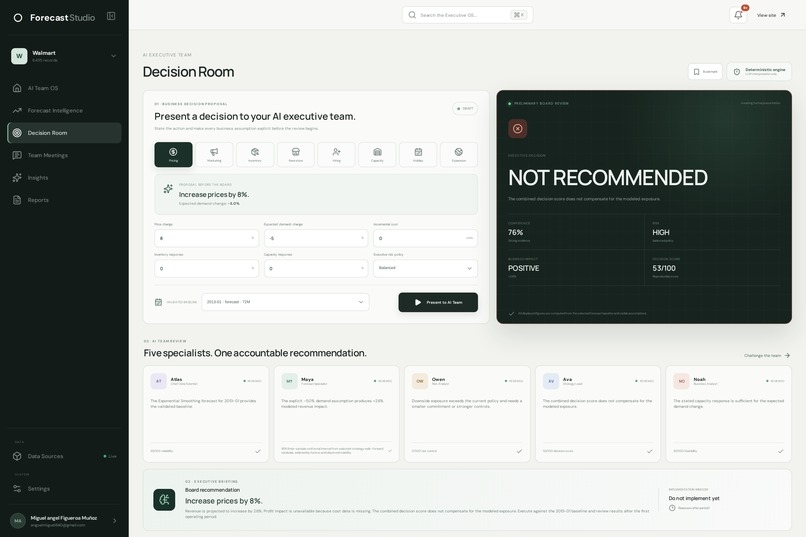
Decision Room
-
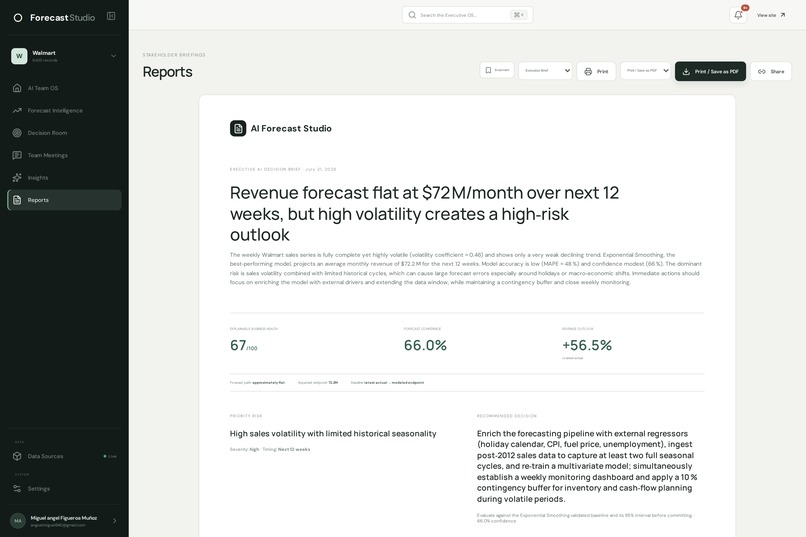
Reports
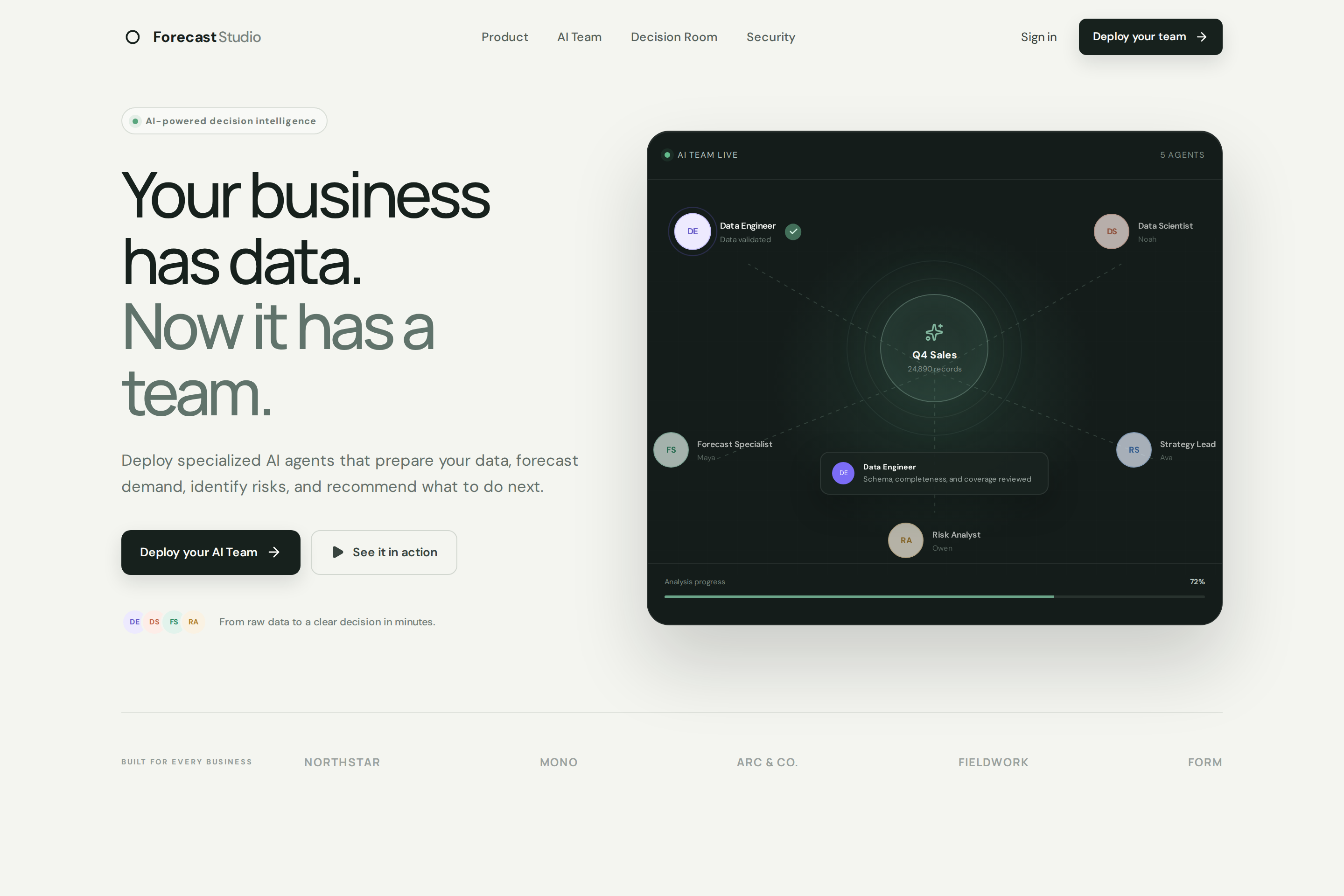
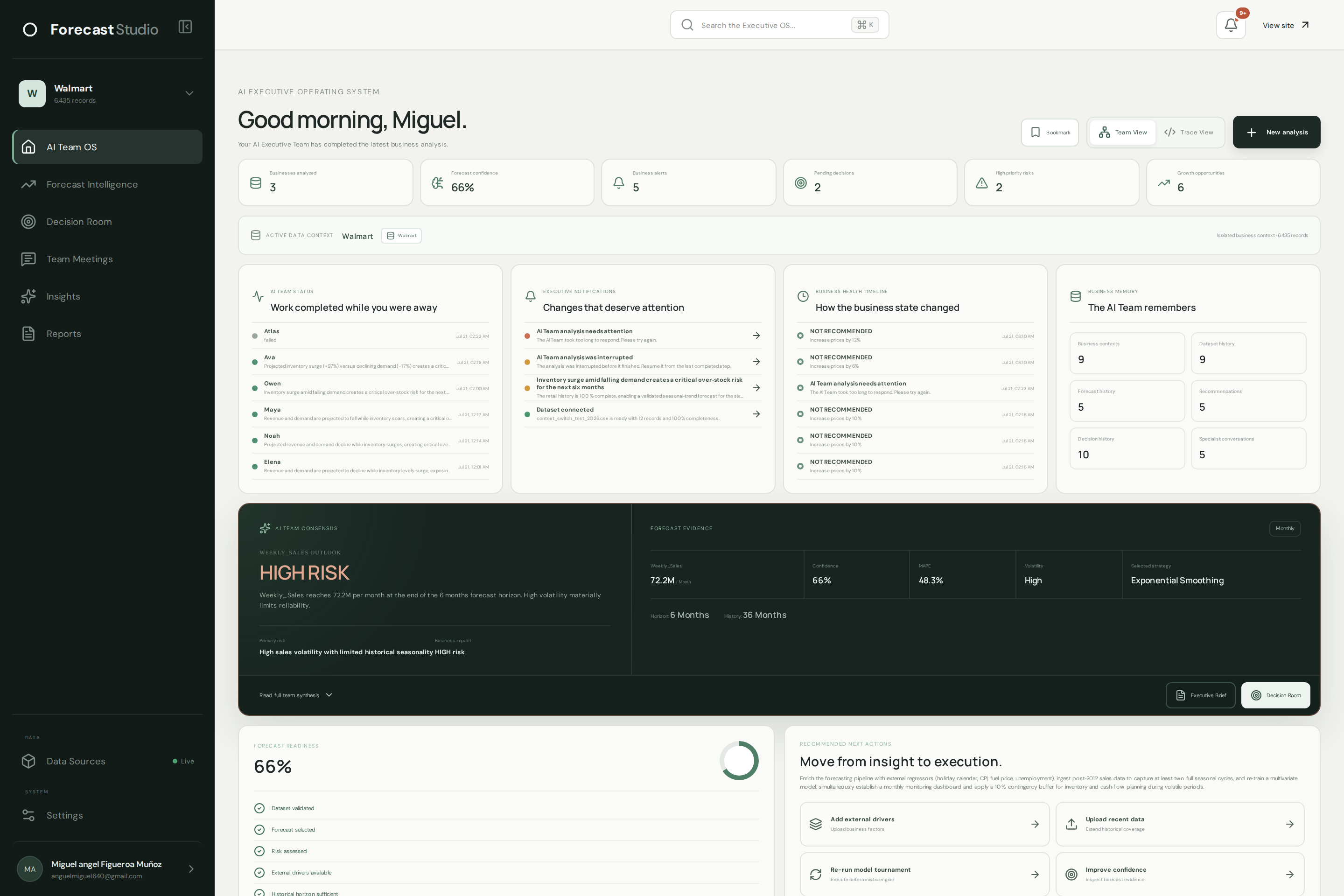
AI Forecast Studio
Inspiration
What if any business could hire its own data science team in under 30 seconds?
Small and medium businesses generate data every single day, but very few can afford data scientists, forecasting specialists, or a BI team. And the tools that exist assume you already understand statistics, ML models, and dashboards — exactly the knowledge these businesses don't have.
So we flipped the premise. Instead of another forecasting dashboard, we give people a team: upload your business data and your own AI Data Science Team gets to work.
What it does
AI Forecast Studio is a Data Science Team as a Service.
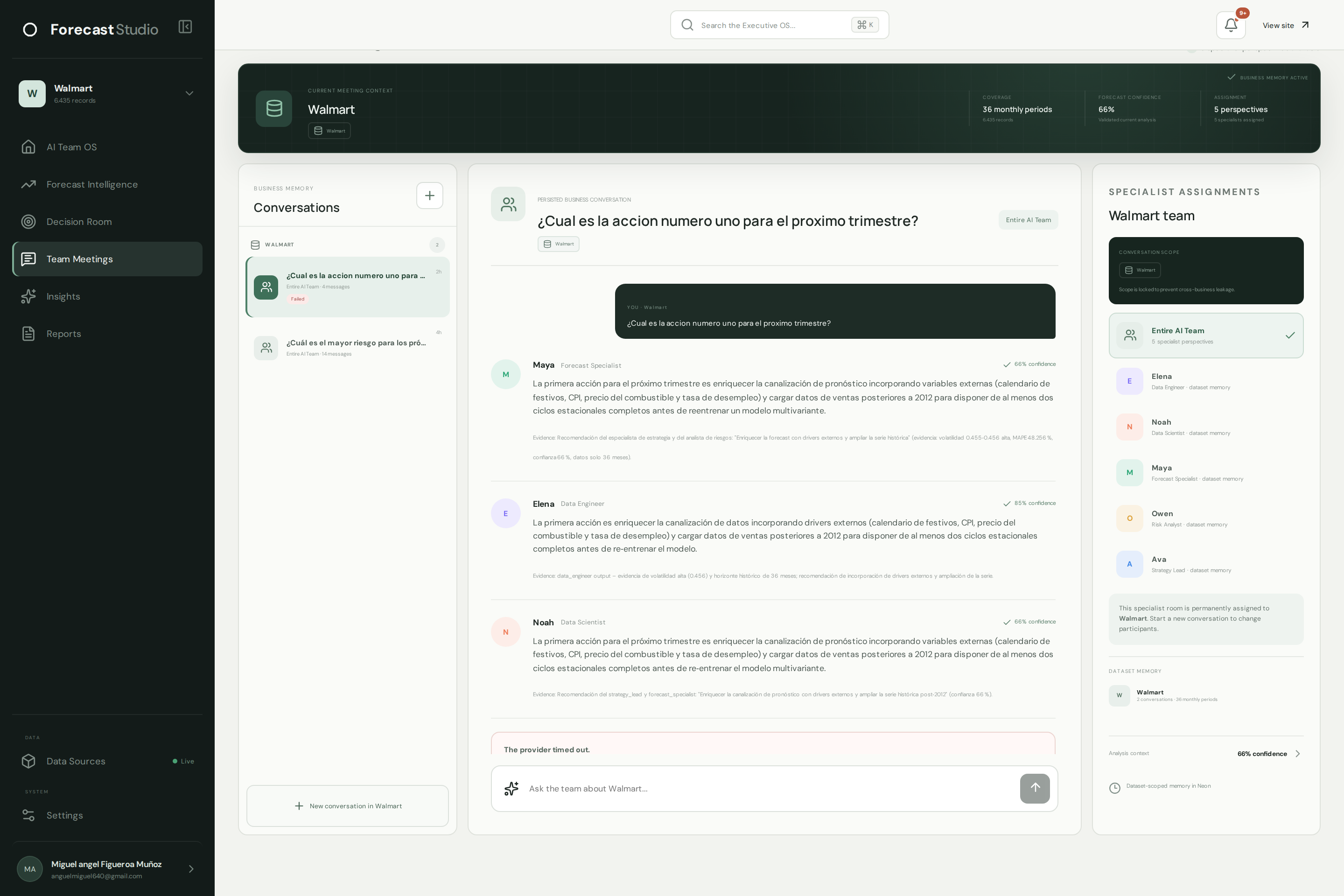
Rather than behaving like an analytics platform, it works like a consulting team of specialized AI agents collaborating in real time:
- Atlas – Chief Data Scientist
- Maya – Forecast Specialist
- Noah – Data Engineer
- Owen – Risk Analyst
- Ava – Business Strategy Lead
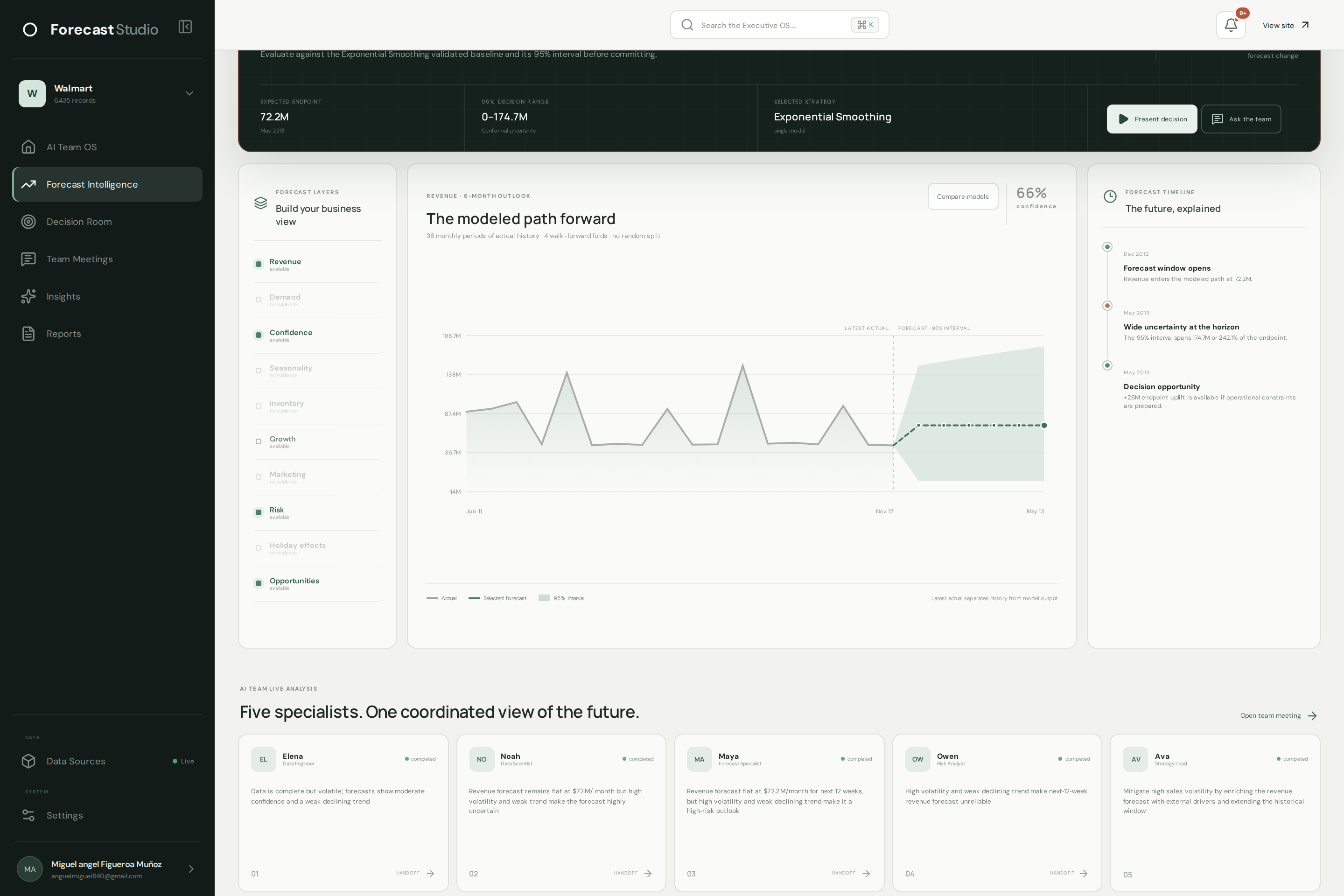
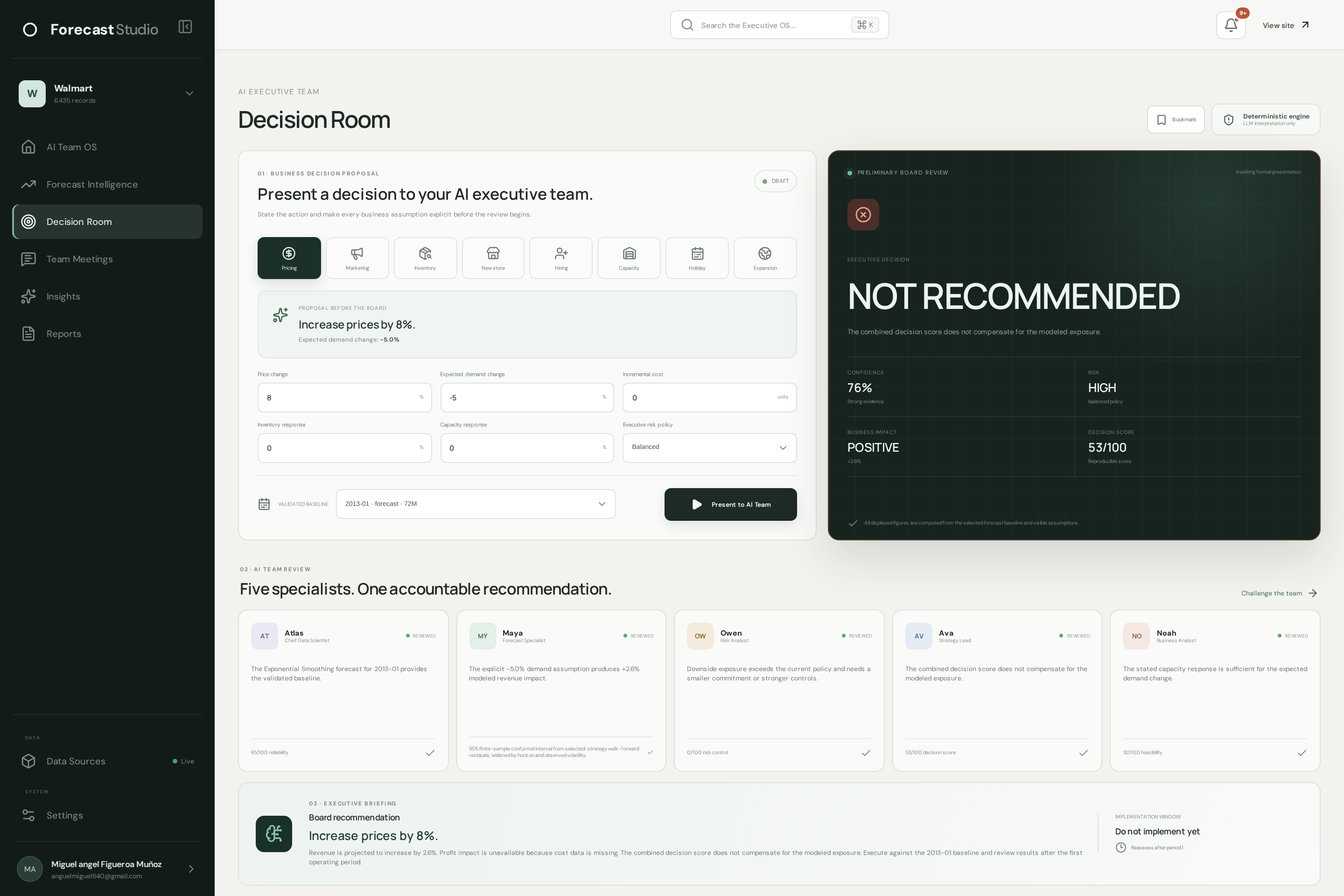
You upload a CSV or Excel file and the team takes over. Noah validates the dataset, Maya detects trends and seasonality and — with the rest of the team — tests several statistical and machine learning models to forecast revenue and demand, Owen flags risks and opportunities, and Ava turns it all into executive recommendations. Atlas coordinates everyone and explains every decision in plain language.
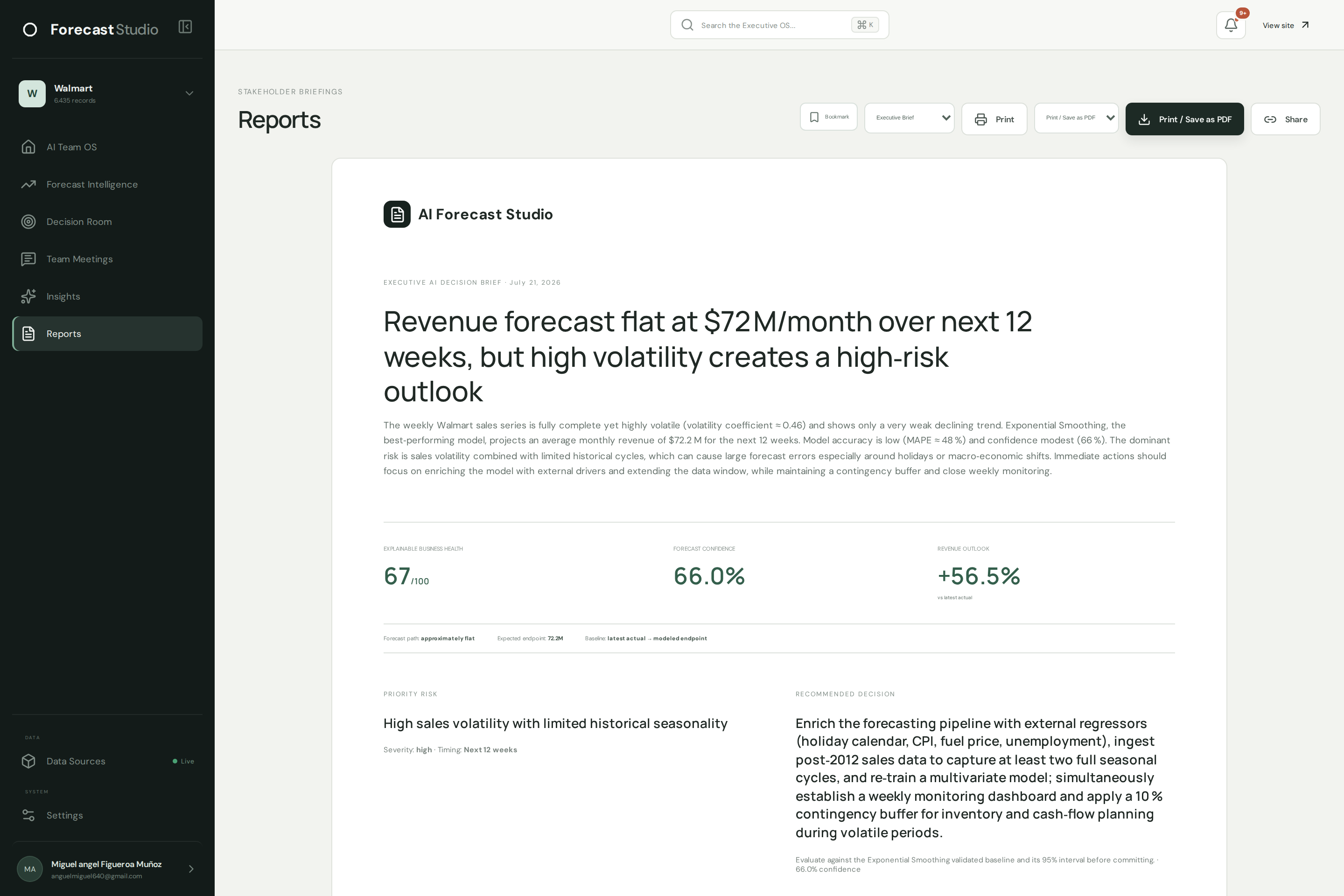
The output isn't a chart with a trend line. It's closer to an executive briefing: forecasts with confidence intervals, the model selection and validation behind them, the risks and opportunities they reveal, and simulations of what happens if conditions change — all produced collaboratively by the team.
The user never touches a model or a parameter. That's the whole point.
How we built it
AI Forecast Studio was designed and built by a single Computer Engineering student in three days, using GPT-5.6 and Codex.
GPT-5.6 is the reasoning behind the team. It coordinates the business analysis, the forecasting decisions, how the specialists collaborate, and the explanations written for non-technical users. Codex handled almost everything else — the architecture, the multi-agent workflows, the forecasting pipelines, the UI, API integrations, debugging, testing, and documentation.
One design choice matters more than the rest: the numbers come from a deterministic forecasting engine, not from the model. GPT-5.6 explains, prioritizes, and communicates the results, but it never invents a forecast. The engine always owns the math.
Challenges we ran into
The hardest technical problem was building a forecasting engine that works across completely different businesses without asking the user to configure anything. Every dataset has its own structure, history, and gaps, so the platform has to figure out on its own what data is usable, which models fit, and how much to trust the result.
The second challenge was product feel. We didn't want another AI dashboard — we wanted something that feels like working with a real consulting team. That meant designing how the specialists collaborate, hand evidence to each other, explain uncertainty, and phrase recommendations so a business owner gets them on the first read.
Accomplishments that we're proud of
- We built a team, not a tool — and the difference shows in how it feels to use.
- The numbers always come from the forecasting engine; the AI never fabricates a prediction.
- Statistical forecasting and business reasoning work together instead of competing.
- Someone with zero statistics background can use every part of it.
- Raw spreadsheets go in; executive-level recommendations come out.
- And all of it shipped in three days.
What we learned
The biggest lesson: businesses don't want forecasting models — they want better decisions. The value of AI here isn't swapping a dashboard for a chatbot; it's turning a complex analytical workflow into something that actually feels usable.
We also learned to treat GPT-5.6 and Codex as collaborators, not code generators. They shaped architecture calls and product decisions as much as the implementation — which is how one person shipped in three days what would normally take weeks.
What's next for AI Forecast Studio
We want to grow this into a full AI business intelligence platform:
- Automatic model selection and model tournaments.
- More advanced statistical and machine learning engines.
- Real-time integrations with business systems.
- Industry-specific forecasting strategies.
- Collaborative AI executive meetings.
- Richer business simulations.
- Multilingual support.
- SaaS deployment for businesses worldwide.
The long-term goal is simple: give every business in the world its own AI Data Science Team.
Built With
- ai-agents
- business-intelligence
- codex
- data-science
- data-visualization
- decision-intelligence
- executive-intelligence
- fastapi
- forecasting
- gpt-5.6
- machine-learning
- multi-agent-systems
- neon
- next.js
- node.js
- openai
- postgresql
- python
- react
- saas
- statistical-modeling
- supabase
- tailwindcss
- time-series-forecasting
- typescript

Log in or sign up for Devpost to join the conversation.