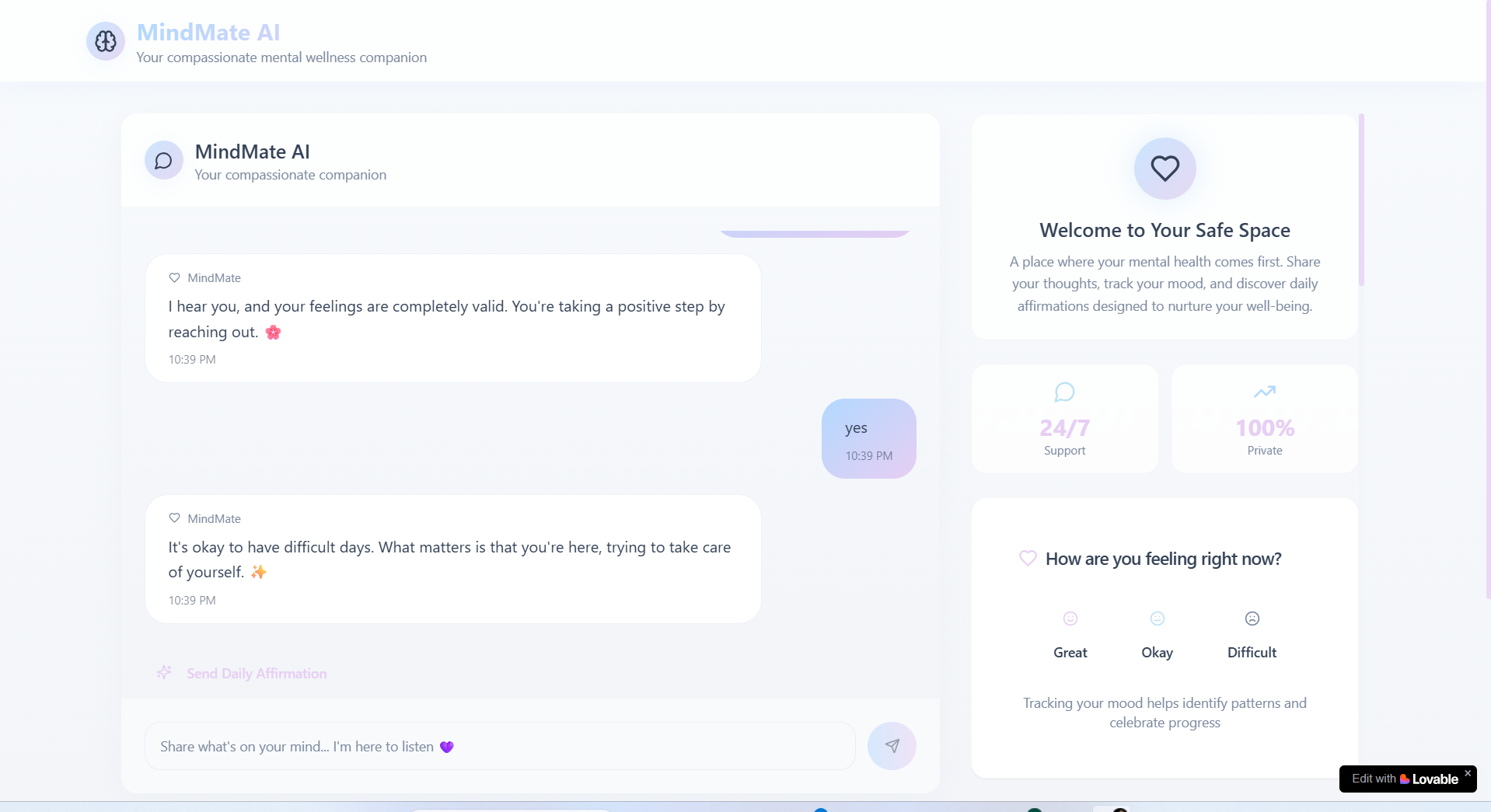
How we built it
We built this project using:
Lovable AI to design the chatbot interface and flow
A calming UI with pastel colors and smooth animations to create a safe environment
Integration of an AI model that generates empathetic and motivational responses
Features like journaling, affirmations, and progress tracking to make the chatbot engaging and useful
Challenges we ran into
Designing responses that felt empathetic and not robotic
Balancing simplicity in the interface with meaningful functionality
Making sure the chatbot doesn’t sound like a therapist but rather a supportive friend
Handling different moods and ensuring replies remain positive and safe
Accomplishments that we're proud of
Creating a functional chatbot that feels approachable and supportive
Designing a calming and modern UI that users enjoy interacting with
Successfully integrating features like mood tracking and journaling into the chat experience
Seeing how even simple affirmations can make users feel better
What we learned
Mental health tools need to be designed with care and empathy first, technology second
Small design details (like soft colors, smooth animations, or encouraging words) make a big difference in user experience
Building for well-being is different from regular apps — it requires responsibility and sensitivity
Teamwork and brainstorming helped us refine ideas and stay user-focused
What's next for AI for good way
We plan to:
Add voice-based interaction for users who prefer speaking over typing
Introduce personalized well-being plans based on user moods and habits
Integrate professional resources (like helplines) for people who need more than just AI support
Expand the chatbot’s ability to recognize early signs of stress or burnout and suggest healthy coping strategies
We believe AI has the power to make the world kinder, and this project is just a small step in that direction.

Log in or sign up for Devpost to join the conversation.