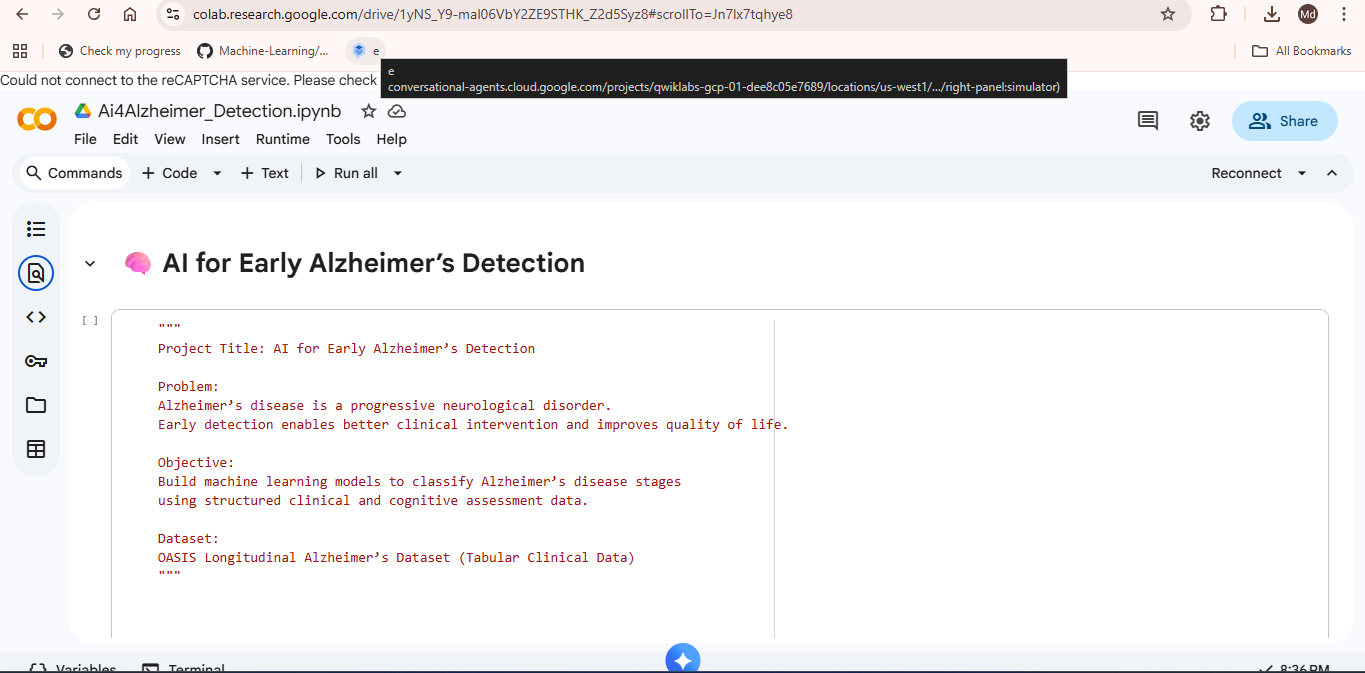
Alzheimer’s disease is a progressive neurological condition
that is often diagnosed only after noticeable cognitive decline. Early detection is crucial, as it can enable timely medical intervention, better care planning, and improved quality of life for patients and caregivers. This project was inspired by the growing role of artificial intelligence in healthcare and the potential of machine learning to uncover early patterns in clinical data that may not be obvious through traditional analysis. The goal was to explore how AI can assist in identifying early signs of Alzheimer’s disease and support clinical decision-making.
AI for Early Alzheimer’s Detection
uses machine learning models to analyze structured clinical and behavioral data and classify whether early indicators of Alzheimer’s disease are present. The system compares multiple models using cross-validation and standard evaluation metrics to identify the most reliable approach. The project focuses on accuracy, robustness, and interpretability, making it suitable as a decision-support tool rather than a replacement for medical professionals.
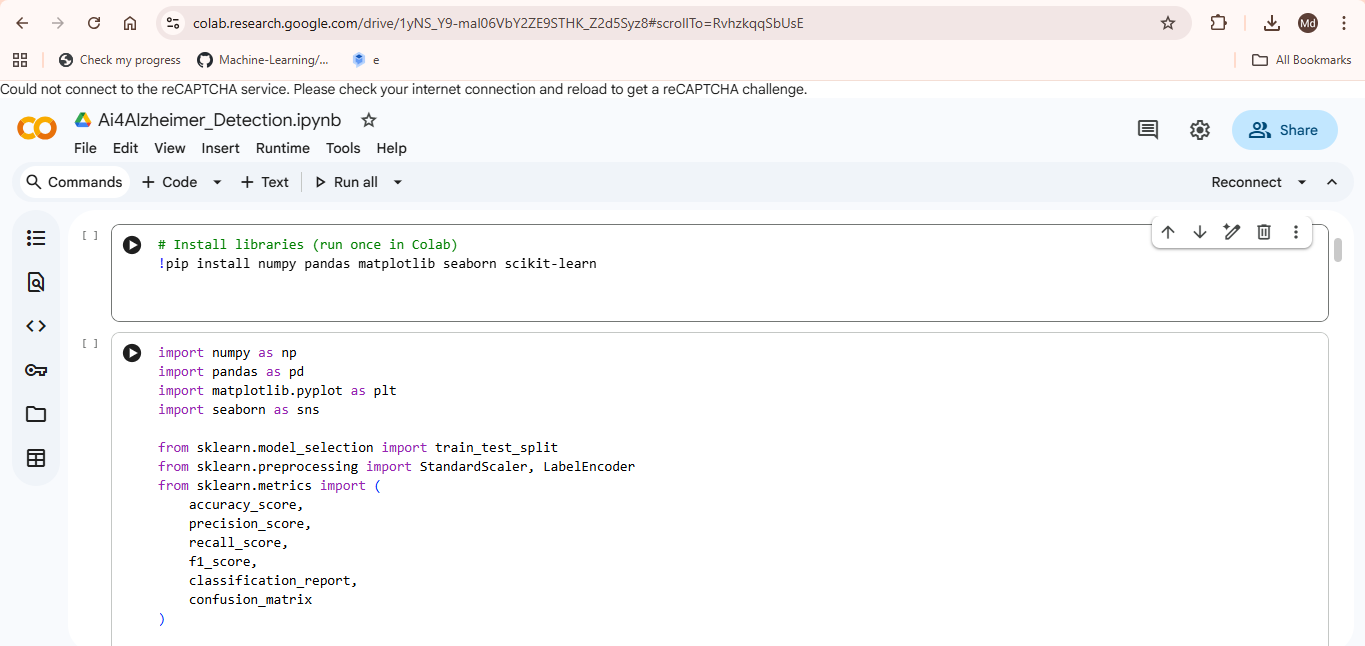
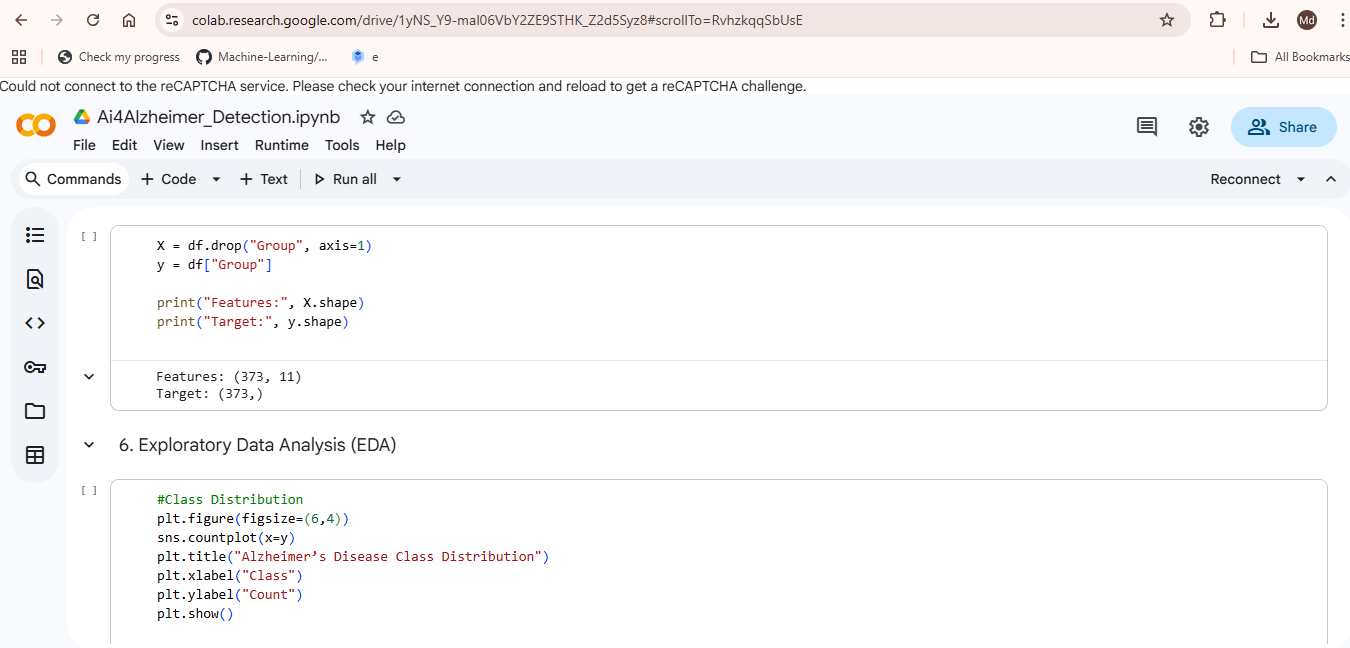
The project was built using Python in a reproducible Jupyter/Google Colab environment.
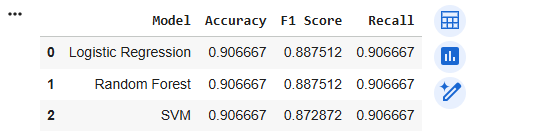
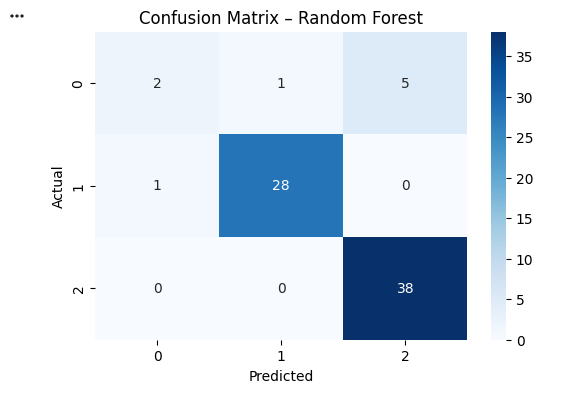
The workflow includes: Data cleaning, preprocessing, and feature scaling Training multiple machine learning models such as Logistic Regression, Random Forest, and Support Vector Machines Applying k-fold cross-validation to ensure reliable performance estimates Evaluating models using accuracy, precision, recall, F1-score, and confusion matrices Comparing model performance and selecting the best-performing approach All experiments and results are documented in a single reproducible notebook, along with a detailed PDF report.
One of the main challenges was handling data quality issues
such as missing values and potential class imbalance, which required careful preprocessing and validation. Another challenge was ensuring that the models were not only accurate but also interpretable and suitable for healthcare use. Maintaining reproducibility and clear documentation for evaluation by others was also an important consideration throughout the project.
Built a fully reproducible machine learning pipeline
Implemented cross-validation and model comparison for robust evaluation Achieved reliable performance using multiple evaluation metrics Created a clear and well-documented project suitable for healthcare-focused review Delivered a complete hackathon-ready submission with code, report, and documentation
Through this project, we learned how to apply machine learning techniques to real-world healthcare data,
the importance of robust evaluation beyond simple accuracy, and the value of reproducibility in AI projects. We also gained a deeper understanding of ethical considerations in medical AI, particularly the need for transparency and responsible model usage.
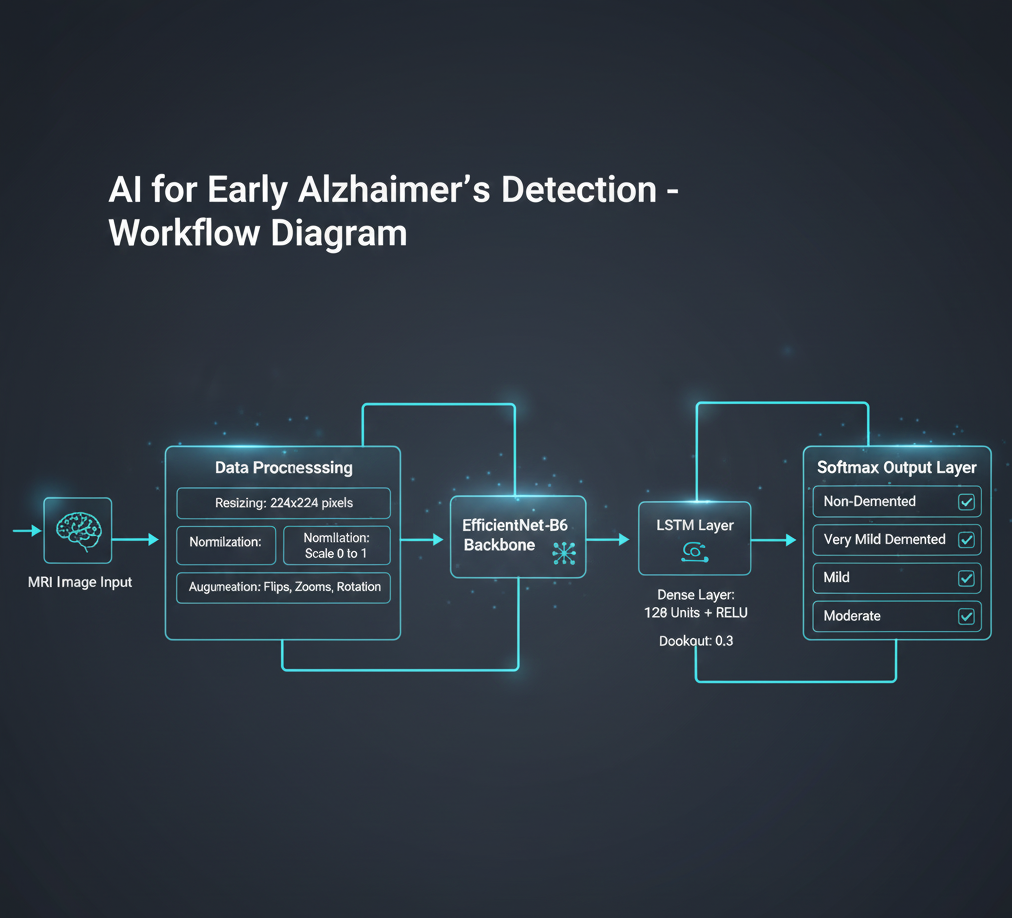
Future improvements could include integrating multimodal data such as MRI scans
or speech analysis, exploring advanced models like deep learning, and expanding the dataset for improved generalization. With further validation and collaboration with medical professionals, this project could evolve into a lightweight clinical decision-support tool to assist in early Alzheimer’s detection.
Built With
- colab
- matplotlib
- numpy
- pandas
- python
- scikit-learn
- seaborn


Log in or sign up for Devpost to join the conversation.