-
-
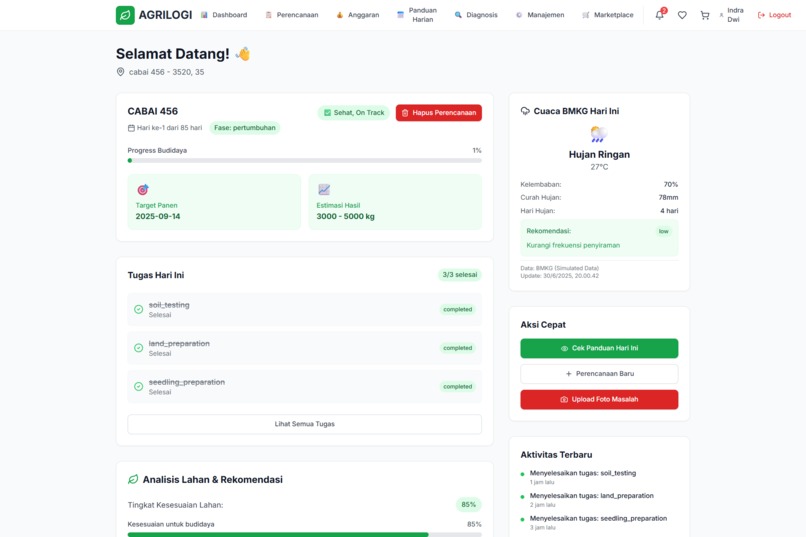
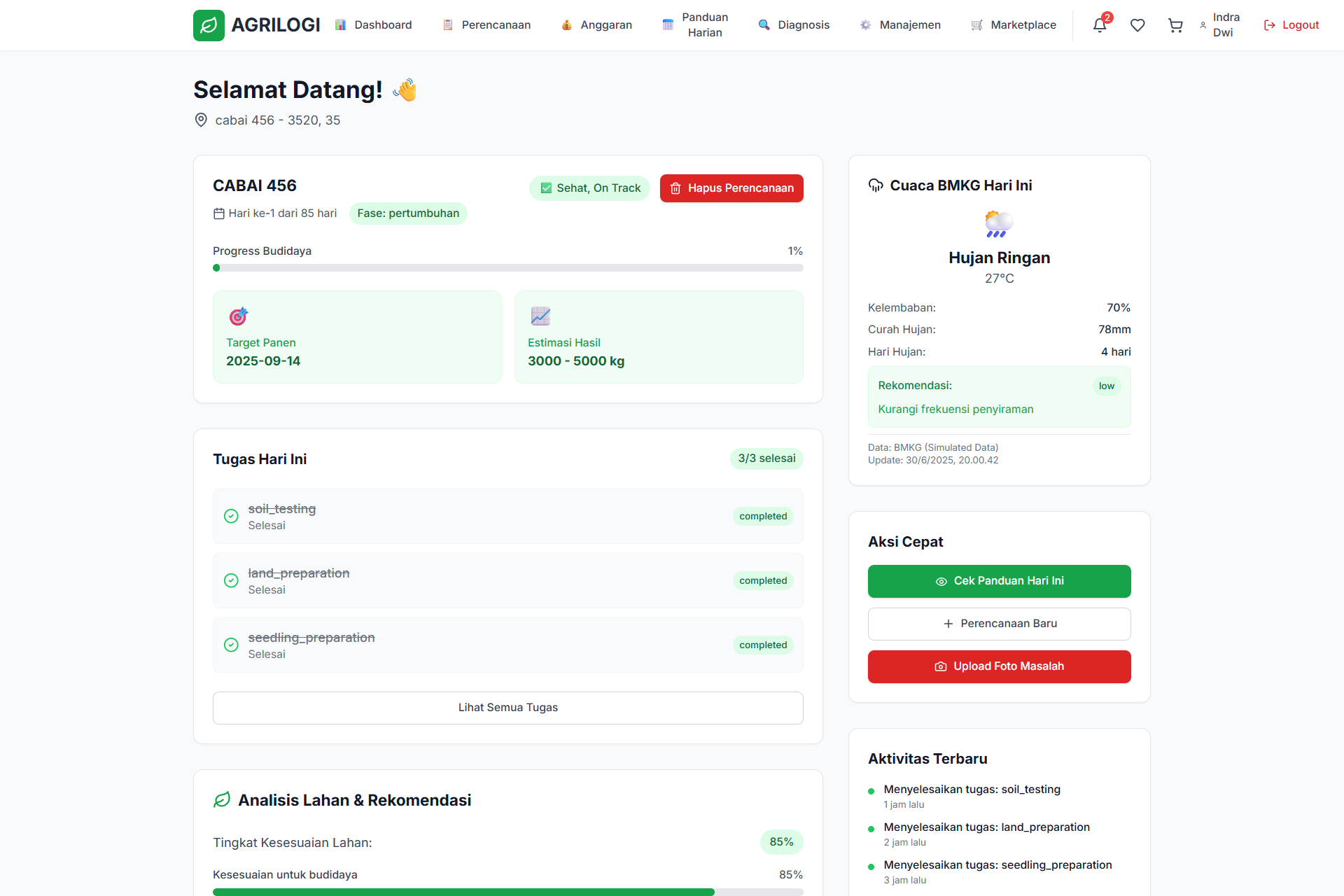
Dashboard
-
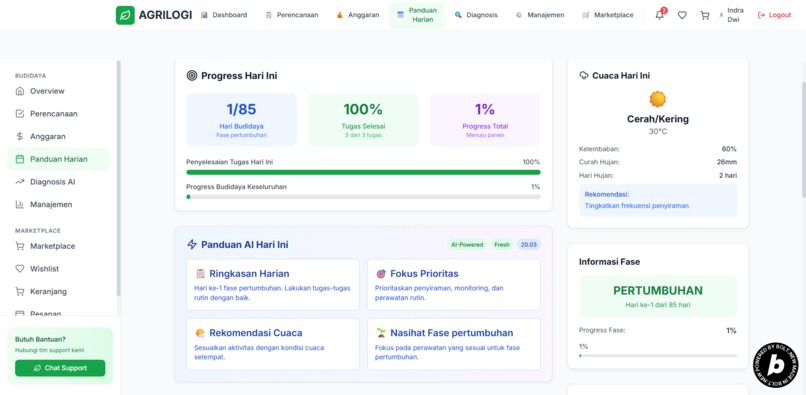
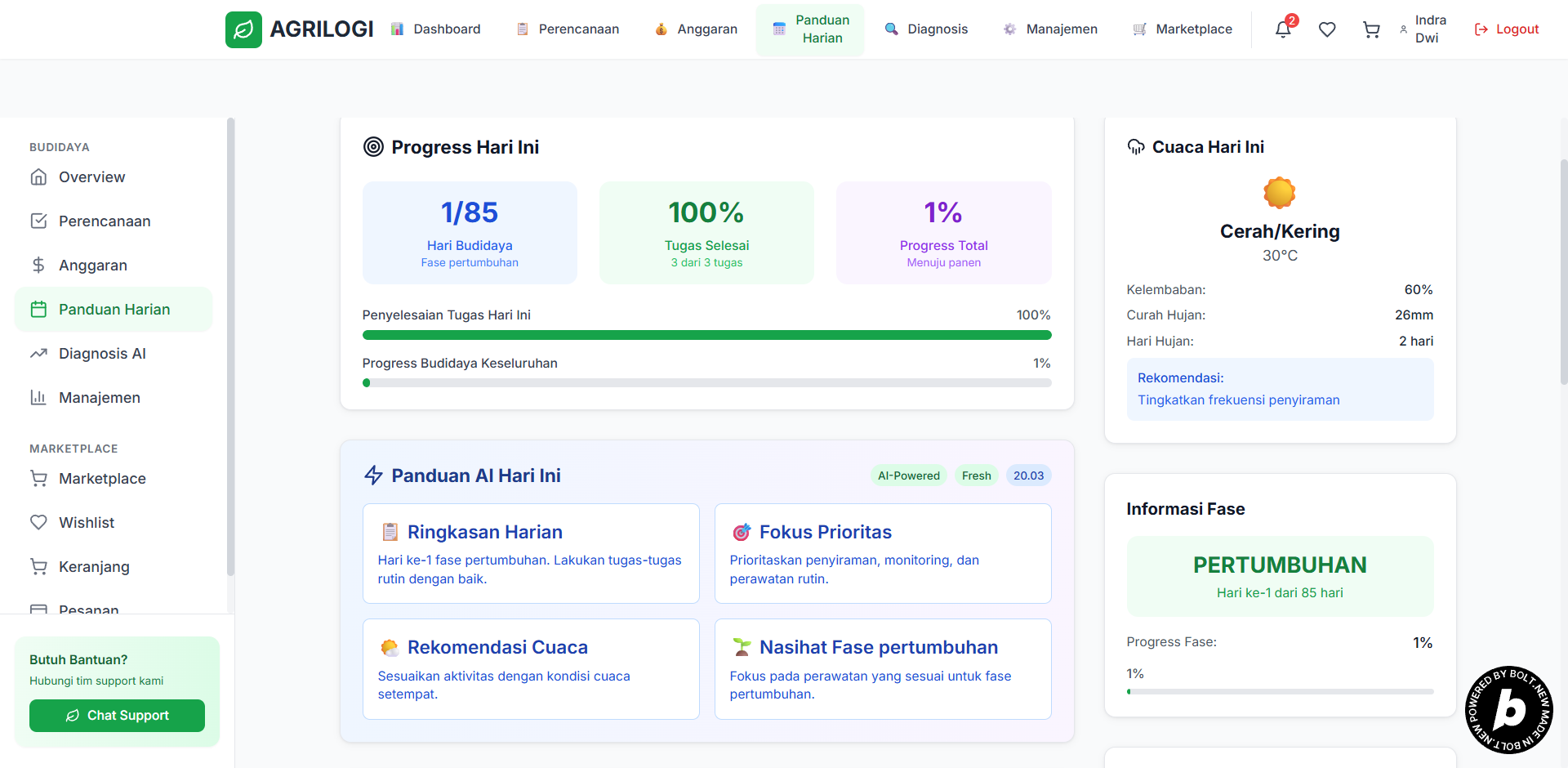
Daily Planning
-
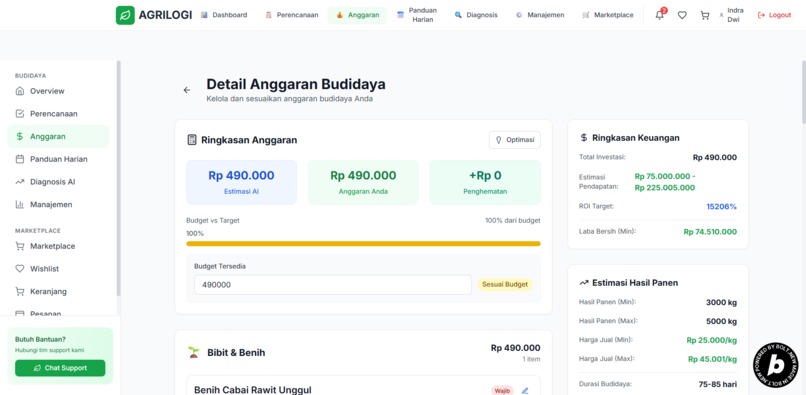
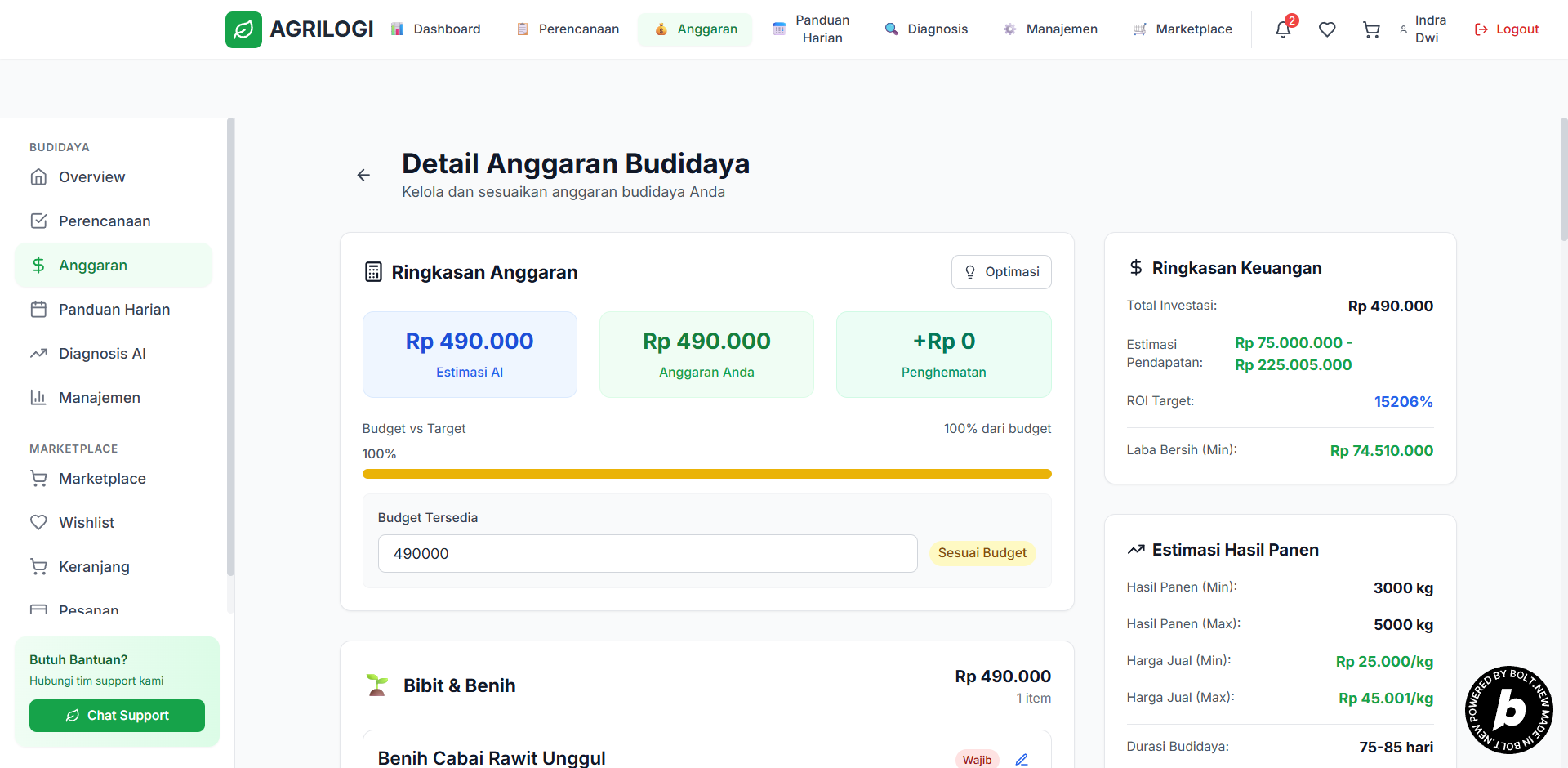
Budgeting
-
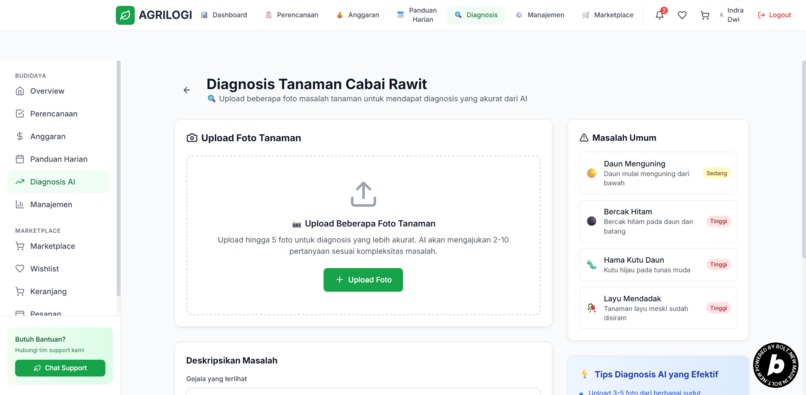
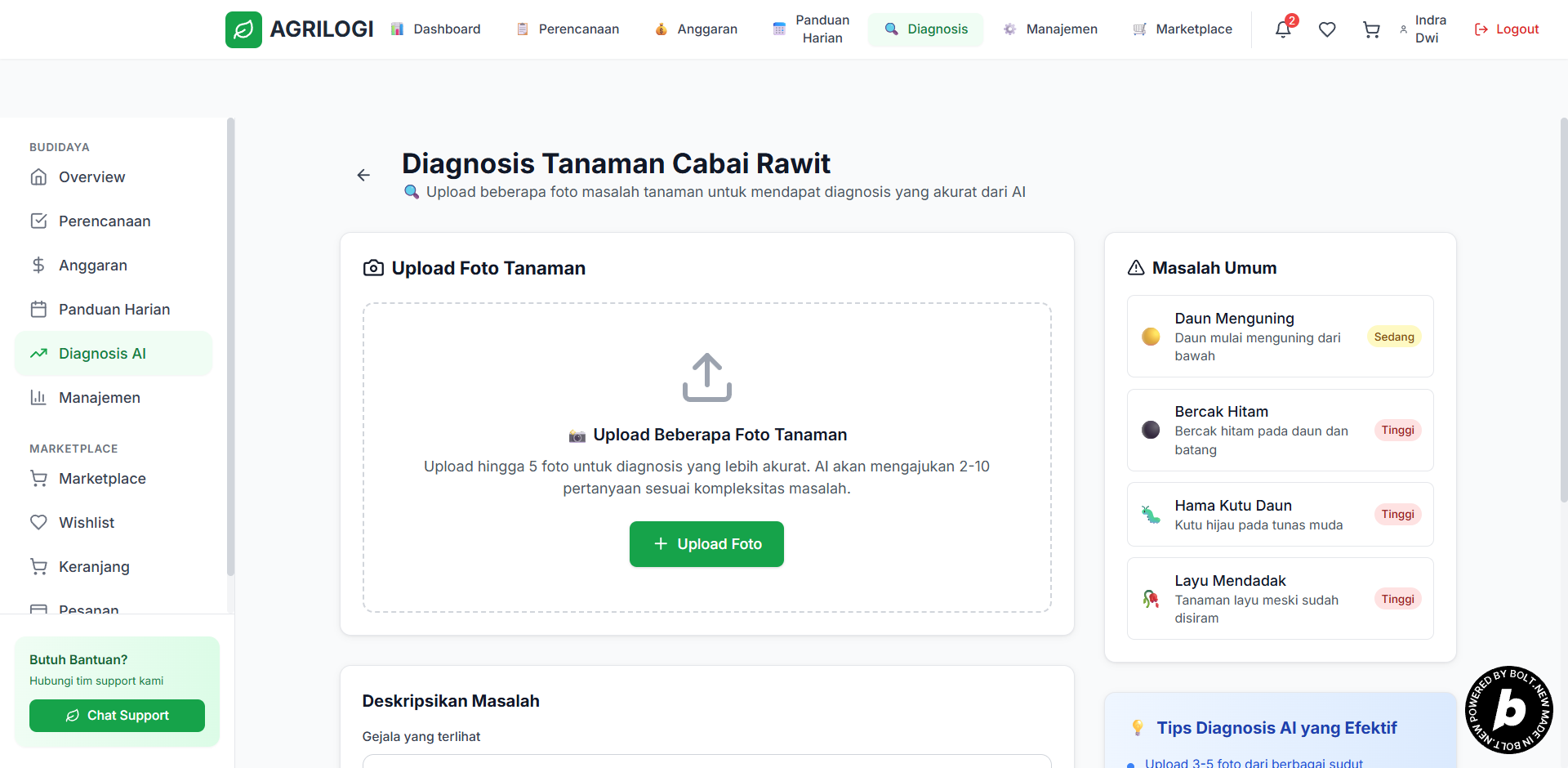
Plant Diagnose
Inspiration
As I began to learn about agriculture in Indonesia, I noticed a stark contrast: on one hand, the sector holds massive economic potential—many young, successful entrepreneurs have emerged from farming. On the other hand, millions of smallholder farmers still live in poverty. Farming has become a profession that is often abandoned, especially by the younger generation and those operating on a smaller scale.
The deeper I explored, the clearer it became that their challenges go beyond fertilizer or climate—it's about access. Many farmers lack basic knowledge about crop management, can't afford expensive fertilizers, don’t know about affordable alternatives, and often miss early signs of plant diseases. Most importantly, they lack a reliable guide to help them make decisions.
And yet, the solutions exist. There are ways to manage budgets, diagnose crop problems, and increase yields—if only they were accessible in a language and format farmers could use.
That’s where Agrilogi comes in. We were inspired to build a smart, AI-powered agriculture assistant—not for large-scale industrial farms, but for the smallholder farmers across the country. Agrilogi requires no sensors, no drones, and no expensive tools. Just a phone. We want technology to be a companion, not a barrier—for every farmer, everywhere.
What it does
Agrilogi is an AI-powered assistant designed to support farmers throughout the crop cycle. It provides:
- Data-driven crop planning, customized to soil type, location, season, and budget.
- Input recommendations (fertilizer, pesticides) based on local alternatives.
- AI-based photo diagnosis to identify pests and diseases.
- Daily task guidance tailored to each stage of the crop lifecycle.
- Cost analysis and yield estimation from farmer inputs. All in a simple, intuitive interface that speaks the farmer’s language—literally and figuratively.
How we built it
We built Agrilogi entirely using Bolt and Supabase—two platforms that enabled us to move fast without needing to write code manually. To be honest, I don't come from a deep technical or coding background. But with the help of AI, I was able to make decisions, build flows, and create logic that aligned with what I envisioned.
For the AI itself, I used the Gemini model via OpenRouter, which allowed me to generate smart responses, validate farming strategies, and create dynamic recommendations based on user inputs. Most of the UI and system logic were also AI-assisted—crafted through prompt engineering and modular prototyping within the Bolt platform.
Challenges we ran into
As the project grew more complex, we started encountering AI hallucinations, especially when chaining multiple tasks or decision layers in one prompt.
One major challenge was handling major structural changes. Whenever we redefined core logic or data structure, bugs would emerge that AI couldn’t resolve alone. These often required manual fixes in Supabase, particularly during complex data migrations.
Integrating OpenRouter with Bolt also had its share of issues. Bugs would appear unpredictably, and sometimes the AI-generated logic wouldn’t properly link the modules. Debugging that required multiple attempts and retries.
Collaborating across team accounts brought friction too. Environment variables and API keys often went missing or had to be regenerated, especially when switching environments or ownership within Bolt.
Sometimes even minor adjustments in logic or interface caused ripple effects, triggering new bugs that felt endless—and worse, drained millions of tokens during repeated AI re-runs.
Lastly, we noticed that Bolt tends to fix surface-level issues without fully understanding the structural problem. This led to layered quick fixes that looked fine initially but created deeper technical debt—again, consuming more tokens and time in the long run.
Accomplishments that we're proud of
We're genuinely proud of what we’ve built together.
Our team of three came from different backgrounds: one with a background in sales and business, one who comes from a farming family and understands real agricultural challenges, and one frontend developer who supported us when AI couldn’t solve the technical issues.
Most of the platform was built using AI tools, especially through no-code platforms like Bolt. While we had limited technical skills, we were able to build a working system—something that normally takes months—in just a few weeks.
Our frontend developer was often busy, but stepped in at the right moments—especially when AI-generated code failed or when critical bugs needed to be fixed manually.
What makes us proud isn't just the speed—it’s the fact that we managed to translate a real-world farming problem into a working tech solution with limited resources and a lot of determination. We hope to keep refining Agrilogi and bring it into the hands of real farmers soon.
What we learned
Throughout this journey, we realized that AI is going to transform the way every business operates. It makes it possible for anyone—with or without a technical background—to build, test, and launch products faster than ever before.
But we also learned that AI alone is not enough.
AI is a powerful tool, but it still depends on the people behind it—people who understand the problem, who can ask the right questions, identify real opportunities, and test ideas with clarity and persistence.
We learned how to balance AI automation with human judgment, and how important it is to stay close to the real-world context—especially when building solutions for something as grounded and critical as agriculture.
This experience taught us that the future doesn’t belong to just developers or technologists—but to those who are willing to learn, adapt, and think deeply about real problems.
What's next for Agrilogi: AI for Agriculture
Agrilogi is just getting started. Our next steps will focus on turning this platform into a truly holistic ecosystem for smallholder farmers, with deeper alignment to global standards and sustainability goals:
Developing GAP-compliant modules: We'll build AI workflows based on Good Agricultural Practices (GAP) to help farmers meet food safety and quality standards—step-by-step.
Organic farming support: We plan to release an Organic Mode, with tailored input recommendations, certification guidance, and organic-friendly pest and nutrient management.
Blockchain for agriculture: To meet export standards in Europe and the U.S., we’ll explore using blockchain for traceability, compliance records, and post-harvest tracking—without adding complexity for farmers.
Sustainable fertilizer innovation: We're working on partnerships to co-develop microbial-based fertilizer alternatives—low-cost, eco-friendly, and easy to reproduce on-farm, reducing dependency on synthetic inputs.
Offline-first and voice-enabled version: To support remote areas and farmers with low literacy, Agrilogi will offer an offline-friendly version and voice assistant guidance in local languages.
Real-world pilot programs: We’re preparing for field trials in collaboration with cooperatives, local governments, and NGOs to validate Agrilogi in real farming conditions.
Agrilogi’s goal is not just to digitize farming—but to make high-quality, sustainable agriculture accessible and profitable for every smallholder farmer.
Built With
- and-rapid-prototyping-supabase-?-open-source-backend-for-authentication
- bolt
- database-(postgresql)
- entri
- logic-flow
- openrouter
- supabase


Log in or sign up for Devpost to join the conversation.