-
-
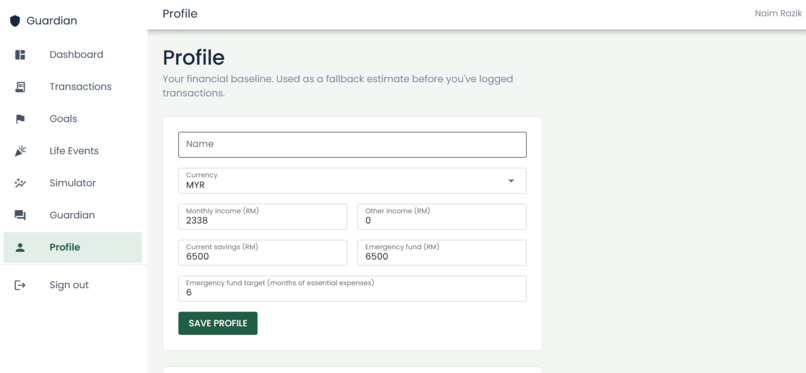
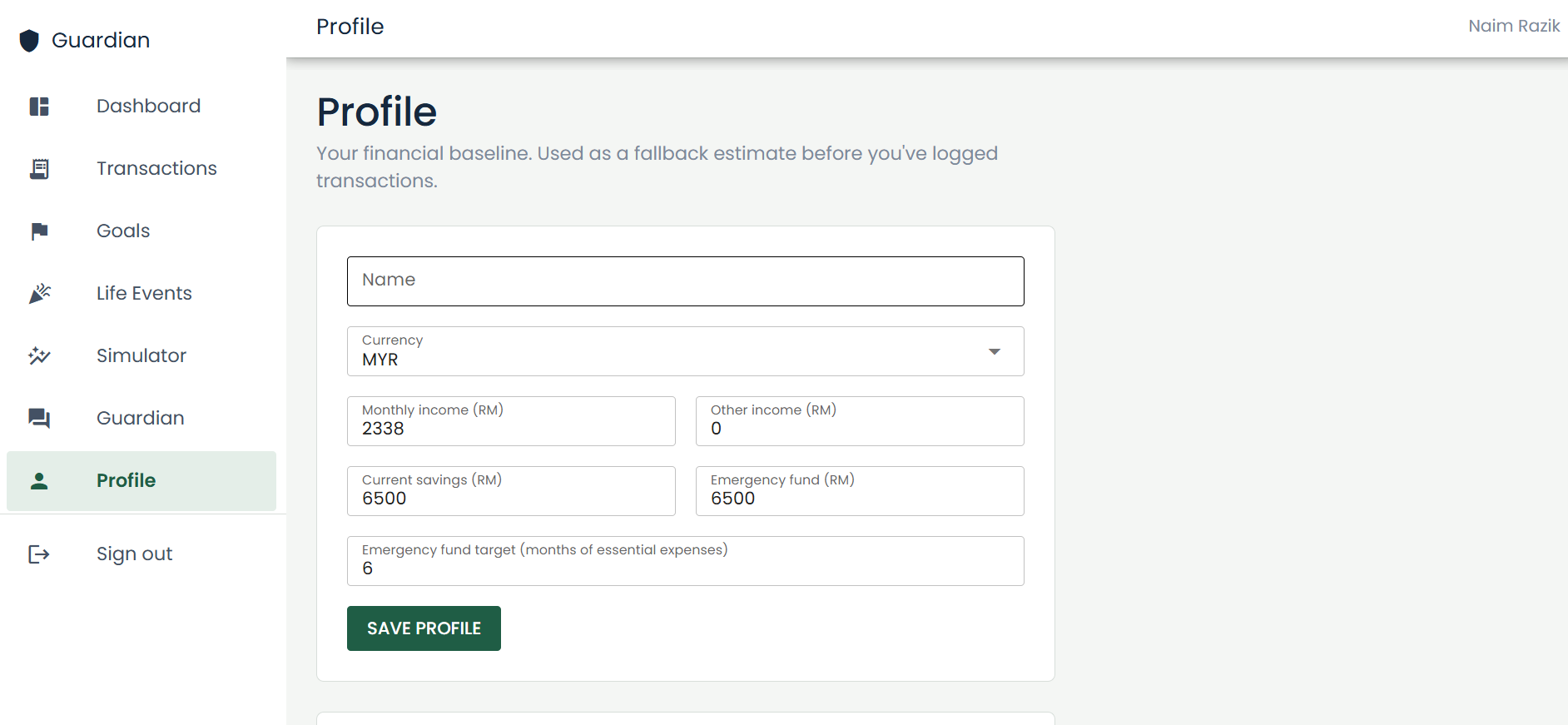
User Profile: Stores baseline settings like MYR currency and baseline monthly income
-
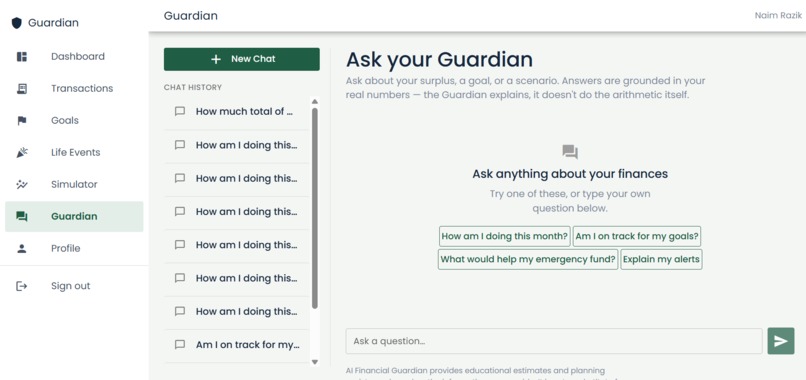
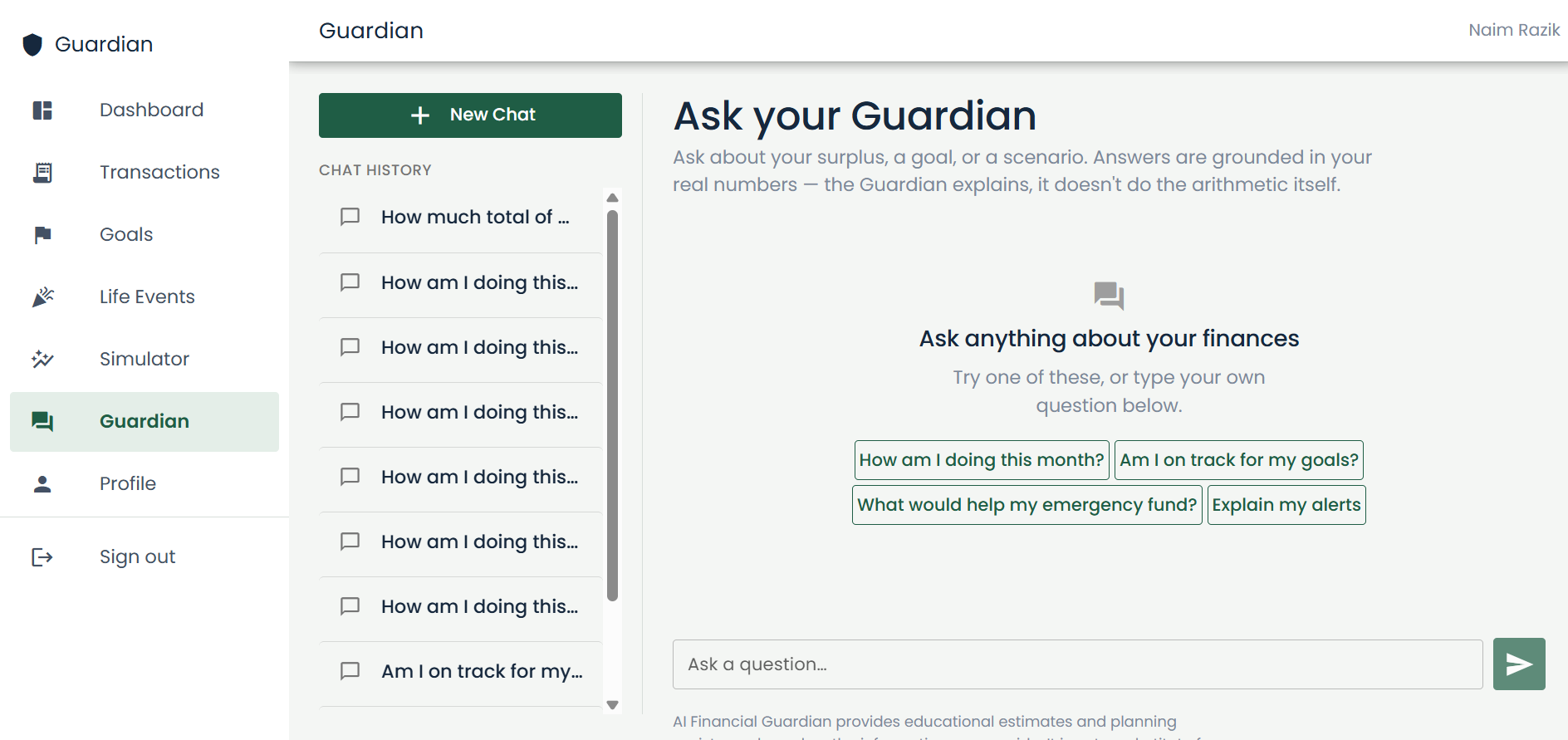
Guardian AI Chat: An interactive chatbot that directly reads the screen data to answer user questions
-
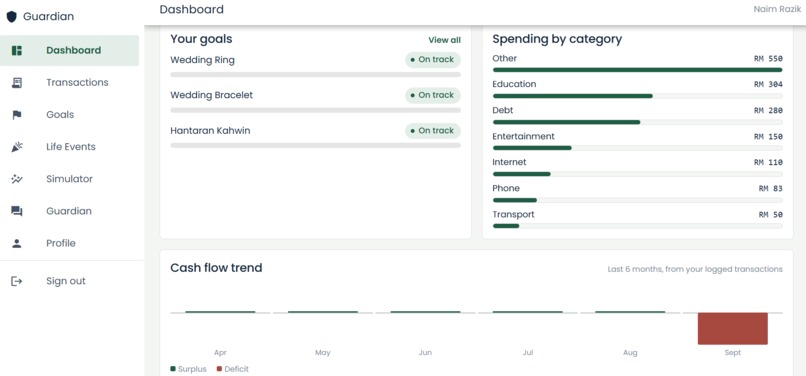
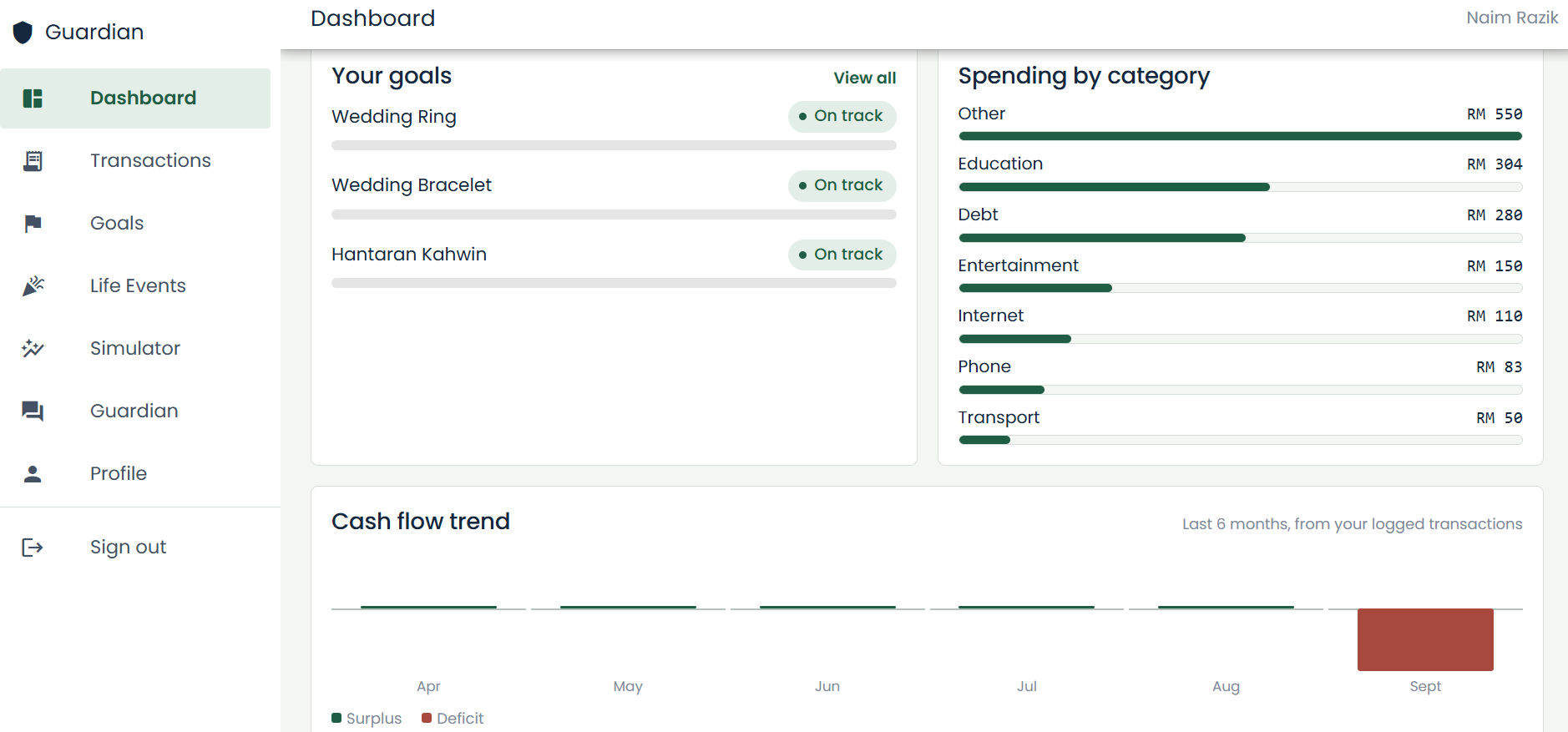
Spending Breakdown: Visualizes monthly Spending by category and recent cash flow trends
-
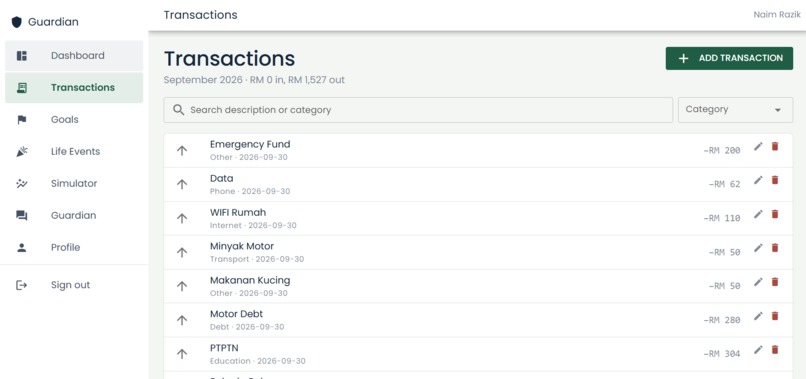
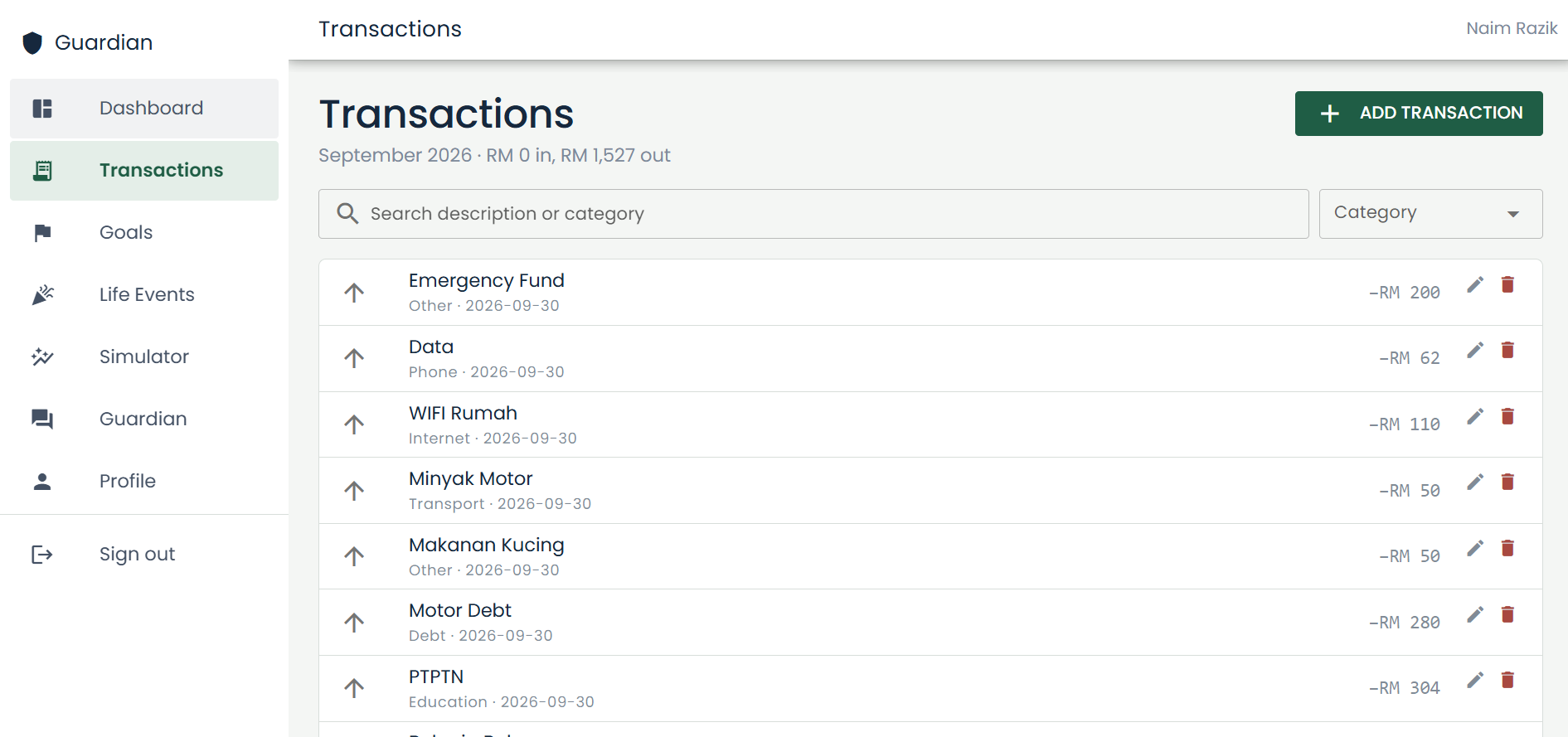
Transactions Ledger: Lists historical expense logs for accurate categorization and tracking
-
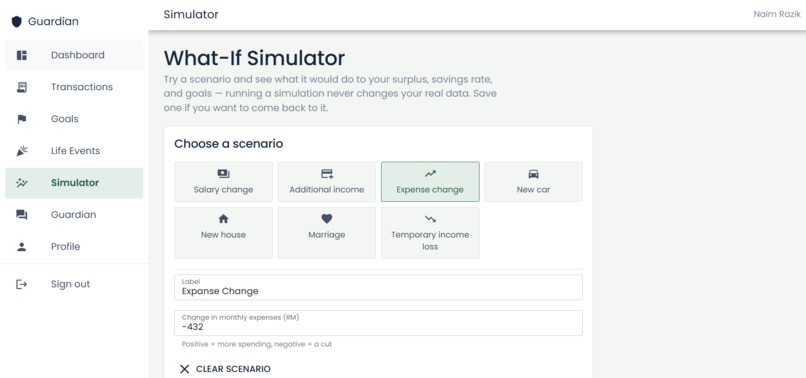
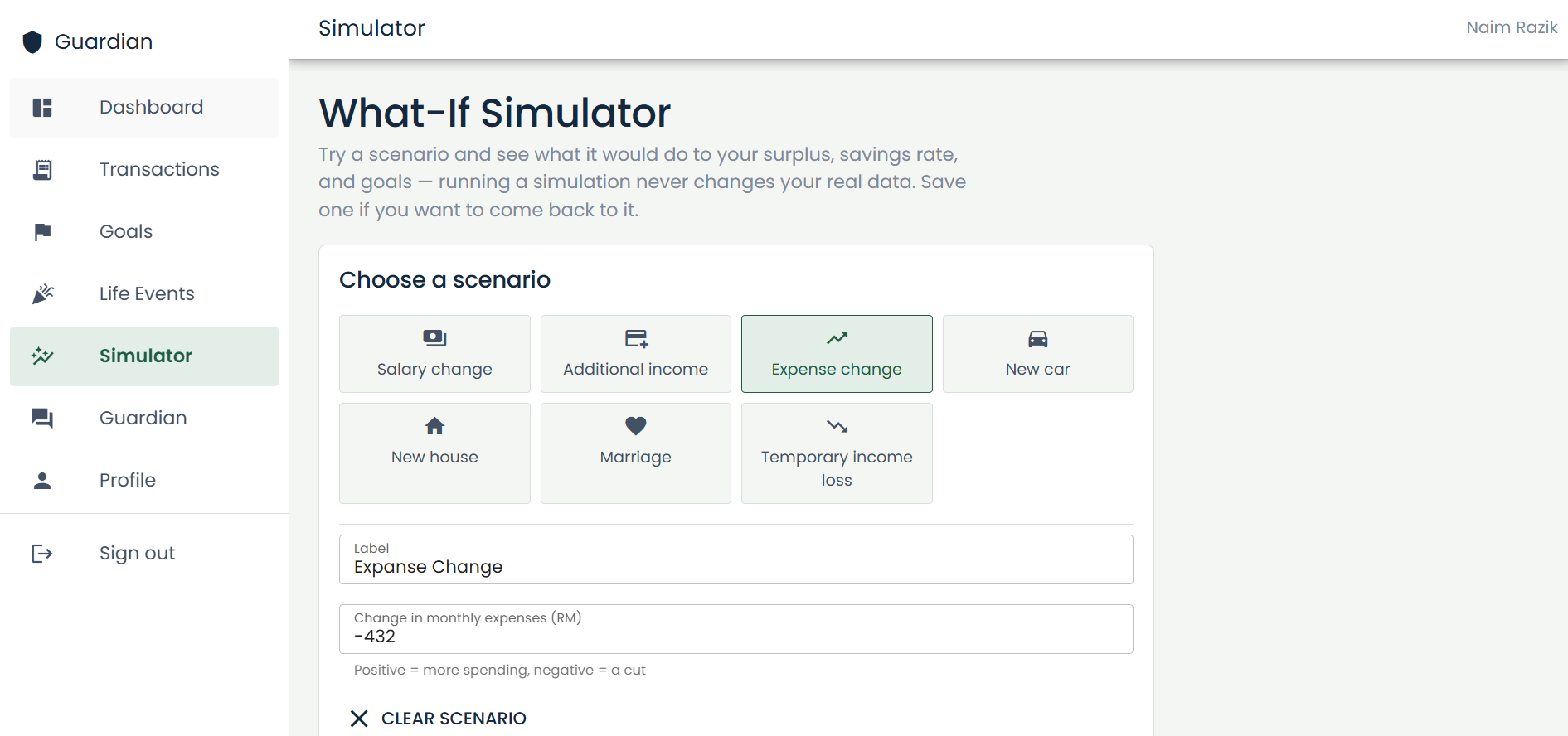
Simulator Setup: The workspace where users configure budget change scenarios to test hypotheses
-
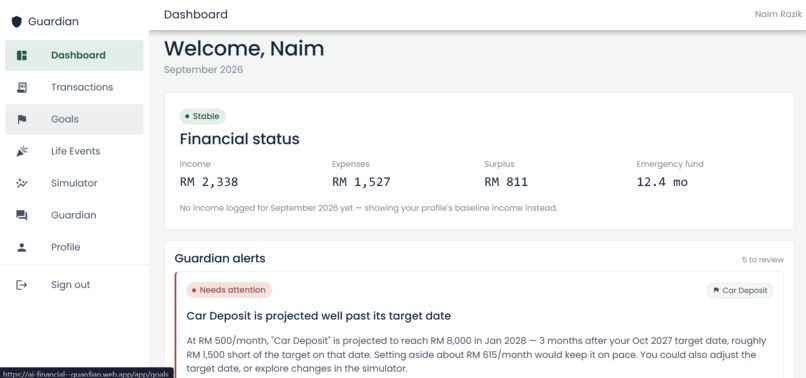
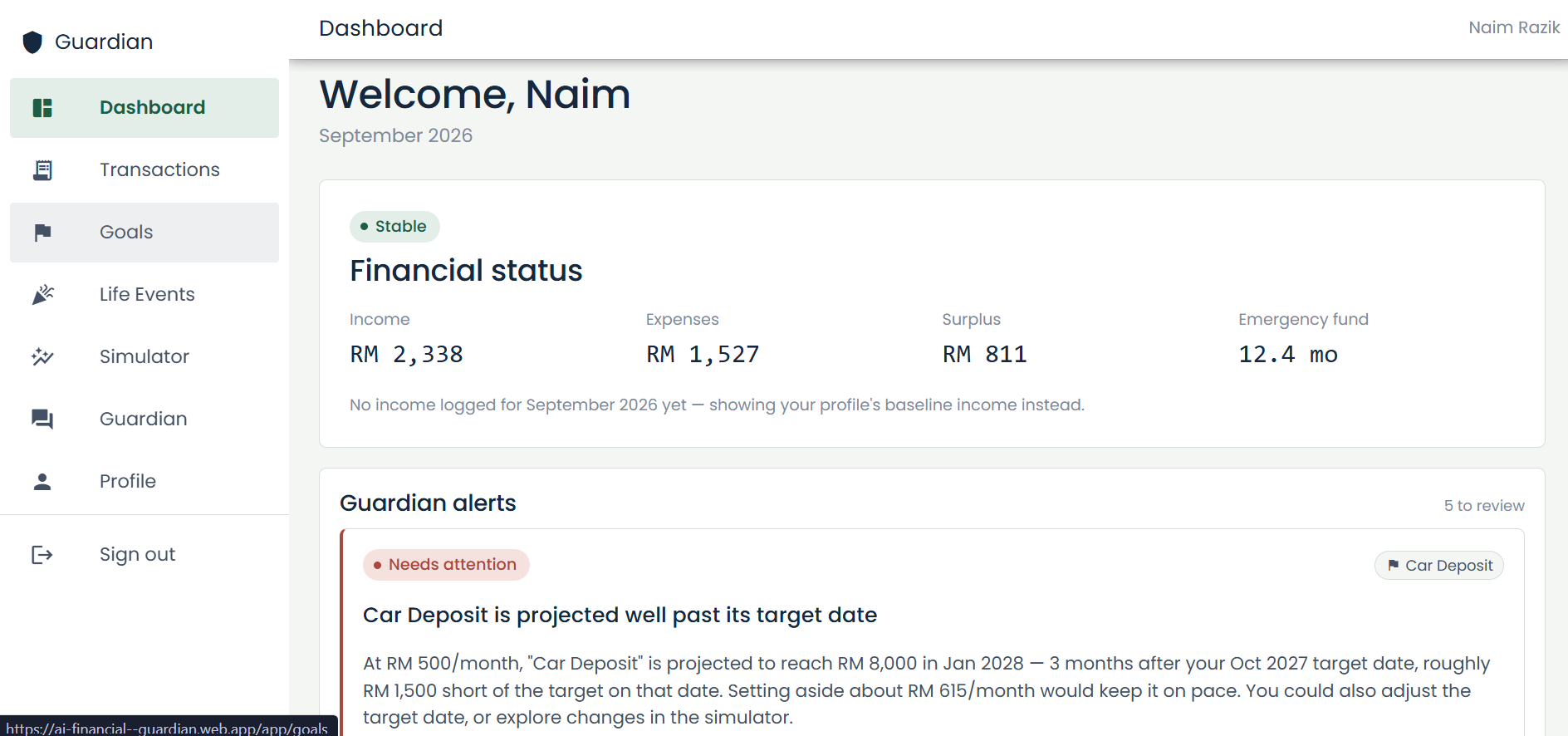
Main Dashboard: Shows Financial status metrics and active Guardian alerts for late goals
-
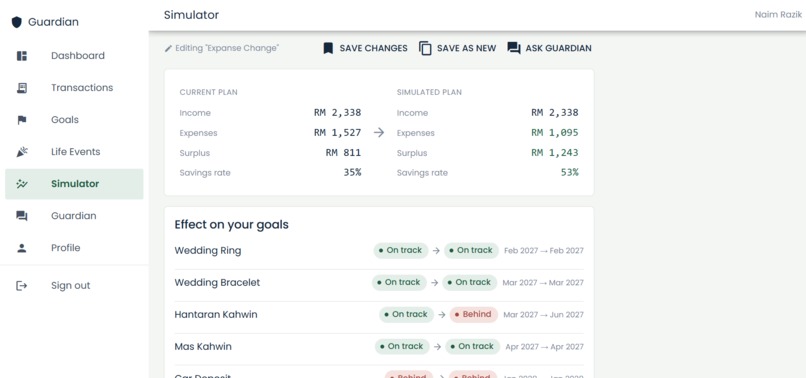
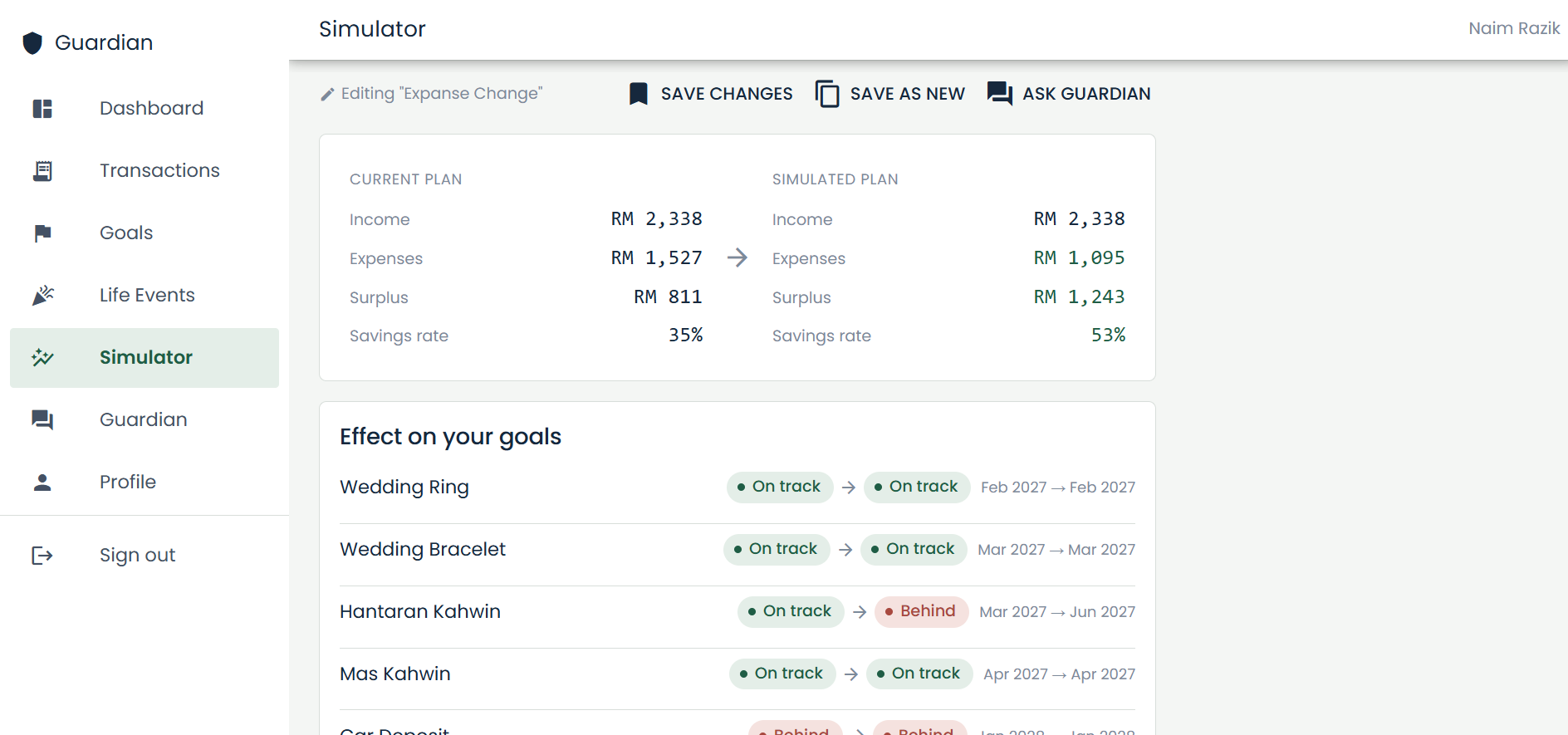
Simulation Results: Shows the direct impact of budget cuts on the user's monthly savings rate
-
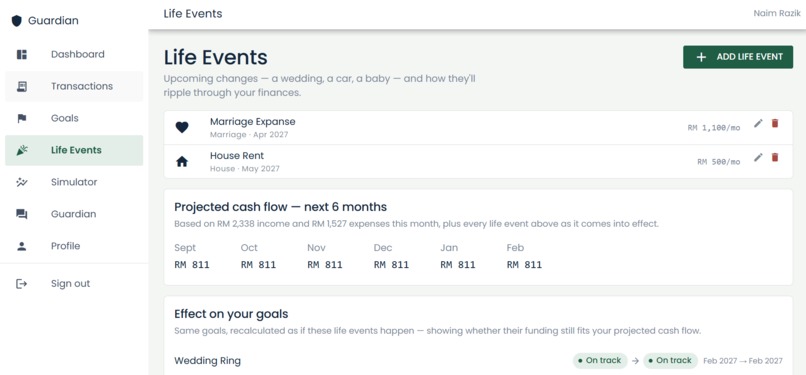
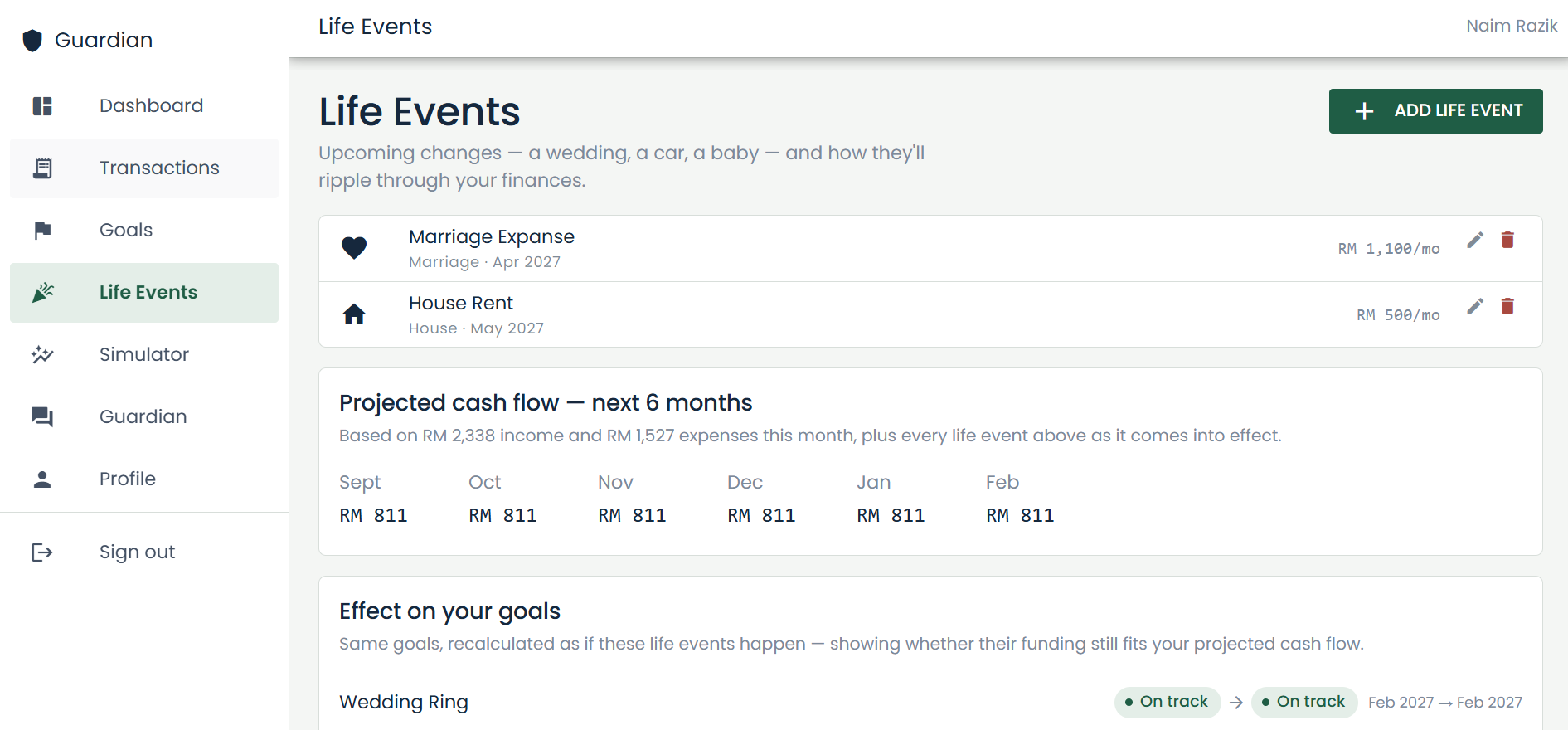
Life Events Planning: Plans upcoming financial changes and models a Projected cash flow timeline
-
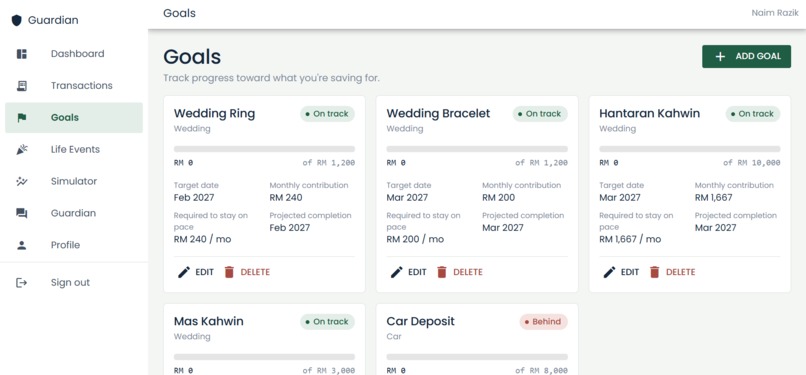
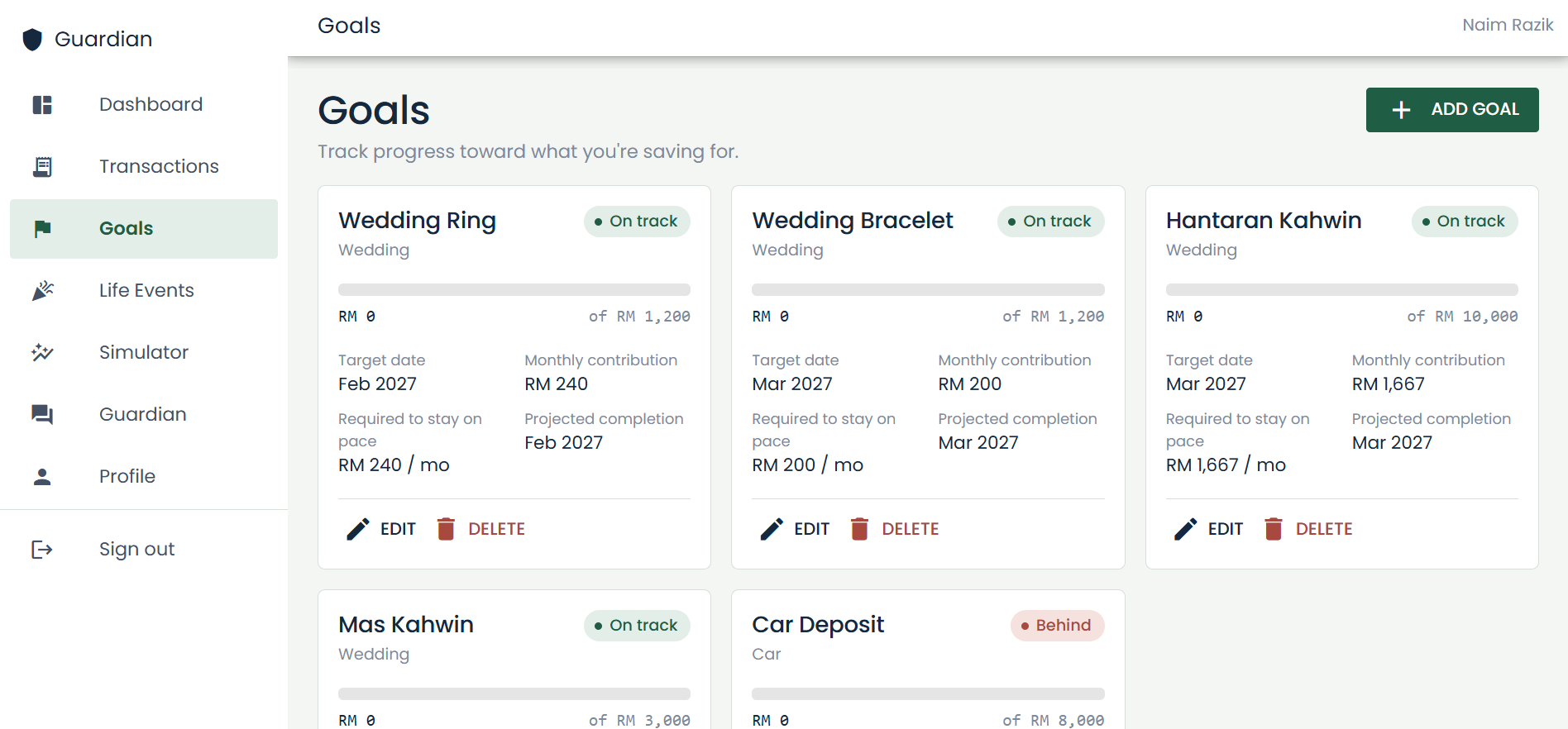
Goals Tracker: Monitors savings progress and tracks target dates for individual goals like a Wedding
Inspiration
Most personal finance apps are good at telling you what already happened: how much you spent, how much you saved, and where your money went. But important financial decisions are usually about the future.
What happens if I buy a car? What happens if my salary changes? Will I still reach my wedding savings goal? What happens if I take on another monthly commitment?
That question inspired AI Financial Guardian — a personal financial simulator that helps people understand the possible consequences of their decisions before they make them.
Instead of simply saying “you spent too much,” the Guardian shows how one decision can affect other goals and future plans.
What I Built
AI Financial Guardian combines a deterministic financial engine with AI.
Users can enter their income, expenses, savings, debts, financial goals, and future life events such as a wedding, car, house, or child.
The application then calculates their current financial position and allows them to create What-If scenarios.
For example, a user can simulate adding a RM700 monthly car payment. The application can show:
Current monthly surplus:     RM1,300
New car payment:             -RM700
Simulated monthly surplus:   RM600
The system then projects how that change could affect existing goals, such as delaying a wedding savings target.
The AI Financial Guardian explains these results in natural language and helps users explore different possibilities without making the financial decision for them.
How I Built It
The application was built using Vue 3, TypeScript, Quasar, Vite, Firebase Authentication, Firestore, and Gemini.
A major design decision was to keep financial calculations completely separate from AI.
The financial engine performs the actual calculations for income, expenses, surplus, savings rate, emergency-fund coverage, goals, life events, and What-If scenarios.
The Guardian rule engine detects situations such as negative surplus, delayed goals, low emergency-fund coverage, significant changes in surplus, and unusual spending.
AI is then used primarily to explain the calculated results and interact with the user, rather than being trusted to perform financial arithmetic.
This makes the system more transparent and easier to test.
I also built automated tests covering normal cases, edge cases, goal projections, life events, scenario simulations, and Guardian rules.
What I Learned
One of the biggest things I learned was that AI does not need to control everything in an application.
For financial applications, deterministic calculations are important because users need to understand where a number came from. AI is much more useful when it acts as an explanation and interaction layer on top of reliable application logic.
I also learned how much complexity can appear when projecting finances into the future. A single recurring expense can affect monthly surplus, savings contributions, goal completion dates, and other future events.
Building the simulation engine forced me to think carefully about dates, monthly projections, temporary changes, one-time costs, and edge cases.
Challenges
The biggest challenge was designing the What-If simulation engine.
A scenario should not modify the user's real financial data. It needs to create a temporary version of the user's financial situation, calculate the consequences, and then discard the simulation unless the user explicitly saves it.
Life events created another challenge. A car payment beginning several months from now should not affect today's expenses, while a one-time wedding cost should only affect the month in which it occurs.
I solved this by building reusable month-by-month projection functions instead of creating separate calculation logic for every feature.
Another challenge was deciding what AI should and should not do. Rather than allowing the AI to invent financial calculations, I designed the system so that the application calculates the numbers first and the AI explains them afterward.
Why It Matters
Financial planning is often difficult because people don't just need to know where their money is going — they need to understand what their choices could change in the future.
AI Financial Guardian turns financial planning into an interactive simulation:
Plan → Simulate → See the consequences → Understand → Decide
The goal isn't to tell people what financial decision to make.
The goal is to give them enough context to make that decision themselves.


Log in or sign up for Devpost to join the conversation.