-
-
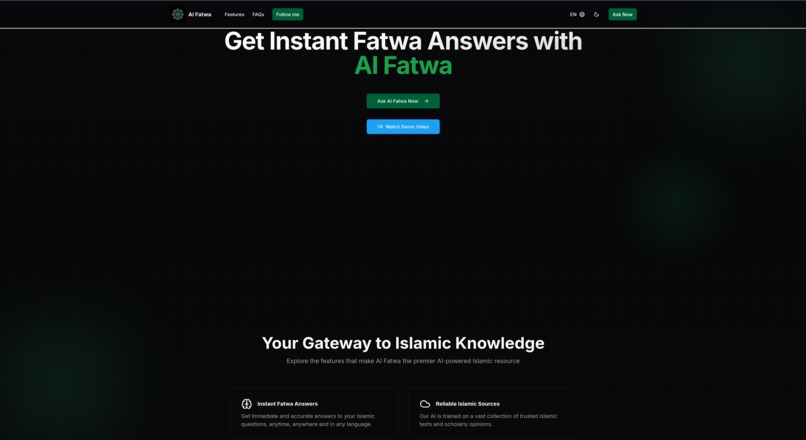
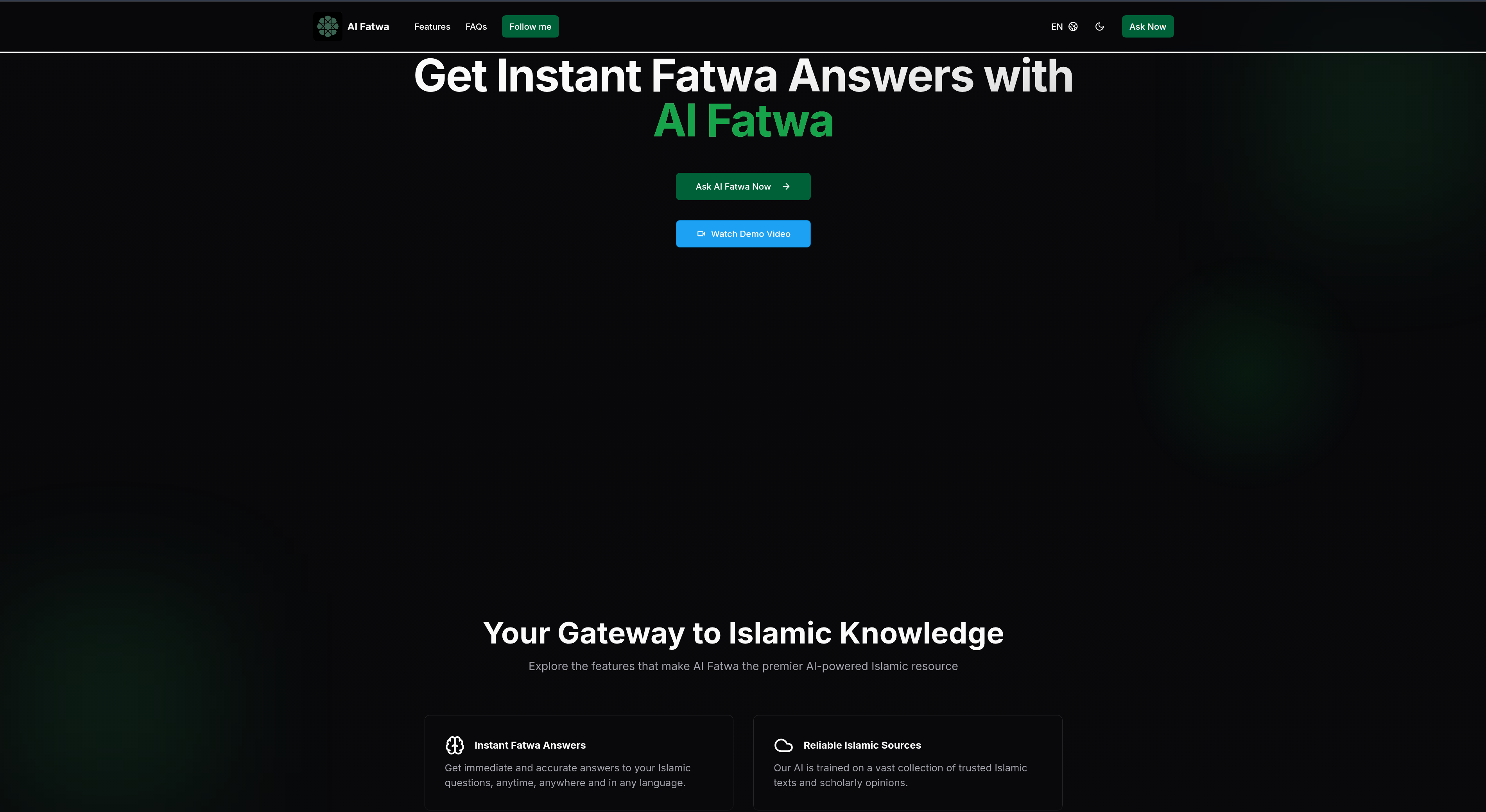
Landing Page
-
-
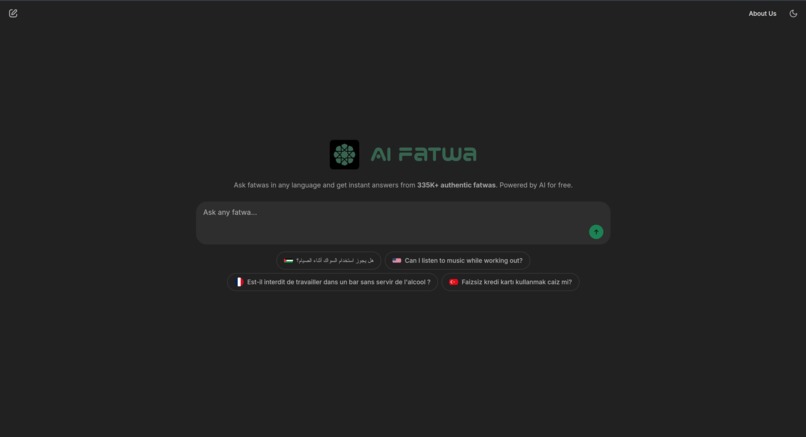
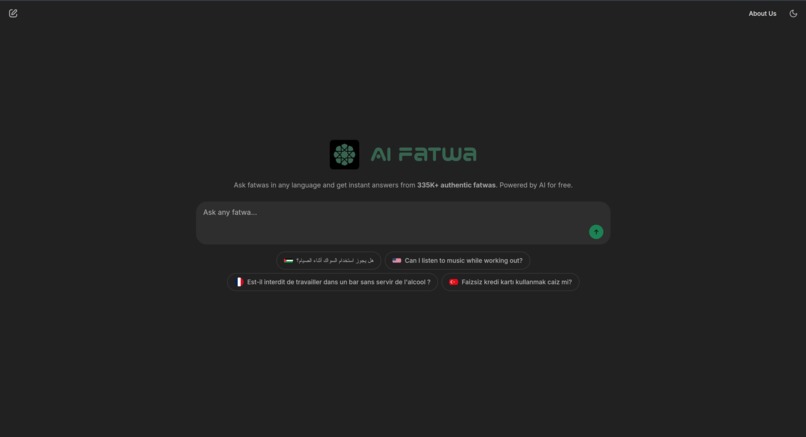
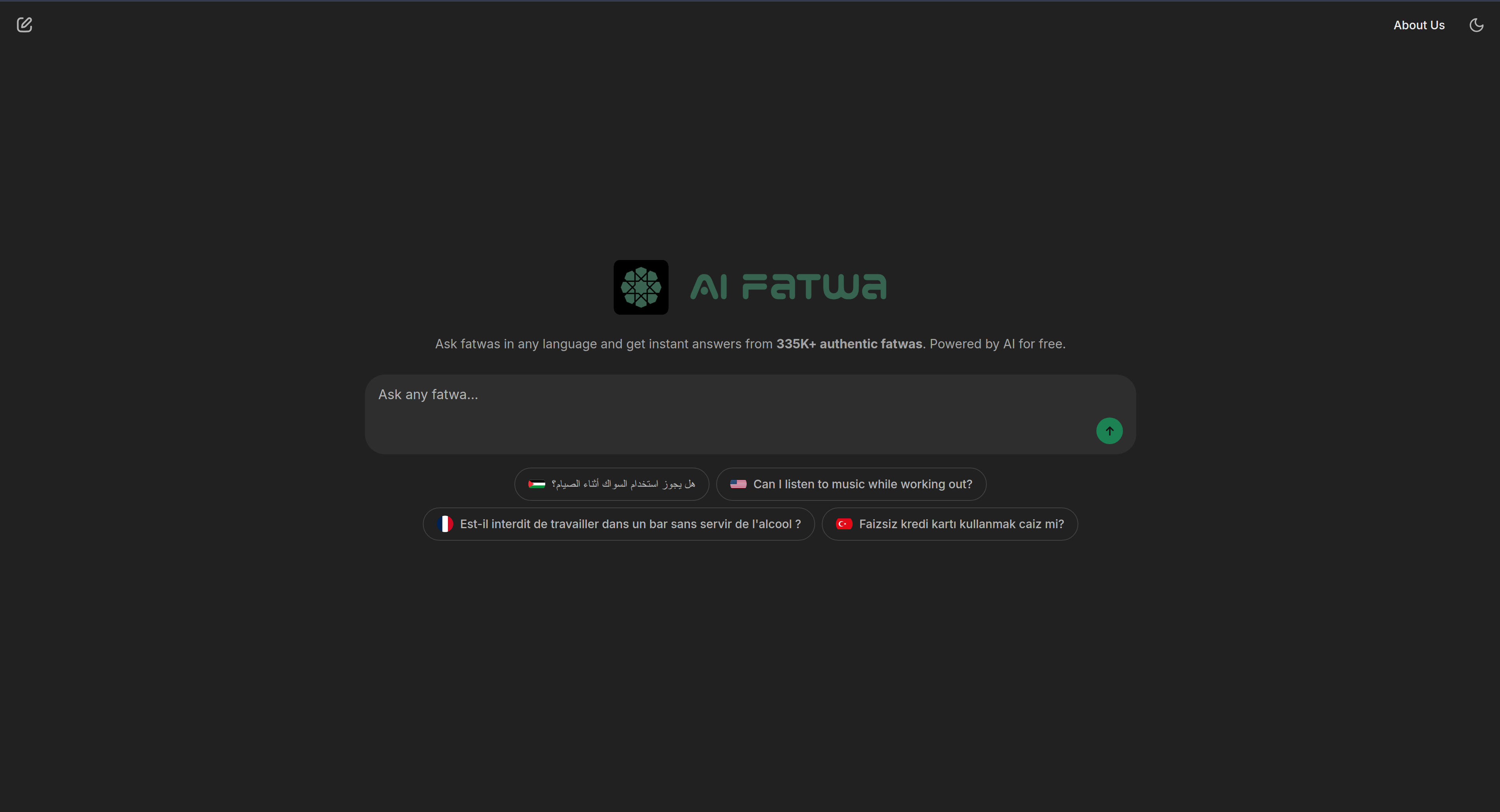
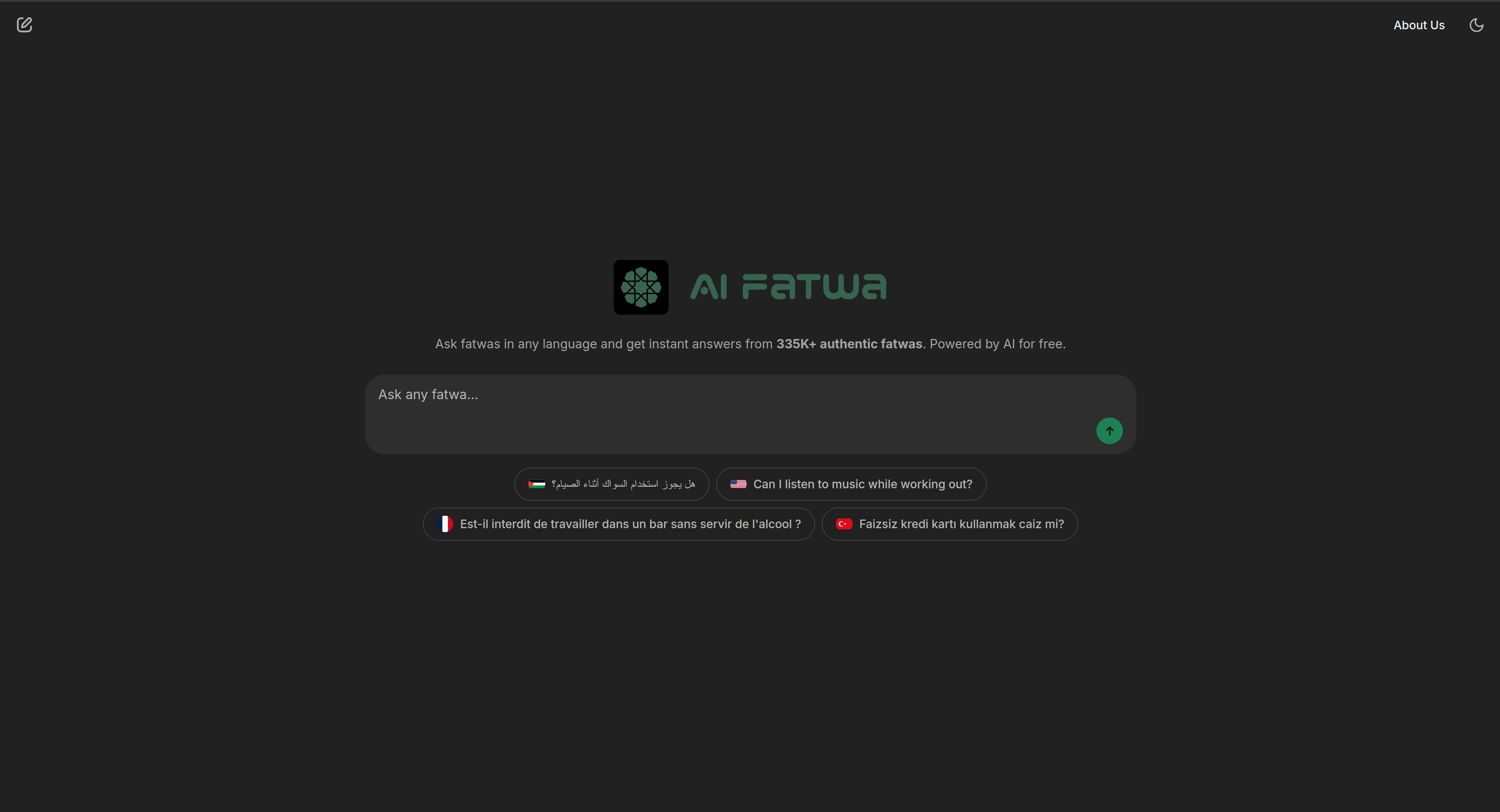
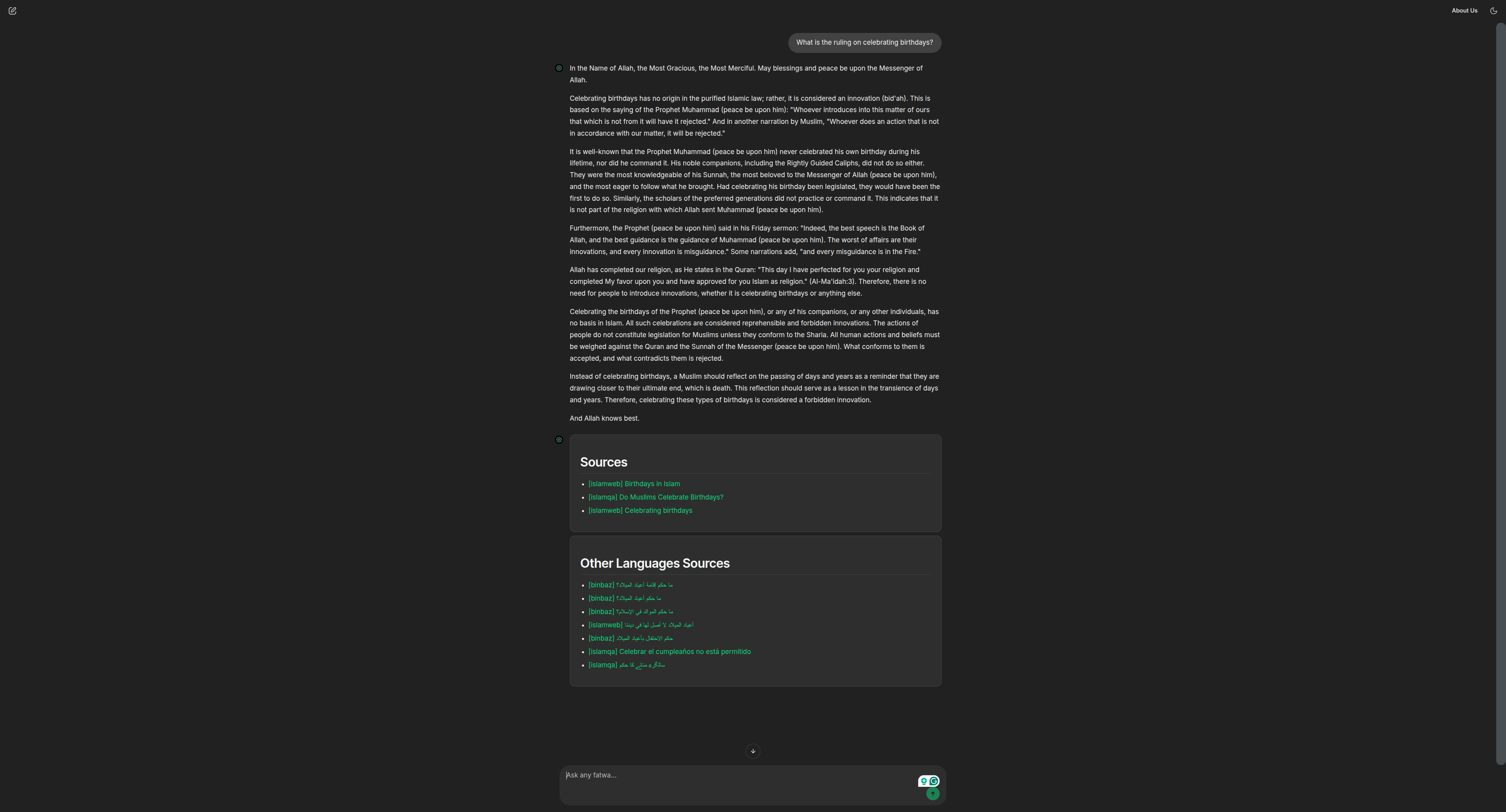
AI Chat Page
-
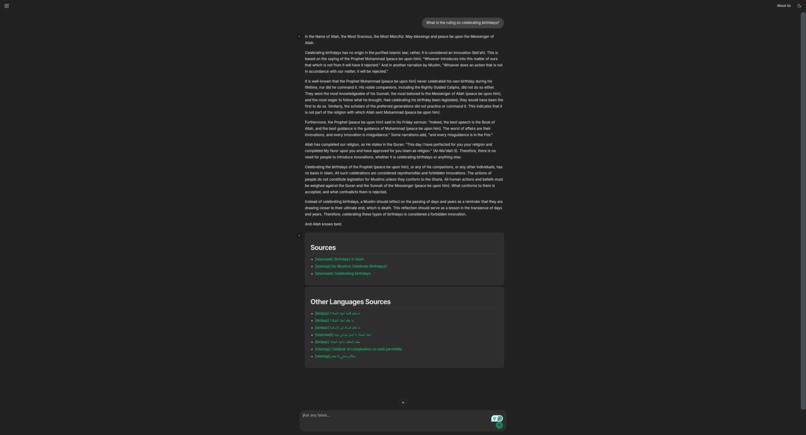
Asking a Fatwa
-
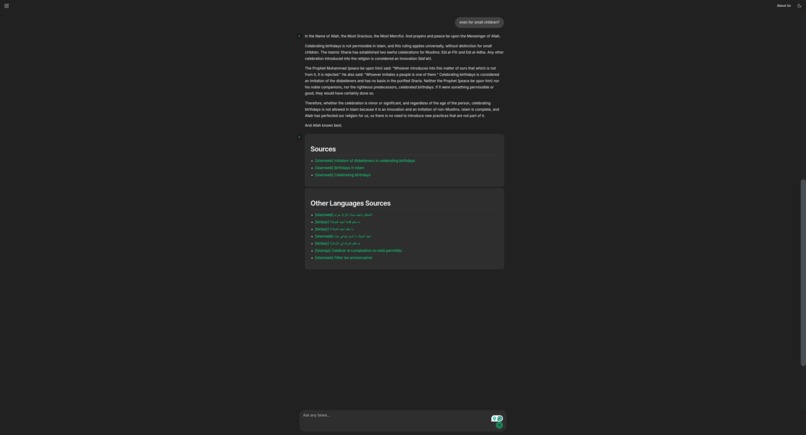
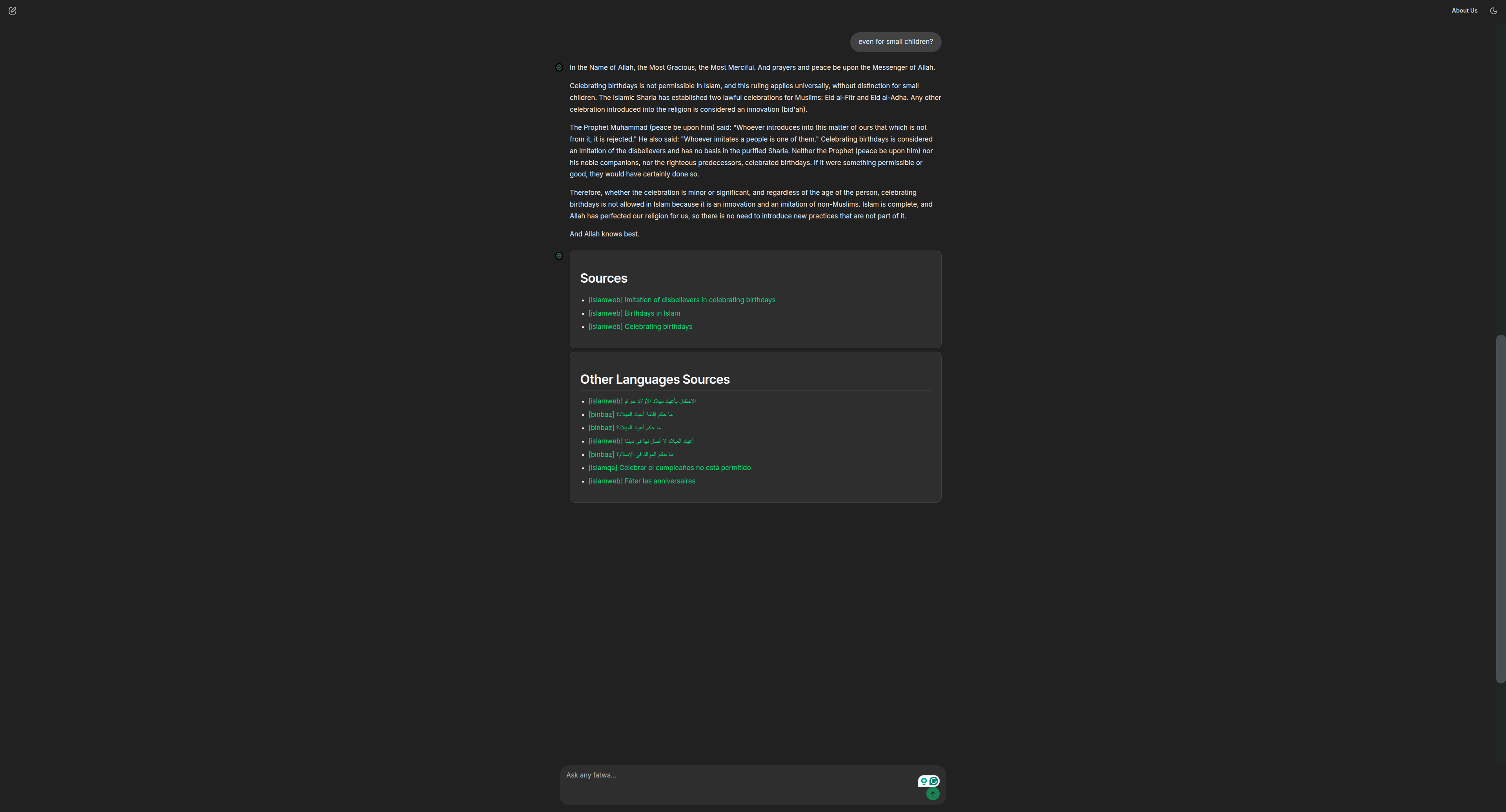
Follow-up Questions
The Inspiration
I was inspired by a common and significant frustration in seeking religious knowledge online: the waiting. Traditionally, if you ask a scholar a question, you might wait days or even weeks for a response. If that answer sparks a follow-up question, the long wait begins all over again. This delay creates a barrier to understanding and can leave pressing questions unanswered when guidance is needed most.
The vision for AIFatwa.site was to eliminate this waiting period entirely. I wanted to build a tool that respects both the user's time and their need for authentic knowledge. This led to the creation of an AI-powered assistant designed to provide instant answers and support immediate follow-up questions, making reliable Islamic guidance more accessible than ever before.
How I Built It
As a solo technical founder, I built and deployed every component of AI Fatwa from the ground up. The project is a testament to what a single, product-minded engineer can achieve without external teams or funding.
The core of the project is a custom Retrieval-Augmented Generation (RAG) pipeline built with Python, optimized for speed and accuracy. The process is built on a strong foundation:
- Data Foundation: I curated a massive dataset of over 335,000 reliable Fatwas. These were sourced from highly respected Islamic authorities, including
islamweb.com,islamqa.info,binothaimeen.net, andbinbaz.org.sa. - AI & Orchestration: I leveraged OpenAI's Large Language Models for the generative component. The RAG pipeline ensures that the AI's responses are not just conversational but are directly grounded in the authentic, verified texts from the database. This is key to providing answers that are both instant and trustworthy.
- Full-Stack Development: I developed the entire system solo. This included:
- The Python backend housing the core AI logic.
- A user-friendly chat interface built with Chainlit that supports conversational follow-ups.
- A modern landing page using Node.js.
- Seamless deployment and hosting on Railway, chosen for performance and reliability.
Challenges Faced
Building AI Fatwa solo presented a unique set of challenges:
- Ensuring Authenticity at Speed: The primary challenge was delivering answers instantly without sacrificing authenticity. When dealing with religious knowledge, accuracy is non-negotiable. The RAG system had to be meticulously designed to force the AI to rely strictly on the provided sources and cite them, preventing the model from generating its own opinions under the pressure of a real-time response.
- Data Curation at Scale: Handling a dataset of over 335,000 documents is a significant data engineering task. Cleaning, structuring, and embedding this vast corpus of text to be retrieved in milliseconds required an optimized and efficient ETL pipeline.
- End-to-End Solo Development: Building the entire stack—from the backend AI pipeline to the frontend UI and cloud infrastructure—is a massive undertaking for one person. It demanded discipline and a broad skill set across multiple domains, from GenAI to cloud deployment and UX design.
What I Learned
This project was a profound learning experience, both technically and from a product perspective.
- Solving a Core User Pain Point: I learned how crucial it is to address a specific, tangible user frustration. The traditional process of getting a fatwa can take weeks; by focusing the entire product on providing instant answers and follow-ups, I was able to deliver immediate and obvious value.
- From Engineer to Founder: I learned firsthand how to take a product from a mere idea to a fully launched, user-facing application entirely on my own. This solidified my skills not just in writing code, but in architecting systems, designing user flows, and deploying robust infrastructure.
- The Power of RAG for Trust: I gained deep, practical experience in building custom RAG pipelines, confirming that this architecture is one of the most effective ways to build trustworthy, factual AI assistants that can operate in real-time.
- Responsibility in AI: Building
AI Fatwareinforced the immense responsibility that comes with developing AI for sensitive domains. It taught me the importance of placing safeguards, prioritizing authenticity, and being transparent with users about the tool's capabilities and limitations.

Log in or sign up for Devpost to join the conversation.