-
-
1
-
2
AI FarmOS — About the Project
Inspiration
Every year, farmers lose huge portions of their harvest to crop diseases that are caught too late. By the time symptoms are visible to the naked eye, the disease has often already spread, and the damage is done. We looked at the existing tools on the market and noticed they all stopped at the same place: "your plant is sick." No farmer needs to be told what they can already see — they need to know why it happened, how bad it is, and what to do next. That gap between diagnosis and actual decision-making is what pushed us to build AI FarmOS.
What it does
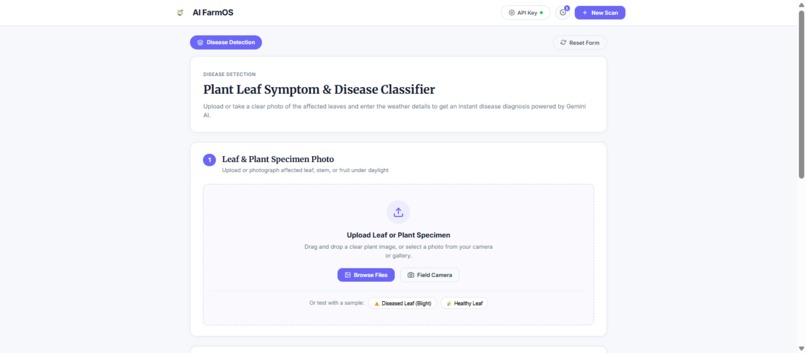
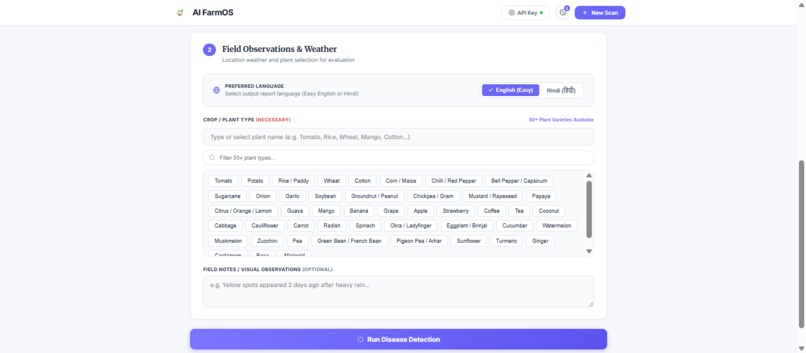
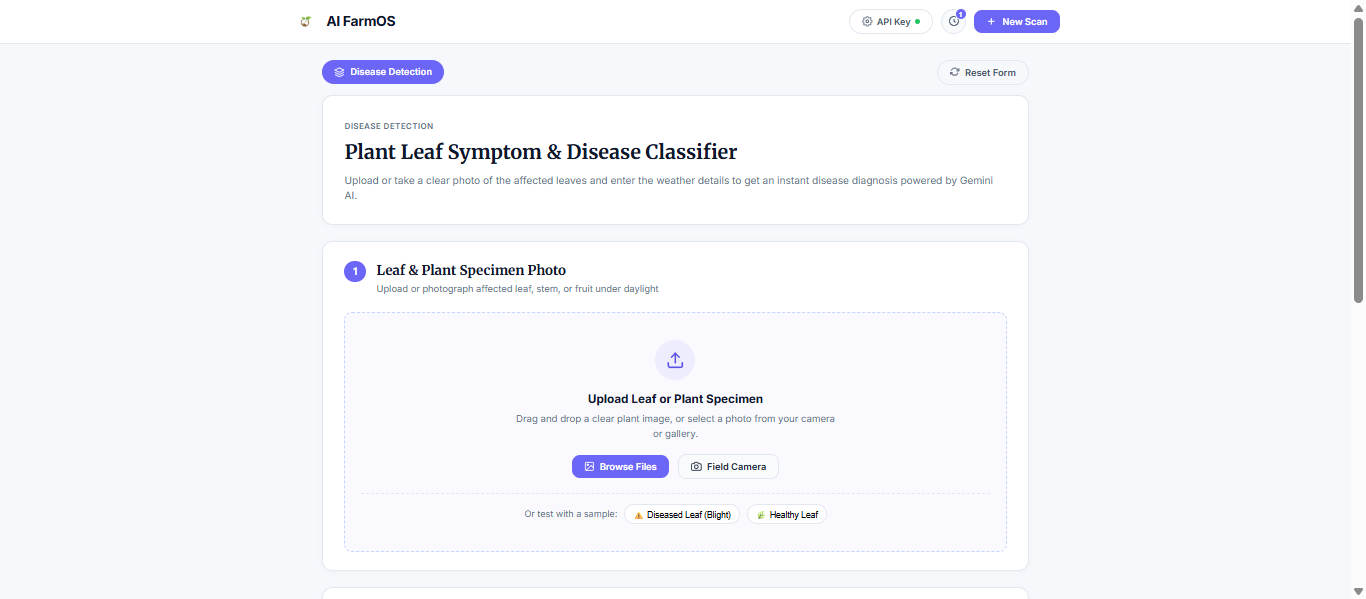
AI FarmOS turns a single leaf photo into a full diagnosis and action plan. A farmer uploads an image, and the platform:
- Detects the disease using computer vision, and calculates infection percentage and affected area
- Predicts risk by forecasting possible disease outbreaks before they occur, using live weather data
- Explains severity — not just "sick," but how far along the disease is and what happens if nothing is done
- Builds a personalized treatment plan — dosages, organic alternatives, and a recovery timeline
- Generates a professional, downloadable report, all surfaced in one dashboard
For example, a scan might return:
Disease: Late Blight, Risk: High, Confidence: 97%, Severity: 42%, Recommended Action: Apply Mancozeb, Expected Yield Recovery: 92%
We're not building another classifier — we're building every farmer's AI crop doctor.
How we built it
- Frontend: React
- Backend: FastAPI (Python)
- AI Layer: Gemini API, used to analyze uploaded crop images and generate insights — disease identification, severity, risk assessment, and treatment recommendations — along with clear, farmer-friendly explanations in real time
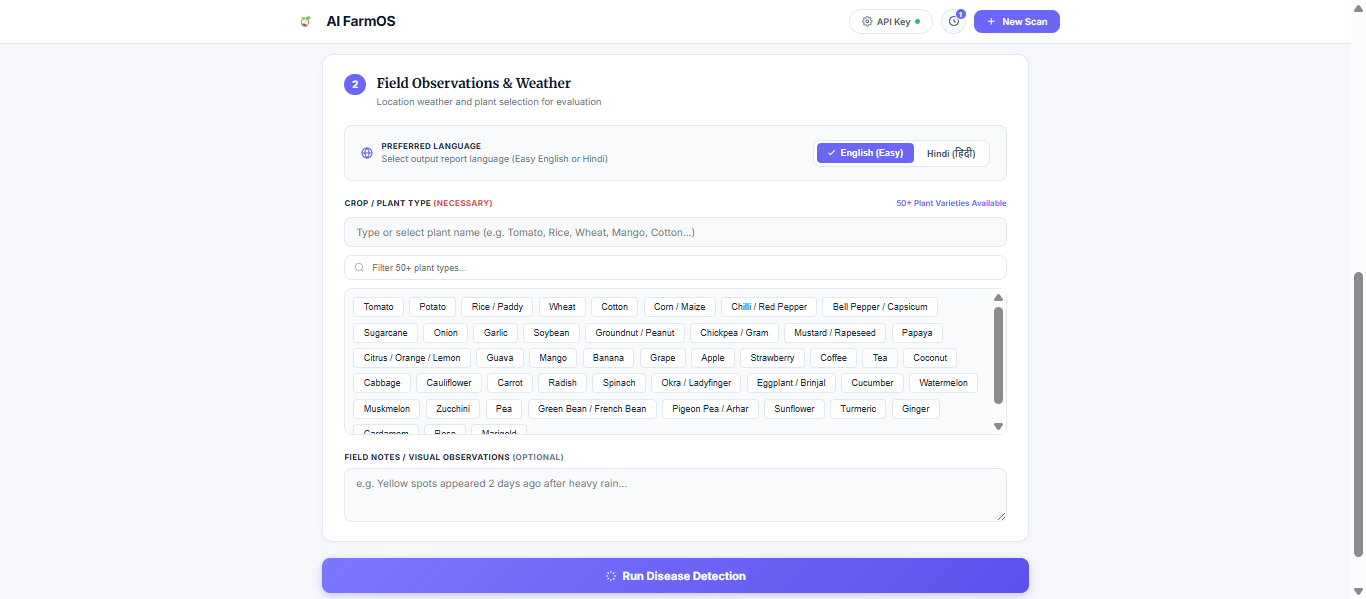
- We fused the image analysis with live weather and location data (via GPS) so predictions account for real environmental conditions, not just the photo in isolation
- Completed phases so far: Computer Vision (disease detection from images) and IoT/Weather Integration (GPS-based weather correlation)
Challenges we ran into
- Moving beyond simple classification to actually correlating image data with external signals like weather in a way that produces a meaningful, personalized risk score
- Designing recommendations that are genuinely actionable (dosages, organic alternatives, timelines) rather than generic advice, since most existing tools stop at "here's what you have"
- Balancing depth of information with simplicity, since the end user is a farmer in the field, not a data scientist — the output needed to be clear and immediately usable
What we learned
- Prediction is far more valuable to farmers than detection alone — catching a risk before visible symptoms is what actually saves a harvest
- Combining multiple data sources (image, weather, farm history) into one coherent explanation is much harder than building a single-purpose classifier, but it's what turns a tool into a genuine decision-support system
- Small, concrete outputs (like an expected yield recovery percentage) build far more trust with users than a vague severity label
What's next for AI FarmOS
Looking ahead, we're planning Drone Integration for larger-scale field scanning and expanded IoT sensor integration for continuous, real-time farm monitoring — moving AI FarmOS from a reactive diagnostic tool into a fully proactive farm intelligence platform.


Log in or sign up for Devpost to join the conversation.