-
AI Family Photo
Inspiration
Family photos are emotionally valuable, but they are often the hardest kinds of photos to create. Families live in different cities, schedules never line up, older relatives may not be able to travel, and some meaningful portraits cannot be captured in real life at all. AI Family Photo Generator was inspired by this gap: we wanted to make it possible for people to create warm, realistic family portraits from separate photos, without the cost and friction of a traditional studio shoot.
What it does
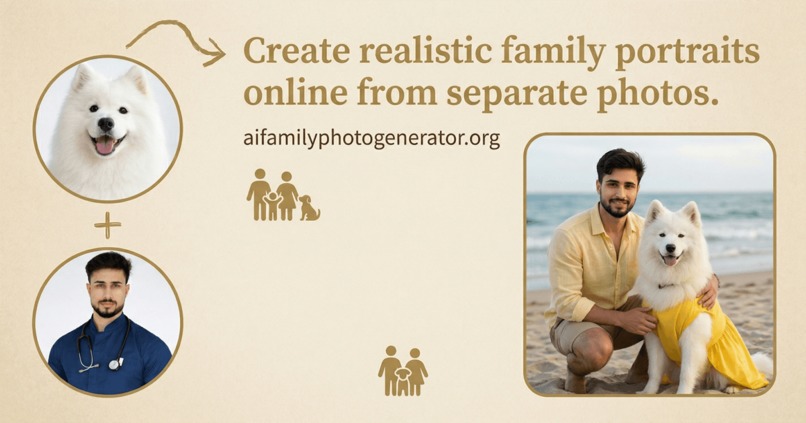
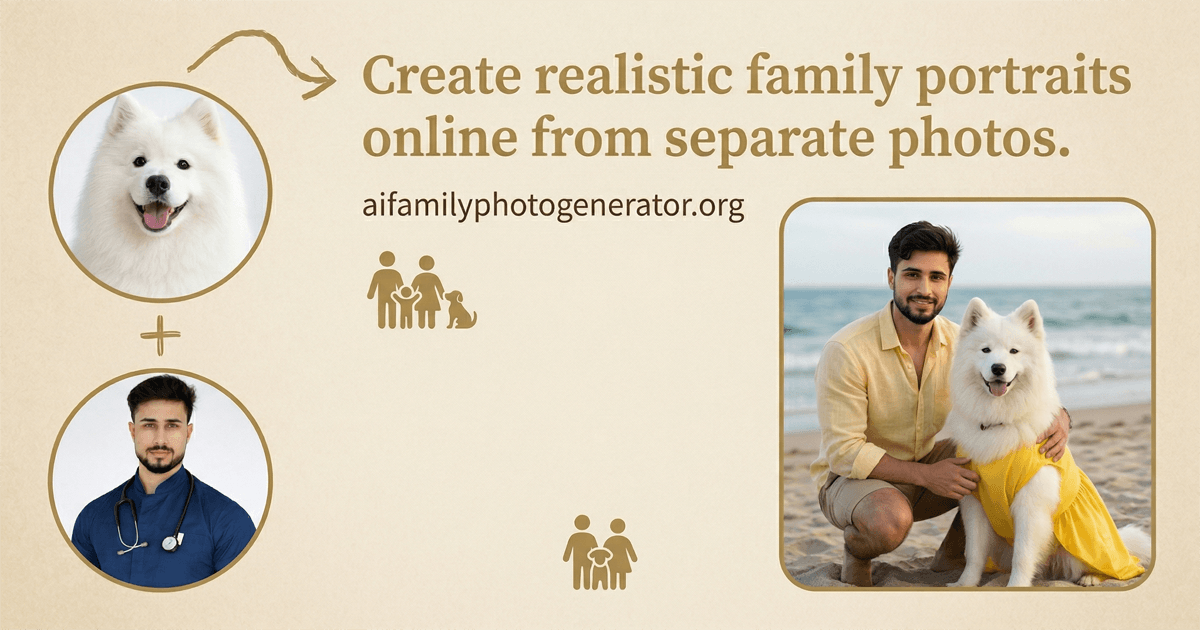
AI Family Photo Generator is an online tool that helps users create realistic family photos and family portraits from separate pictures or guided prompts. It supports scenarios like long-distance family reunions, holiday cards, framed keepsakes, anniversary gifts, and memorial portraits. Users can upload separate images, choose styles and scene directions, and generate natural-looking family portraits that are ready to download, share, or print.
How I built it
I built the product with a Next.js application for the user-facing experience and a dedicated AI core service for image generation workflows. The main app handles the product layer, including user interaction, prompt assembly, generation records, billing logic, and result presentation. The AI core service handles generation task orchestration, provider communication, polling, retry logic, and final image processing.
To make the system more maintainable, I separated image generation into clear start/status task flows. I also split responsibilities between the business app and the AI worker, so the app remains focused on user workflows while the worker focuses on provider execution, fallback handling, and final asset delivery. Generated images are processed and uploaded to storage so the final result is stable and production-ready rather than tied to temporary provider URLs.
Challenges I ran into
One of the biggest challenges was reliability. Image generation is asynchronous, provider behavior is not always consistent, and failed tasks need to be retried carefully without breaking the user experience. Another challenge was separating product logic from AI infrastructure without making the system harder to debug.
Handling image generation from separate family photos also required careful prompt design and workflow structure. The product needs to feel simple for users, but behind the scenes there is a lot of orchestration involved: choosing the right provider model, polling task results, deciding when a failure should retry, storing outputs safely, and keeping the app state consistent between local development and production deployment.
Accomplishments that I'm proud of
I'm proud that the project evolved from a direct provider integration into a cleaner service-oriented architecture. The generation flow is now much more structured, reusable, and scalable. I’m also proud that both image-to-image and text-to-image workflows now follow a more consistent task model, which makes the platform easier to extend.
On the product side, I’m proud that the experience stays focused on emotional value rather than technical complexity. The tool is not just about generating images; it is about helping families create portraits for moments that matter, even when real-life photography is difficult or impossible.
What I learned
I learned that building AI products is not just about model access. The real work is in orchestration, failure handling, storage, consistency, and user trust. I also learned that separating product concerns from AI execution concerns makes the system easier to evolve over time.
Another important lesson was that prompt construction should be treated like product logic, not just model input. The way prompts are assembled has a direct impact on both quality and maintainability, especially when different pages, styles, and family portrait scenarios need different behavior.
What's next for AI Family Photo Generator
The next step is to expand provider support so the platform can intelligently route different models and use cases through the best image generation backend. I also want to improve prompt composition for more portrait scenarios, expand style and scene systems, and make the final generation flow even more reliable.
On the product side, the roadmap includes better support for different family portrait use cases, more refined generation controls, stronger result consistency, and a more polished sharing and keepsake experience. The long-term goal is to make AI Family Photo Generator a dependable creative tool for meaningful family memories, not just a one-off image demo.
Built With
- english
- nextjs
- typescript

Log in or sign up for Devpost to join the conversation.