-
-
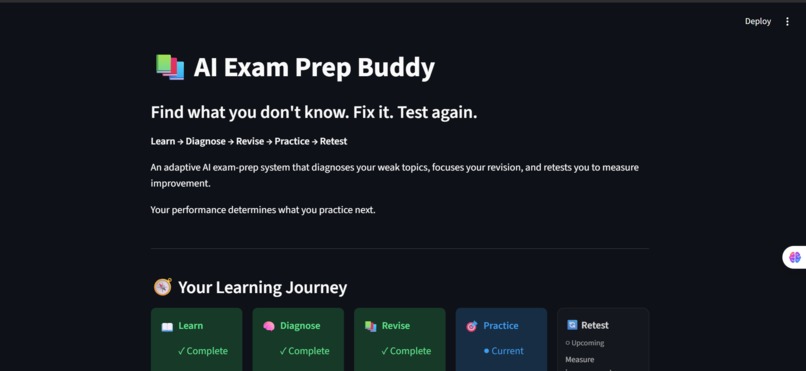
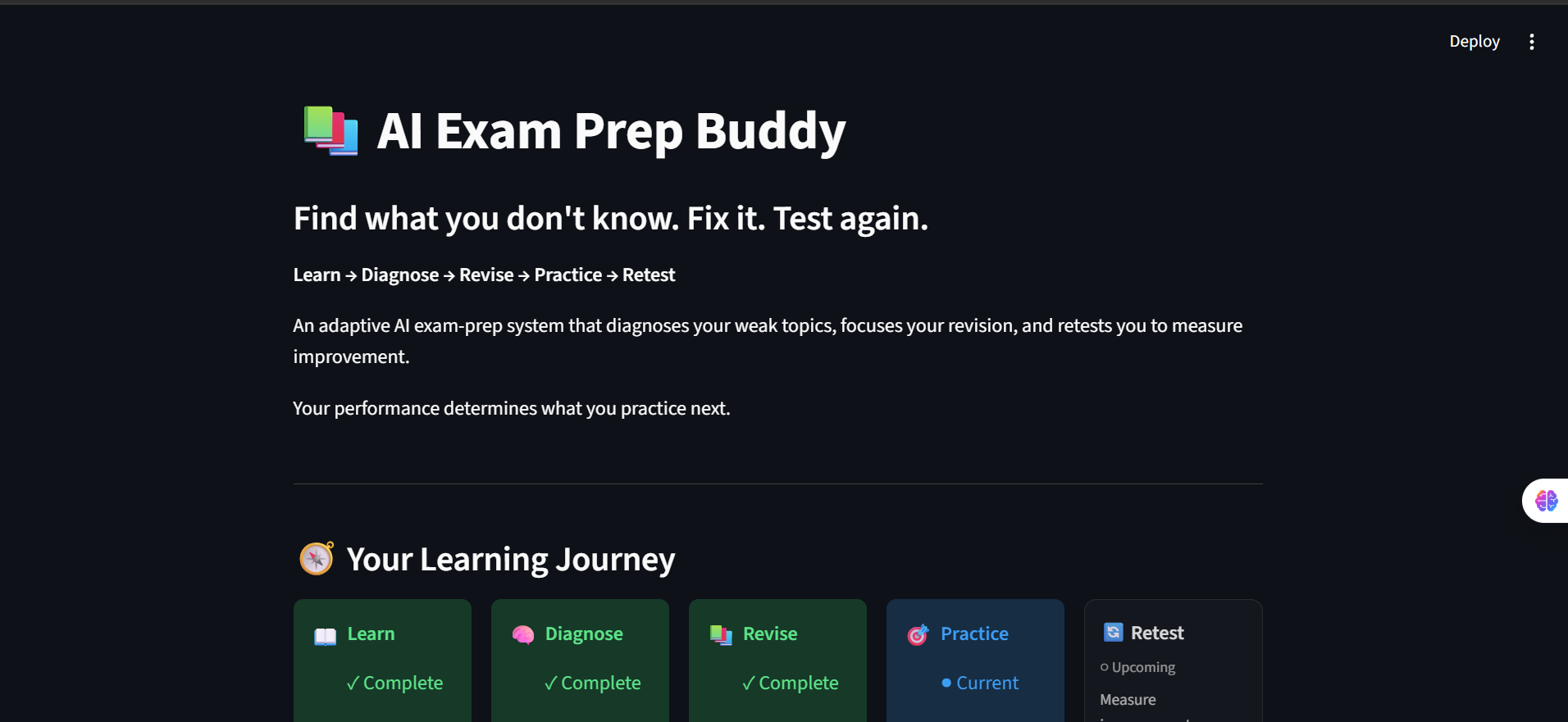
The complete adaptive learning loop: Learn, Diagnose, Revise, Practice, and Retest—built around each student's demonstrated weaknesses.
-
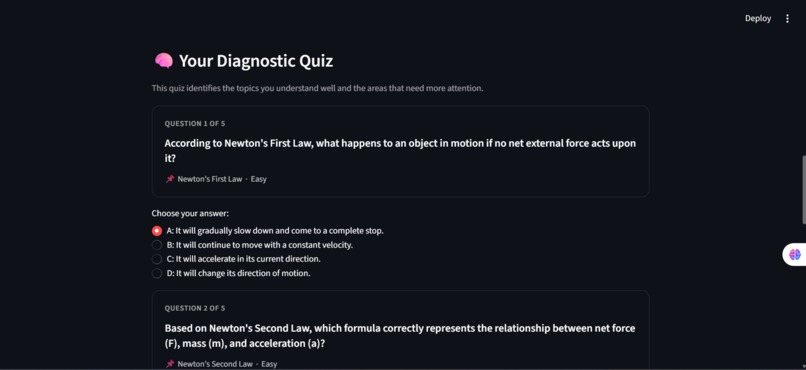
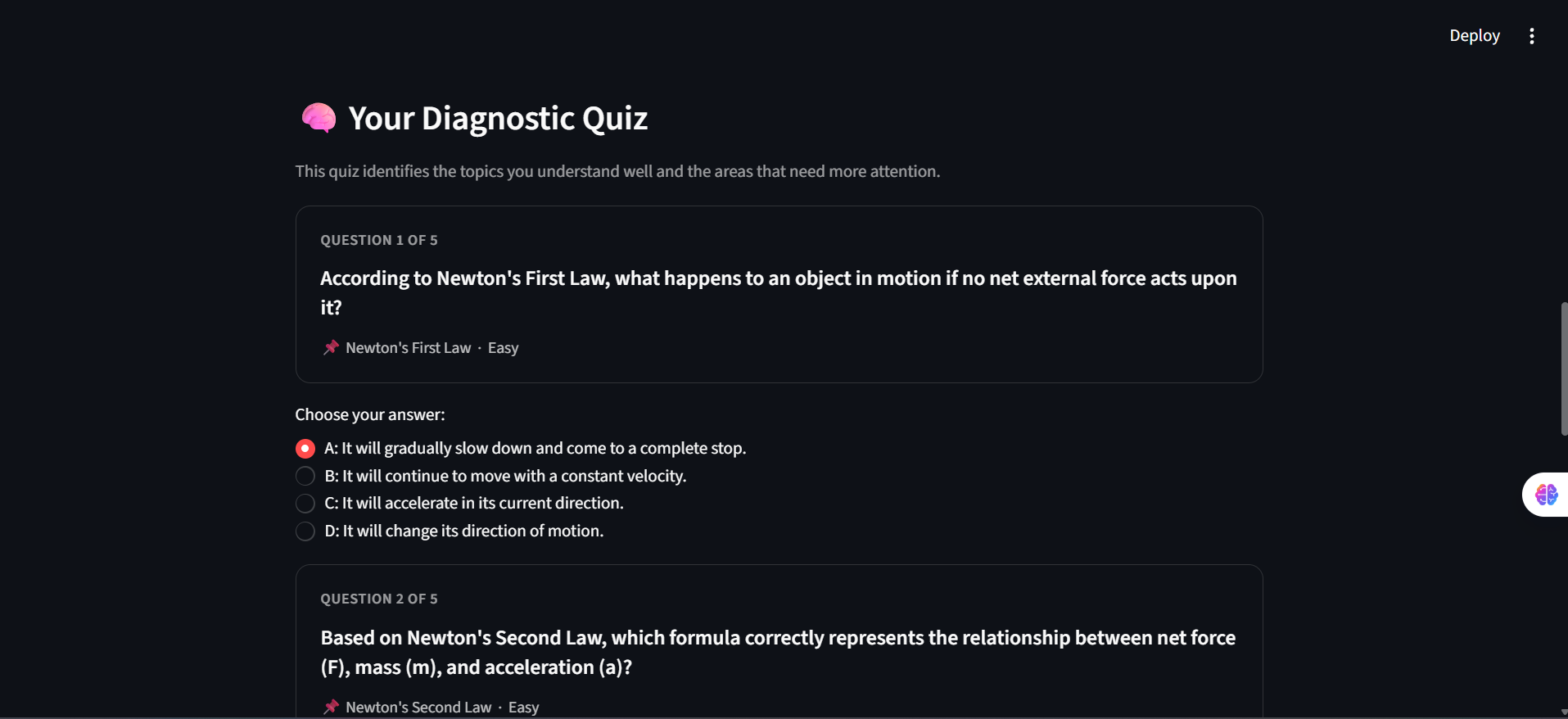
The diagnostic stage uses Gemini-generated questions to assess understanding and identify the topics where a student needs help.
-
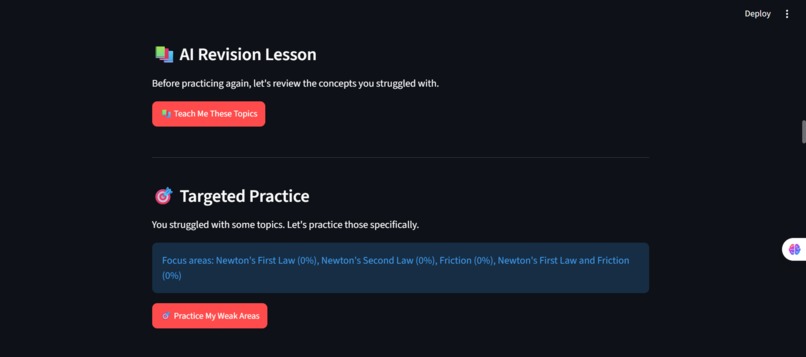
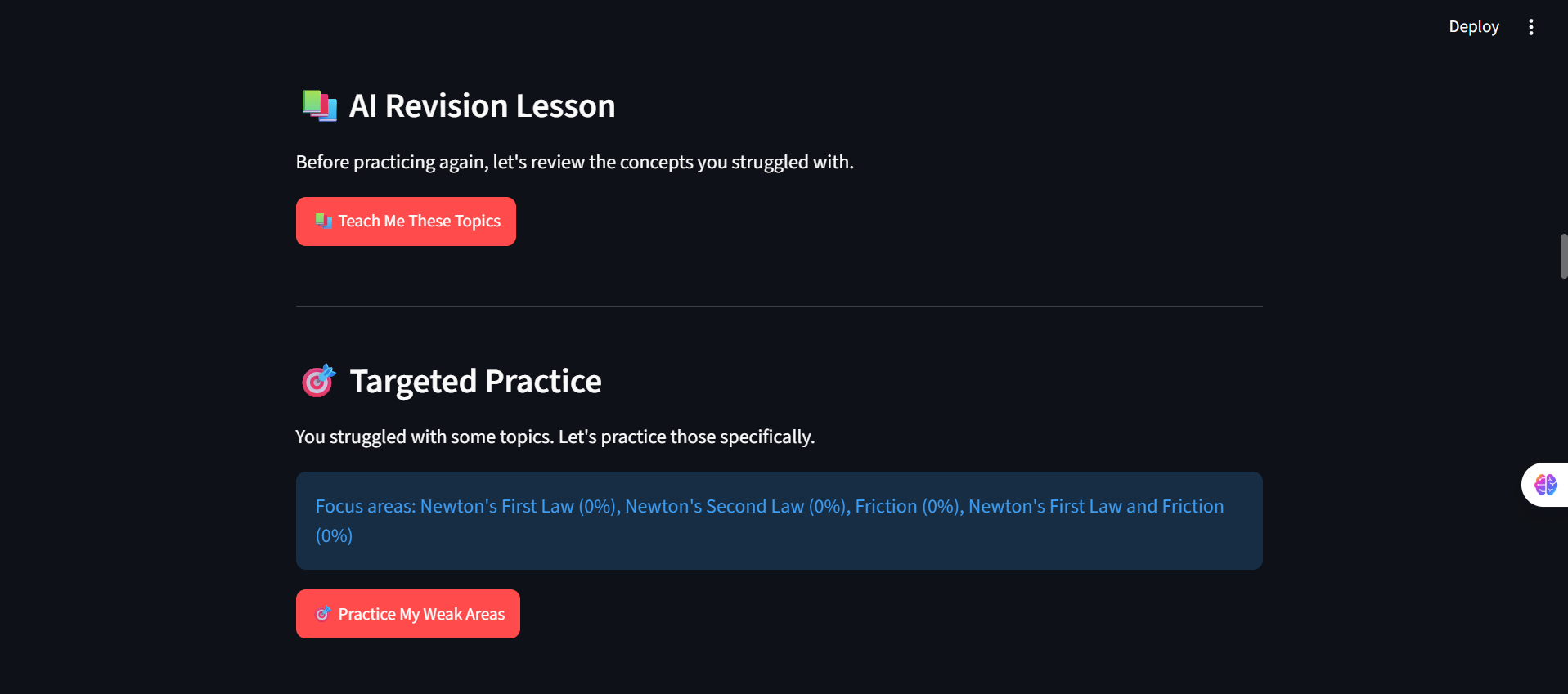
AI-generated revision targets the student's weakest topics, turning quiz performance into a personalized study plan.
-
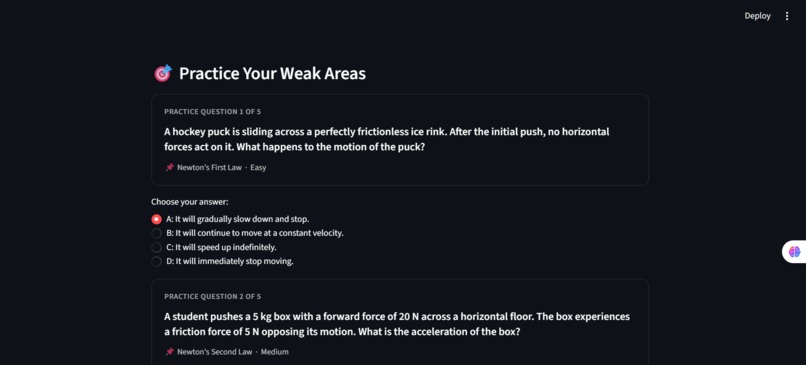
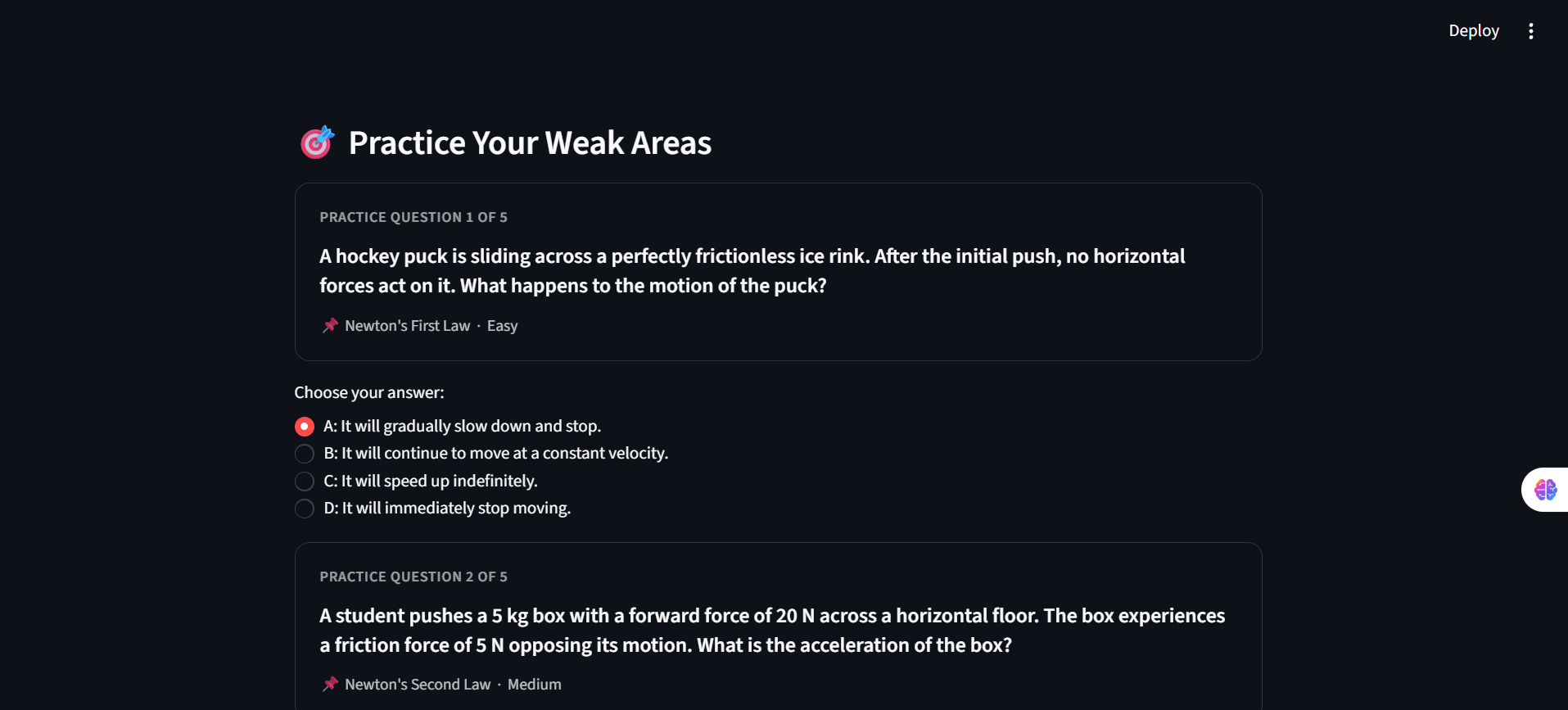
Targeted practice generates fresh, scenario-based questions focused specifically on the student's demonstrated weak areas.
-
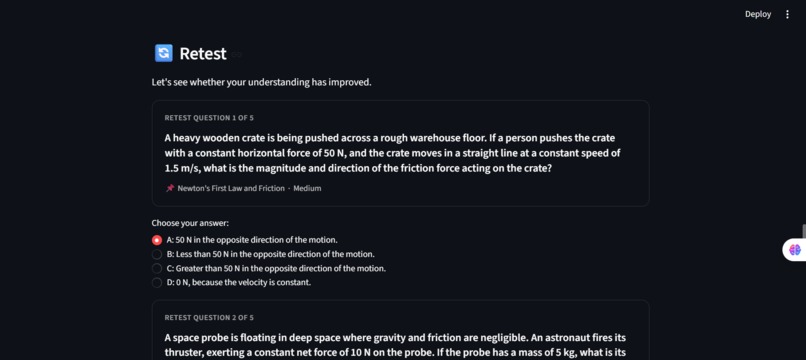
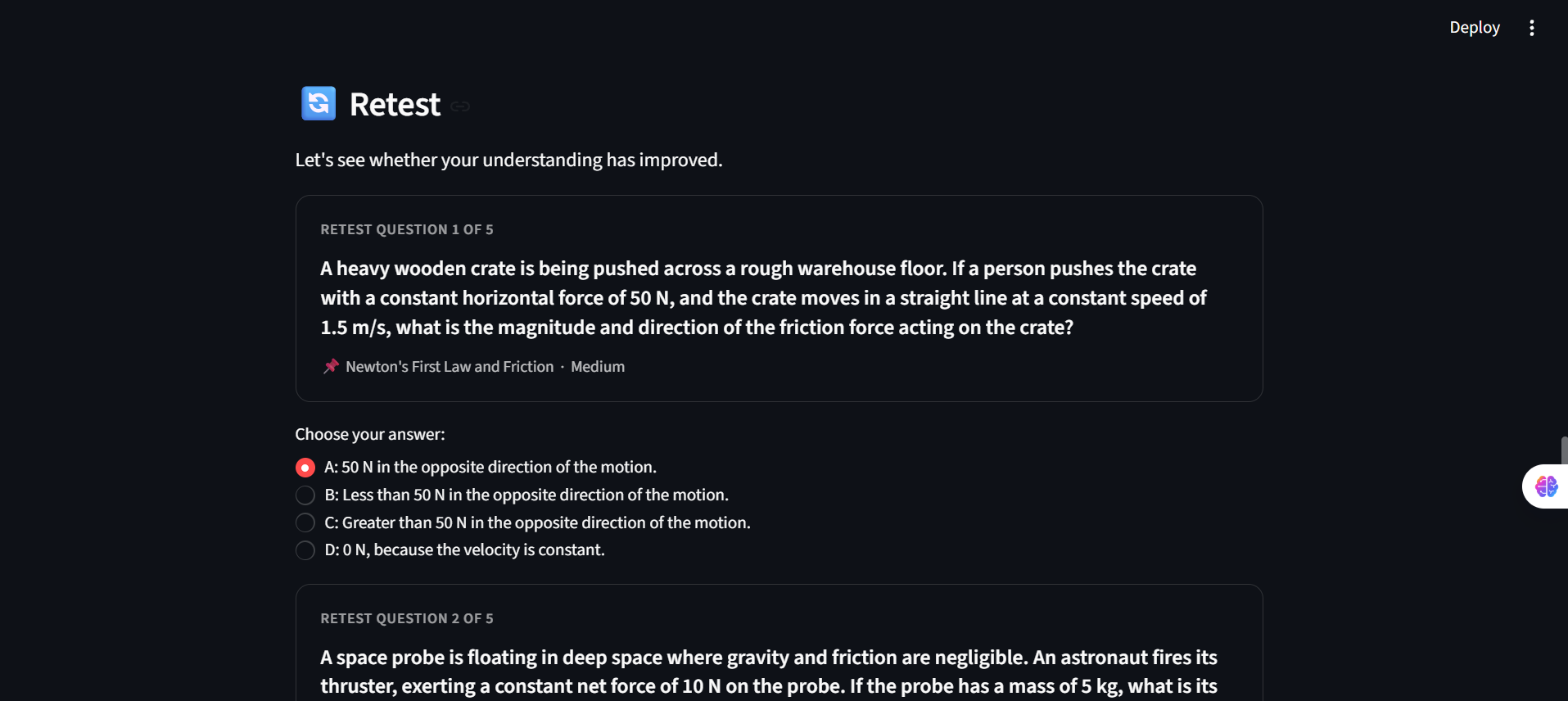
A fresh retest revisits the original weak areas with new scenarios to check whether the student's understanding has recovered.
-
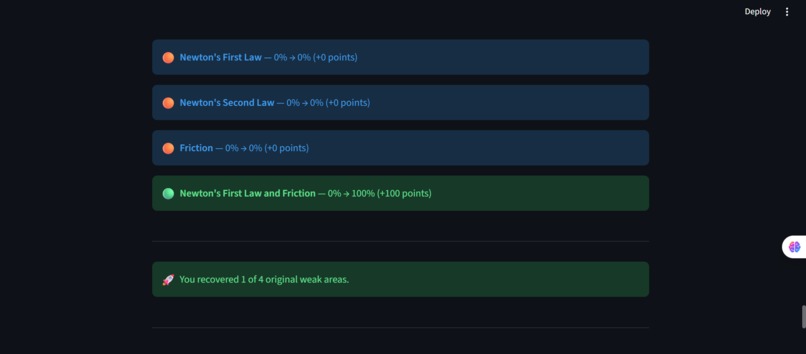
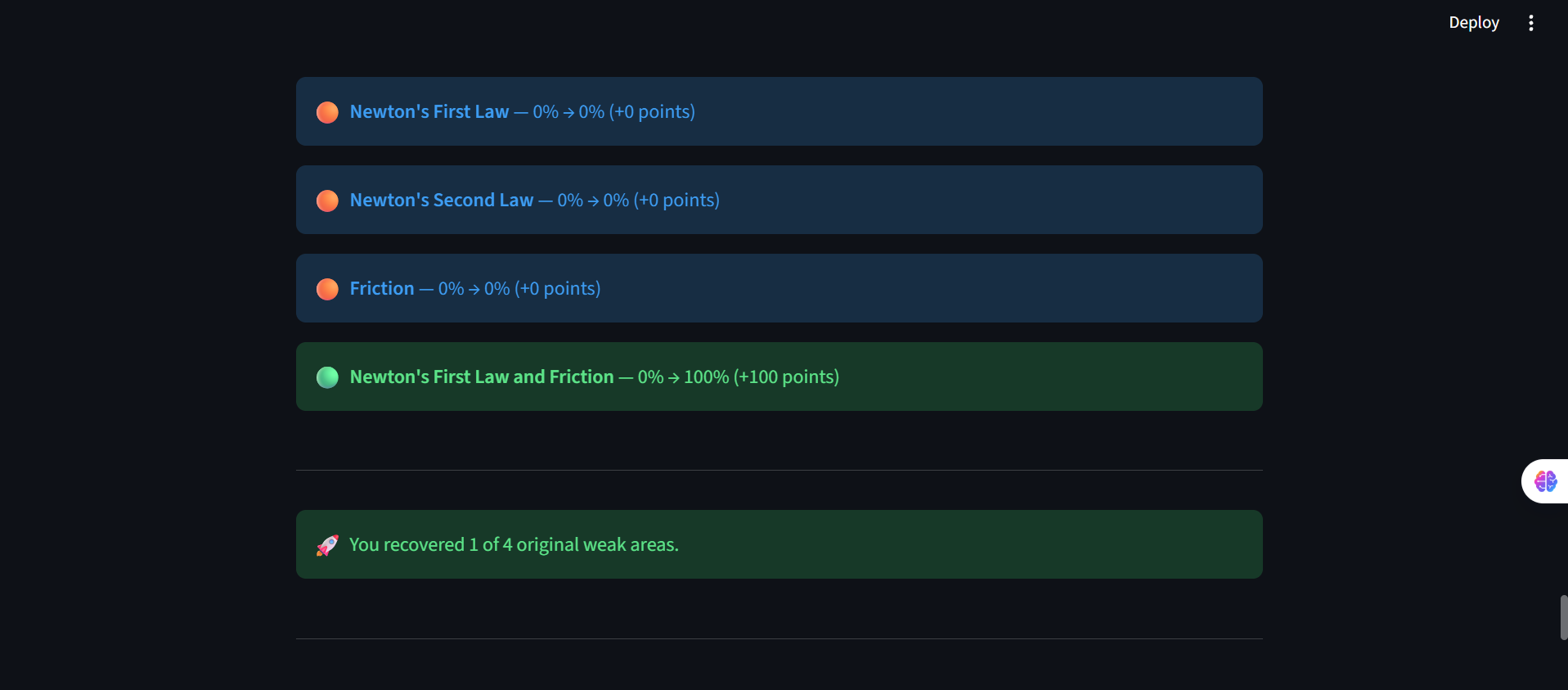
The system compares performance across rounds to show which weak areas recovered and which still need further practice.
Inspiration
Preparing for exams often means studying everything, even when only a few specific concepts are actually causing problems. With AI tools, it is easy to generate endless practice questions, but generating more questions does not necessarily create an effective learning loop.
I wanted to build something that answers a more useful question: what should a student study next based on what they actually got wrong?
What it does
AI Exam Prep Buddy is an adaptive AI exam-preparation system that focuses a student's limited study time on the concepts they actually struggle with.
The workflow is:
Learn → Diagnose → Revise → Practice → Retest
A student provides study material, and Google Gemini generates a diagnostic quiz with questions mapped to relevant topics and difficulty levels. The application then scores the student's answers and analyzes performance by topic to identify demonstrated weak areas.
Instead of giving the student another generic quiz, those weak areas determine what happens next. Gemini generates personalized revision content and targeted practice focused on those topics. The student then takes a fresh retest designed around the original weaknesses, allowing the system to identify which areas appear to have recovered and which still need practice.
How we built it
The application was built in Python using Streamlit, with the Google Gemini API providing the generative AI layer.
Gemini handles diagnostic question generation, revision lessons, targeted practice questions, and fresh retest scenarios. The application uses structured response schemas and validation to keep generated quizzes consistent.
A key architectural decision was separating AI generation from deterministic evaluation. Python handles answer scoring, topic-level performance aggregation, weakness detection, topic normalization, and recovery calculations. The AI generates learning content, while the application logic determines performance and controls the adaptive workflow.
Challenges we ran into
One of the biggest challenges was making AI-generated content reliable enough for an actual assessment workflow. We had to handle malformed responses, API errors, quota limitations, validation of generated questions, and differences in topic labels between separate AI-generated quizzes.
Another challenge was making the adaptive system behave honestly. The application should not claim that a student improved simply because an AI generated new questions, so recovery is calculated from actual quiz performance.
Accomplishments that we're proud of
We are proud of building a complete adaptive learning loop rather than stopping at AI-generated quizzes.
The application can take a student from initial diagnosis through targeted intervention and back to a fresh retest, while preserving the connection between the student's weak topics and the content generated for them.
We are also proud that the system does not rely on the language model to decide whether a student is correct. The scoring and performance analysis remain deterministic and transparent.
What we learned
We learned that building an AI application is about much more than connecting an API to a user interface. The surrounding application logic is what turns model generation into a reliable workflow.
We also learned the importance of validation, error handling, prompt design, and clearly separating probabilistic AI behavior from deterministic application logic.
Because assessment rounds are intentionally short for rapid feedback and iteration, small question sets can introduce score variance. Recovery percentages are therefore treated as directional indicators rather than definitive measurements of learning; longer assessment rounds can provide a stronger signal.
What's next for AI Exam Prep Buddy
Future versions could support longer assessment sessions, persistent progress tracking, richer learning analytics, and additional study-material formats.
The longer-term goal is to make the system a continuous adaptive study companion that learns which concepts a student consistently struggles with and continually adjusts their preparation around those gaps.

Log in or sign up for Devpost to join the conversation.