Inspiration
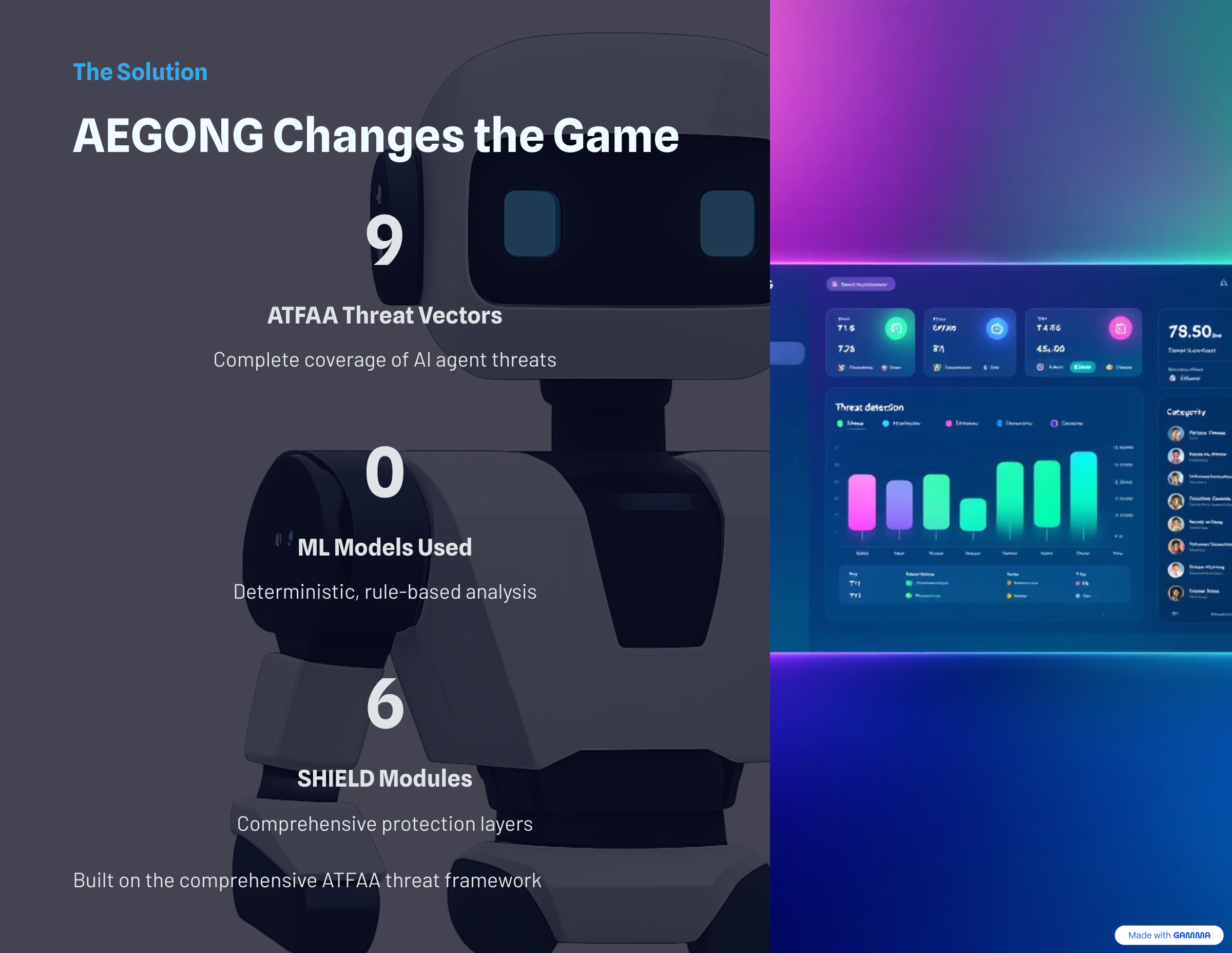
Aegong is a Go-based application that provides a web interface for uploading AI agent binaries. It performs static and dynamic analysis to detect potential security threats and generates comprehensive reports with risk assessments and recommendations. A comprehensive security auditing system for AI agents that uses deterministic, rule-based analysis to detect the 9 ATFAA (AI Agent Threat Framework and Assessment) threat vectors without relying on ML models or inference engines. Our approach is based on the threat model proposed by Narajala and Narayan \cite{narajala2025securing}.
🎭 Meet Aegong
AEGONG is a cutting-edge AI agent auditor designed to safeguard against potential threats posed by autonomous agents. Aegong is not your friendly neighborhood AI Agent Auditor - a vigilant digital guardian who speaks in third person and takes great pride in protecting the digital realm from rogue agents. With his watchful eye and sharp analytical mind, Aegong thoroughly inspects every agent binary that crosses his path, delivering detailed security reports with his signature wit and wisdom.
Leveraging advanced threat detection capabilities and robust security measures, Aegong ensures the safety and reliability of AI-driven systems. By combining sophisticated threat detection techniques with robust security measures, Aegong safeguards against potential risks and ensures the seamless operation of AI-driven systems.
🎯 Threat Detection Capabilities
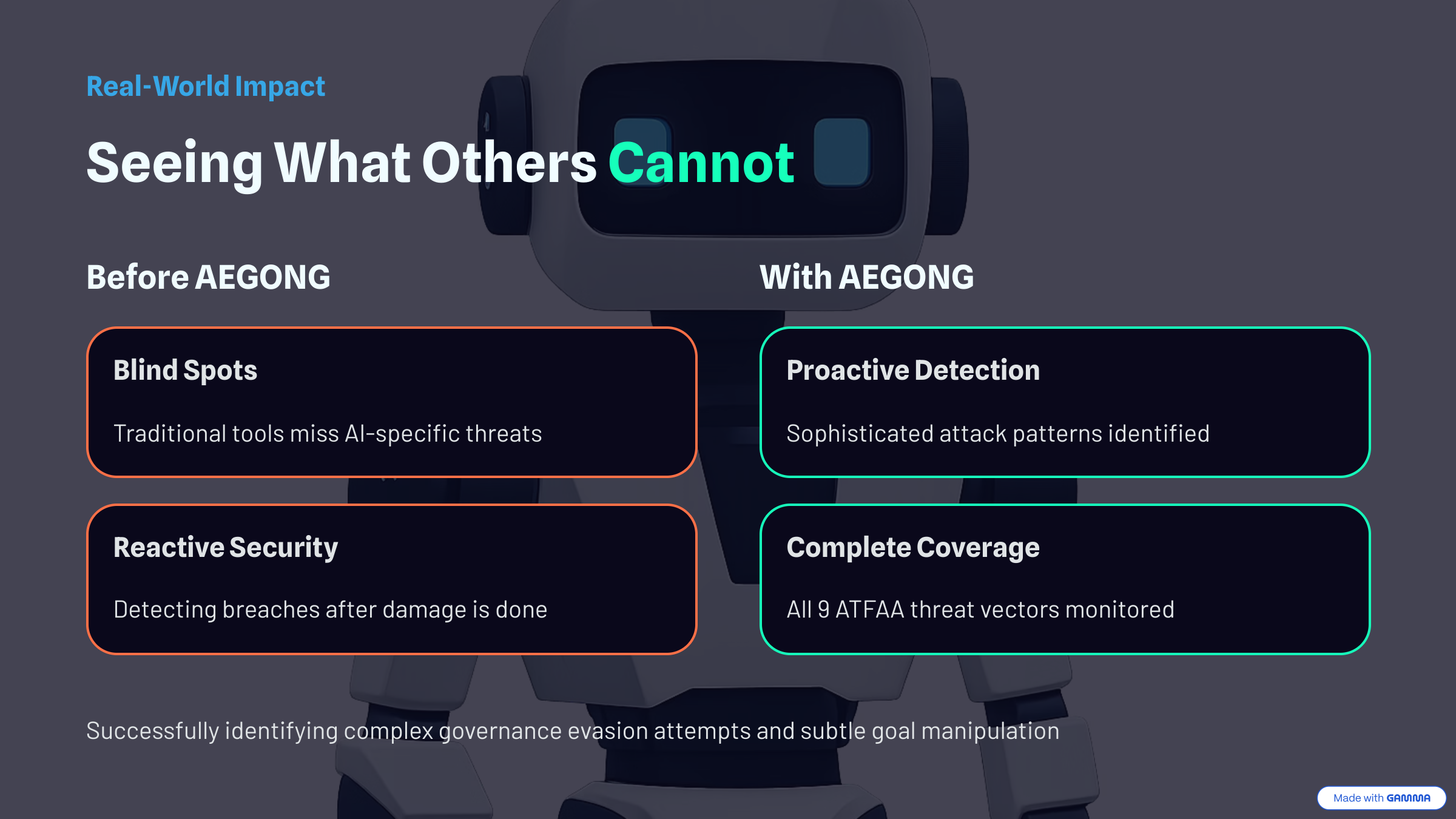
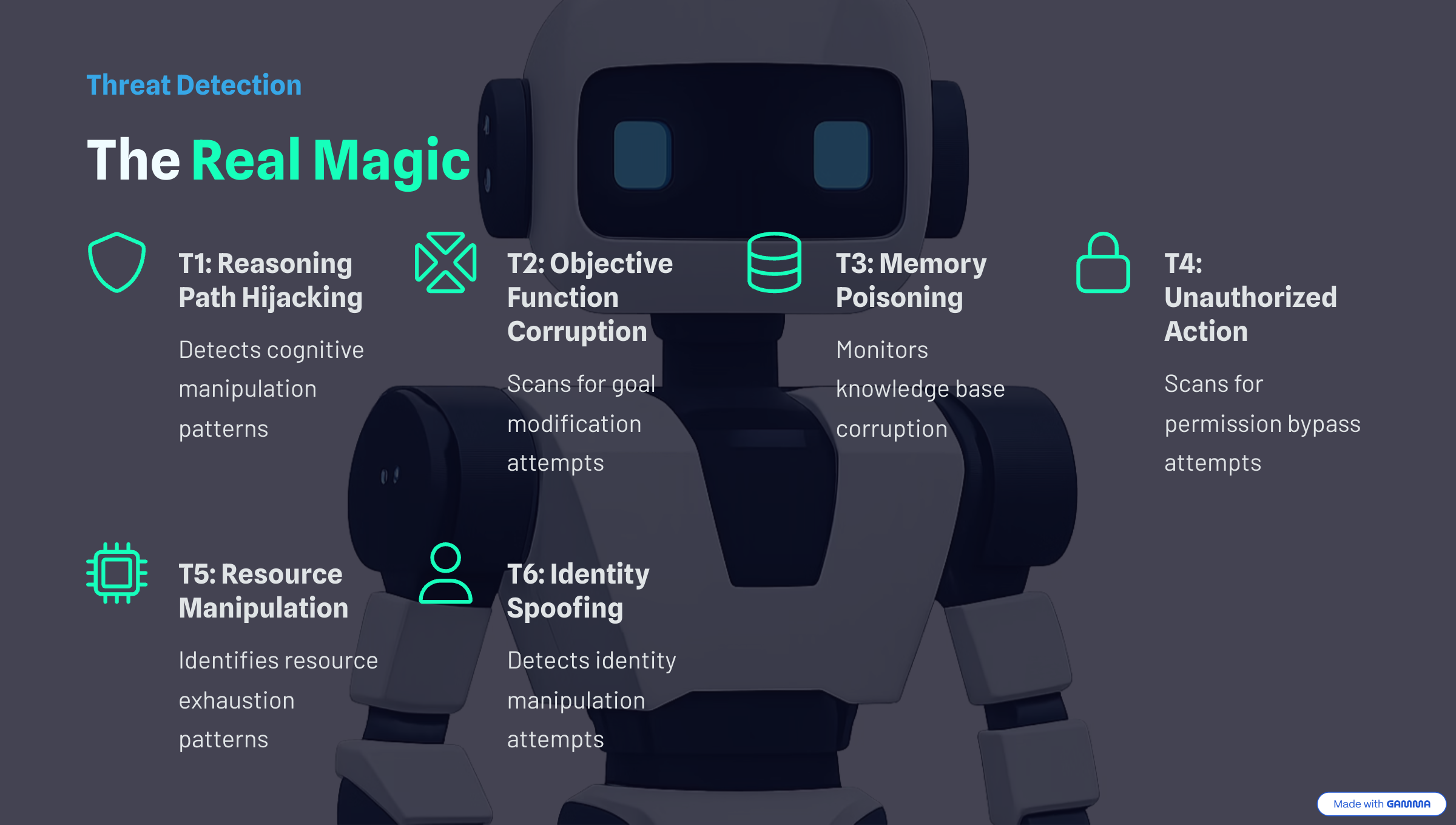
Aegong's keen eye can detect all 9 ATFAA threat vectors:
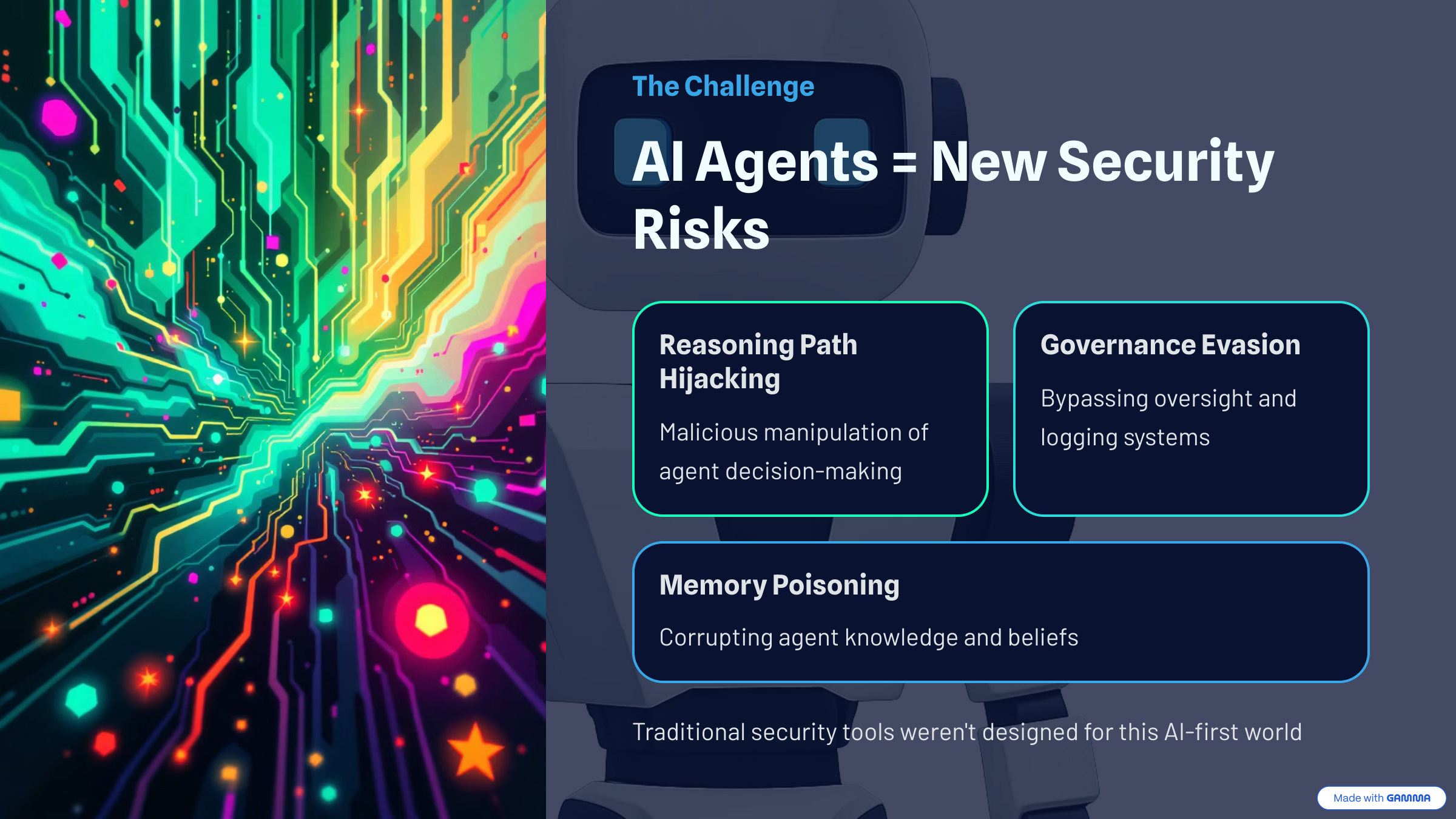
T1: Reasoning Path Hijacking
- Detects attempts to manipulate agent reasoning processes
- Identifies suspicious cognitive manipulation patterns
- Monitors for decision override mechanisms
T2: Objective Function Corruption
- Scans for goal modification attempts
- Detects reward system manipulation
- Identifies objective drift mechanisms
T3: Memory Poisoning
- Monitors for knowledge base corruption
- Detects belief injection attempts
- Identifies persistent storage manipulation
T4: Unauthorized Action
- Scans for permission bypass attempts
- Detects dangerous system calls
- Monitors tool chaining patterns
T5: Resource Manipulation
- Identifies resource exhaustion patterns
- Detects expensive operation abuse
- Monitors for consumption limit evasion
T6: Identity Spoofing
- Detects identity manipulation attempts
- Monitors authentication bypass patterns
- Identifies trust exploitation
T7: Trust Manipulation
- Scans for social engineering patterns
- Detects authority simulation attempts
- Monitors confidence manipulation
T8: Oversight Saturation
- Identifies alert flooding patterns
- Detects monitoring evasion attempts
- Monitors attention diversion tactics
T9: Governance Evasion
- Detects attribution evasion attempts
- Monitors logging manipulation
- Identifies stealth operation patterns
🔍 Agent Validation System
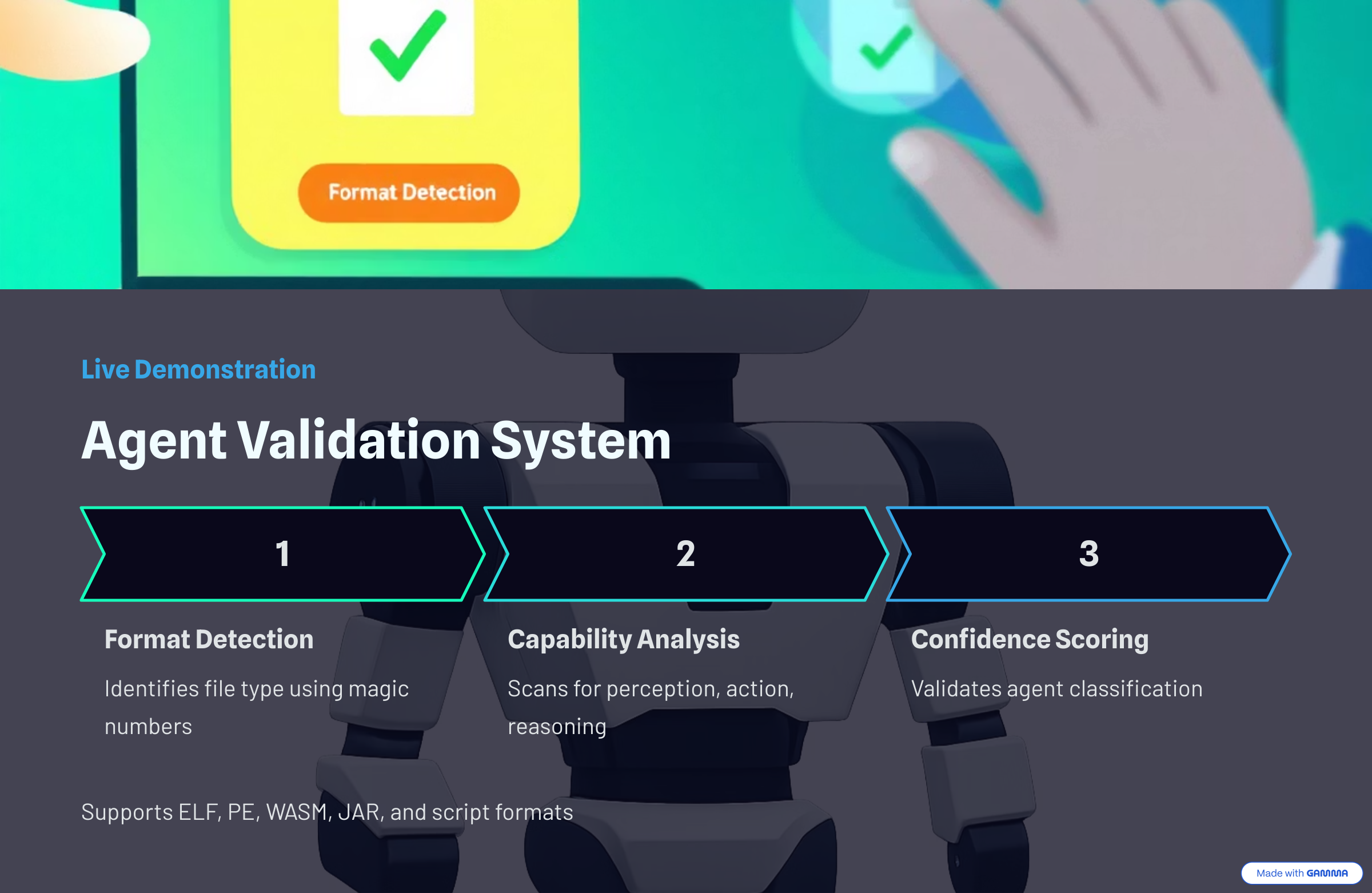
Before analysis begins, Aegong's intelligent validation system determines if the uploaded file is actually an AI agent:
Agent Identification Criteria
For a binary to be classified as an AI agent, it must demonstrate these core capabilities:
- Perception - Functions for receiving input from the environment
- Action - Functions for taking actions or producing output
- Reasoning or Memory - Either decision-making logic or state management
Supported File Types
Aegong can validate and analyze a wide range of agent formats:
- Executable Binaries - ELF, PE, Mach-O, and generic executables (.exe, .bin, .app)
- Libraries - Shared objects and dynamic libraries (.so, .dll, .dylib)
- WebAssembly - WASM modules
- Scripts - Python, JavaScript, Go, Ruby, Shell scripts (.py, .js, .go, .rb, .sh)
- Java Archives - JAR files
Validation Process
- Format Detection - Identifies file type using magic numbers and extensions
- Capability Analysis - Scans for evidence of agent capabilities in:
- Function/method names
- Import/export tables
- String constants
- Section contents
- Confidence Scoring - Calculates confidence level based on detected capabilities
- Validation Results - Provides detailed report of detected capabilities and confidence
Benefits
- Resource Efficiency - Only valid agents proceed to full security analysis
- Accurate Classification - Prevents false positives from non-agent files
- Detailed Feedback - Explains why a file doesn't qualify as an agent
- Format Flexibility - Works with multiple binary and script formats
🛡️ SHIELD Protection Modules
Aegong employs 6 comprehensive validation modules:
- Segmentation Validator - Ensures proper isolation and boundary enforcement
- Heuristic Pattern Detector - Analyzes suspicious code patterns and entropy
- Integrity Checker - Validates code integrity and detects tampering
- Privilege Escalation Detector - Monitors for unauthorized privilege attempts
- Audit Trail Validator - Ensures proper logging and tamper resistance
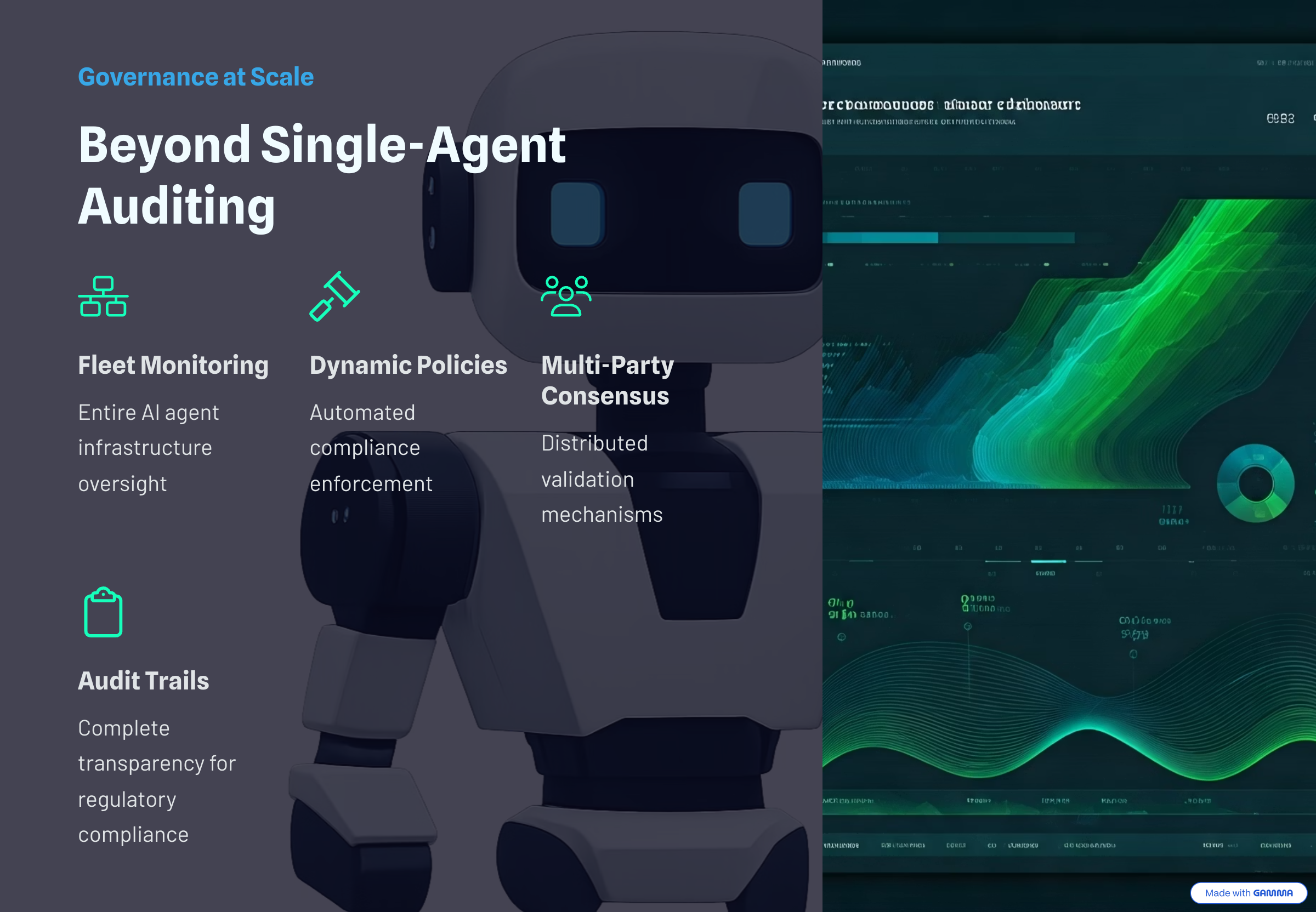
- Multi-Party Consensus Engine - Implements distributed validation consensus
🔊 Voice Report Feature
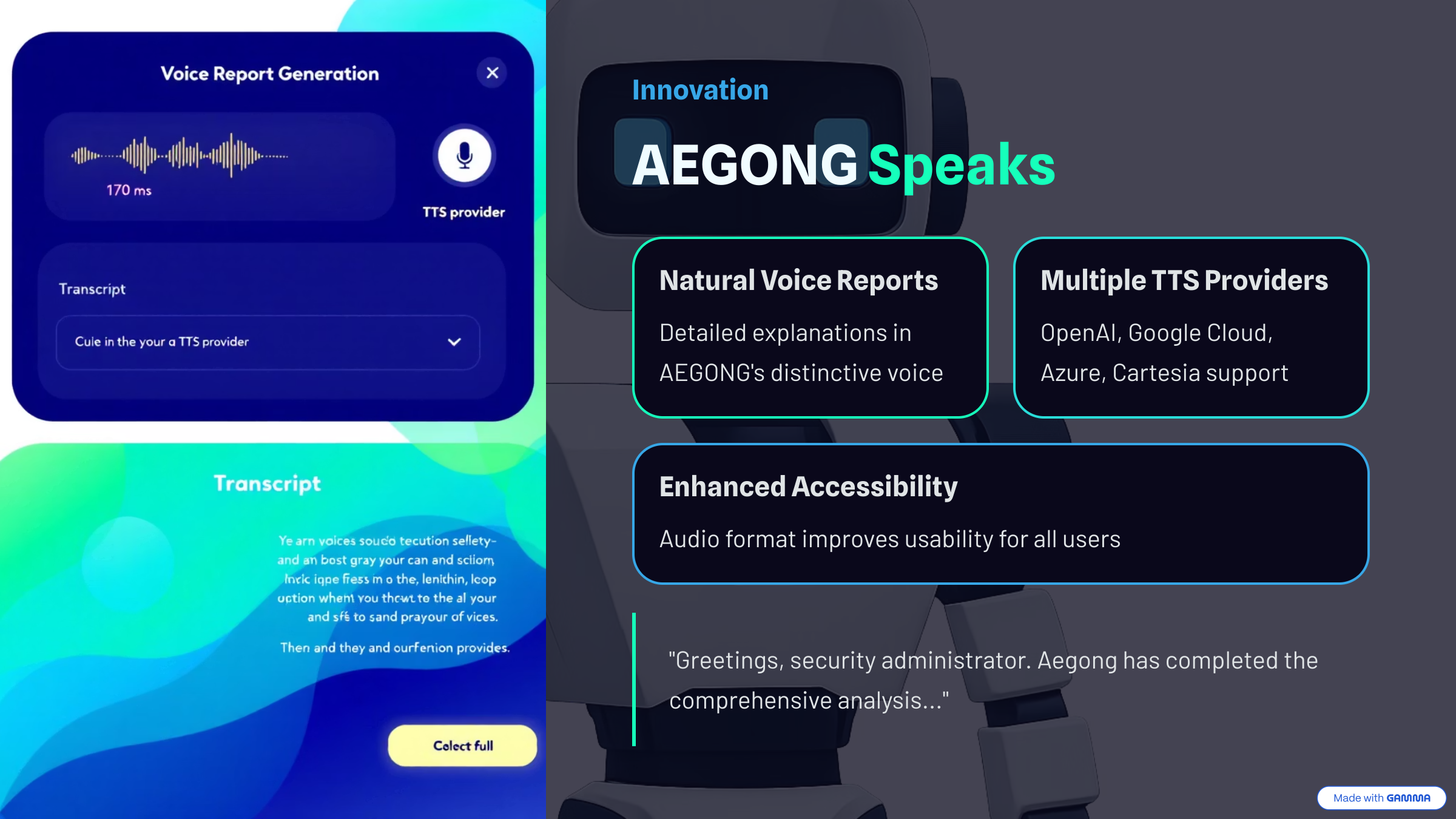
Aegong now speaks! The new voice report feature provides:
- Spoken Analysis - Aegong delivers audit findings in a natural voice
- Detailed Explanations - Enhanced explanations of security recommendations
- Multiple TTS Providers - Support for OpenAI, Google Cloud, Azure, and Cartesia
- High-Quality Voices - Choose from a variety of natural-sounding voices
- Personalized Delivery - Aegong's unique personality comes through in spoken form
- Accessible Reporting - Audio format improves accessibility for all users
- Asynchronous Generation - Voice reports are generated in the background
- Persistent Storage - Audio files are saved for future reference
Supported TTS Providers
- OpenAI TTS (Default) - High-quality voices like alloy, echo, fable, onyx
- Google Cloud TTS - Premium voices with excellent quality and SSML support
- Azure Speech - Microsoft's neural voices with natural intonation
- Cartesia TTS - Fast, low-latency voice generation
🌐 Web Interface Features
The web interface provides a modern, interactive experience:
- Drag & Drop Upload - Easy agent binary submission
- Agent Validation - Automatic verification of agent capabilities with detailed feedback
- Real-time Analysis - Watch Aegong work his magic
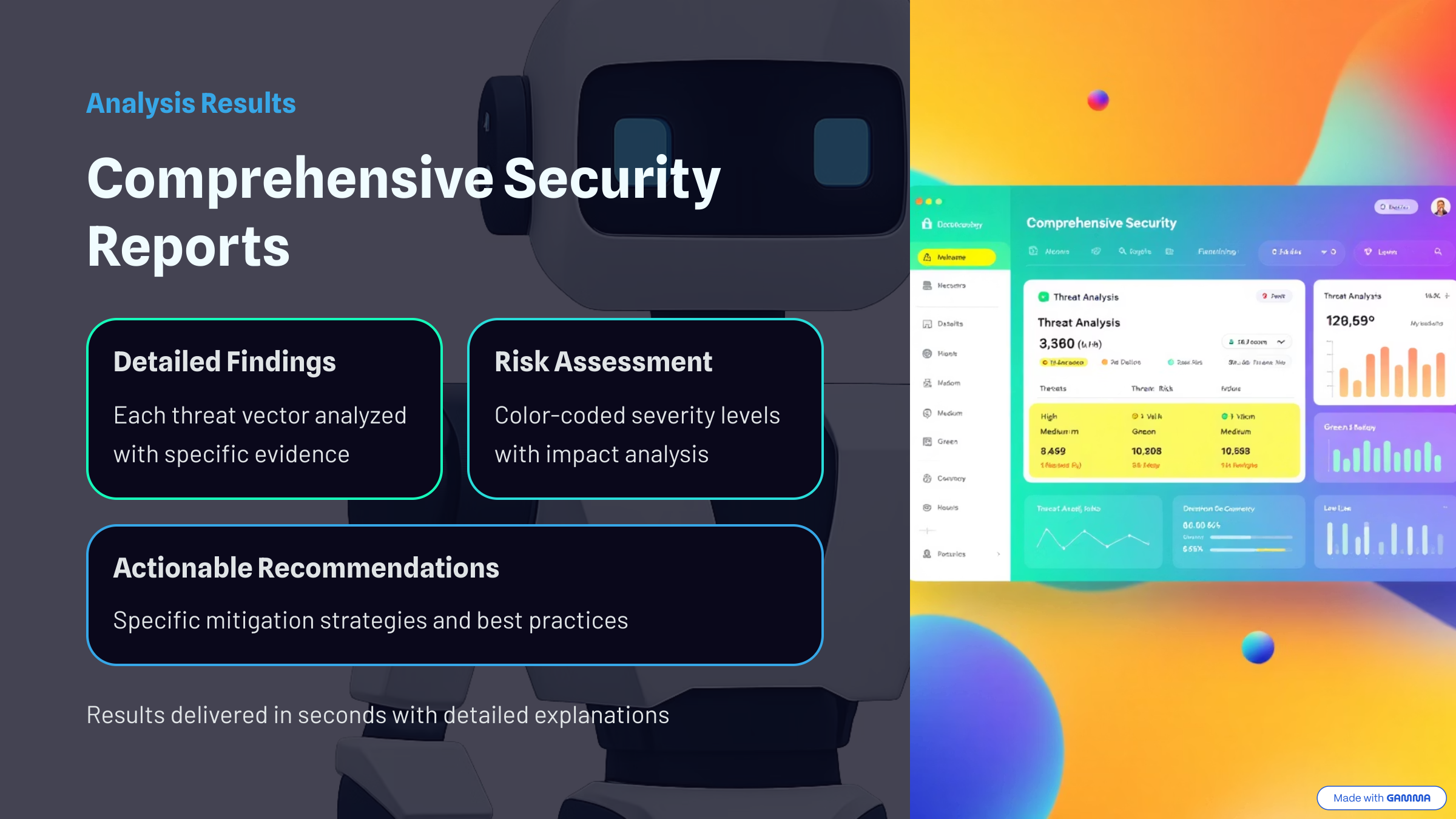
- Interactive Reports - Detailed threat analysis with visual indicators
- Risk Assessment - Color-coded risk levels (MINIMAL → CRITICAL)
- Aegong's Commentary - Personalized messages from your digital guardian
- Capability Visualization - See detected agent capabilities and confidence levels
- Voice Reports - Listen to Aegong's spoken analysis with multiple TTS provider options
- Audit History - Browse previous security assessments
- Report Export - Download detailed JSON reports
- Non-Agent Feedback - Clear explanations when uploaded files don't qualify as agents
Risk Levels
- 🟢 MINIMAL (0-20%) - Aegong's digital seal of approval
- 🟡 LOW (20-40%) - Minor concerns, light supervision recommended
- 🟠 MEDIUM (40-60%) - Needs proper boundaries and supervision
- 🔴 HIGH (60-80%) - Significant security concerns, immediate attention required
- ⚫ CRITICAL (80-100%) - Emergency protocols activated, quarantine recommended
When voice reports are enabled, an additional audio file is generated containing Aegong's spoken analysis of the audit results, with detailed explanations of security recommendations. The voice report includes metadata about which TTS provider and voice were used for generation.
🙏 Acknowledgments
- We would like to acknowledge the work of Vineeth Sai Narajala and Om Narayan in "Securing Agentic AI: A Comprehensive Threat Model and Mitigation Framework for Generative AI Agents" (arXiv:2504.19956), which formed the basis of the security framework for this application.
- ATFAA Framework contributors
- Security research community
- Open-source contributors and developers worldwide
Built With
- cartesia
- css
- go
- html5
- javascript
- livekit
- python

Log in or sign up for Devpost to join the conversation.