-
-
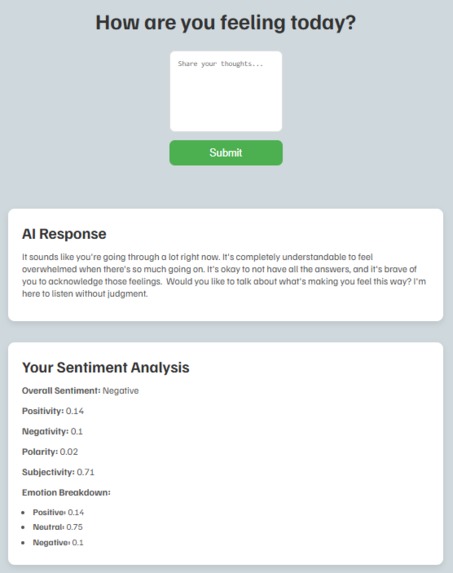
Sentiment analyser image
Inspiration
I was inspired to create this project because I believe that timely, compassionate support can make a big difference, especially when someone is feeling low. I wanted to create a tool that could recognize when someone is struggling and offer an encouraging response, all in a way that respects user privacy and confidentiality. Combining sentiment analysis with AI allowed me to build a platform that listens and responds in a way that can uplift users.
What it does
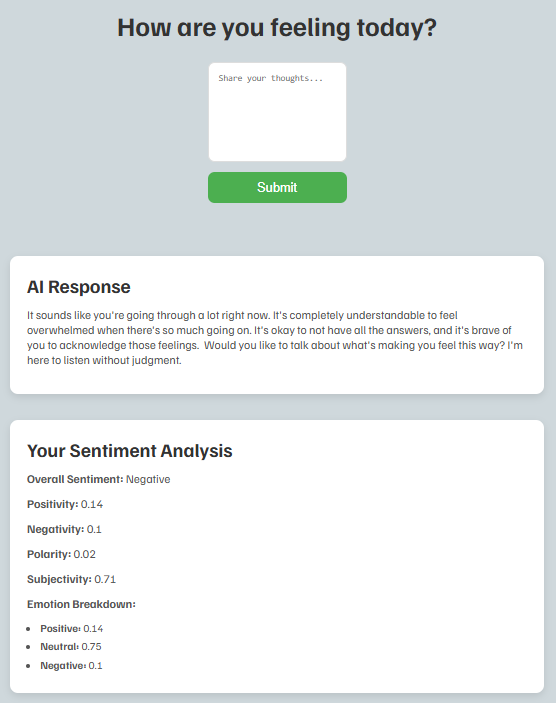
AI-Enhanced Support is an app that analyzes the sentiment of user input—positive, neutral, or negative—and provides an AI-generated response to match the mood. The tool is anonymous, stores no user data, and offers an immediate, supportive response based on what users share, creating a safe and responsive experience for those seeking support.
How we built it
I built this app using Flask for the backend, Google Generative AI for generating responses, and integrated sentiment analysis with libraries such as TextBlob and NLTK. Using python-dotenv, I managed environment variables securely to protect API keys, ensuring the app is both secure and efficient.
Challenges we ran into
One major challenge was ensuring the app runs efficiently without compromising privacy. Handling performance issues was another hurdle, especially given the limitations of my local machine with larger data processing. Integrating multiple libraries seamlessly and ensuring accurate sentiment recognition and responses required a lot of testing and tuning.
Accomplishments that we're proud of
I’m proud of creating a live app that not only functions well but also maintains user privacy. Successfully combining sentiment analysis with AI-driven responses in real time was a rewarding achievement, and seeing it work as intended has been incredibly fulfilling.
What we learned
This project taught me a lot about balancing technical performance with ethical considerations, especially regarding data privacy. I also strengthened my skills in Flask, Google Generative AI, TextBlob, and natural language processing through NLTK, while gaining valuable experience in integrating APIs and managing environment variables securely.
What's next for AI-Enhanced Support
Moving forward, I’d like to improve the app's response capabilities by training it on more nuanced sentiments and potentially add features that allow users to interact with a variety of supportive personas. I’m also considering building a mobile-friendly version to make this resource even more accessible.

Log in or sign up for Devpost to join the conversation.