
AI Classroom Challenge Example Submission
Use Case Title:
AI-Enhanced Medical Learning: A Prescription for Success
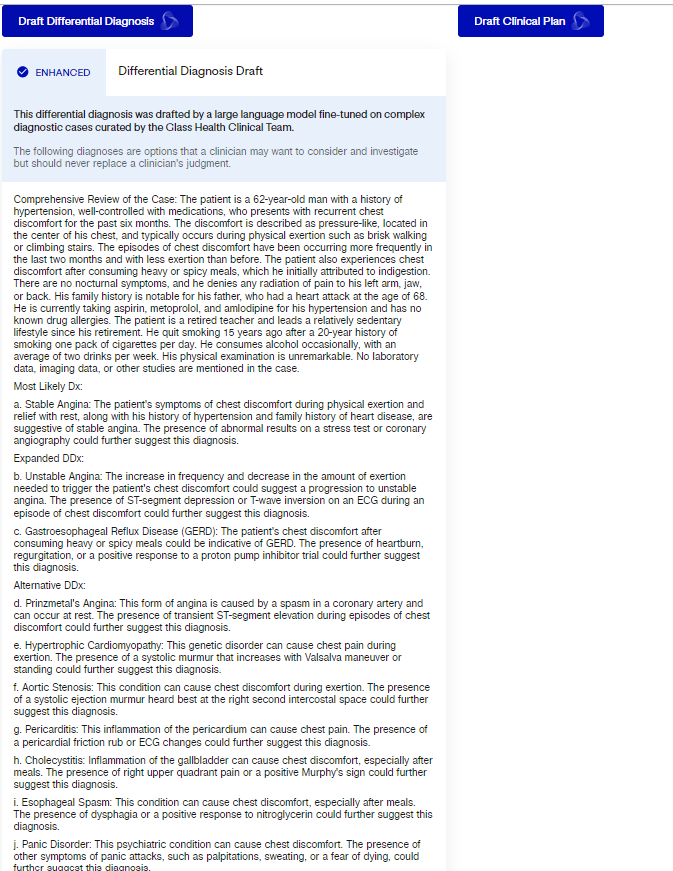
Description: This use case delves into the integration of glass.health/ai in medical education. Targeting healthcare professionals, Glass Health AI assists in generating potential diagnoses and treatment options by analysing patient data. It addresses the challenge of clinical decision-making, offering innovative support for physicians. This initiative helps enhance clinical skills, fostering a deeper understanding of complex medical concepts, and preparing future healthcare professionals for real-world scenarios.
Tutorial for Use and Best Practices:
To harness the transformative power of Glass.health/AI, follow these steps:
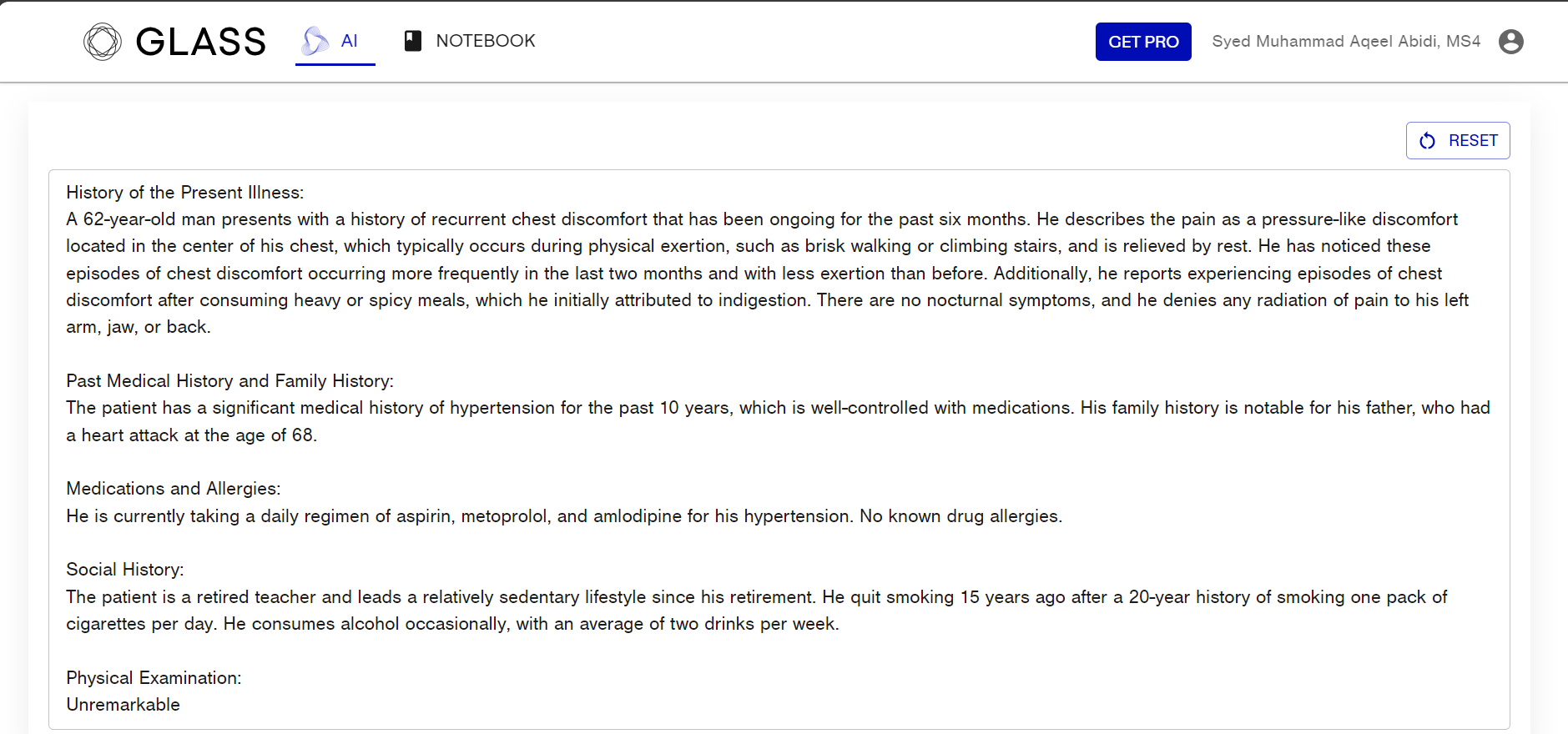
Step 1: Create an account on glass.health/ai platform and go to the basic version (5 differential diagnoses and medical plans per month) or buy the pro version. Step 2: Enter Patient Summary (Include demographics, presenting complaint, history of presenting complaint, systematic review, relevant past medical history, medications, descriptions of relevant studies (including labs and imaging) and any addition information if available. Step 3: Click on the differential diagnosis to generate and review the list of differential diagnosis with justification of each. Step 4: Click on clinical plan to utilize AI-driven guidance for treatment Step 5: Edit and refine the case assessment paragraph provided by the AI tool for clinical notes or sharing.
Best Practices:
Always exercise clinical judgment alongside AI-generated recommendations. Keep updated with the latest medical knowledge as AI may not reflect the most current information. Collaborate with peers to discuss AI-assisted diagnoses for comprehensive patient care. Continuously adapt your learning plan based on AI recommendations. Review your performance analytics to identify areas for improvement.
Additional Resources:
Link to a demo conversation: [Demo] 80W h/o of hemolytic anemia p/w acute on chronic dyspnea | Glass Health
Supplementing with other AI tools
Review the generated response with other AI tools like ChatGPT. If unclear about any aspect, ask specific follow-up questions. E.g., “As a medical student, what should be the learning points I need to extract from this case”. E.g., “Will the management differ in a child?”.
Best Practices: You can ask ChatGPT to further simplify the concepts by creating bullet points and explaining each of them in detail. You can ask ChatGPT to create multiple scenarios of the same diagnosis to make sure you cover all presentations of the particular disease.
Impacts on Learning:
Positive Impacts: Glass Health AI revolutionizes clinical decision-making by: Providing physicians with potential diagnoses and treatment options. Offering explanations of diagnostic studies for comprehensive understanding. Enhancing efficiency and accuracy in diagnosis and treatment planning. Fostering collaborative learning among healthcare professionals. Without Glass Health AI, clinical decision-making relies solely on manual analysis, potentially leading to delays and missed diagnoses. The AI tool's advantages include efficiency, data-driven insights, and support for clinicians, making it a valuable addition to healthcare practice. Moreover, it will help the physician to understand why the other diagnoses were wrong alongside which one was correct. This is helpful to rule out other diagnoses and understand how the other diseases differ.
Limitations: AI tools should complement, not replace, clinical judgment. Users must stay vigilant about the accuracy of AI-generated information. Privacy and security concerns may arise when handling patient data. Transparency in AI algorithms and decision-making processes is crucial for ethical use.
Ethical Considerations:
To ensure ethical usage, healthcare professionals should use AI as a supportive tool rather than a sole decision-maker, continuously update their medical knowledge, and prioritize patient data security and privacy. Healthcare professionals should avoid entering any potential identifiers of the patient.
Link to an Example:
https://docs.google.com/document/d/1xPrJ4J4SYY4RwQQR_hyNkTAPg7ABWVtsWJLIIn8WIxM/edit?usp=sharing
Inspiration
The inspiration for my project on Glass Health AI, stemmed from the recognition of the transformative potential of artificial intelligence (AI) in the field of healthcare. As a medical student with an interest in technology, and data science, I want to leverage AI to enhance clinical decision-making and improve patient care.
I was inspired by the idea that AI could be harnessed to assist clinicians in this demanding environment, offering insights and recommendations to complement their expertise.
Built With
- ai

Log in or sign up for Devpost to join the conversation.