-
-
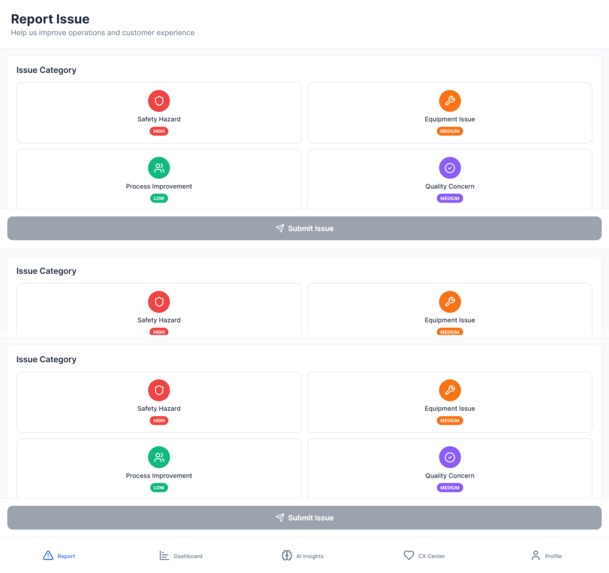
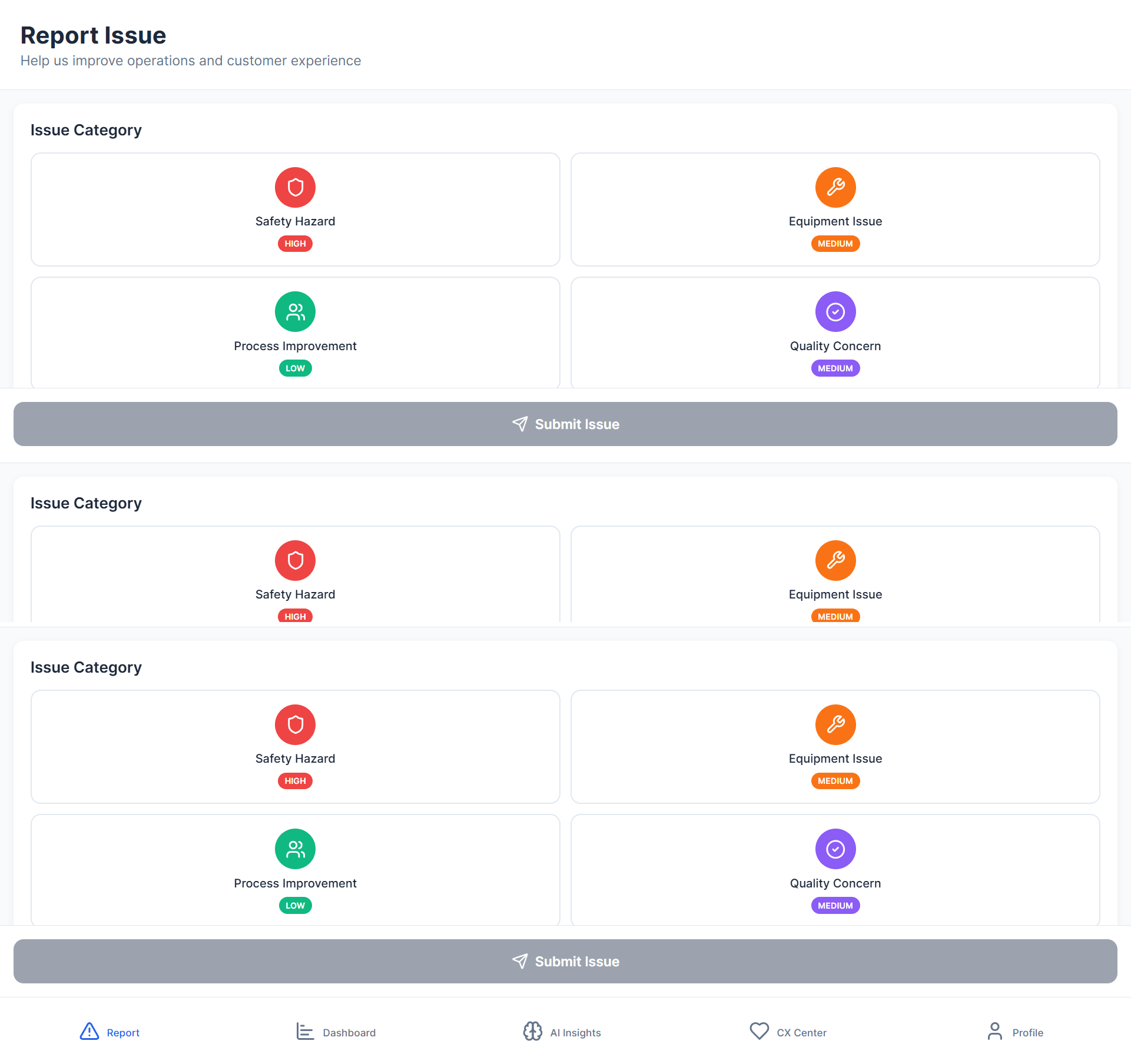
Report issue
-
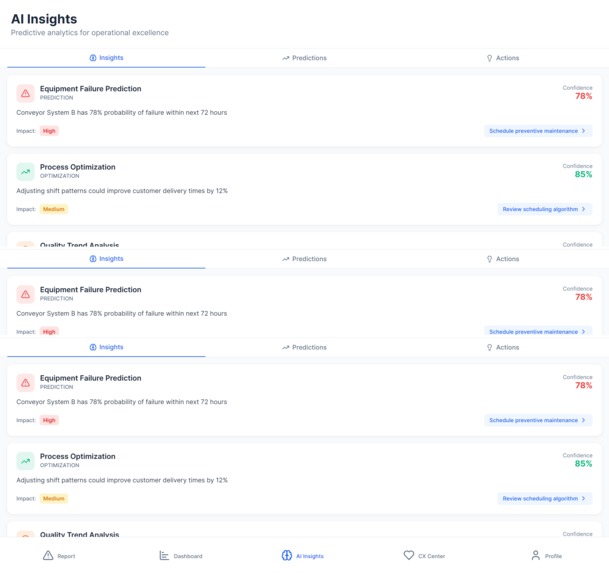
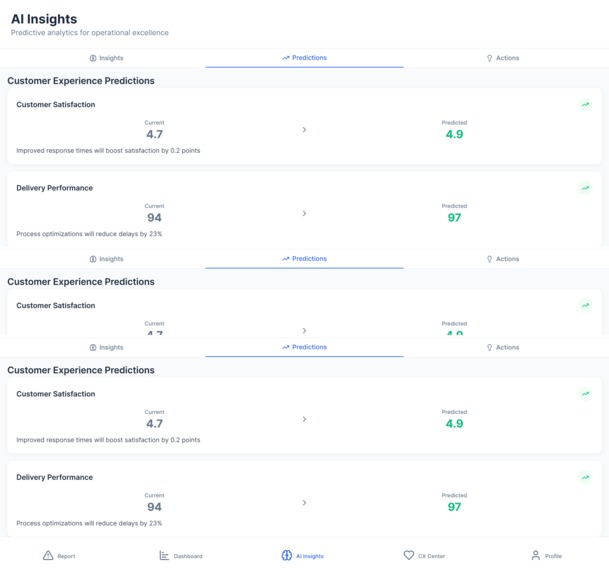
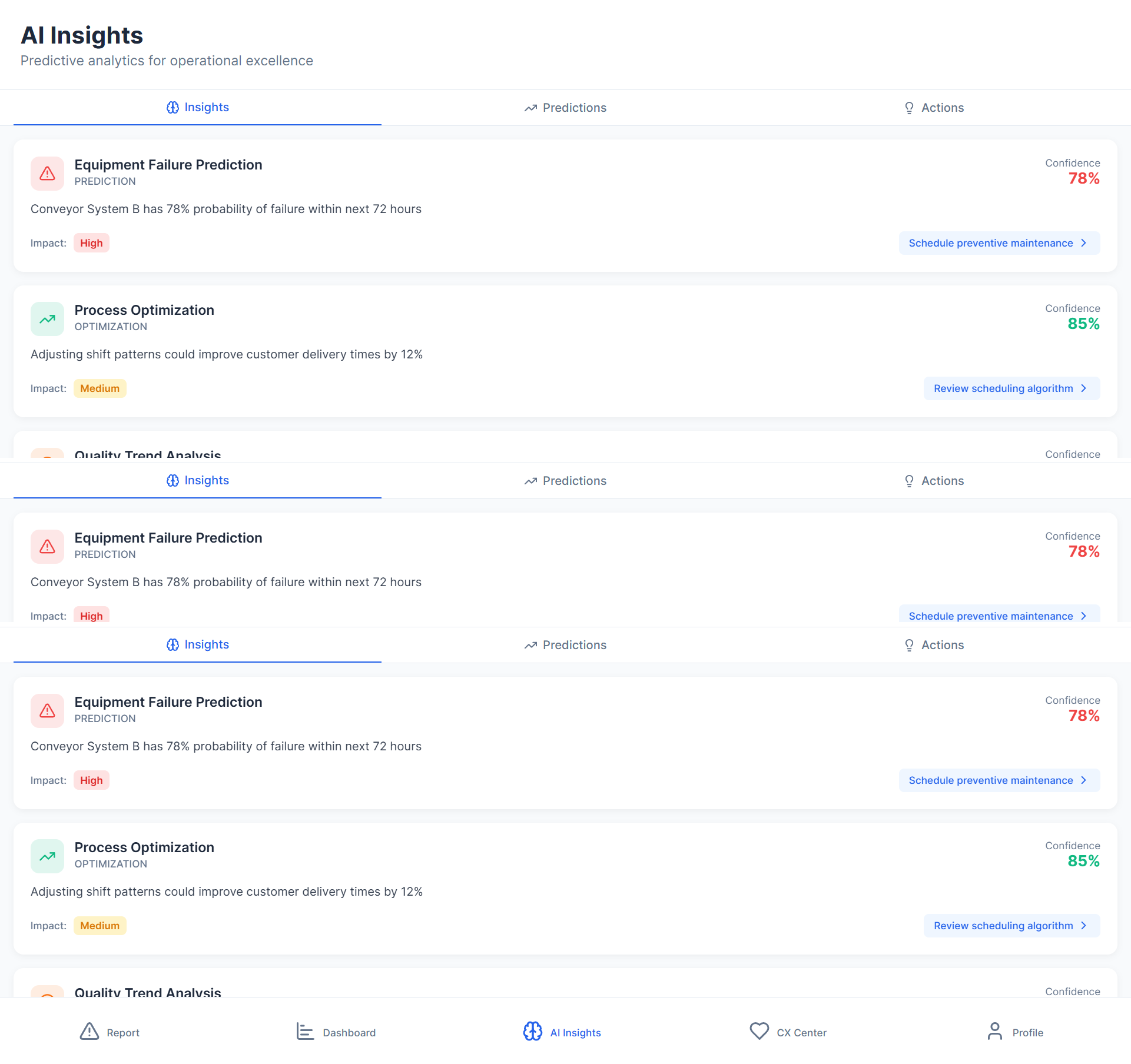
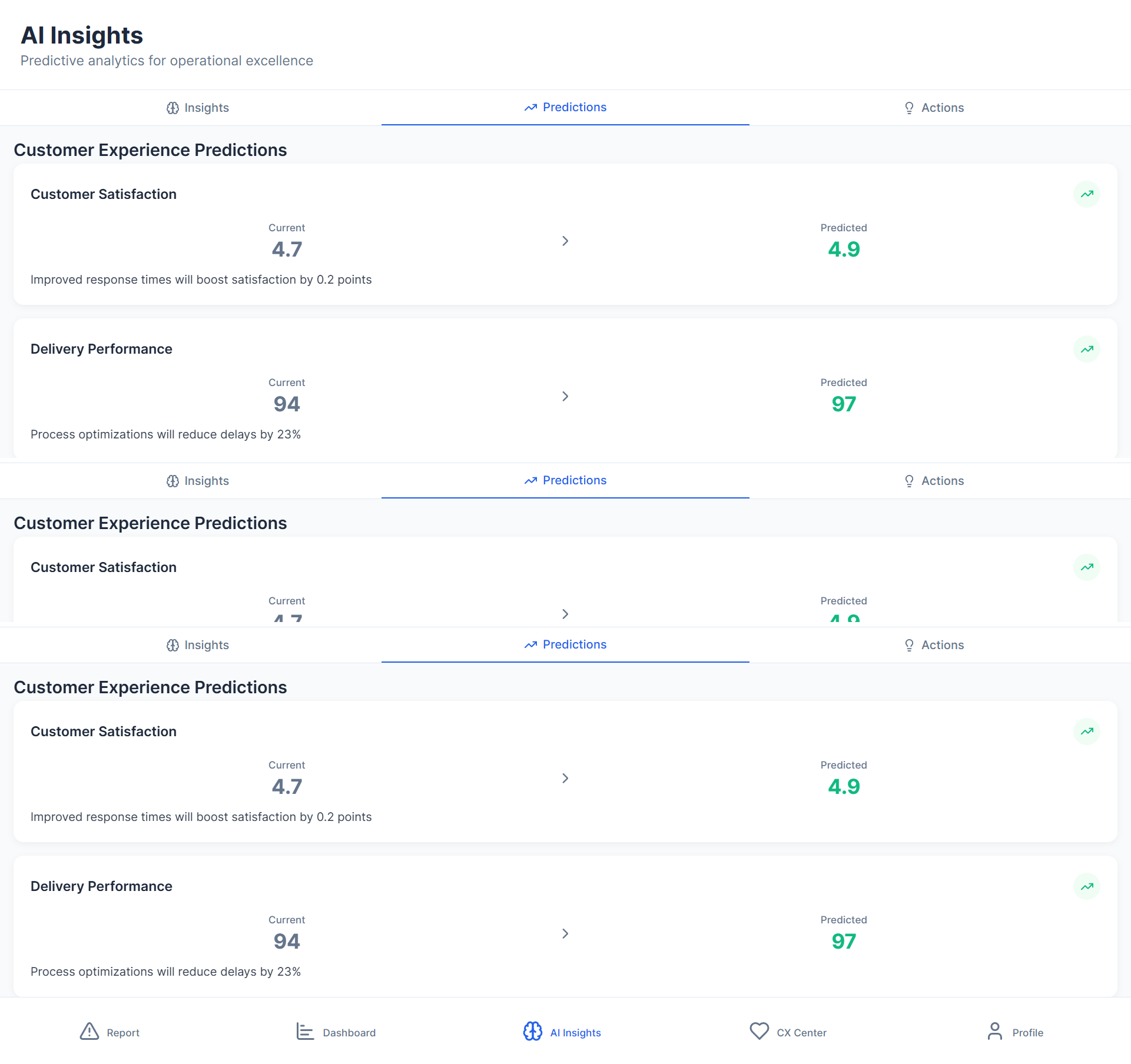
AI Insights
-
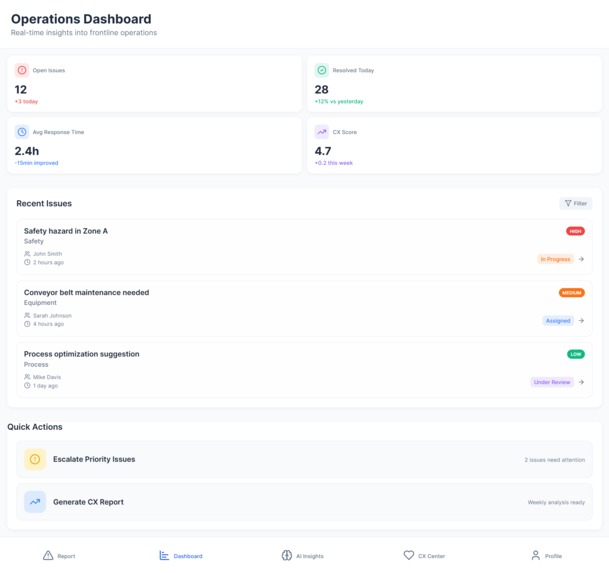
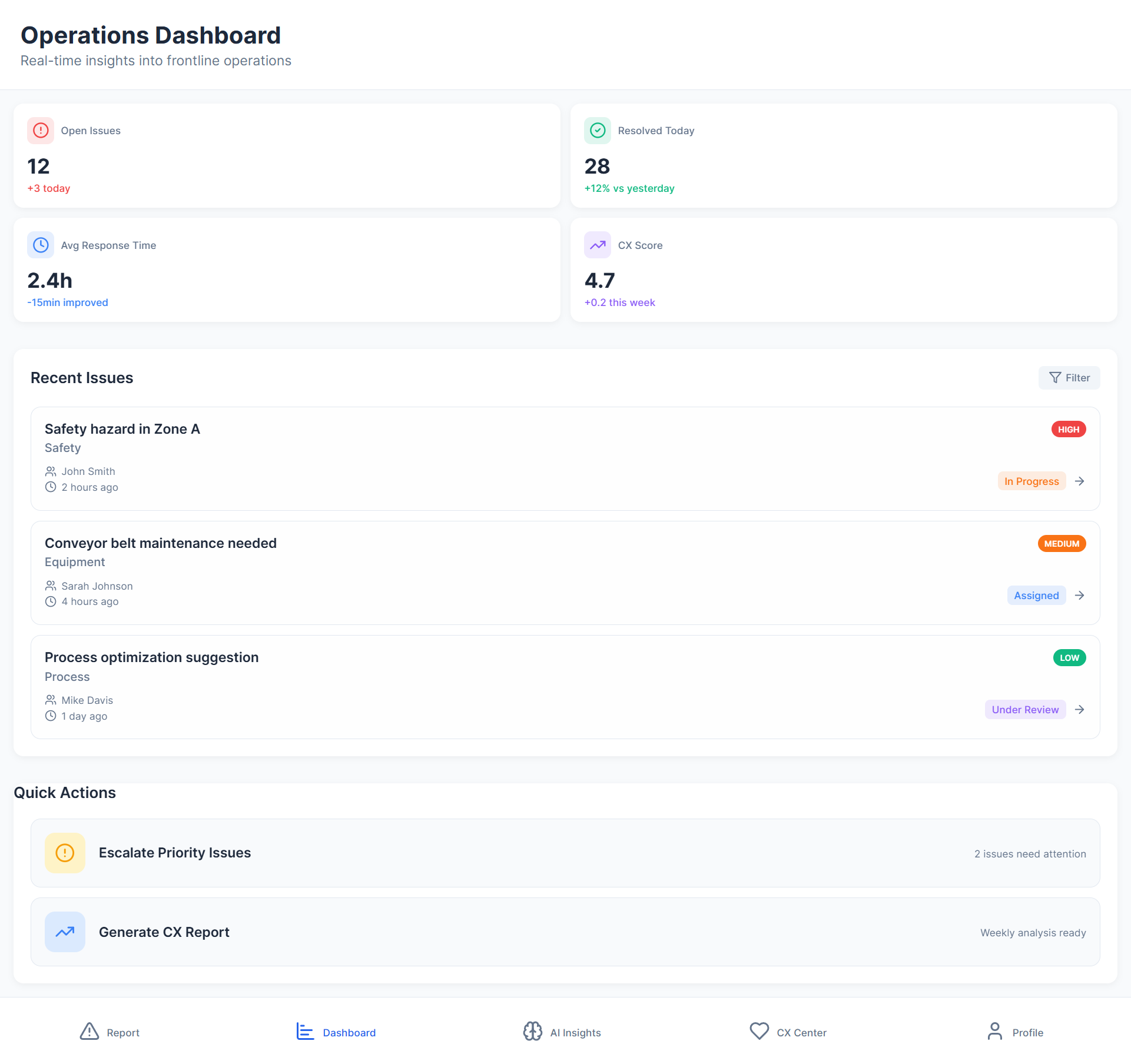
Operations dashboard
-
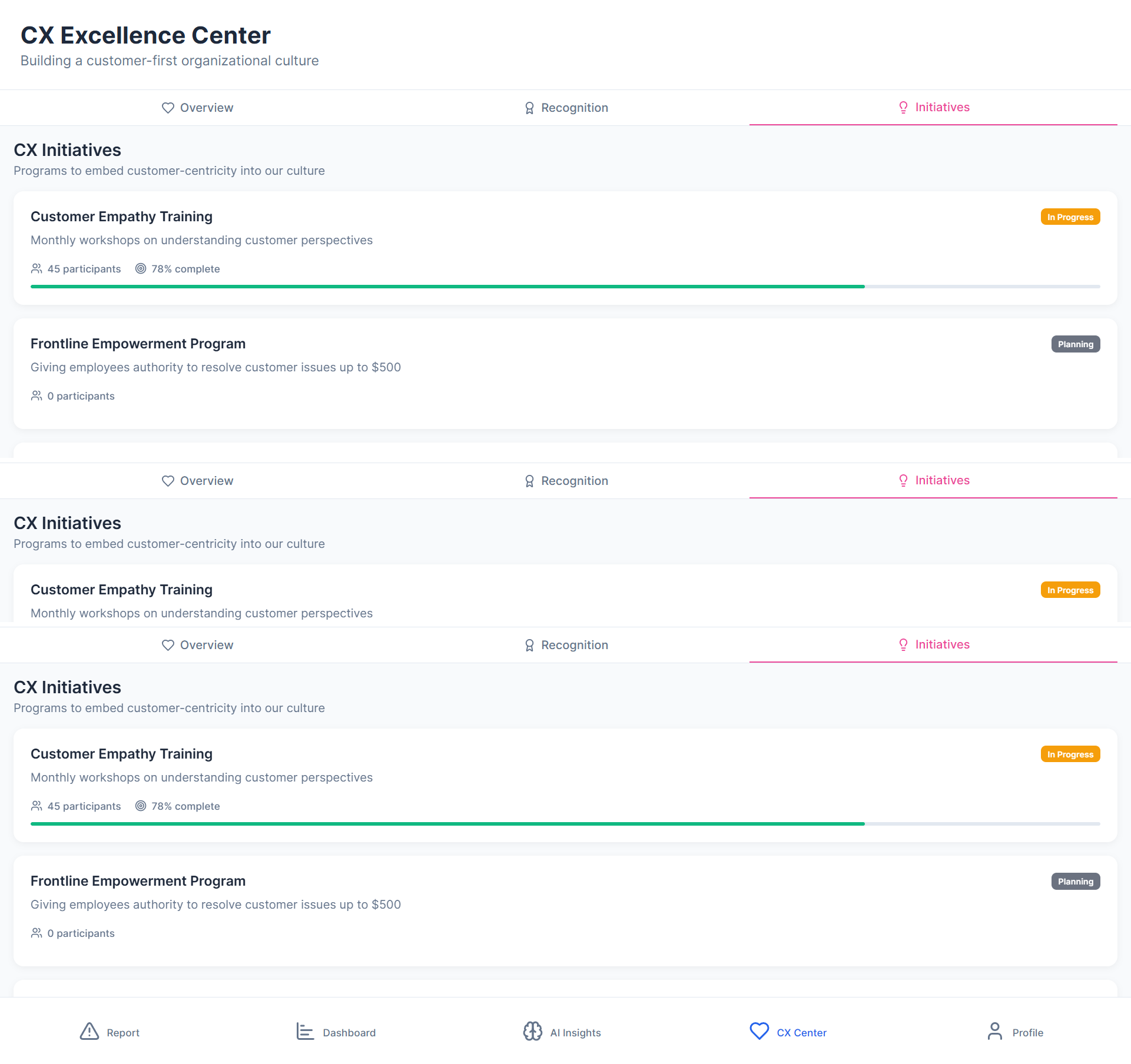
CX Excellence Center
-
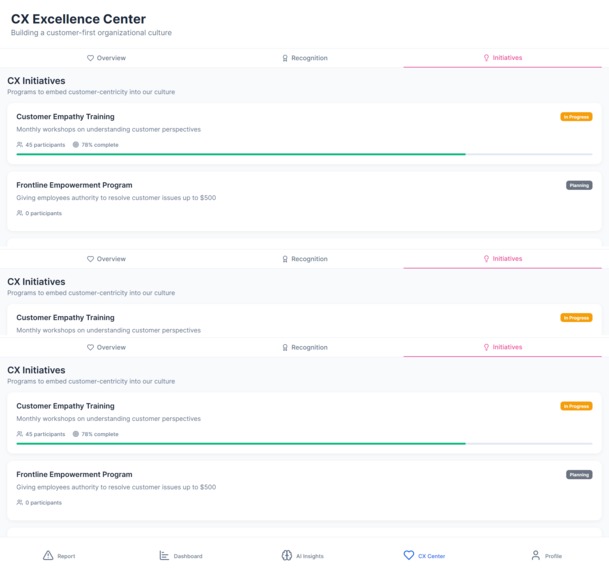
CX Initiaves
-
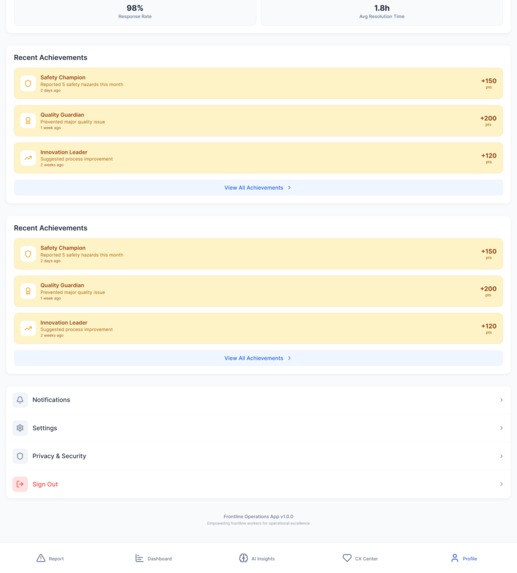
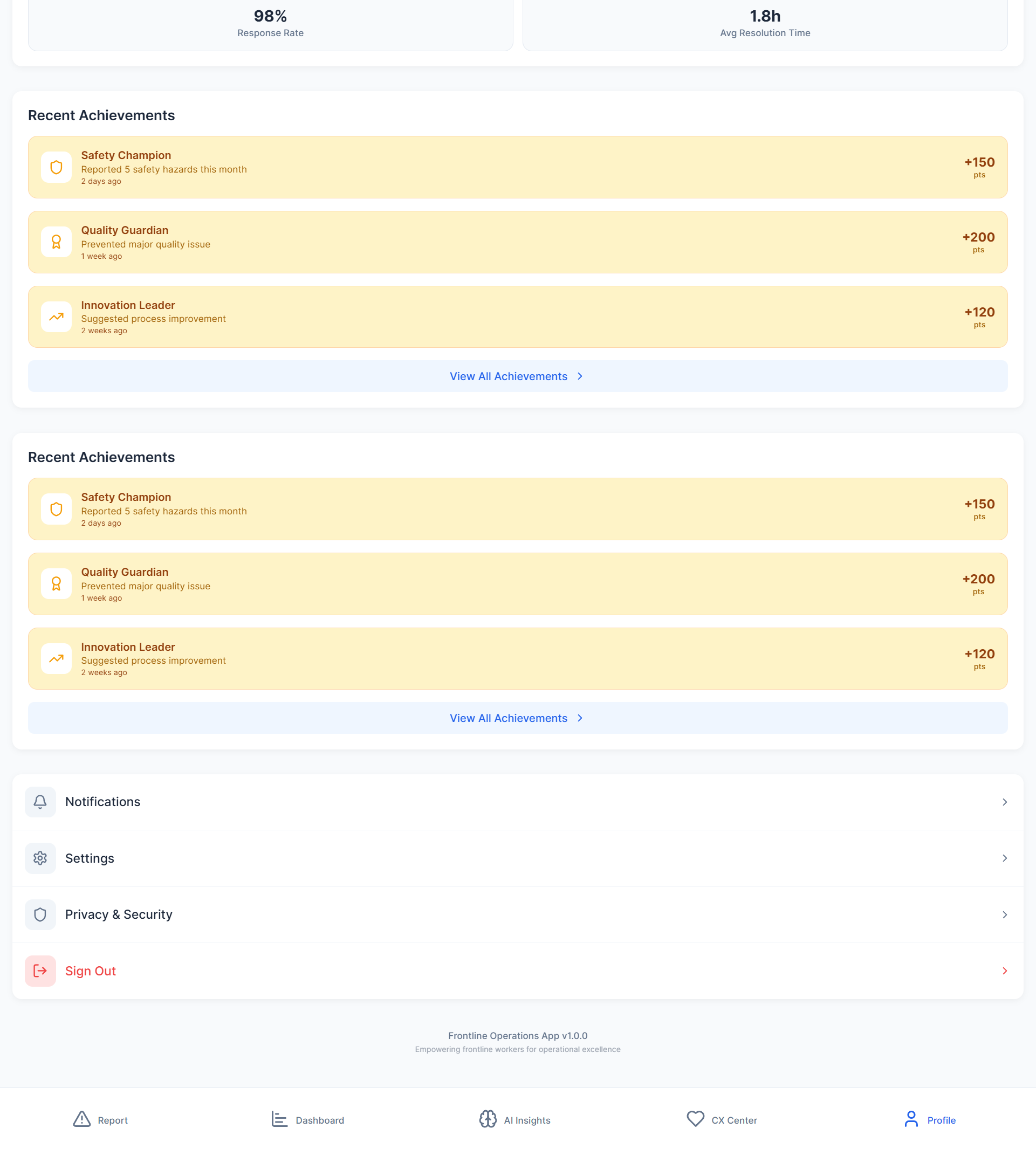
User Profile
Inspiration
The genesis of this app stemmed from a critical observation: the severe consequences of communication breakdowns on the operational frontline. Unreported machine faults, lingering safety hazards, and missed opportunities for process improvement directly impact efficiency, safety, and ultimately, customer satisfaction. The core problem identified was not a lack of willingness to report issues, but the absence of an effective, immediate, and trustworthy channel. This app was conceived as that essential conduit, empowering frontline workers and delivering instant, actionable insights to decision-makers, all while prioritizing a customer-centric approach.
What it does
The app serves as a dynamic, real-time feedback loop, continuously optimizing operations and elevating Customer Experience (CX).
Empowered Frontline Reporting: Frontline workers can swiftly report issues, hazards, and ideas using intuitive multi-modal inputs (quick forms, voice-to-text, photo/video with annotations, GPS tagging).
AI-Powered Intelligent Routing & Escalation: Leveraging Predictive AI, the system analyzes report content, historical data, and potential customer impact to intelligently route and prioritize issues, triggering real-time, multi-channel escalations for critical concerns.
Generative AI for Actionable Insights: Generative AI provides immediate, context-specific solutions and troubleshooting guides to frontline workers. For decision-makers, it summarizes complex reports, crafts personalized customer communications for impacted services, and even suggests training content based on recurring issues.
Integrated CX Feedback & Analysis: It actively captures Customer Satisfaction Scores (CSAT), Net Promoter Scores (NPS), and Customer Effort Scores (CES) directly linked to operational interactions. AI analyzes this feedback to identify trends, pain points, and measure the direct impact of operational changes and AI interventions on customer sentiment.
Real-Time Dashboards: Supervisors and managers gain immediate visibility into operational issues and key CX performance indicators, enabling proactive decision-making and resource allocation.
Fosters a Customer-Centric Culture: The app's design inherently promotes a customer-first mindset, linking every operational action to its potential CX impact and empowering employees to contribute to superior customer experiences.
How we built it
The app was developed using a hybrid approach, leveraging the strengths of a rapid application development platform combined with custom coding for specialized functionalities.
Foundation with Bolt: Bolt was instrumental for rapid prototyping and generating the core full-stack application (React frontend, Node.js/Express backend, PostgreSQL/Supabase database). This allowed for quick scaffolding of basic reporting forms, user authentication, and data management, accelerating the initial development phase.
Real-Time Capabilities (Node.js & WebSockets): We extended Bolt's Node.js backend with WebSockets (Socket.IO) to ensure true real-time, bidirectional communication, delivering instant notifications, live status updates, and dynamic dashboard data.
AI Microservices Integration: Distinct Python-based microservices (Flask/FastAPI) were developed and deployed for advanced AI functionalities. These services, accessible via secure REST APIs from the Node.js backend, handled:
Predictive AI: Forecasting operational issues and predicting customer impact by analyzing historical and real-time data.
Generative AI: Integrating with Gemini 2.0 Flash API to summarize reports, generate solutions, and craft personalized communications.
Robust Data Pipelines: Ensured efficient data flow between the app's PostgreSQL database and the AI microservices for continuous training and real-time inference. Supabase facilitated secure file storage for visual evidence.
User-Centric Design (Figma): Extensive UX design principles guided the interface development. Figma was used for iterative prototyping and usability testing with frontline workers, ensuring extreme simplicity, efficiency, and clarity even in challenging operational environments. Large touch targets, multi-modal input, and intuitive navigation were prioritized.
Challenges we ran into
Despite the powerful tools and clear vision, several significant hurdles emerged during development:
Bridging Real-Time Gaps in Generated Code: While Bolt provided the Node.js foundation, integrating complex WebSocket architecture for truly instantaneous, bidirectional communication required substantial custom coding on top of the generated framework, pushing beyond out-of-the-box capabilities.
Implementing Robust Offline Capabilities: Frontline environments often have unreliable connectivity. Developing seamless offline data capture, local storage, and intelligent synchronization with conflict resolution upon reconnection was a major challenge, requiring a custom robust queuing system.
Orchestrating Diverse AI Models: Integrating distinct Predictive and Generative AI microservices, each with unique data needs and APIs, presented complexities in ensuring secure, efficient, and low-latency data exchange and interaction management.
Ensuring High-Quality Data for AI Training: The accuracy of our AI models was contingent on clean, well-structured historical operational data. Preparing and validating disparate datasets from various legacy systems for AI training proved to be a laborious yet critical task.
User Adoption and Change Management: Introducing a new digital tool required significant effort in user training and addressing initial resistance, emphasizing the importance of highlighting direct benefits to frontline workers' daily tasks.
Accomplishments that we're proud of
We are immensely proud of several key accomplishments that define the success of this app:
Transforming Communication into Actionable Intelligence: We successfully moved beyond mere digital forms to create a live, intelligent conduit where every piece of frontline feedback directly contributes to smarter operational decisions and proactive customer engagement.
Seamless AI Integration for Practical Impact: The AI isn't just an add-on; it's deeply embedded to predict potential issues before they escalate, provide immediate, context-aware solutions, and personalize communication, fundamentally enhancing operational foresight and responsiveness.
Quantifiable CX Improvement: By meticulously integrating and tracking CSAT, NPS, and CES, we established measurable benchmarks that directly demonstrate the app's effectiveness in improving service quality and customer satisfaction – a rare feat in operational tools.
Empowering the Frontline: The app truly empowers frontline workers, making their invaluable insights visible and actionable, while simplifying their reporting tasks, which fosters a sense of ownership and contribution.
Robust & Intuitive User Experience: Despite the underlying complexity, the app maintains an extremely simple and intuitive interface, designed for the demanding conditions of frontline environments, leading to strong user adoption and reduced training overhead
What we learned
This project provided invaluable lessons that will guide future endeavors:
Context is King for UX: Designing for specific, often challenging, user environments (like a factory floor or a remote service site) requires a deep dive into user context. Generic UX principles aren't enough; extreme tailoring for environmental constraints (gloves, noise, limited attention) is crucial.
AI's True Value Lies in Augmentation: AI is most powerful when it augments human capabilities (prediction, intelligent assistance) rather than attempting to fully automate complex decision-making. The "co-pilot" approach proved highly effective.
Data Integrity is the AI's Lifeblood: The success of AI models is directly proportional to the quality, volume, and relevance of training data. Investing heavily in data collection, cleaning, and labeling is non-negotiable for effective AI.
Iterative Development with Continuous Feedback is Essential: Especially for a user base with unique needs, short development sprints combined with continuous user testing and feedback loops (from both frontline and management) are critical for refining features and ensuring real-world usability and value.
Change Management is a Product Feature: Deploying a new digital tool is not just a technical task; it's a human one. Effective change management strategies, including comprehensive training and highlighting individual benefits, are as important as the code itself for successful adoption.
What's next for AI-Enhanced Digital Programming Curriculum Platform
Our focus for the next phase of the Real-Time Frontline Operations Feedback & Issue Escalation App will be on continuous refinement and expansion:
Deeper Predictive Analytics: Further enhance the Predictive AI to identify more nuanced correlations between operational data and customer behavior, potentially predicting specific customer complaints or service failures before they occur.
Proactive Alerting & Smart Notifications: Develop more intelligent notification systems that not only alert but also suggest the most effective response based on the issue's severity, location, and potential impact.
Enhanced Generative AI for Automated Reporting & Compliance: Explore using Generative AI to automatically draft segments of compliance reports or summarize daily operational logs, reducing administrative burden for managers.
Advanced Gamification & Recognition: Implement more sophisticated gamification features within the app to further incentivize proactive reporting and customer-centric behaviors, using AI-driven performance metrics for fair and impactful recognition.
Integration with IoT and Legacy Systems: Broaden integrations with existing IoT sensor networks and enterprise resource planning (ERP) systems to create an even richer data ecosystem for AI analysis and a more seamless operational flow.
Cross-Industry Template Development: Based on lessons learned, develop customizable templates for specific sub-sectors within manufacturing, logistics, and field services, allowing for even faster deployment to new clients.
Scalability & Performance Optimization: Continuously optimize the app's architecture and AI models to handle increasing data volumes and user loads while maintaining real-time responsiveness.
Built With
- figma
- google-cloud-functions/azure-functions-(for-serverless-ai-microservices)
- google-cloud-storage-(or-similar-like-aws-s3-for-media-storage)-authentication-&-file-storage:-supabase-(for-user-authentication-and-secure-file-storage
- leveraging
- or-pytorch)-ai-microservice-frameworks:-flask-or-fastapi-(for-python-ai-apis)-cloud-services-(for-ai/storage/deployment):-google-cloud-ai-platform-(or-similar-like-azure-ml-for-ai-model-deployment)
- postgresql)
- python-(for-ai-microservices)-ai-integration:-generative-ai:-gemini-2.0-flash-api-predictive-ai:-custom-python-models-(built-with-libraries-like-scikit-learn
- rapid-application-development-platform:-bolt-frontend:-react
- tailwind-css-(for-styling)-backend:-node.js-(with-express.js)-database:-postgresql-(managed-via-prisma-or-integrated-with-supabase)-real-time-communication:-websockets-(using-socket.io)-programming-languages:-javascript-(for-node.js/react)
- tensorflow
- ux/prototyping:


Log in or sign up for Devpost to join the conversation.