-
-
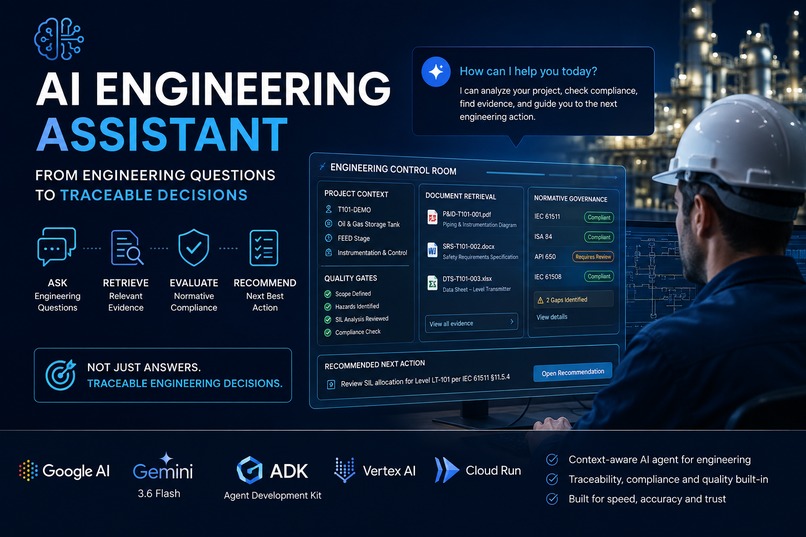
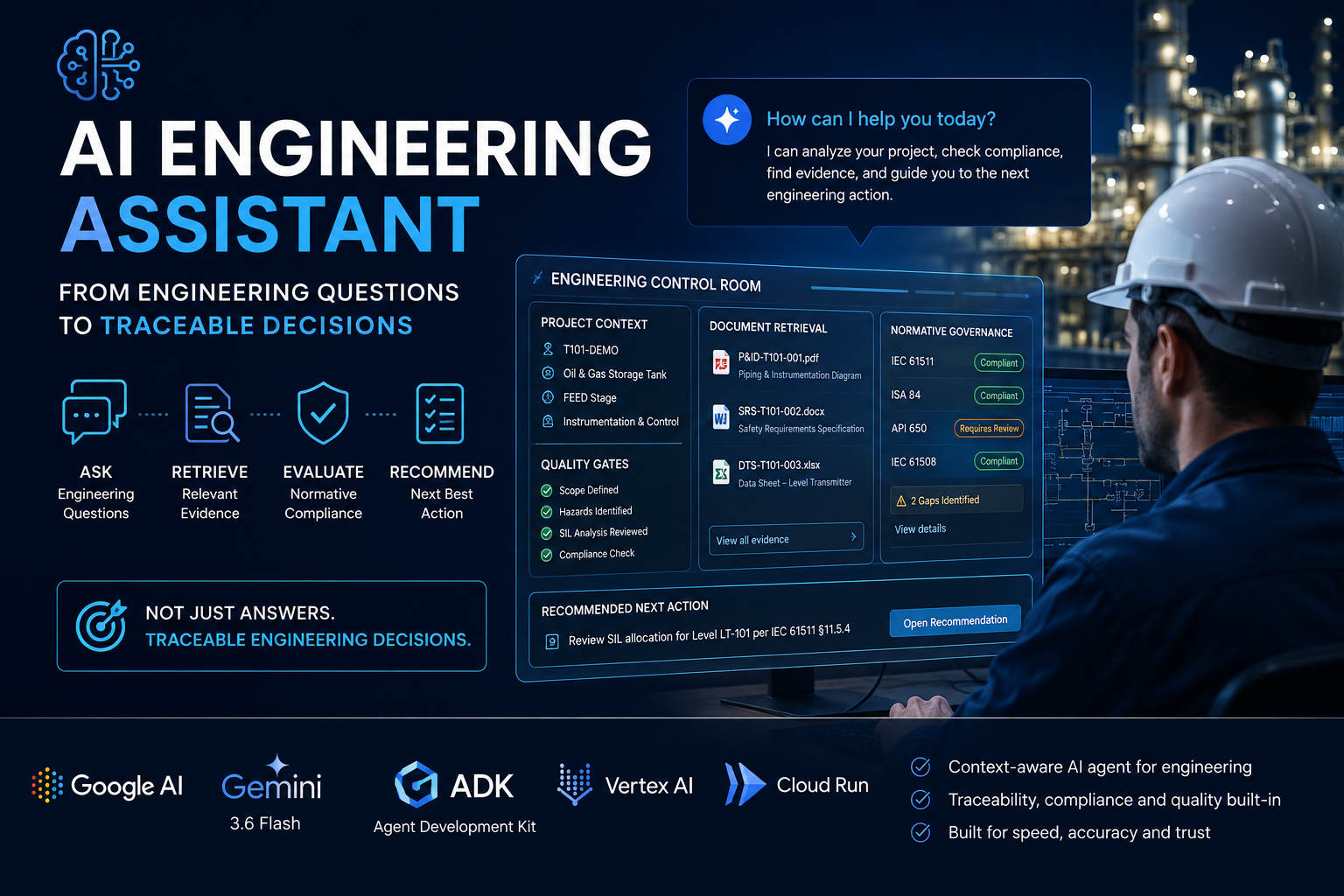
AI Engineering Assistant — From Engineering Questions to Traceable Decisions
-
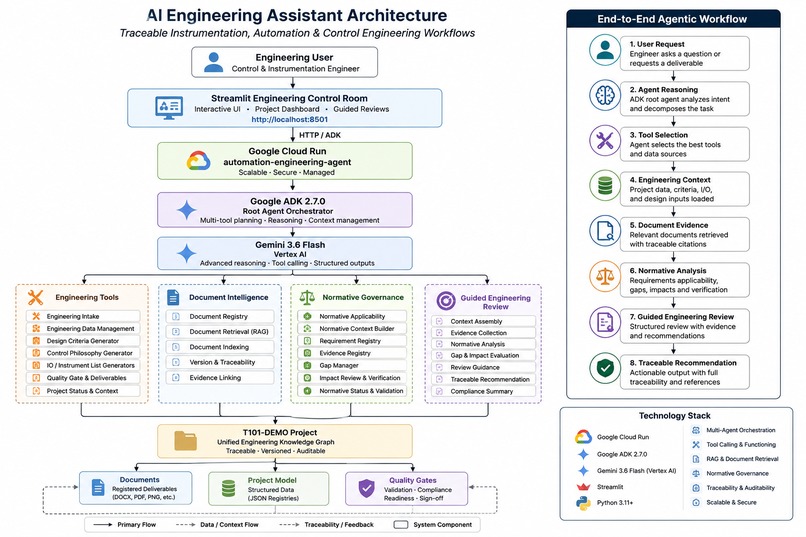
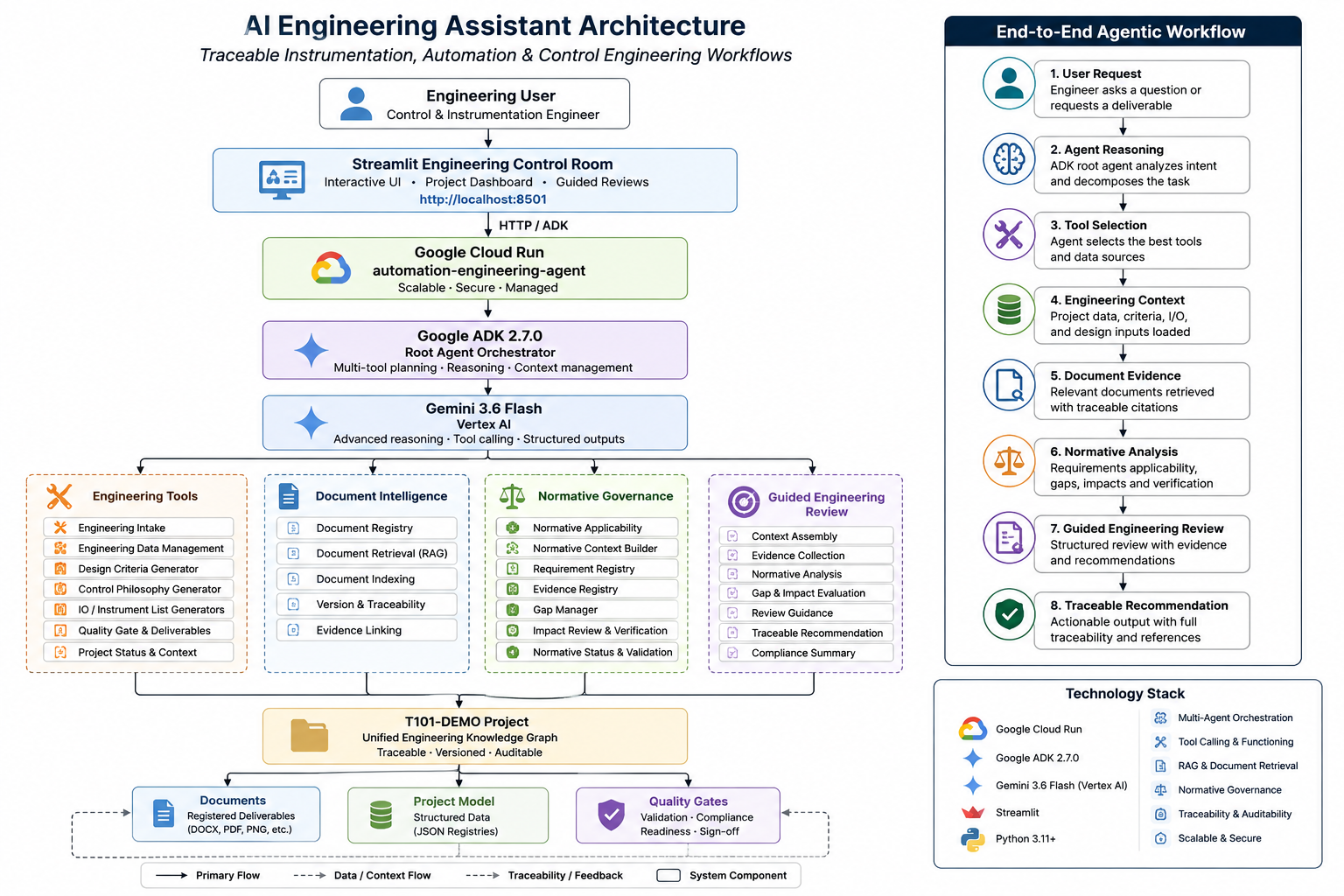
Agentic architecture integrating engineering context, evidence, normative governance and Google Cloud services.
-
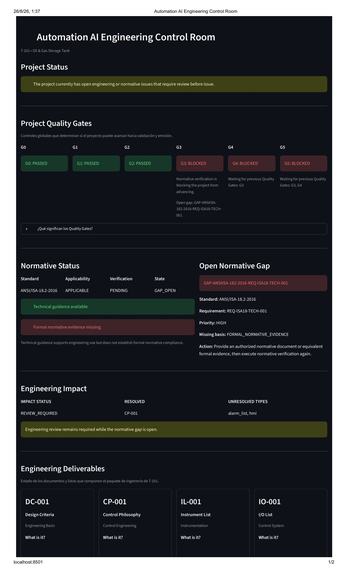
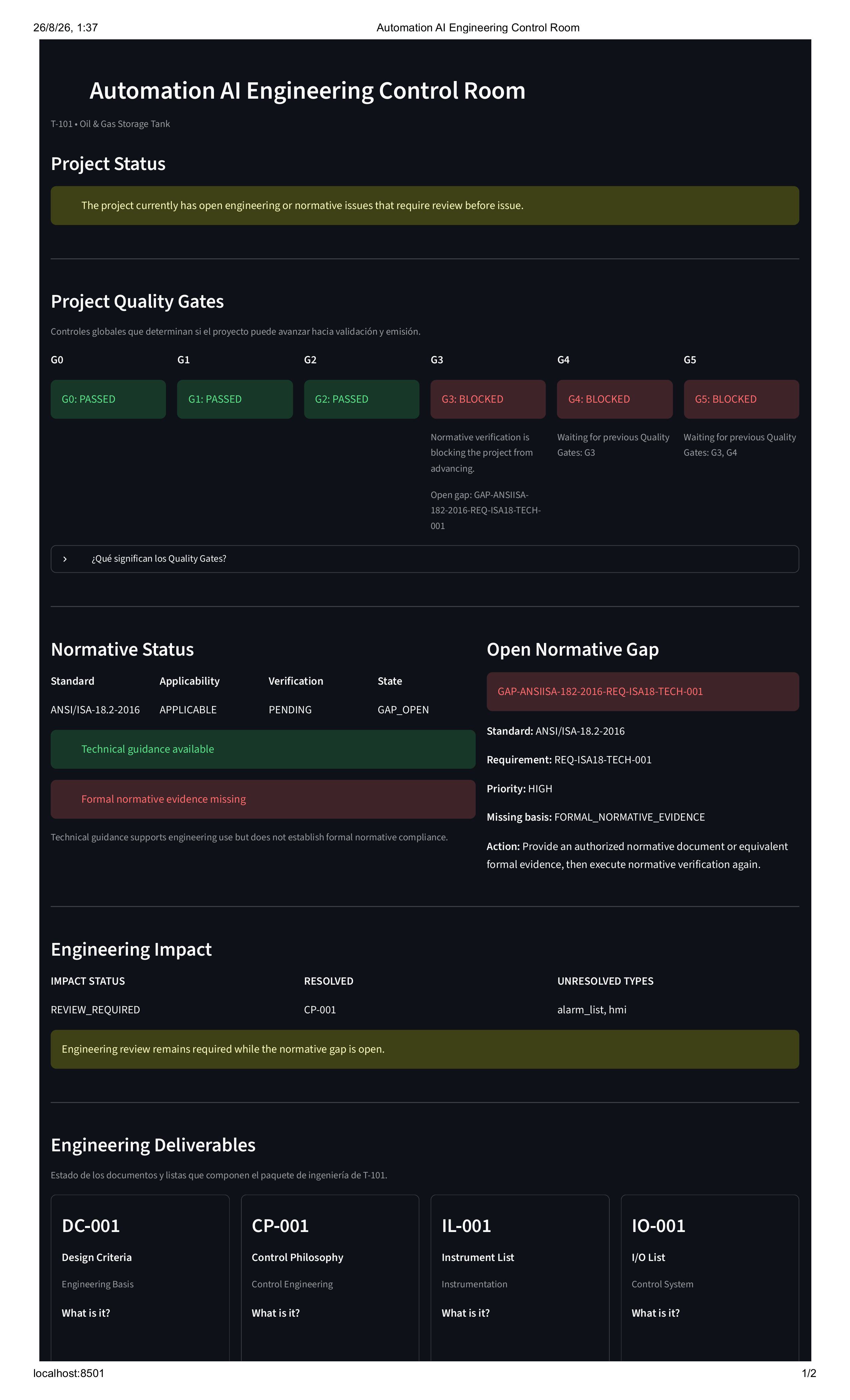
Engineering Control Room with project status, quality gates and AI-assisted engineering review.
-
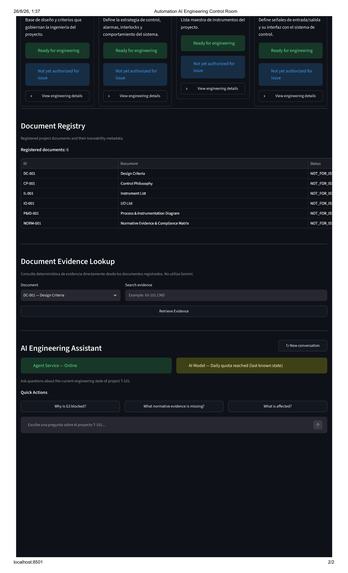
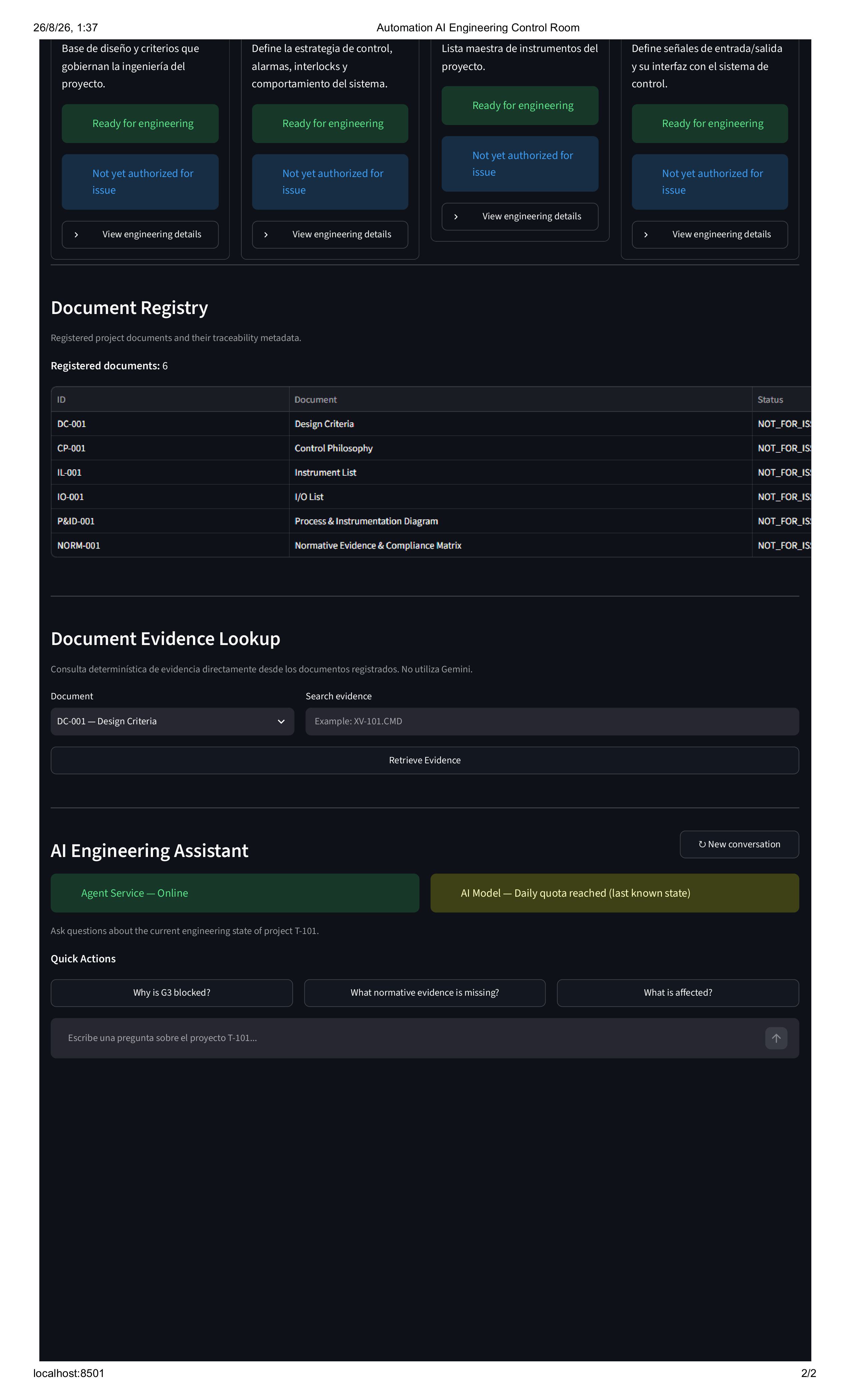
Engineering Control Room with project status, quality gates and AI-assisted engineering review.
Inspiration
Engineering teams in instrumentation, automation and control often have the information they need, but it is distributed across project documents, technical specifications, standards, quality gates and engineering decisions.
The problem is not simply finding an answer. Engineers need to know why an answer is relevant, what evidence supports it, what requirement applies, and what action should happen next.
We built AI Engineering Assistant to explore how an agentic AI system can become an engineering partner rather than just a chatbot.
Our goal is simple:
From engineering questions to traceable decisions.
What it does
AI Engineering Assistant is an agentic engineering assistant designed for instrumentation, automation and control projects.
It combines:
- Project context to understand the current engineering state.
- Documentary evidence to ground engineering reasoning in project information.
- Normative governance to identify requirements and verification needs.
- Quality gates to represent engineering readiness and blockers.
- Guided engineering review to determine what is blocking progress.
- Traceable next actions so an engineering question can lead to a concrete recommendation.
Instead of returning an isolated answer, the assistant connects the question with project context, evidence, governance and the next engineering action.
A user can ask questions such as:
- Why is G3 blocked?
- What normative evidence is missing?
- What is affected?
- What should we do next?
The prototype represents the engineering state through quality gates, making blockers and required actions visible.
How we built it
The application was developed as an agentic workflow using the Google Agent Development Kit (ADK) and Gemini, with the application deployed on Google Cloud Run.
The architecture separates the engineering assistant from the user interface and organizes the workflow around project state, evidence, normative verification and quality gates.
The prototype includes a web interface where users can ask questions about the current engineering state of project T-101 and obtain guided engineering reviews.
A typical workflow is:
- Ask an engineering question.
- Retrieve relevant project evidence and context.
- Evaluate applicable engineering or normative requirements.
- Identify blockers and affected areas.
- Recommend the next engineering action.
- Preserve traceability between the recommendation and its supporting evidence.
Challenges we ran into
One of the main challenges was translating an engineering workflow into an agentic architecture without reducing the engineering process to a generic chatbot.
Another challenge was representing engineering governance explicitly. A blocked quality gate should not simply produce an answer saying that something is wrong; the system needs to communicate what evidence or action is required before progress can continue.
We also encountered local development, service connectivity, deployment and session-management issues while integrating the ADK agent service with the web interface and Google Cloud.
These challenges helped us understand the importance of treating the agent service, session lifecycle, user interface and deployment environment as distinct components.
Accomplishments that we're proud of
We are proud of transforming a conventional engineering-review workflow into an interactive agentic experience.
The prototype demonstrates how an AI assistant can move beyond question answering and organize engineering reasoning around:
Context → Evidence → Governance → Quality Gates → Action
We are also proud of deploying the working application on Google Cloud and integrating the engineering workflow into a usable web interface.
Most importantly, the project establishes a foundation for engineering AI where recommendations are contextualized and connected to evidence rather than presented as isolated AI-generated answers.
What we learned
Our main lesson was that an engineering AI assistant cannot be evaluated only by how naturally it answers a question.
For engineering workflows, the quality of the interaction also depends on:
- context,
- evidence,
- traceability,
- governance,
- explicit project state,
- and actionable recommendations.
We also learned that agentic systems require careful handling of state and sessions. Working through connectivity and session-management issues gave us a better understanding of how the agent service and application interface must coordinate during real interactions.
The project reinforced an important principle:
Engineering AI should support decisions, not replace engineering responsibility.
What's next for AI Engineering Assistant
The next step is to expand the assistant from a prototype into a broader engineering decision-support platform.
Future development could include:
- richer document retrieval across engineering project repositories;
- deeper integration with engineering standards and specifications;
- automated evidence collection for quality gates;
- stronger traceability between requirements, evidence, decisions and actions;
- integration with engineering project-management workflows;
- additional instrumentation, automation and control engineering use cases;
- and more robust evaluation of agent recommendations against engineering evidence.
Our long-term vision is an engineering environment where project knowledge, technical documentation, standards and workflows can work together through an AI assistant that helps teams move from information retrieval to evidence-based engineering decisions.
Not just answers. Traceable engineering decisions.

Log in or sign up for Devpost to join the conversation.