-
-
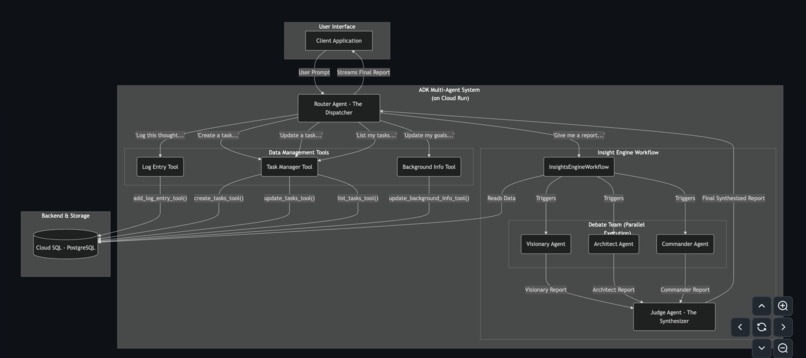
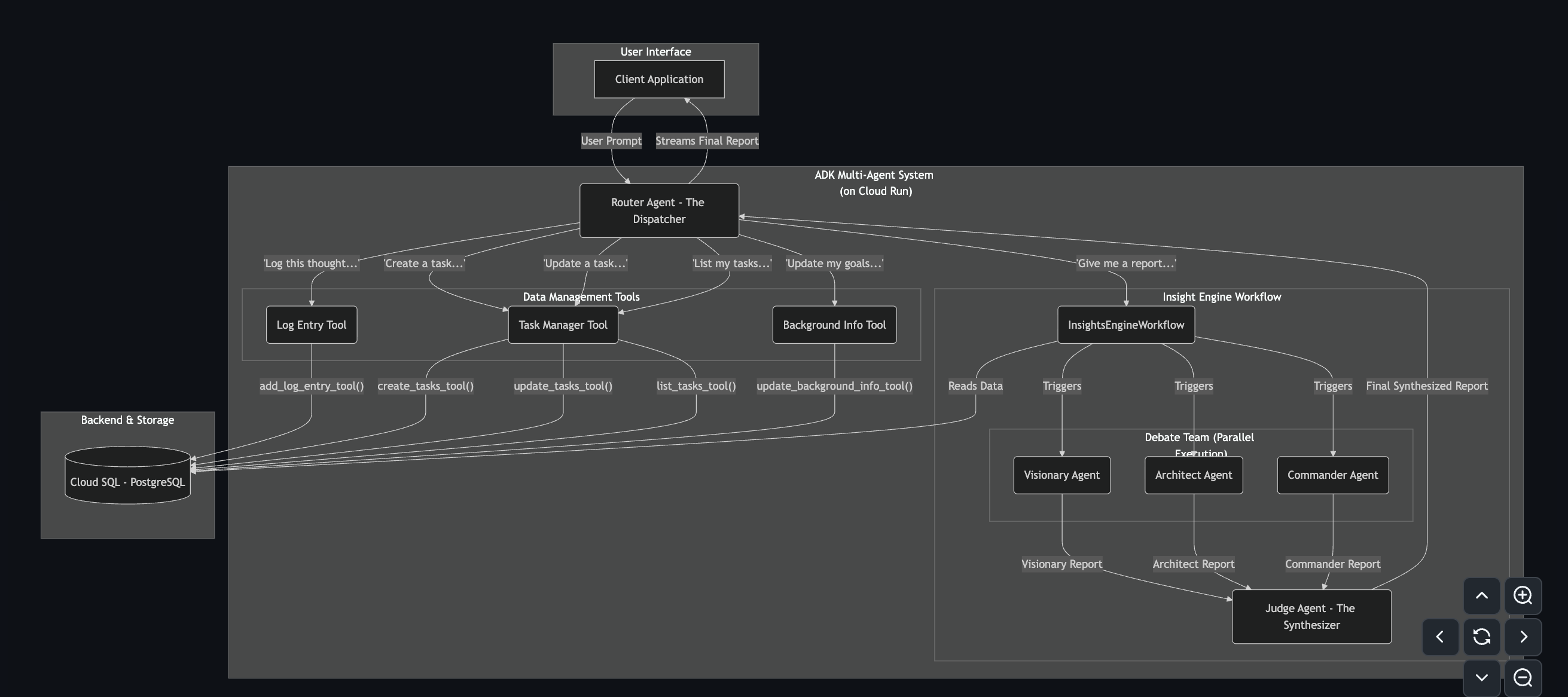
Agent flow diagram with tool capabilities
-
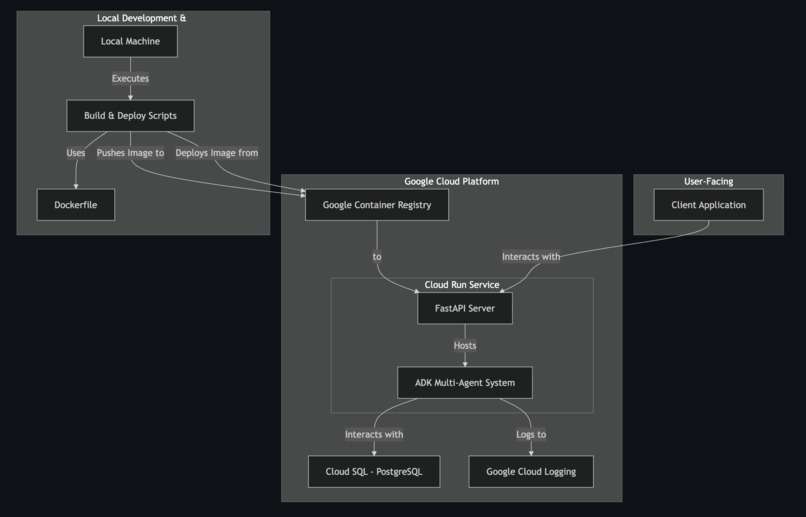
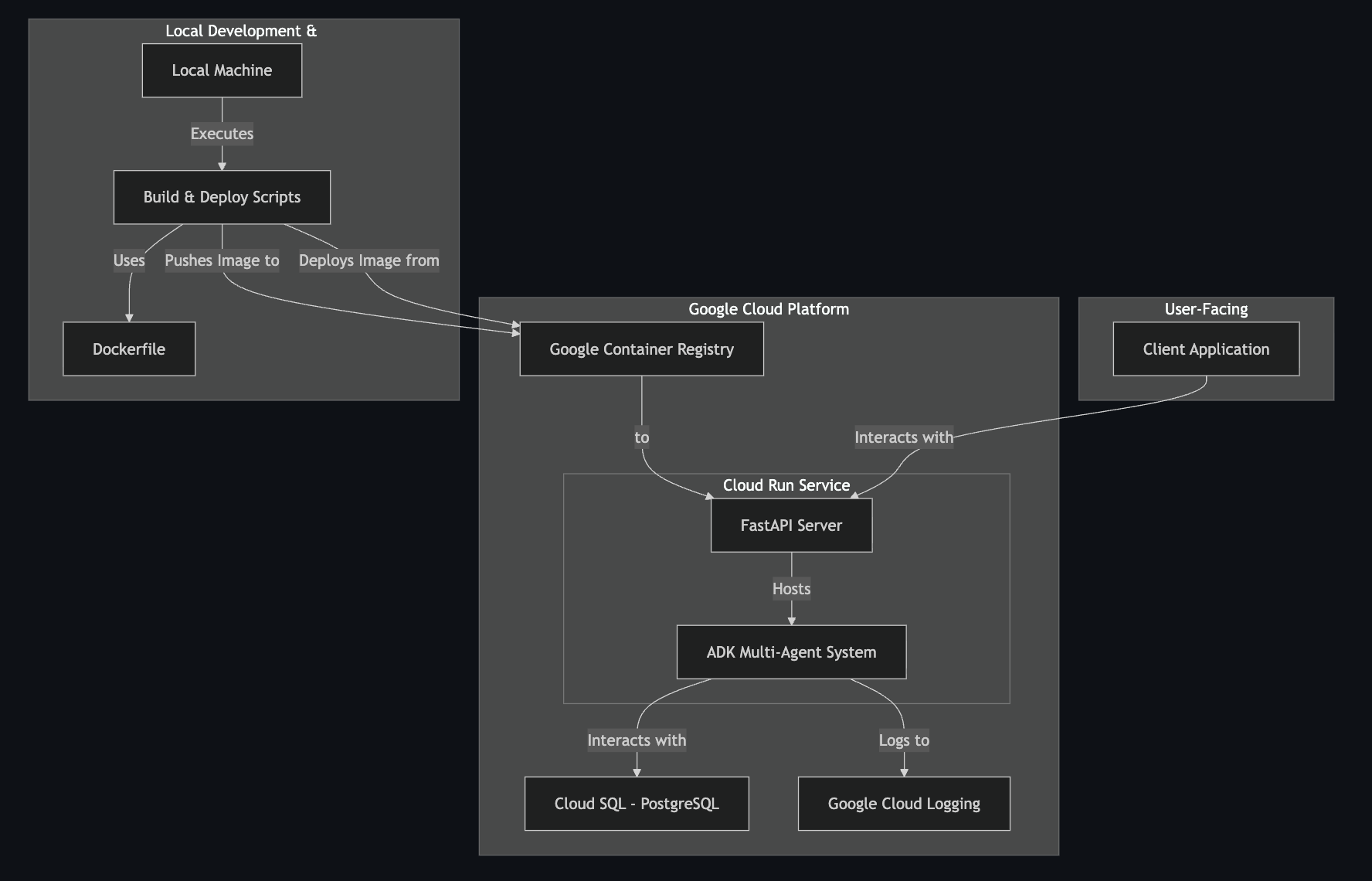
Architecture diagram with GCP components
Inspiration
For me, the process of tracking my daily life always felt like a chore. It felt unnatural and it imposed a "mental penalty" that slowed me down. The context switch between analytical thinking and creative living is real, and traditional tools like notebooks or spreadsheets add more friction than they remove. I was wrestling with rigid formats and questioning if the effort would ever pay off. This project was born from a personal quest to eliminate that friction and build a system that feels less like a database and more like a trusted conversational partner you can talk to, dump random thoughts into, and rely on to make sense of the chaos.
What it does
The AI-enabled Life Tracker is a personal intelligence engine designed to automate the process of life-logging and generate deep, personalized insights.
Automated Data Structuring
The agent automatically identifies user intent and transforms raw input into structured data. It creates tasks, updates user context, and logs entries in a database, turning a high-friction manual task into a seamless workflow.
Personal Insight Engine
The system's core purpose is to analyze my accumulated data. A multi-agent "Insight Team", composed of a "Visionary", an "Architect", and a "Commander", collaboratively analyze behavioral patterns and data points. A final "Judge" agent synthesizes these findings to deliver clear, actionable advice. The flow is similar to how the U.S. president has a chief of staff and an army of analysts constantly monitoring, analyzing, and refining intelligence reports to manage daily operations.
How I built it
The project's architecture evolved through a deliberate, four-phased journey, moving from a simple prototype to a sophisticated, cloud-native intelligence engine.
Phase 1 (Genesis)
I started with a simple multimodal chat app using the Python GenAI SDK to prove the core concept of low-friction, conversational logging.
Phase 2 (Intelligence)
I integrated Function Calling, which transformed the app into a structured data-entry tool. The AI could now interpret intent and store data in local JSON/CSV files.
Phase 3 (Scalable Foundation)
Through recognizing the limitations of local files, I re-architected the backend, and replaced it with a Cloud SQL for PostgreSQL database. This allows me to take my life tracker always with me on the go.
Phase 4 (Sophistication)
The next logical step was to level up the background intelligence layer. My vision is to have agents running 24/7 (or more like 16/7). The Agent Development Kit (ADK) allows me to do just that. I built a multi-agent system where a Router Agent directs requests to a team of specialized agents for complex analysis.
Tech Stack
The final application is built with FastAPI, containerized with Docker, and deployed on Google Cloud Run. Data persistence is handled by Cloud SQL (PostgreSQL).
Challenges I ran into
Data Scalability
The initial prototype using local CSV and JSON files was not robust enough for a true life-logging application. This forced me to migrate to a more scalable and reliable solution like Cloud SQL.
Limited Reasoning
While function calling was a huge leap, a single agent struggles with orchestrating complex reasoning workflows. To achieve deeper analysis & automation, I needed a more advanced framework, and the Agent Development Kit with its Sequential & Parallel Agents allows me to do just that.
Model Dependency
The system's ability to perfectly categorize logs or structure information from free-form text is heavily dependent on the LLM's capabilities (Flash 2.5 vs. Flash 2.5 Lite) and the clarity of the user's input. This remains an ongoing challenge to refine.
Accomplishments that I'm proud of
Creating a Powerful Feedback Loop
This system is more than a data logger, to me it's a genuine tool for self-improvement. It can uncover correlations & patterns I would never see on their own, while acting as a brutally honest AI coach that provides data-driven, "tough love" feedback.
End-to-End Cloud Native Architecture
I successfully designed, containerized, and deployed a sophisticated, scalable AI application on Google Cloud, combining serverless technology (Cloud Run) with a robust database (Cloud SQL).
The Multi-Agent "Insight Team"
I am incredibly proud of the multi-agent architecture that's built into the ADK. It reminds me of the DAG structure in Kubeflow. My vision of an AI "chief of staff" (the Judge) that synthesizes reports from its "analyst team" became a reality, allowing for a depth of analysis a single agent couldn't provide.
What I learned
The Power of Iteration
Evolving from a simple script to a complex multi-agent system taught me the value of a phased approach. Each stage addressed the limitations of the last, resulting in a much more robust and capable final product.
Function Calling vs. Agent Orchestration
Function calling is revolutionary for turning language into actions. However, for complex, multi-step reasoning and analysis, a higher-level framework like the ADK is necessary to orchestrate multiple specialized AI agents effectively.
What's next for the AI-enabled Life Tracker?
- Embed the agent into a customizable Streamlit frontend to create a richer user experience & add more extensive CRUD functionality to the FastAPI backend service.
- Expand the agent's capabilities with a wider array of tools.
Built With
- cloud-run
- cloud-sql
- docker
- fastapi
- function-calling
- gemini
- gemini-api
- google-agent-development-kit-(adk)
- google-cloud-platform-(gcp)
- postgresql
- python


Log in or sign up for Devpost to join the conversation.