Inspiration
As I began running more AI-assisted workflows and local automations, I found that execution alone was not enough.
It was often difficult to see:
- which AI handled a task
- what model was used
- what deliverable was produced
- whether the result had actually been reviewed by a human
I was inspired by visual AI workspace experiments shared online, but I wanted to connect that visual metaphor to a real workflow rather than display fictional progress.
What it does
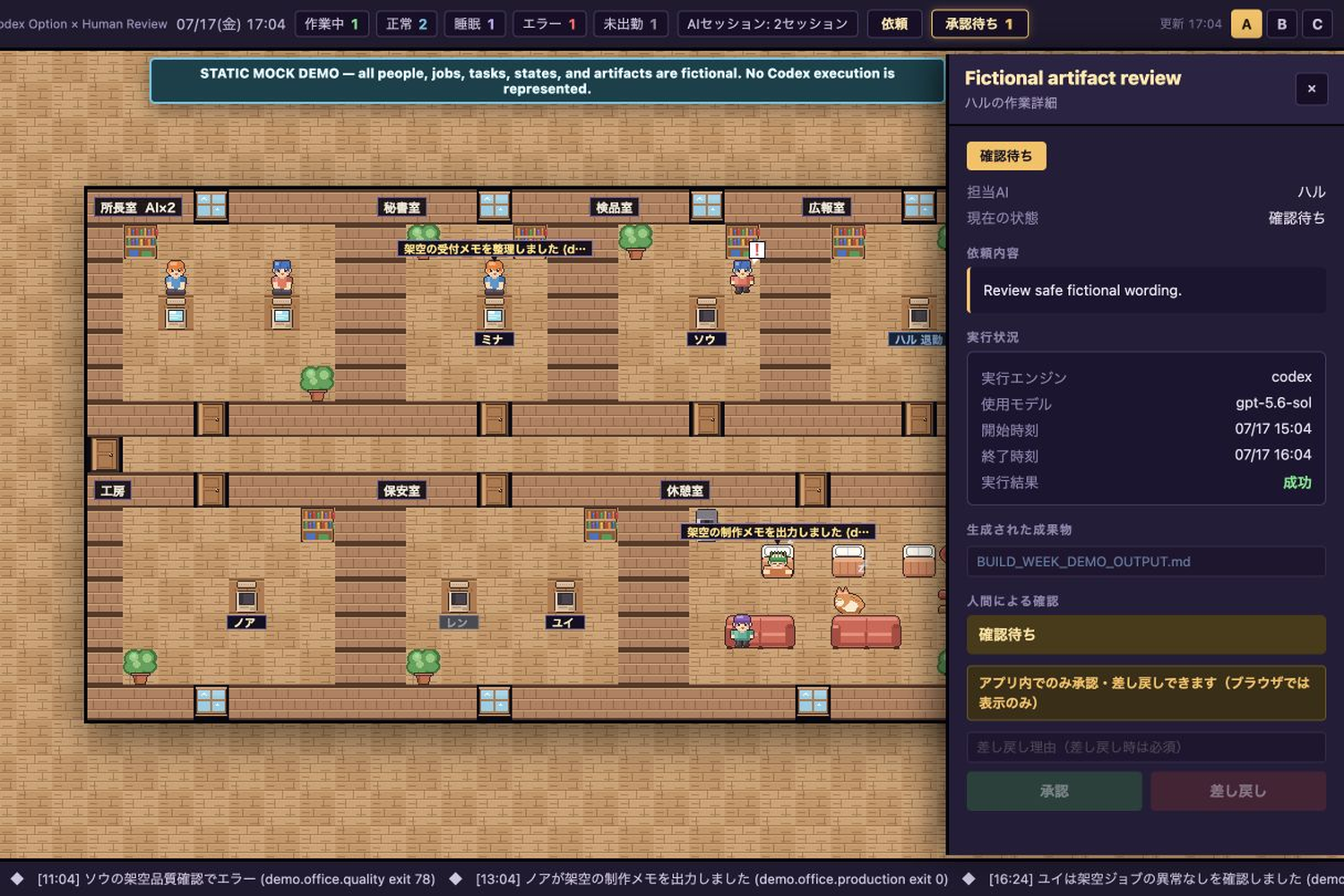
AI Employee Command Center is a local macOS application that connects real Codex task execution with human review.
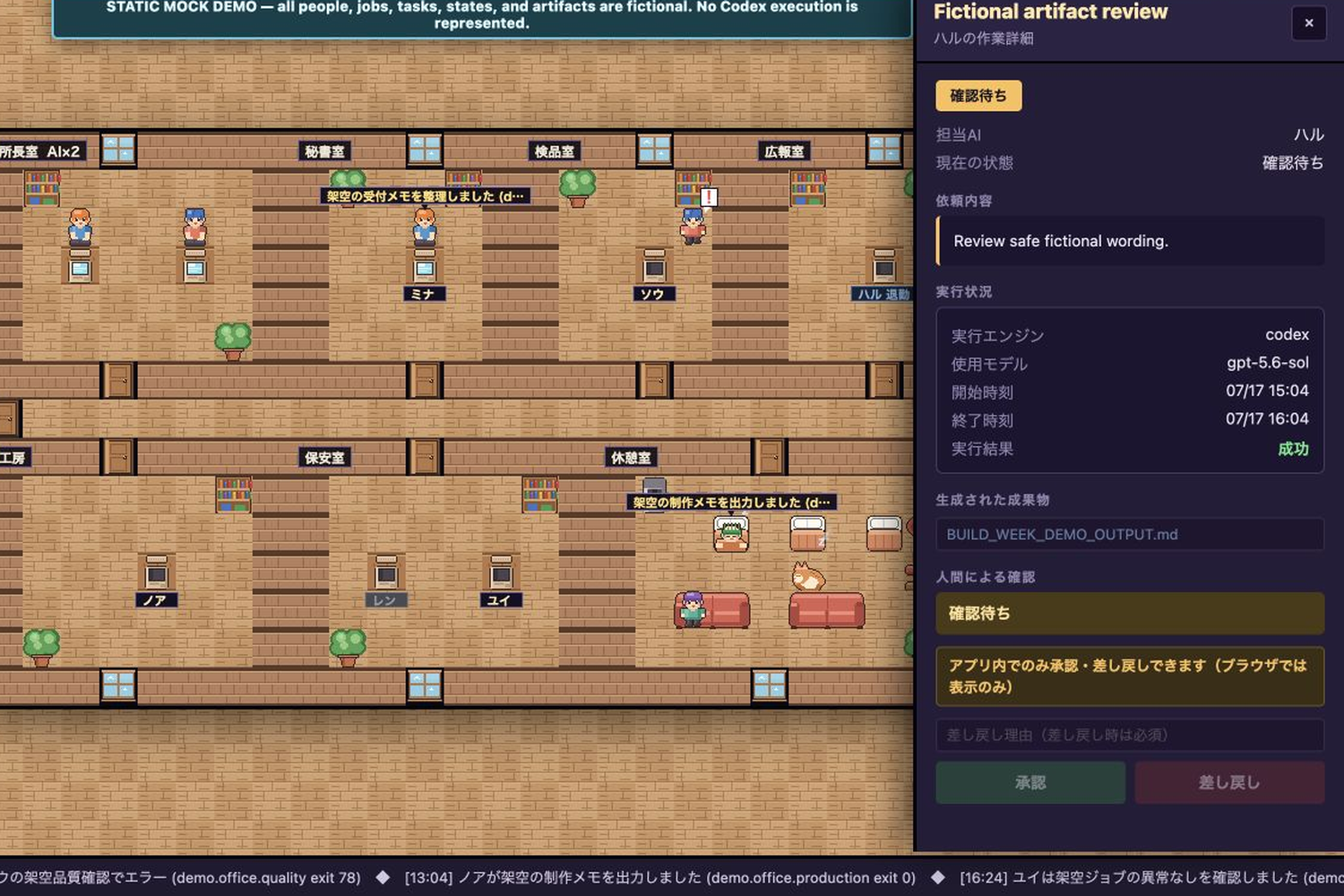
For each task, it can display:
- the assigned AI role
- the execution engine
- the actual model selected
- start and completion times
- execution success or failure
- generated deliverables
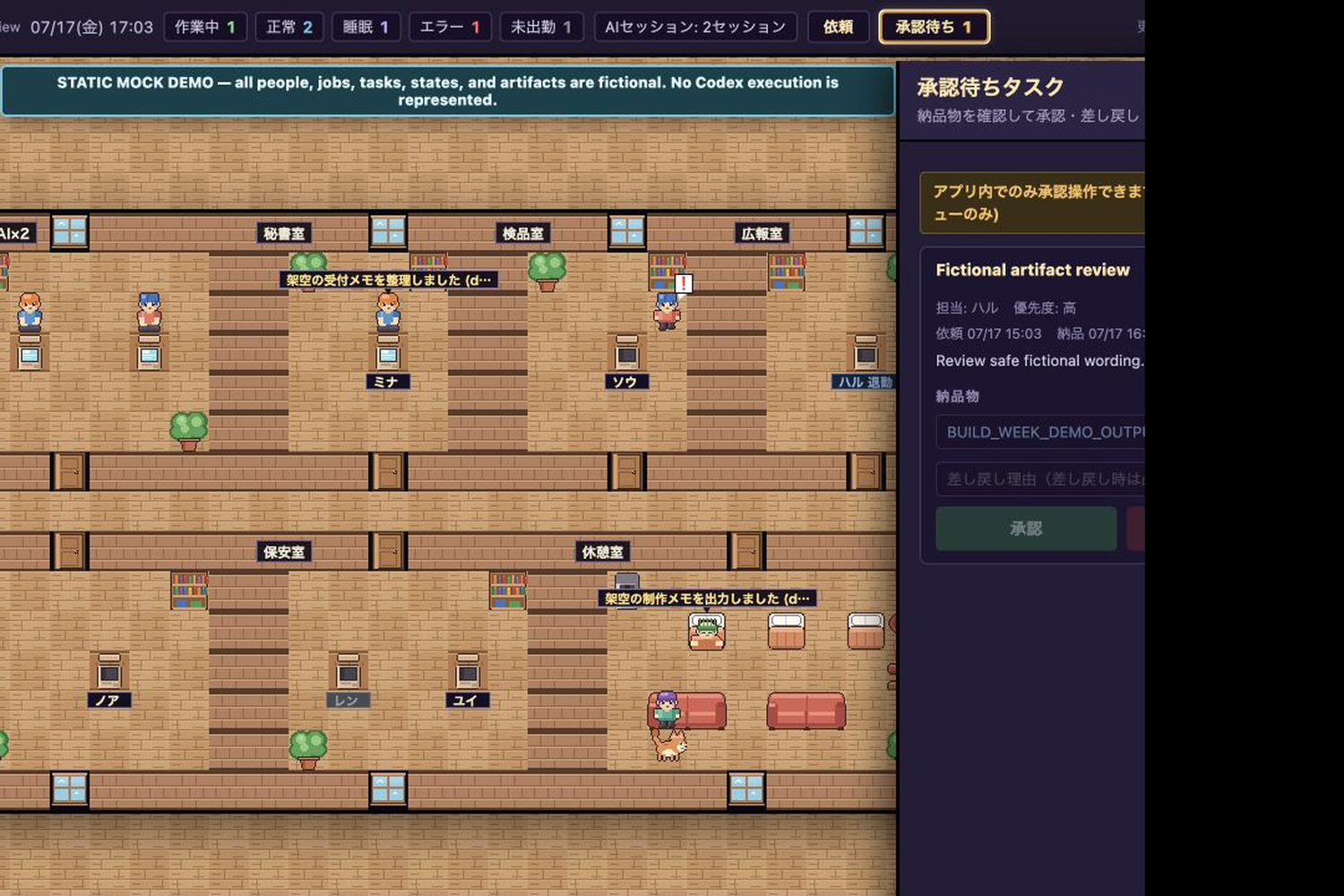
- human approval
- reasoned rejection and rework
A task is not considered complete simply because an AI generated a file. It is complete only after a human reviews and approves the deliverable.
How we built it
The application combines:
- a native macOS shell built with Swift, AppKit, and WebKit
- a JavaScript-based interface
- a local Node.js runner
- Codex CLI task execution
- isolated fictional demo data
- safe local deliverable handling
During Build Week, I used Codex with GPT-5.6 to add the task-detail workflow, model recording, deliverable review, approval and rejection states, safer path handling, and an isolated demo environment.
I defined the product direction, constrained the scope, reviewed the implementation plans, tested the workflows, and made the final product decisions.
Challenges we ran into
The biggest challenge was separating three different meanings:
- the AI successfully executed a task
- the AI produced a deliverable
- a human accepted the quality of that deliverable
I also needed to ensure that the demo could be shown without exposing real jobs, private prompts, local paths, or operational data.
The final submission therefore uses fictional employees, jobs, and tasks while preserving the same workflow used for the verified live Codex tests.
Accomplishments that we're proud of
I am proud that the project connects the entire workflow from real Codex execution to human approval.
During the final end-to-end tests, two isolated tasks were actually executed with Codex using gpt-5.6-sol. Both generated real Markdown deliverables. One was rejected with a reason, and the other was approved and marked complete.
I am also proud that the submission can demonstrate this workflow without exposing private prompts, operational jobs, personal information, or local paths. The demo environment is isolated and clearly distinguishes fictional presentation data from verified live execution.
What we learned
I learned that successful AI execution is not the same as successful work.
An agent may finish without errors and generate a file, but a human still needs to verify whether the deliverable is useful and acceptable. This is why the project separates execution success, deliverable generation, and human approval into different states.
I also learned that transparency matters when demonstrating AI systems. Fictional demo data, real execution evidence, model information, and product limitations must be clearly distinguished.
What's next for AI Employee Command Center
The next step is to evolve the visual design from an AI office into a production and inspection workflow.
AI execution will be represented as production, generated deliverables as products, human review as inspection, approval as shipment, and rejection as rework.
I also plan to improve portability, support more execution environments, strengthen task history and evidence, and make the tool practical for supervising multiple AI-assisted workflows over time.
Built With
- appkit
- cli
- codex
- gpt-5.6
- javascript
- macos
- node.js
- swift
- webkit

Log in or sign up for Devpost to join the conversation.