-
-
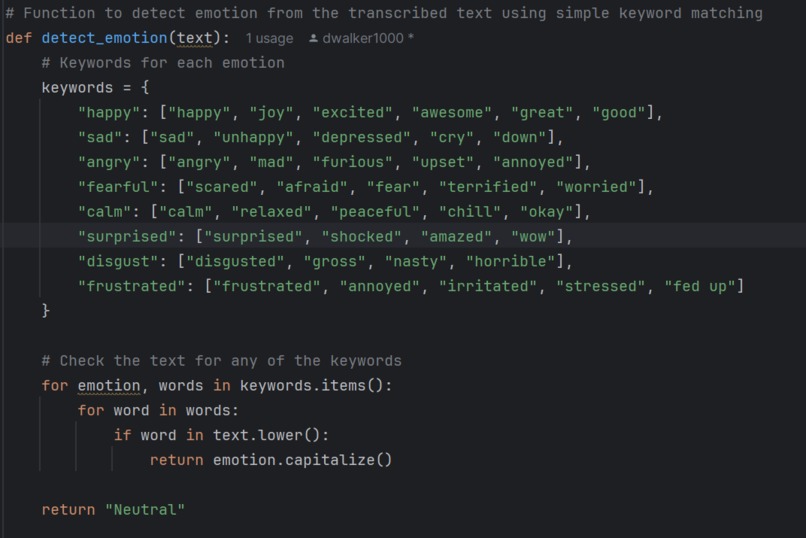
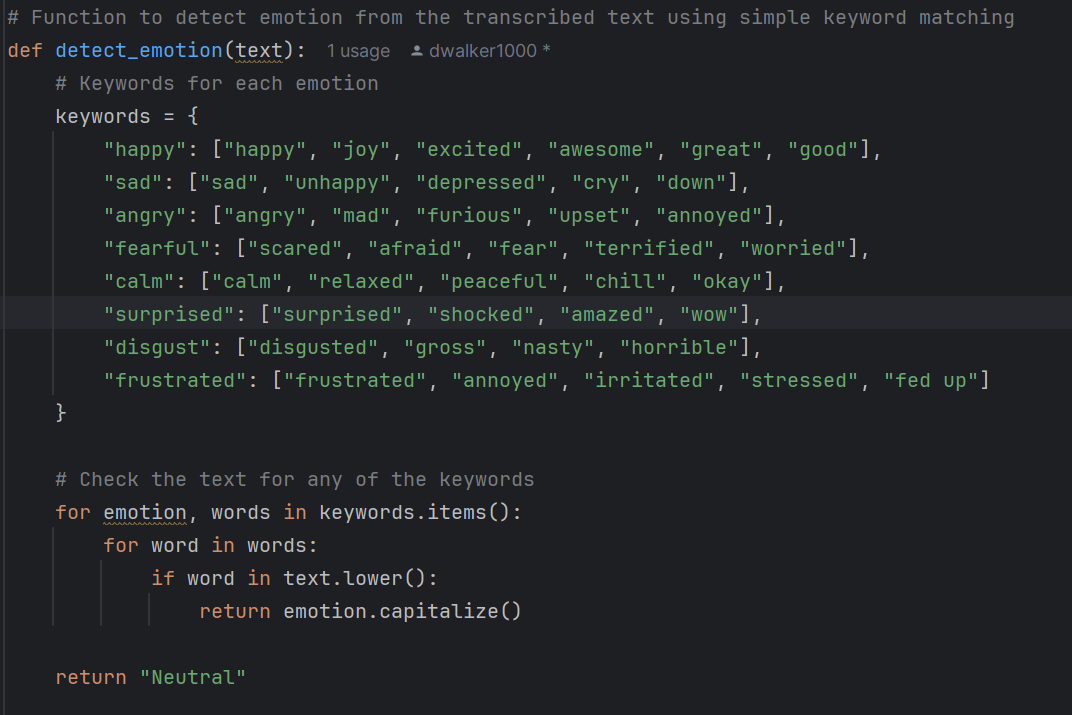
Basic Text Matching
-
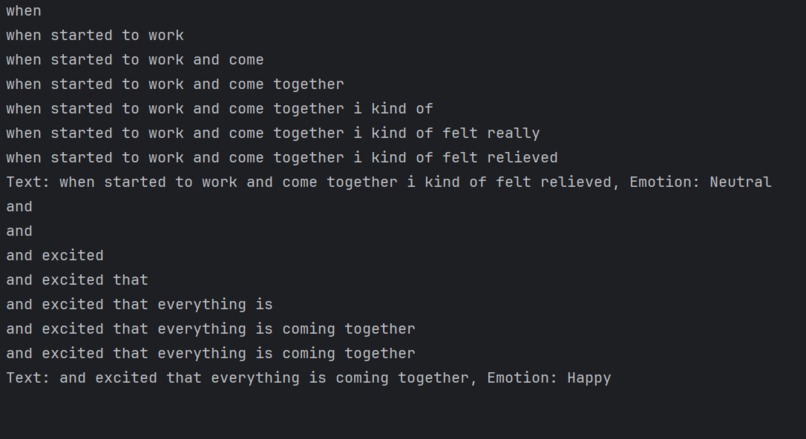
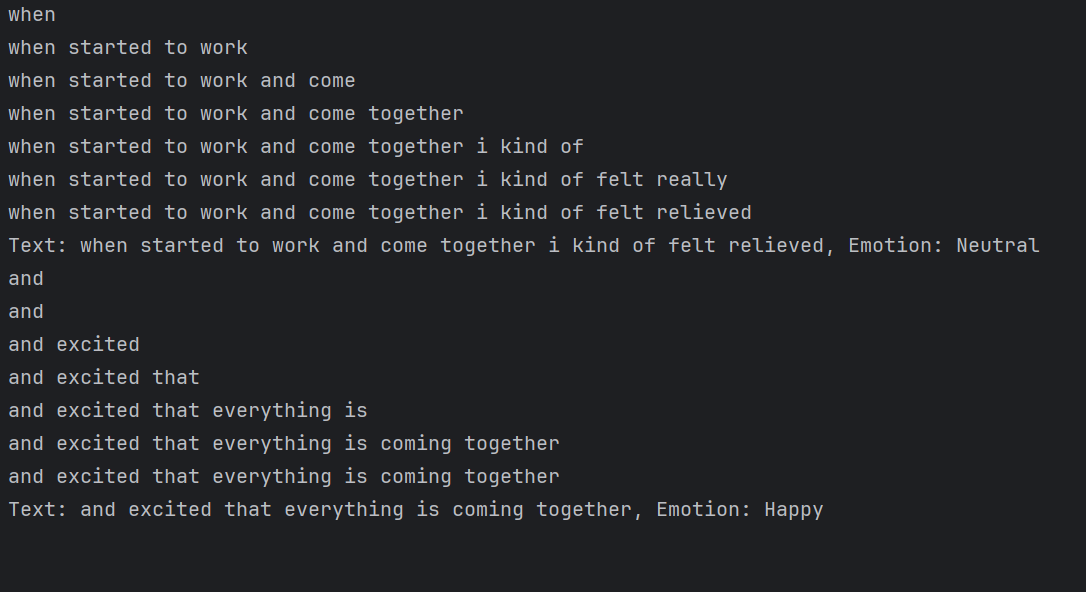
Happy Emotion
-
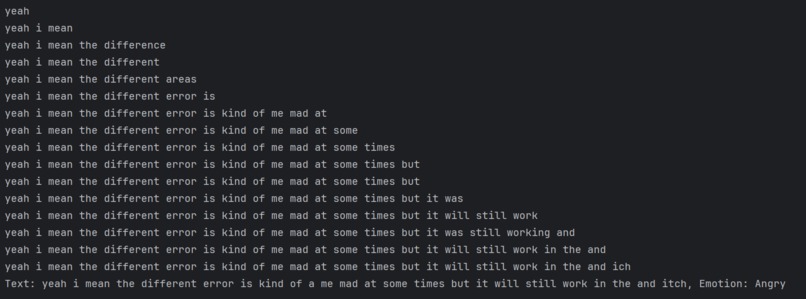
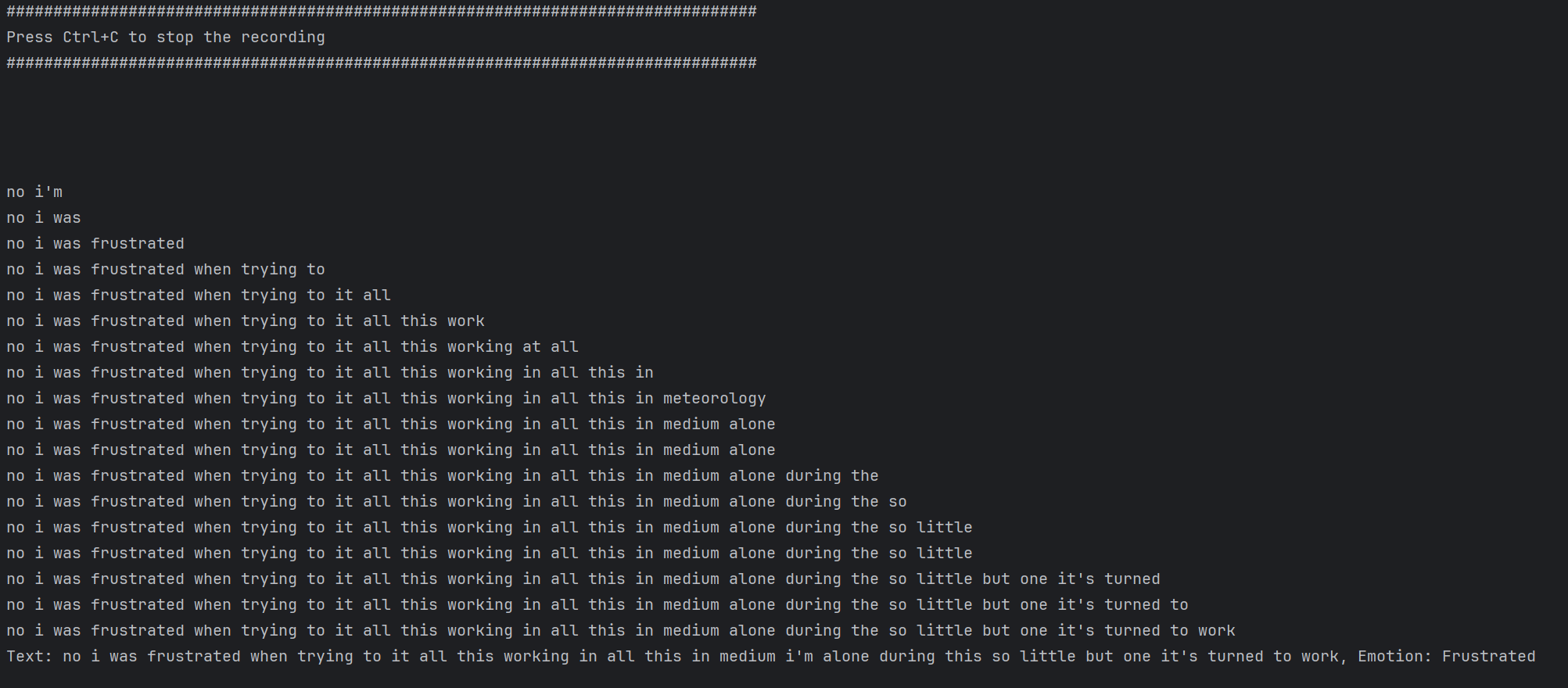
Frustrated Emotion
-
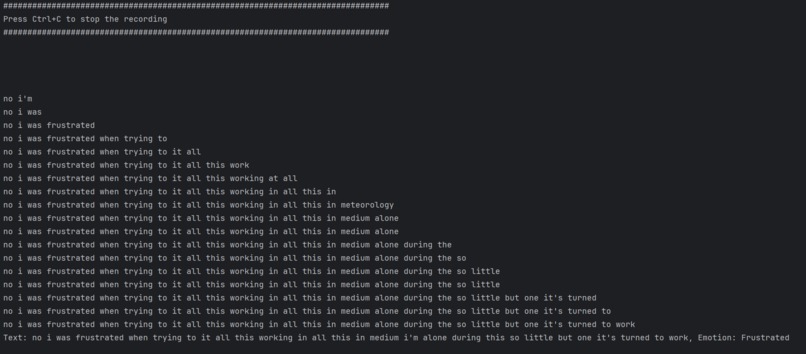
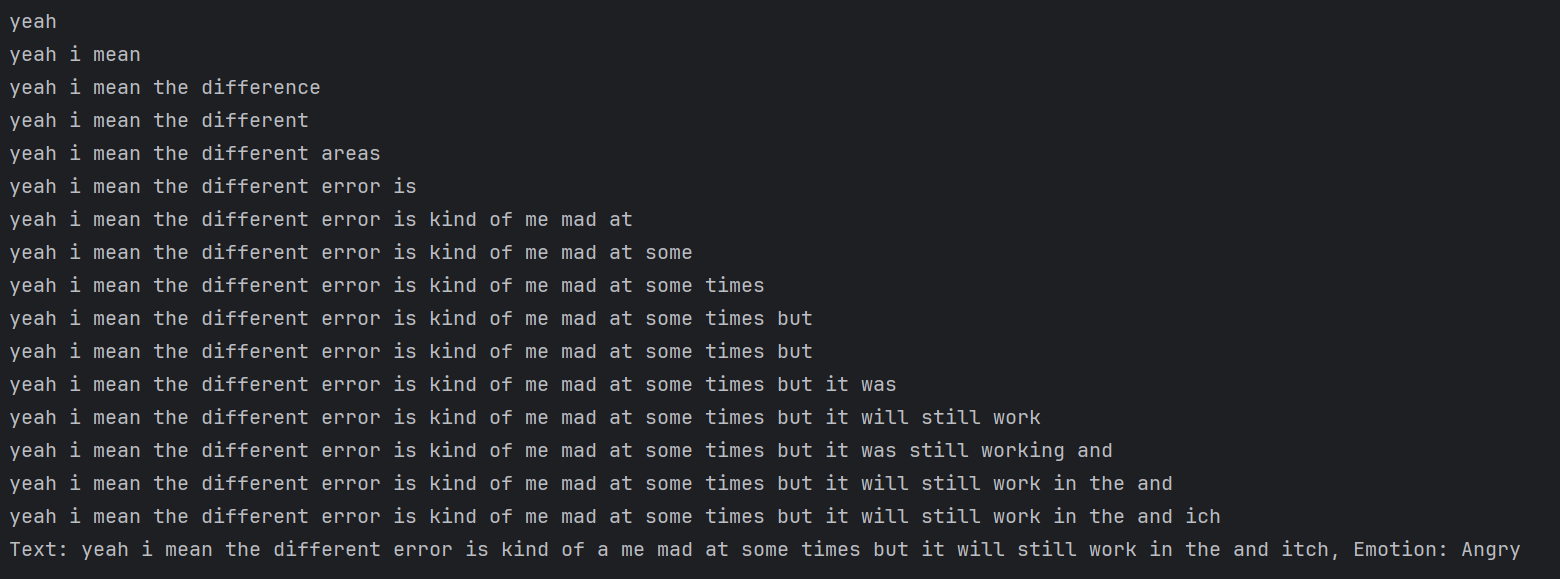
Angry/irritated Emotion
AI Emotion Detector Project
Inspiration
The inspiration for the AI Emotion Detector project came from a fascination with human emotions and the impact of voice in conveying feelings. In an increasingly digital world, understanding emotional cues through speech can enhance communication across various fields, including mental health, customer service, and education. This project aims to bridge the gap between technology and emotional intelligence by leveraging AI to analyze speech and detect underlying emotions.
What it does
The AI Emotion Detector analyzes live audio input to classify emotions based on speech patterns. By utilizing machine learning techniques, it converts spoken words into text and provides feedback on the speaker's emotional state. This tool can be used in diverse applications, such as virtual therapy, customer interaction analysis, and educational feedback.
How we built it
The project was developed using the following steps:
- Data Collection: We utilized the RAVDESS and TESS datasets, which contain audio recordings labeled with various emotions.
- Speech Recognition Integration: Vosk was integrated to convert live audio input into text format for analysis.
- Emotion Classification Model: I worked for a long time on a deep learning model, built using TensorFlow, but because of time I have to change that to a text-matching system.
Challenges we ran into
Throughout the project, we faced several challenges:
- Data Quality: Ensuring the datasets were clean and representative required significant preprocessing efforts.
- Model Accuracy: Achieving high accuracy in emotion classification was challenging, leading to multiple iterations of model architecture and training parameters.
- Real-Time Processing: Integrating real-time audio processing while minimizing latency was technically complex and required careful resource management.
- Emotional Nuance: Capturing the subtleties of emotions in speech proved to be difficult, necessitating a focus on context and additional features.
Accomplishments that we're proud of
We are proud of several accomplishments:
- Building a functional emotion detection system that can classify emotions in real-time.
- Integrating multiple technologies (Vosk, TensorFlow) into a cohesive application.
- Gaining insights into the complexities of emotional recognition in speech, enhancing our understanding of AI applications.
What we learned
This project provided us with valuable lessons, including:
- The intricacies of natural language processing and emotion detection techniques.
- The importance of data preprocessing and feature extraction in machine learning.
- Insights into the challenges of real-time audio processing and how to optimize performance.
- The relevance of emotional intelligence in technology and its potential to enhance human-computer interaction.
What's next for AI Emotion Detector
Looking forward, we plan to:
- Enhance the model's accuracy by exploring more diverse datasets and advanced deep learning techniques.
- Expand the application’s features, such as multi-language support and additional emotional classifications.
- Investigate potential integrations with existing platforms in mental health and customer service to provide a more comprehensive tool for emotional analysis.
- Successfully integrate the Tensorflow model that I was training
- I was potentially thinking about applying this to a chatGPT wrapper and using it as an "AI Therapist"
Built With
- pycharm
- python
- ravdess-dataset
- speechbrain
- tensorflow
- tess-dataset
- vosk

Log in or sign up for Devpost to join the conversation.