-
-
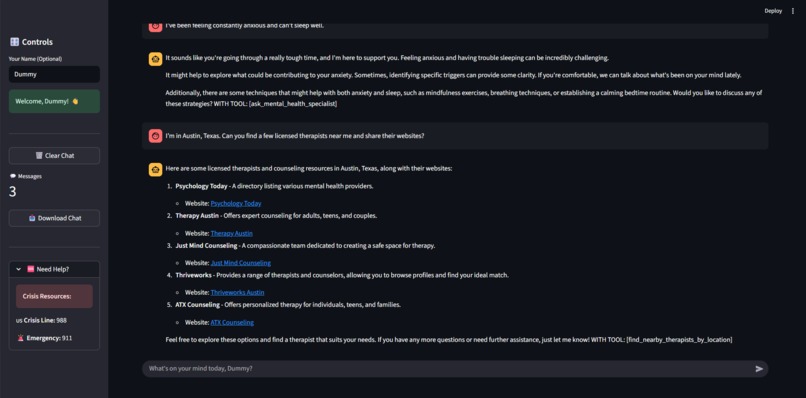
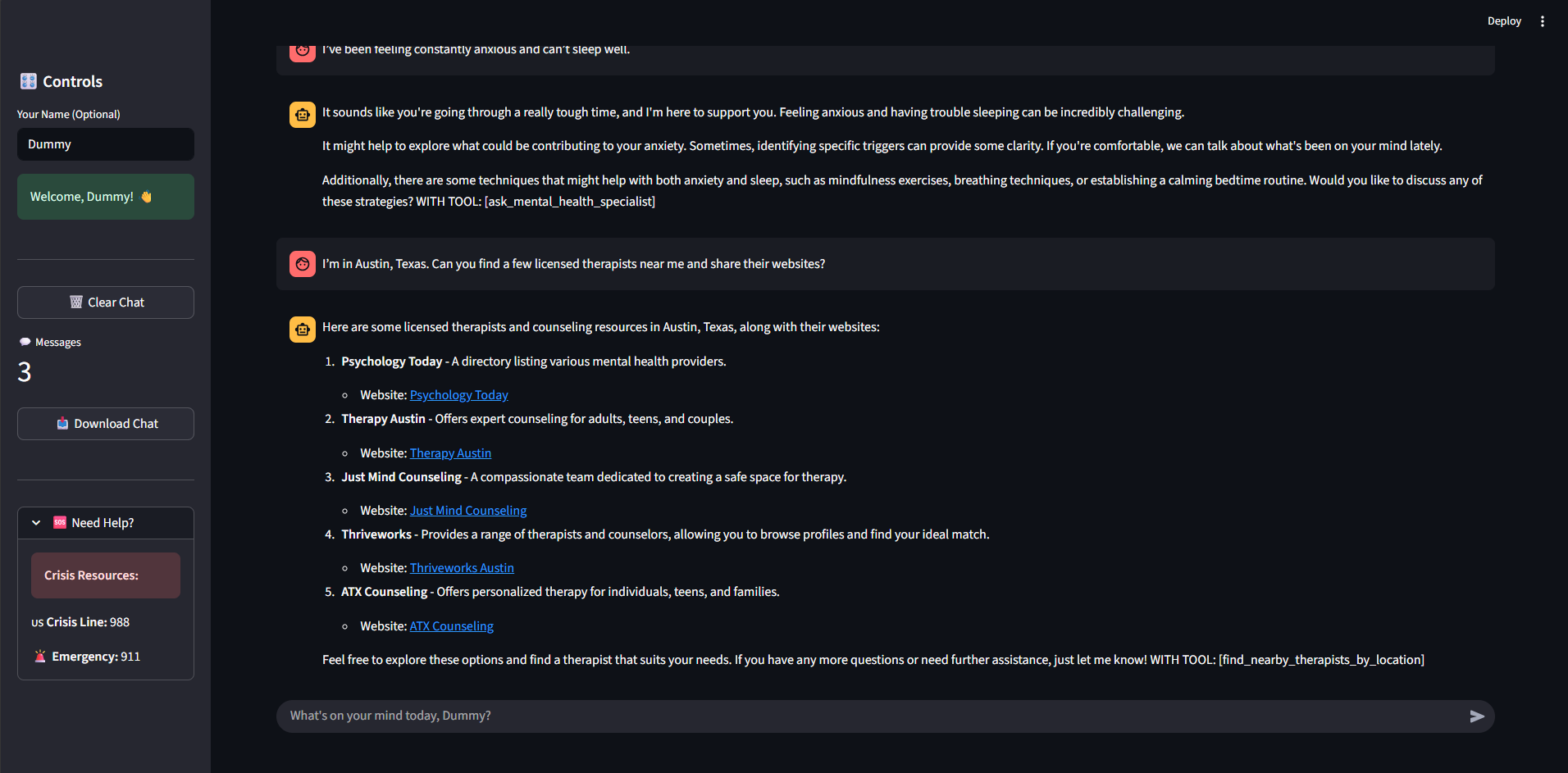
chat bot working snap
Inspiration
I got this idea based on the recent incident, so that the AI chatbot can detect the mental health of the user based on the prompt. This AI chatbot would detect the mental state of the person and respond accordingly. It would not only provide a safe space for conversation but also act as a crucial link to professional help and emergency services. The core inspiration was to move beyond the traditional chatbot model and create a comprehensive, safety-first system that understands the user's emotional state and can intervene effectively when needed
What it does
an end-to-end AI agent that provides empathetic mental health support with a safety-first design. Therapeutic Guidance: Using a LangChain ReAct agent powered by MedGemma and OpenAI, the system engages in compassionate, non-judgmental conversations. It employs therapeutic techniques like Cognitive Behavioral Therapy (CBT) and Dialectical Behavior Therapy (DBT) to guide users through their thoughts and feelings. The AI's responses are designed to be empathetic and reflective, helping users explore their emotions and develop coping strategies. Therapist Discovery: If the user indicates a need for professional help, the agent leverages real-time search (via DuckDuckGo) to identify and present the top 5 mental health therapists based on the user's location. This feature bridges the gap between digital support and human care, providing actionable next steps.
Crisis Escalation: The system is equipped with robust safety protocols. If the person expresses severe distress, such as "I want to end my life," "I can't go on," or other concerning language, the agent's crisis escalation protocol is immediately triggered. It will provide a clear, concise, and direct message of support while simultaneously initiating an automated Twilio emergency call to a pre-designated emergency contact or crisis hotline. This is a critical, life-saving feature that prioritizes user safety above all else.
How we built it
We built SafeSpace using a full-stack machine learning engineering approach:
Backend: A FastAPI backend handles the logic for the ReAct agent, integrating the LLMs and external tools. It manages the chat history, analyzes user input for sentiment and crisis triggers, and orchestrates the calls to the search and Twilio APIs.
Frontend: A real-time chat UI, built with Streamlit, allows for a seamless, interactive user experience. It includes features for mood tracking, providing feedback on the AI's responses, and accessing a library of mental health resources and guided exercises.
LLM Integration: The core of the system is a LangChain ReAct agent. This framework allows the LLM to dynamically select and use different tools (the therapeutic guidance model, the search API, the Twilio API) based on the user's prompt, creating a highly responsive and versatile agent. MedGemma was chosen for its therapeutic-specific knowledge, while OpenAI provided a powerful and general-purpose conversational foundation.
Challenges we ran into
Building SafeSpace presented unique challenges. The most significant was ensuring safety and ethical responsibility. This involved:
Prompt Engineering for Safety: Designing prompts and guardrails that are effective at detecting crisis language without being overly sensitive or triggering false alarms.
Avoiding Hallucination and Misinformation: Ensuring that the therapeutic guidance provided by the LLMs was accurate, safe, and aligned with established psychological principles, rather than generating unhelpful or harmful advice.
Integrating Disparate Systems: Seamlessly connecting the LLM, the search API, and the Twilio API in a reliable and low-latency manner was a significant technical challenge.
Accomplishments that we're proud of
We are most proud of developing a system that places user safety at its core. The automated crisis escalation feature is a major accomplishment, as it addresses one of the most significant risks of an unmonitored mental health chatbot. We are also proud of creating a user interface that is not just functional but also empathetic and user-friendly, with features like mood tracking and feedback that make the experience feel more like a collaborative tool than a passive interaction.
What we learned
This project taught us the importance of moving beyond simply making an AI "smart" to making it "responsible" and "safe." We gained a deeper understanding of ethical AI design, the complexities of LLM integration, and the critical need for a human-in-the-loop approach for high-stakes applications. The experience reinforced that for AI to be truly beneficial in sensitive areas like mental health, it must be built with a foundation of trust, transparency, and a profound respect for the user's well-being.
What's next for Ai mental health therapist
The future of AI in mental health is a field of immense potential. Here are some thoughts on how AI can responsibly support mental health & well-being, building on the foundation of SafeSpace:
Proactive Intervention: Instead of just reacting to a user's prompt, AI could analyze patterns in a user's communication over time (with their consent) to proactively offer support before a crisis point is reached. This could involve gentle check-ins, reminders to engage in coping strategies, or suggesting a human connection.
Enhanced Personalization: The AI could become a more personalized "well-being partner," integrating with wearable data (like sleep patterns or heart rate) to provide even more tailored insights and recommendations.
Therapist Augmentation: AI is not a replacement for human therapists. Future systems could be designed as tools for clinicians, helping them with administrative tasks (like note-taking and scheduling) and providing insights from patient data to inform treatment plans. This allows therapists to focus on what they do best: the human connection.
Cultural and Language Diversity: Developing AI models trained on diverse datasets to better understand and respond to the nuances of different cultures and languages. This is crucial for making mental health support accessible to a wider global audience.
Further Research and Regulation: The field of AI in mental health is still in its infancy. Continued research is needed to validate the efficacy and safety of these tools. This will require collaboration between AI developers, mental health professionals, and policymakers to establish clear ethical guidelines and regulatory frameworks.
Built With
- api
- duckduckgo
- langchain
- langgraph
- llm
- opeanai
- python
- streamlit
- twilio

Log in or sign up for Devpost to join the conversation.