
Project Inspiration
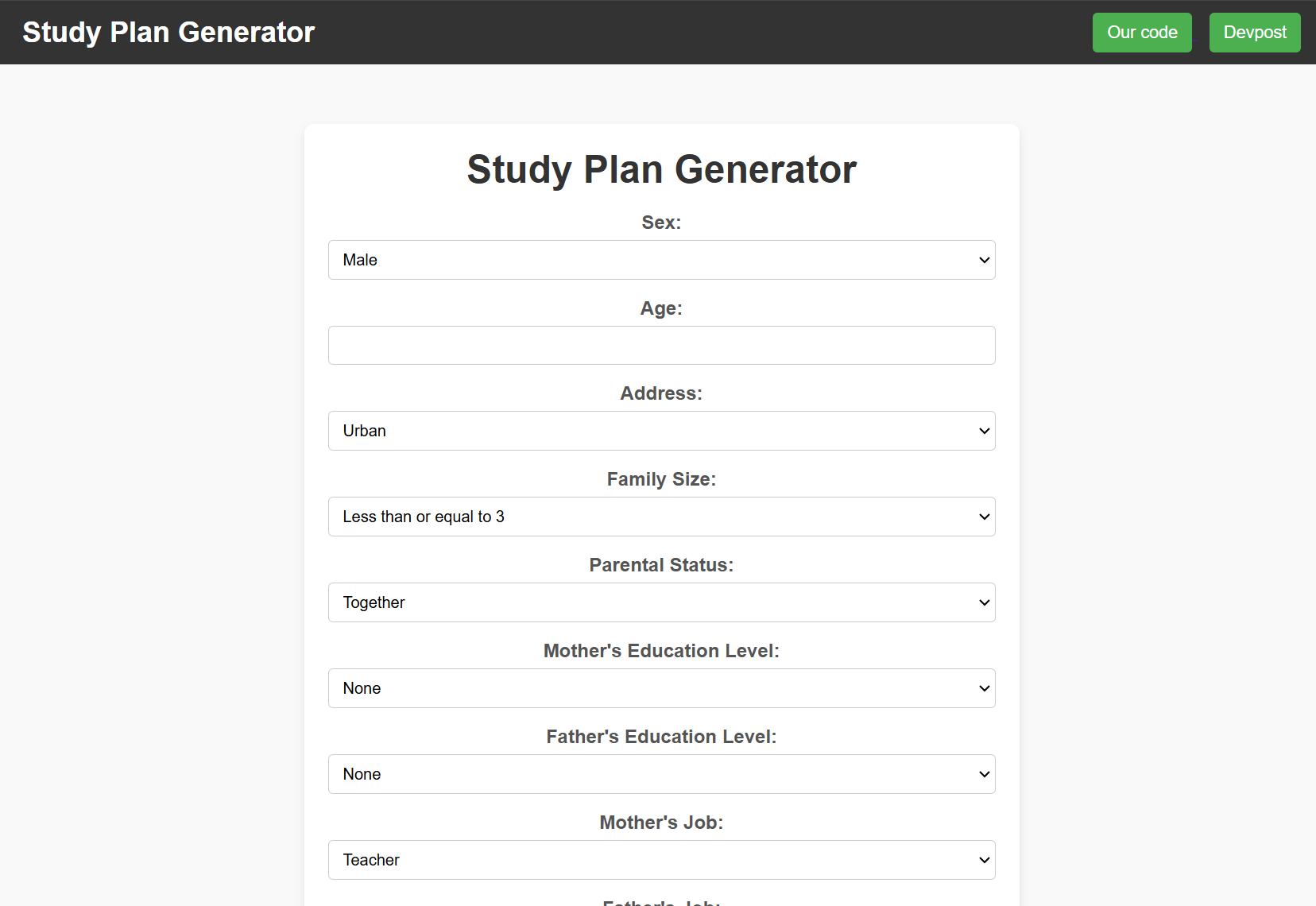
ScholarSync was inspired by a shared goal among our team members: to create a tool that helps students optimize their study time and learning approaches as traditional educational methods often fail to meet the diverse learning needs of students. Each learner is unique, with preferences and strengths that can vary widely. A one-size-fits-all approach leaves many students struggling to engage fully and achieve their potential. We wanted to address the challenges students often face in planning and balancing their studies, especially with their unique learning speeds, styles, and needs. With AI’s growing role in personalized education, we saw this project as an opportunity to harness its potential to provide tailored study guidance.
What We Learned
Throughout the project, we learned a lot about machine learning, Azure AI services, and the complexities of predicting and adapting to individual learning styles. Working with educational data, we learned how to preprocess and merge datasets, identify key learning characteristics, and develop models to classify students' learning pace, academic performance, and performance level. We also gained experience in coordinating multiple models and integrating them into a unified system. Navigating Azure’s AI capabilities taught us how to deploy our models effectively, pushing us to expand our knowledge of AI solutions.
How We Built the Project
We divided the project into several core steps:
- Data Preprocessing and Feature Engineering: We defined features related to learning pace and performance, such as age, study time, GPA, and family support, etc. After data cleaning and encoding, we organized the dataset to support our models.
- Model Training: We trained three separate models, each focused on a different aspect of the student's learning profile:
- Grade Model to predict academic performance
- Pace Model to identify if a student was a fast or slow learner
- Performance Level Model to assess overall study effectiveness
- Merging Models and Handling Varying Input Features: Integrating the three models posed a unique challenge. Each model relied on different features, making it complex to manage student input. We worked to ensure that input data for each student was formatted to accommodate the feature requirements of all models, allowing for smooth transitions between predictions.
- Integration with Azure AI for Study Plan Generation: After the models produced their predictions, we passed this data to Azure AI services to generate personalized study plans. This final step provided actionable, student-specific guidance based on the model outputs.
Challenges We Faced
One of the biggest challenges was handling inconsistencies in data formatting, particularly in student identifiers, study time, and support features. Combining the outputs of three distinct models also required creative problem-solving, as we needed to align the varied input features across models without losing accuracy or interpretability. Ensuring that a single set of inputs could work for all models was both time-intensive and critical to the project's success. Additionally, learning the configurations and limitations of Azure AI services presented its own learning curve, requiring us to adjust our initial approach to fit the platform.
Overall, this project was an invaluable experience, blending our technical skills with real-world problem-solving, and we are proud of the adaptive and personalized solution we created.
Built With
- css
- flask
- html
- jupyternotebook
- microsoftfabric
- python
- scikit-learn


Log in or sign up for Devpost to join the conversation.