
🚀 Inspiration
Economic crises often come too late for decision-makers to react effectively. Traditional models are slow, static, and hard to interpret. I wanted to build a system that gives an early warning signal using AI — something interactive, explainable, and actionable.
💡 What it does
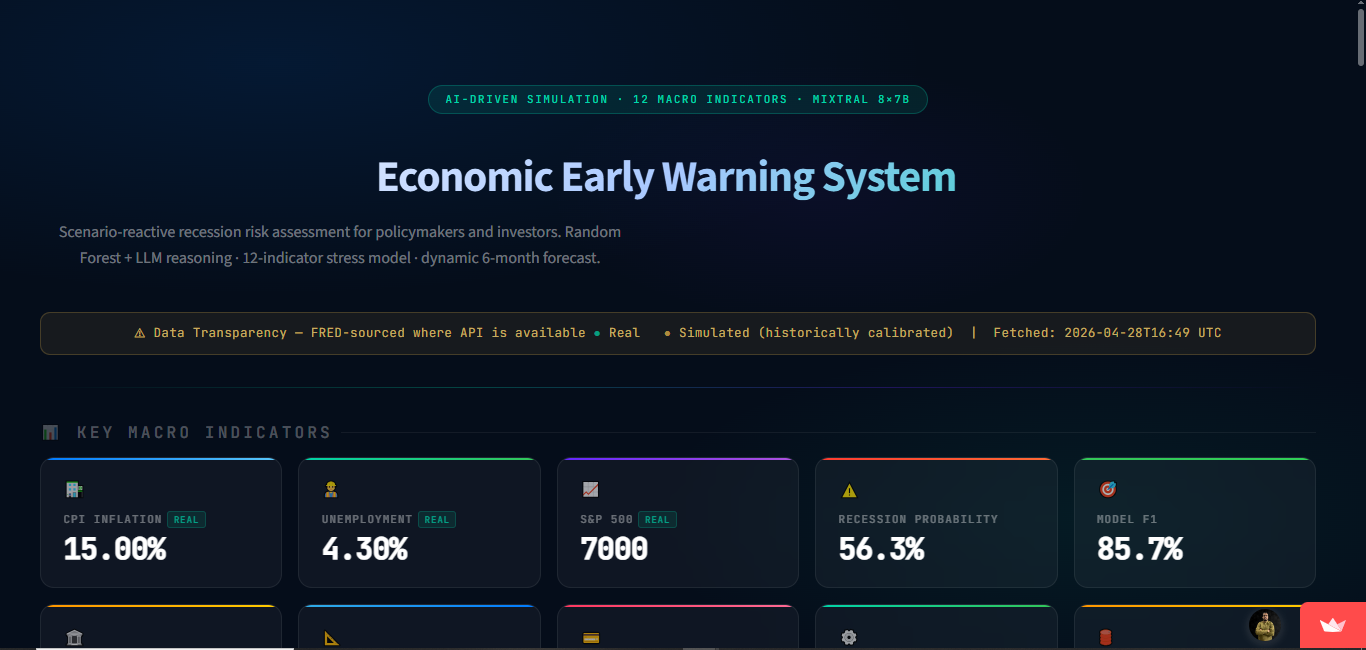
This project is an AI-powered Economic Early Warning System that predicts recession probability using 12 macroeconomic indicators like inflation, unemployment, yield spread, and consumer confidence.
Users can:
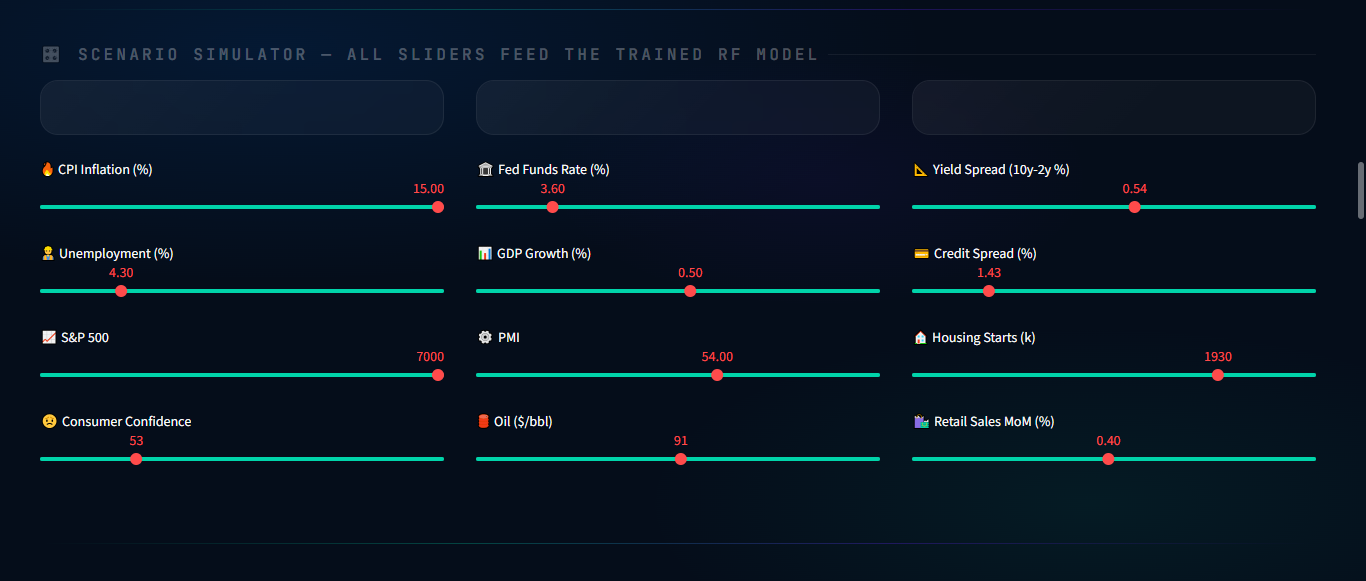
- Simulate economic scenarios in real-time using sliders
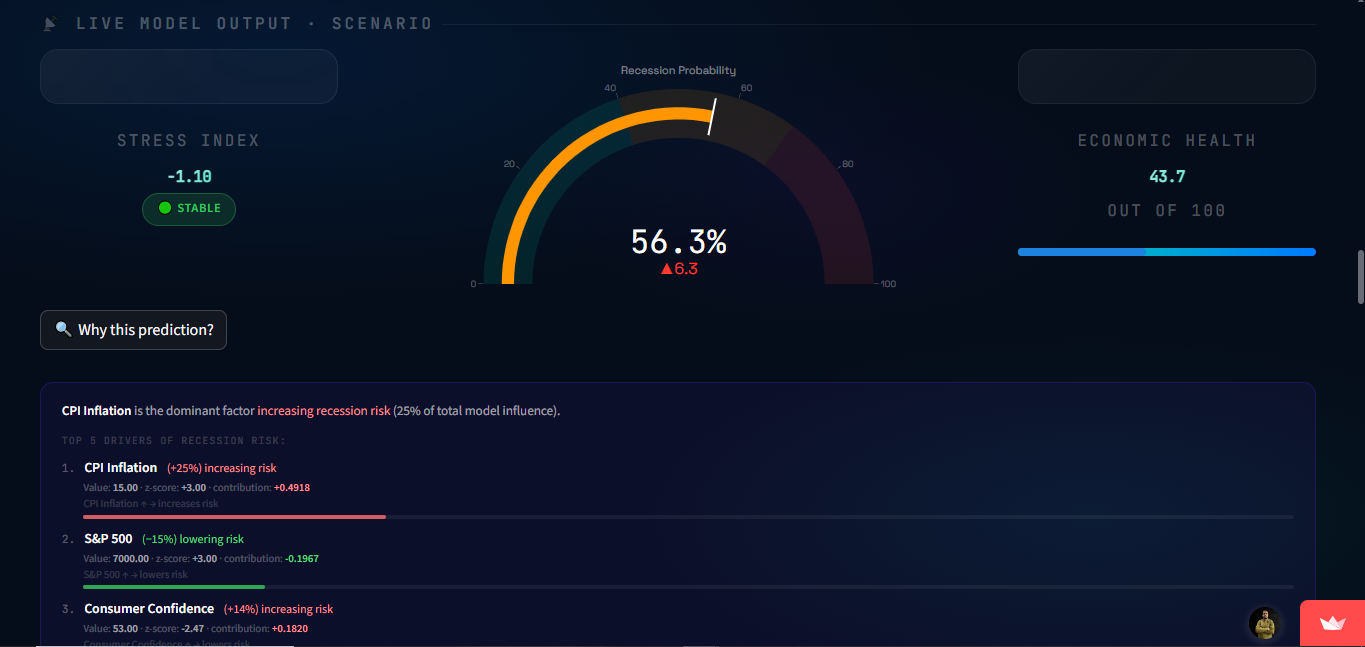
- See how changes impact recession probability instantly
- Analyze key drivers behind predictions
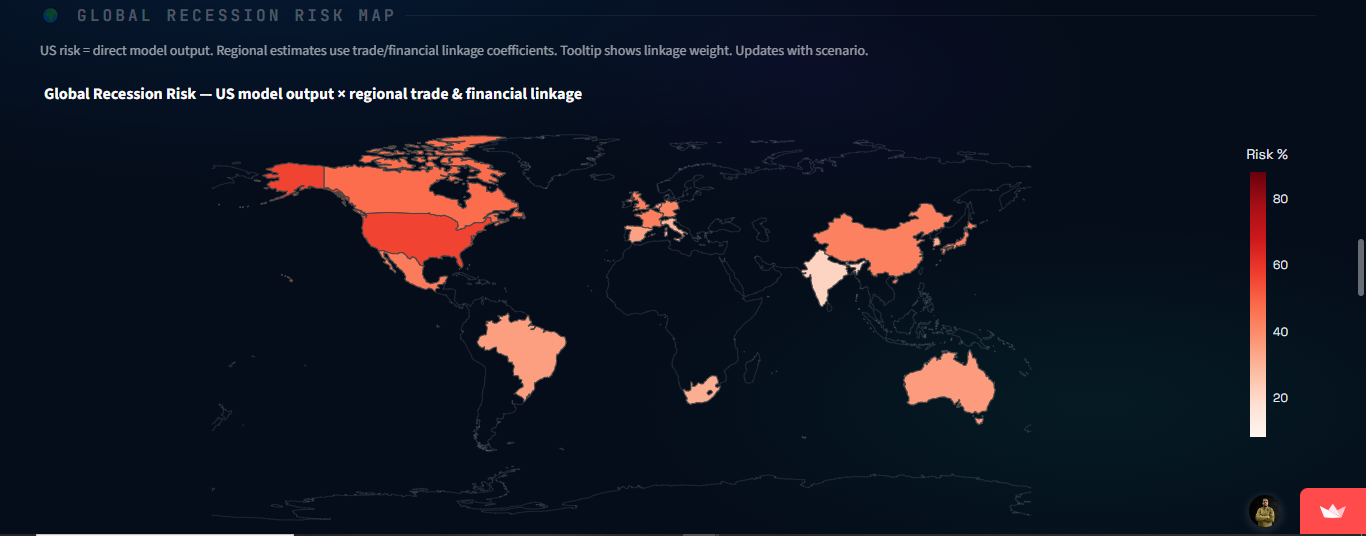
- Explore global recession risk through a dynamic map
- Get policy recommendations and AI insights
🛠️ How I built it
- Random Forest model trained on macroeconomic indicators
- Feature importance + explainability layer
- Scenario simulator connected directly to model inputs
- Streamlit frontend for real-time interaction
- LLM integration for economic reasoning (with fallback handling)
- 6-month forecast using trend + volatility modeling
⚠️ Challenges I ran into
- API limits for AI insights → solved with fallback system
- Data inconsistency → handled using standardization and simulated calibration
- Balancing accuracy vs interpretability
- Designing a UI that is both technical and simple
🏆 Accomplishments
- Built a full end-to-end AI system (model + UI + simulation)
- Real-time scenario analysis with instant feedback
- Clear explanation of "why" behind predictions
- Production-ready interactive dashboard
📚 What I learned
- Real-world data is noisy and imperfect
- Explainability matters more than raw accuracy
- UI/UX can make or break an AI product
- Handling edge cases (like API failure) is critical
🔮 What’s next
- Add live economic data feeds
- Improve model accuracy with more features
- Deploy at scale for policymakers and analysts
- Add alert system (email/SMS for risk spikes)
Built With
- apis
- data
- llm-(mixtral)
- machine-learning
- numpy
- pandas
- plotly
- python
- random-forest
- scikit-learn
- streamlit

Log in or sign up for Devpost to join the conversation.