-
-
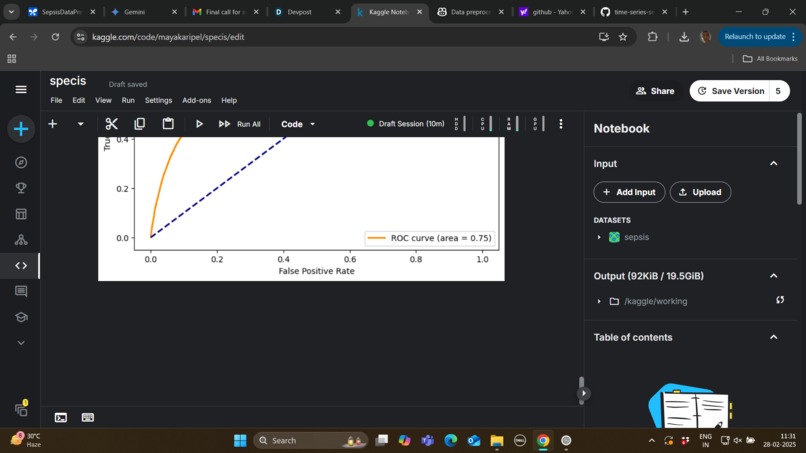
Sepsis prediction model performance: ROC curve and classification metrics
-
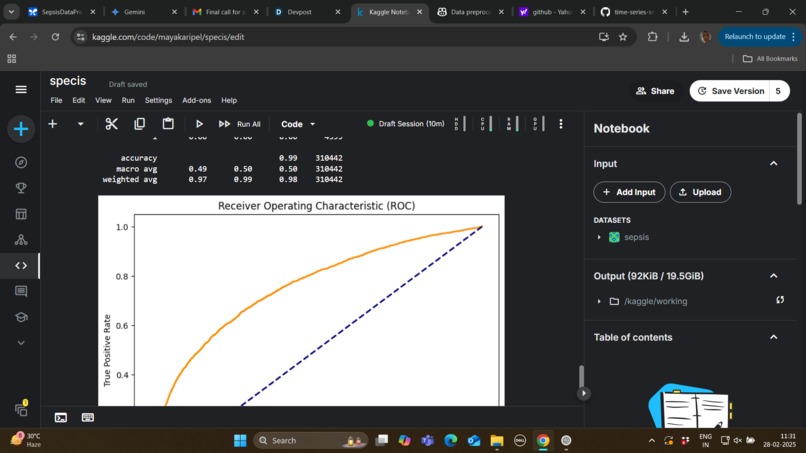
Sepsis prediction model performance: ROC curve and classification metrics
Inspiration
Sepsis is a leading cause of death worldwide, often progressing rapidly. The inspiration for this project came from the urgent need for earlier and more accurate sepsis detection to improve patient outcomes and save lives. We recognized the potential of AI and machine learning to analyze patient data in real-time and identify subtle indicators of sepsis that might be missed by clinicians, enabling timely intervention.
What it does
The AI-Driven Sepsis Early Warning System is a mobile application designed to assist healthcare professionals in the early detection of sepsis. It integrates with electronic health records (EHRs) via [MeldRx/FHIR] and uses machine learning to analyze patient data, including vital signs, lab results, and demographics. The system generates a real-time sepsis risk score, alerting clinicians to patients at high risk of developing sepsis. This allows for faster diagnosis, earlier treatment, and ultimately, improved patient survival rates
How we built it
The solution utilizes a combination of data preprocessing, feature engineering, and machine learning techniques to build a robust sepsis prediction model. Key components include:
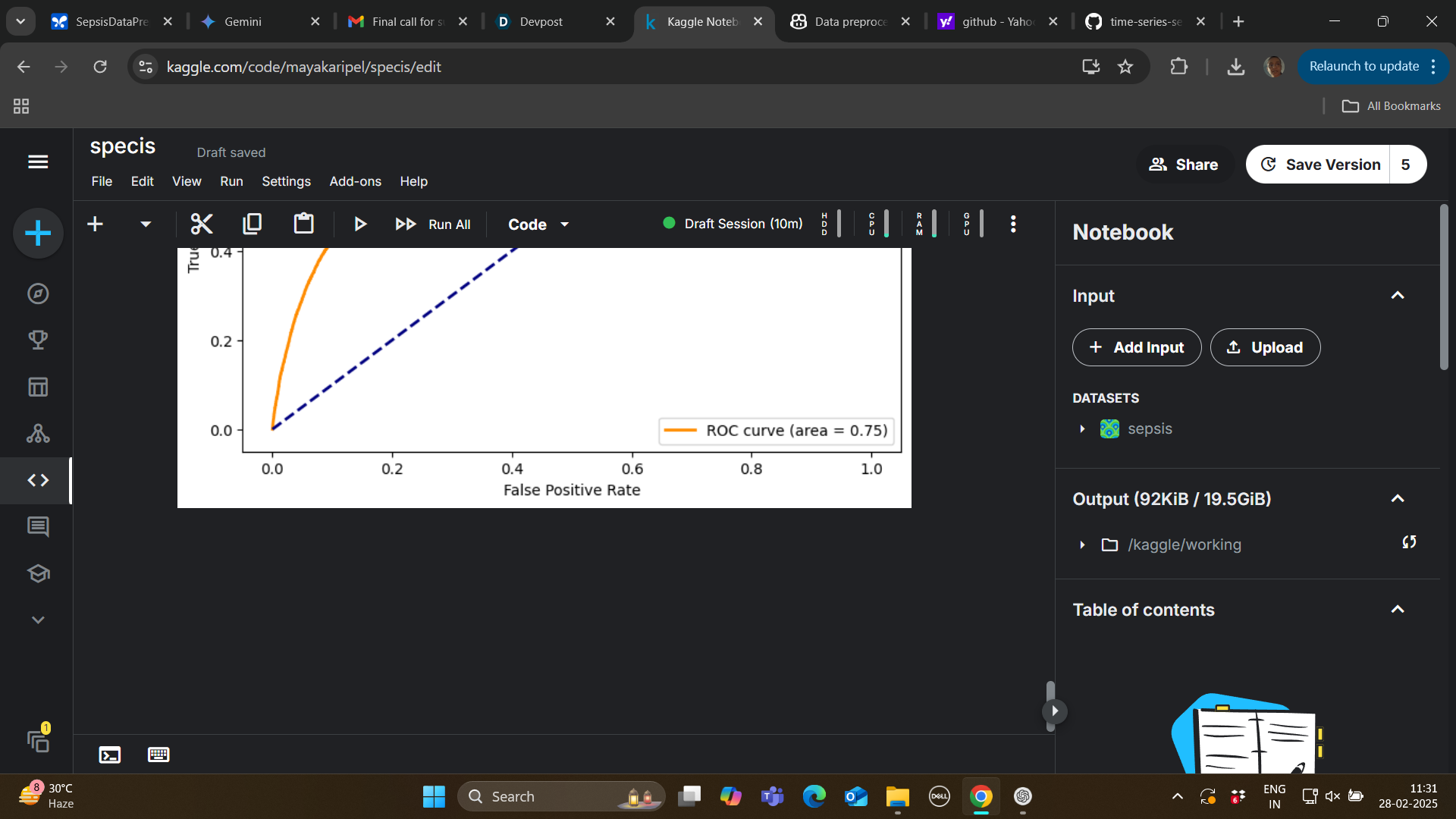
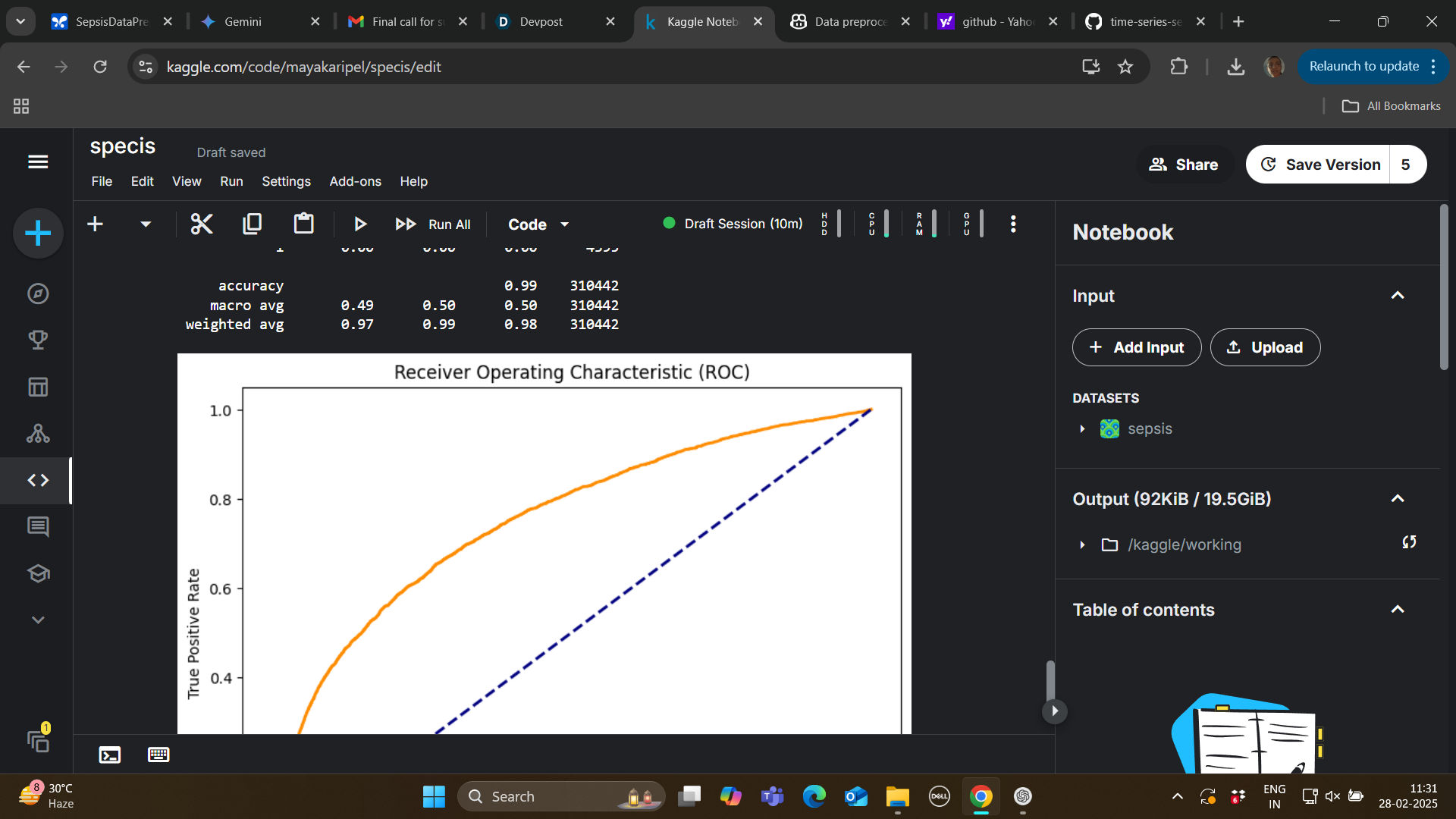
Data Preprocessing: Handling missing values using median imputation and KNN imputation. Addressing data inconsistencies and outliers. Converting data types and cleaning data. Feature Engineering: Creating lagged features to capture temporal dependencies. Calculating time-based features (e.g., elapsed time in days, time of day). Addressing the Hour column to ensure consistent numerical data. Machine Learning: Employing XGBoost, a gradient boosting algorithm, for its high performance. Using SMOTE to address class imbalance. Implementing time-series cross-validation to account for temporal dependencies. Feature selection using SelectKBest. Model calibration using calibrated classifiers. Threshold optimization. Evaluation: Evaluating the model using metrics such as ROC AUC, precision, recall, and F1-score. Visualizing model performance using ROC curves. Logging to track model performance.
This project was built using Python, TensorFlow/PyTorch, scikit-learn, FHIR libraries, React/Angular/Vue.js, MeldRx platform. I utilized [mention specific ML algorithms used: e.g., gradient boosting, random forests, deep learning] to train a predictive model on MIMIC-III, synthetic data. The model was trained to identify patterns and correlations in patient data indicative of sepsis. The web application was developed to interface with the [MeldRx/FHIR] API, retrieve patient data, and display the sepsis risk score in a user-friendly format.
Challenges we ran into
Accomplishments that we're proud of
What we learned
What's next for AI-Driven Sepsis Early Warning System
Built With
- converted-to-pandas-for-model-training.-model-training:-timeseriessplit-for-cross-validation
- curves
- dask
- for
- gridsearchcv-for-hyperparameter-tuning.-feature-engineering:-custom-functions-for-creating-lagged-features.-evaluation:-custom-scoring-function-for-roc-auc
- imbalanced-learn-(imblearn)
- logging.-data-handling:-dask-for-efficient-handling-of-large-datasets
- matplotlib
- numpy
- precision-recall
- programming-language:-python-libraries:-pandas
- scikit-learn
- seaborn
- threshold
- xgboost

Log in or sign up for Devpost to join the conversation.