-
-
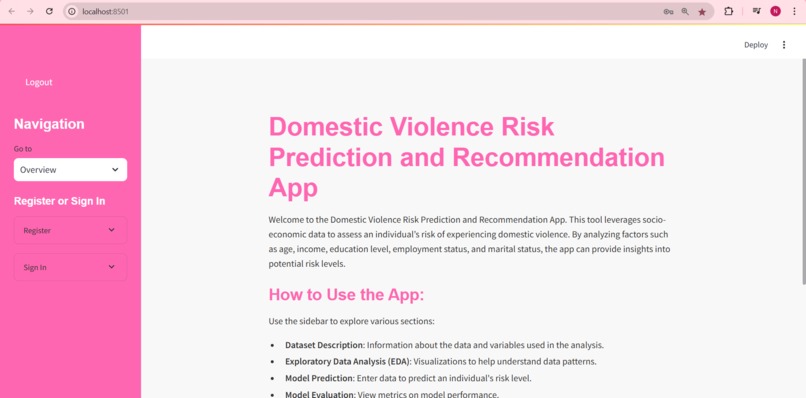
App_image
Inspiration
This project was inspired by the pressing issue of domestic violence, particularly in underserved rural areas where resources and support systems for women are scarce. With a commitment to promoting gender equity, I aimed to create a tool that could proactively address and prevent domestic violence, aligned with UN Sustainable Development Goal 5 on Gender Equality. By leveraging AI, I sought to empower organizations with insights to support women and reduce instances of violence in their communities.
What it does
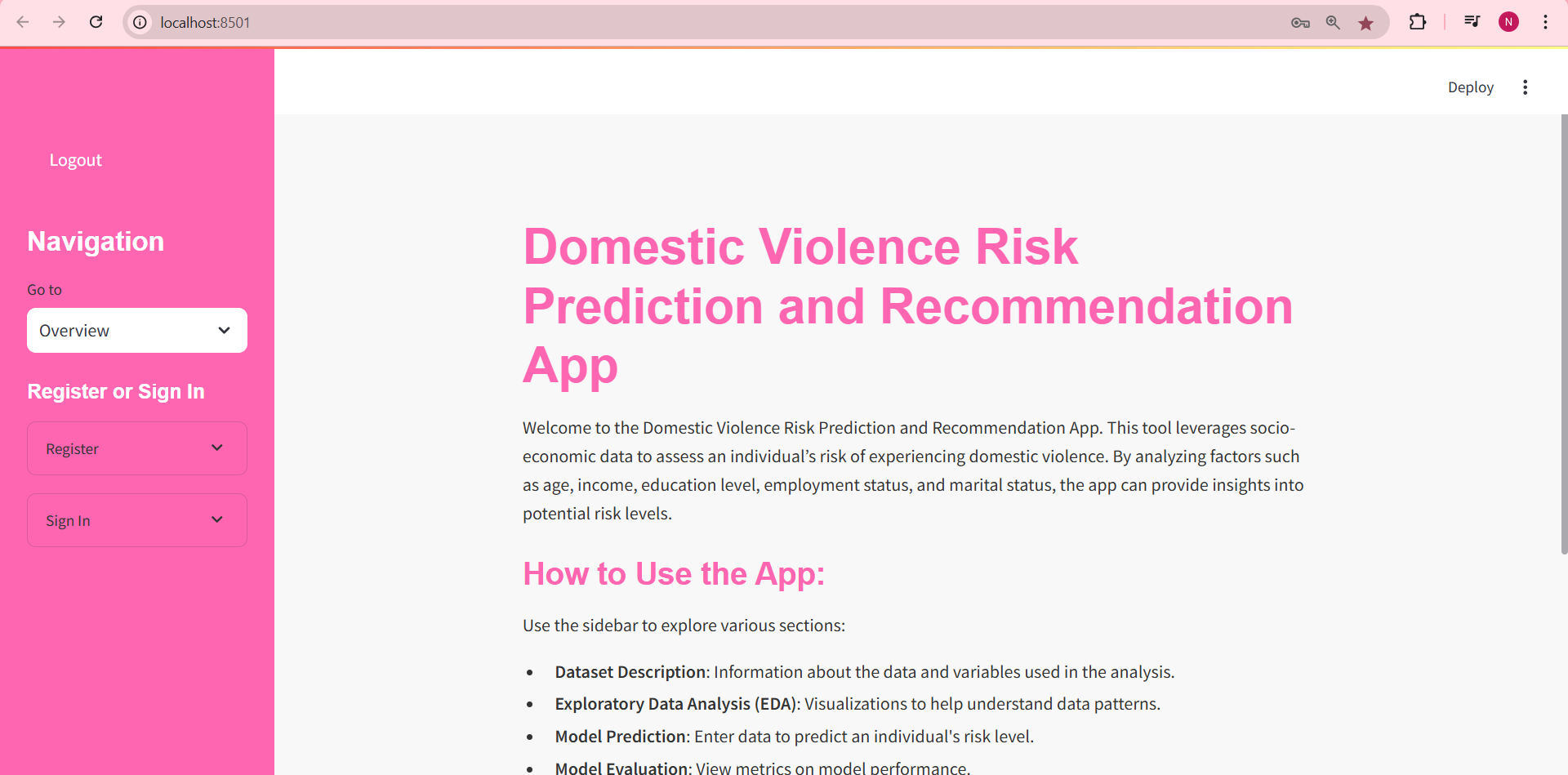
This solution is an AI-driven tool that predicts the risk of domestic violence based on socio-economic factors such as age, income, employment status, and education level. This predictive model is integrated into an easy-to-use Streamlit app, allowing NGOs, policymakers, and community leaders to identify high-risk cases and make data-informed decisions for timely interventions. Additionally, the app provides data visualizations that help users understand risk patterns, enabling them to respond effectively.
How we built it
I started by gathering and preprocessing socio-economic data relevant to domestic violence risk. Using Python, I trained several machine learning models, including Random Forest, Gradient Boosting Machines (GBM), and XGBoost. After fine-tuning the models, I integrated the best-performing model into a Streamlit app, allowing for real-time interaction and visualization. The app is designed to be user-friendly, ensuring that insights can be accessed by both technical and non-technical users.
Challenges we ran into
One of the primary challenges was ensuring data quality and addressing any biases inherent in the dataset. Additionally, balancing model complexity with interpretability posed a challenge, as i needed the model to be accurate yet understandable for decision-makers. Another hurdle was designing the app to be accessible to non-technical users, which required thoughtful user experience (UX) considerations.
Accomplishments that we're proud of
I am proud of successfully creating a model that can accurately predict domestic violence risk, as well as developing an interactive app that makes these insights accessible. This project brings actionable insights to the frontlines of community work, empowering NGOs and policymakers with the data-driven tools necessary to make a tangible difference.
What we learned
Throughout the project, i learned about the importance of selecting relevant socio-economic features to optimize model accuracy. I also gained valuable experience in balancing technical accuracy with user-centered design, ensuring the tool remains effective and intuitive for end-users.
What's next for AI-Powered Solution for Domestic Violence Prevention
Looking forward, I plan to enhance the app by incorporating more detailed data and refining the model for even higher accuracy. I also aim to add new features, such as resource allocation suggestions and intervention tracking, to make the tool more comprehensive. My goal is to expand the app's reach, collaborating with organizations globally to address domestic violence and promote gender equality.
Built With
- data-preprocessing-and-analysis
- data-visualization
- databases-and-data-formats
- google-colab
- google-drive
- machine-learning
- mlflow
- python
- streamlit


Log in or sign up for Devpost to join the conversation.