-
-
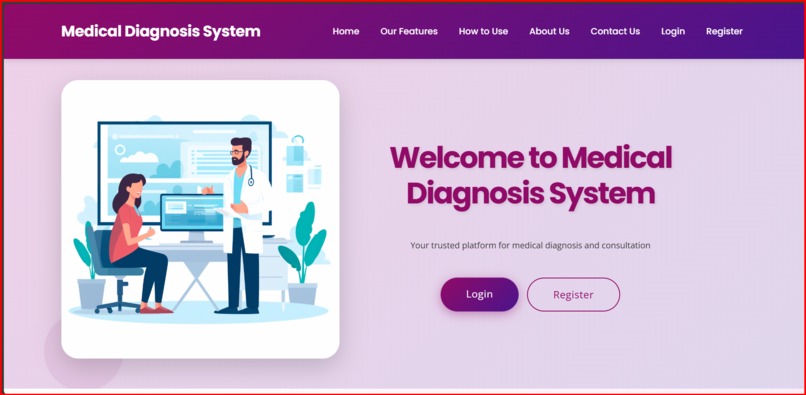
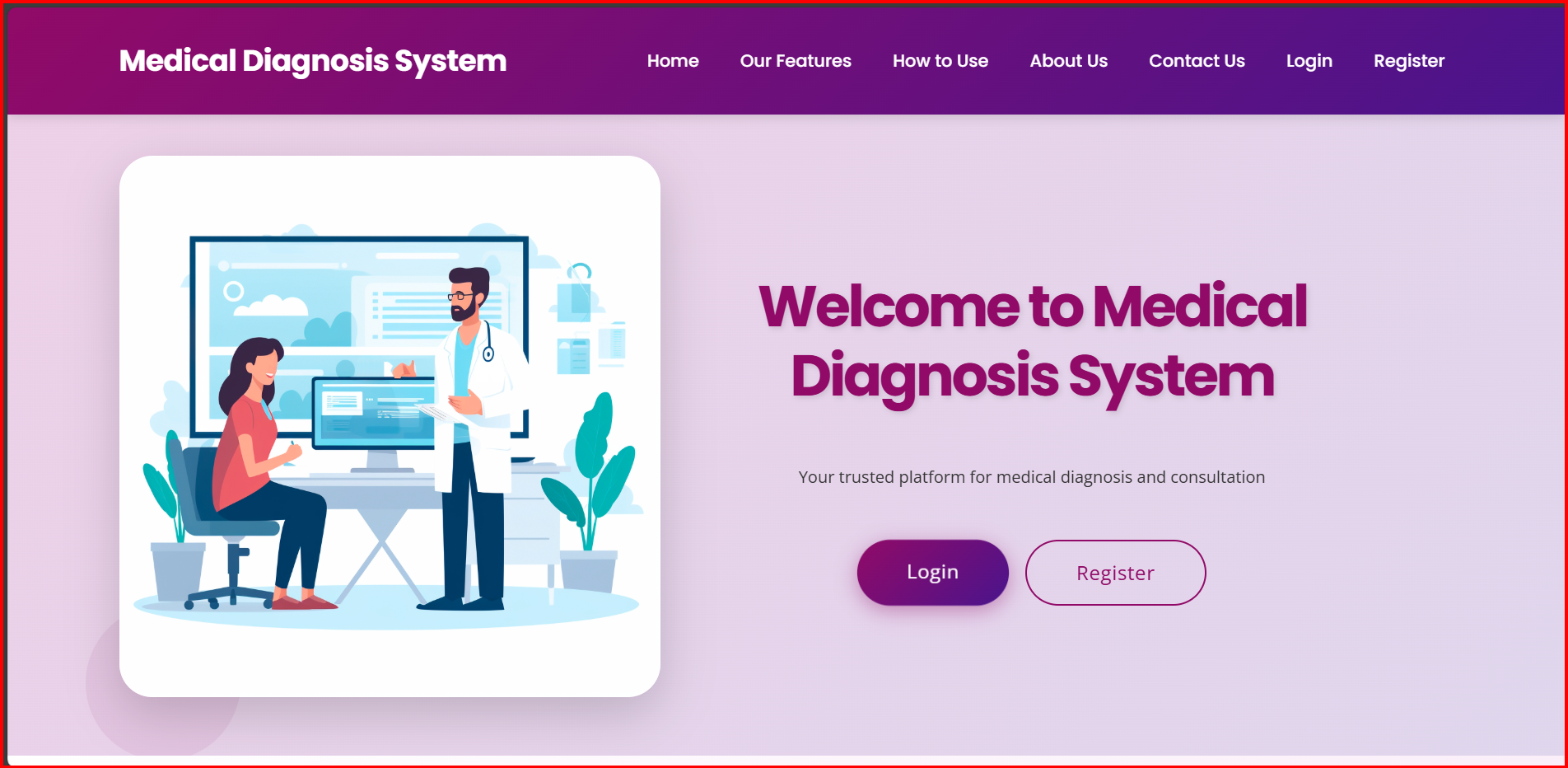
Home Page 1
-
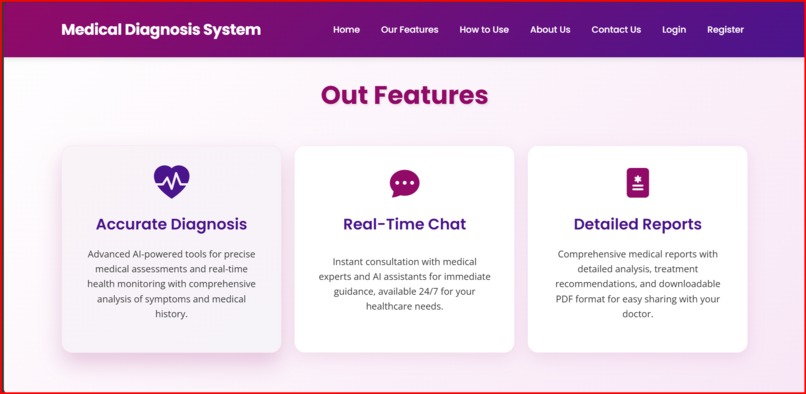
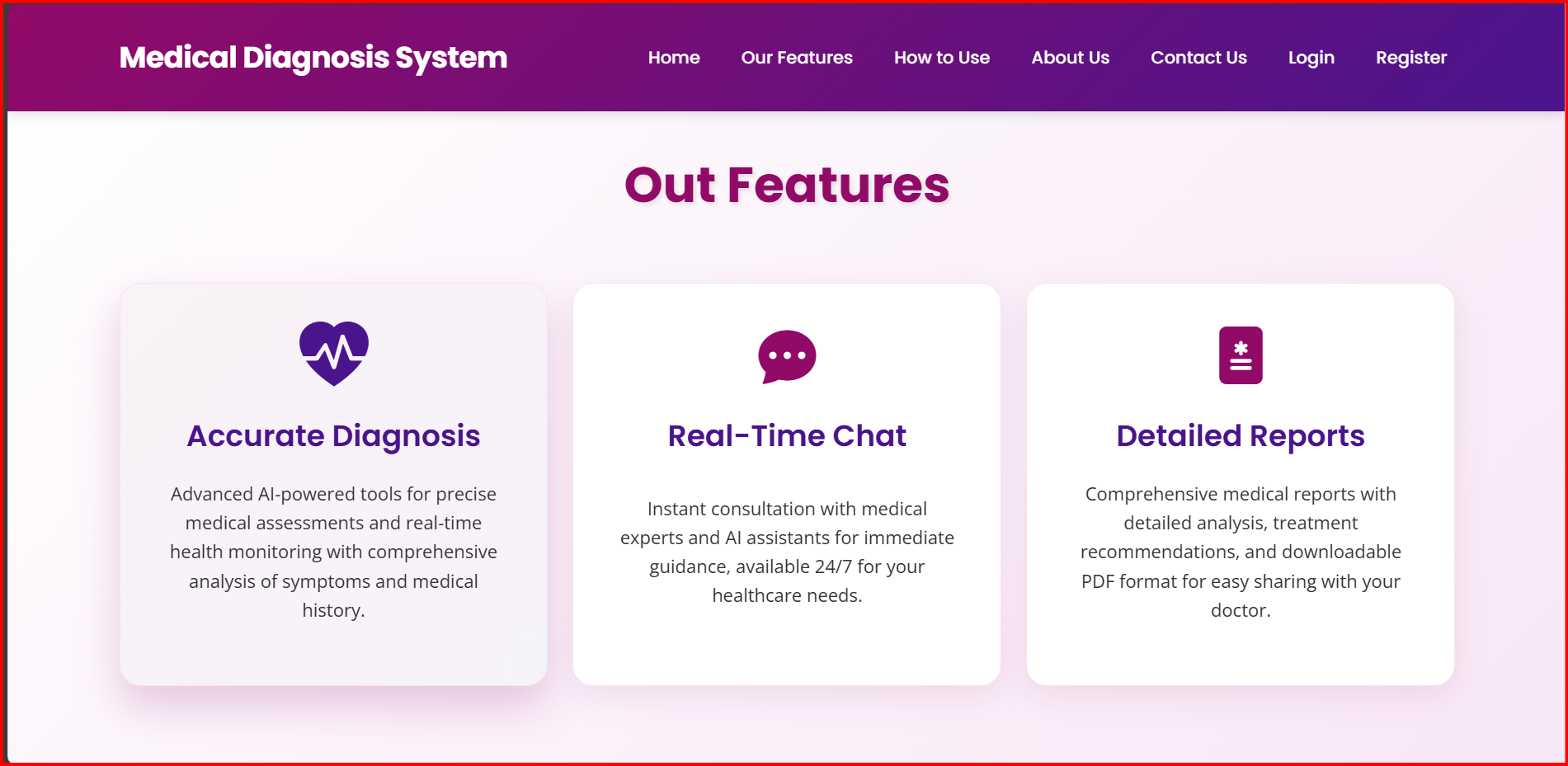
Home Page 2
-
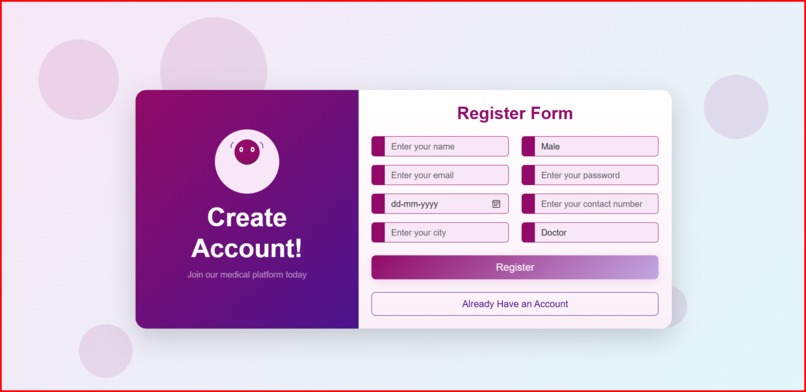
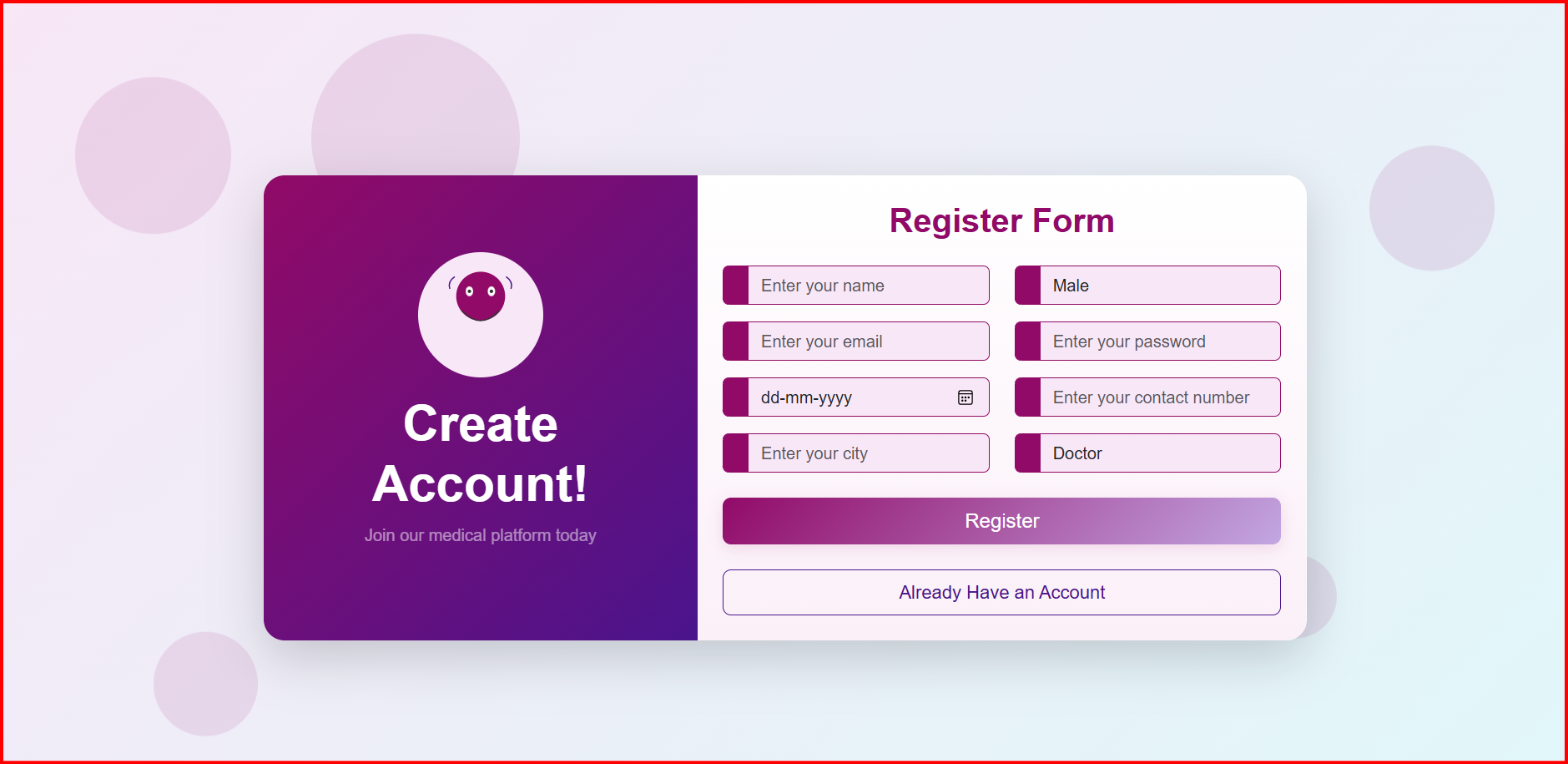
Register Page
-
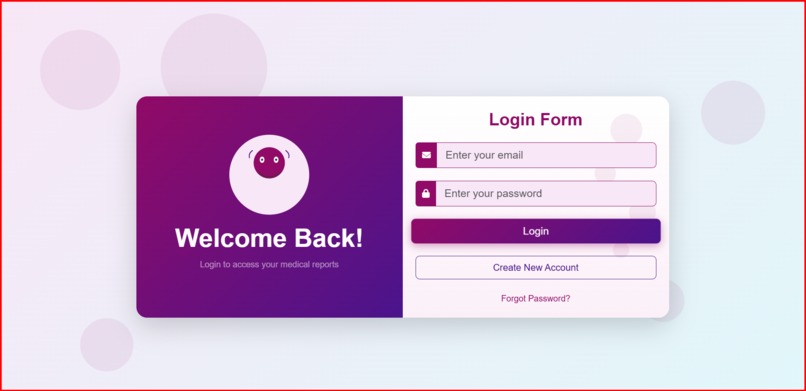
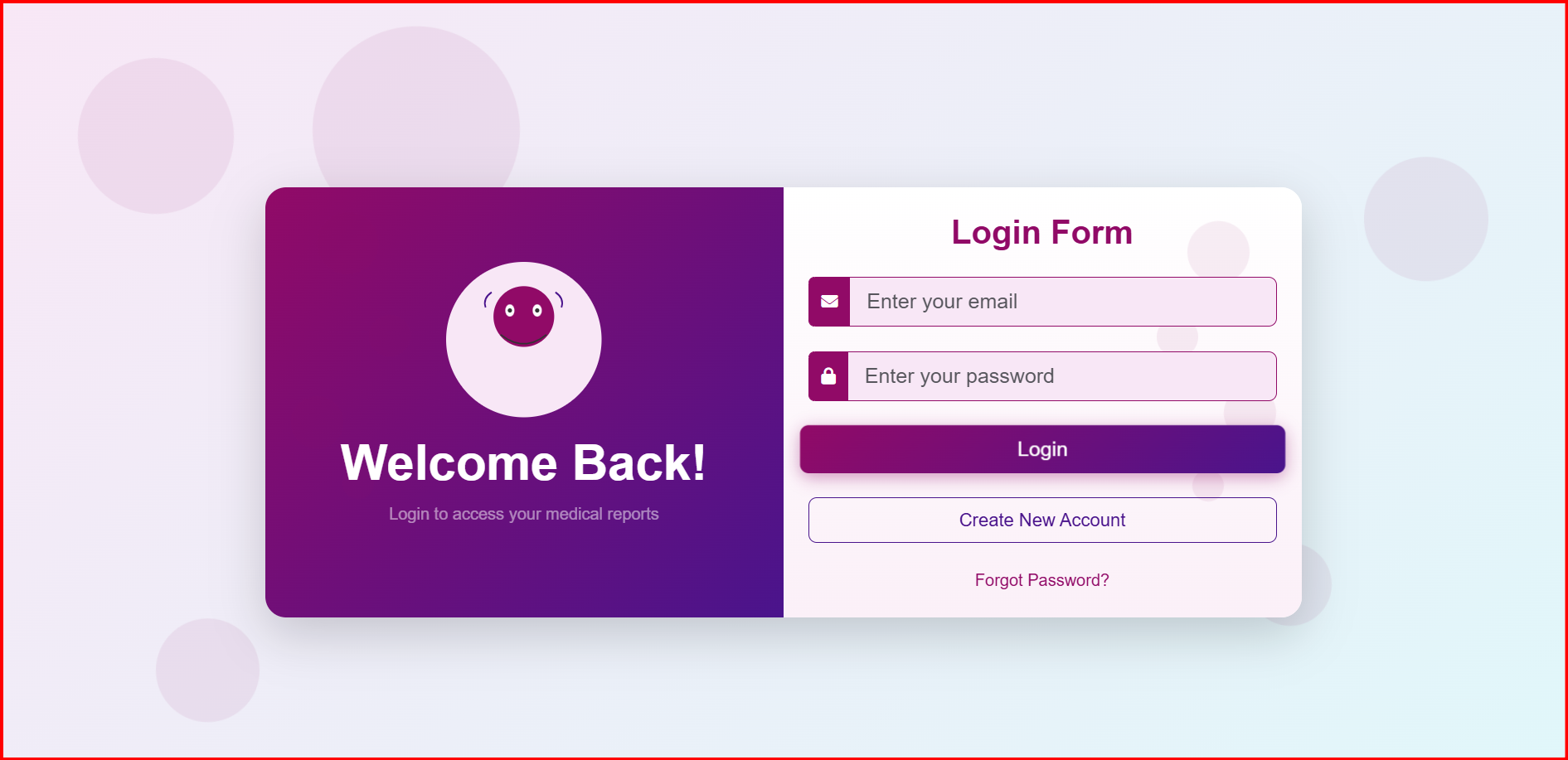
Login Page
-
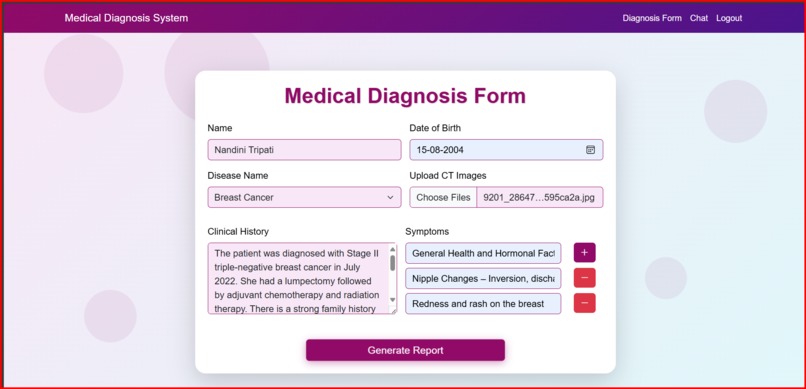
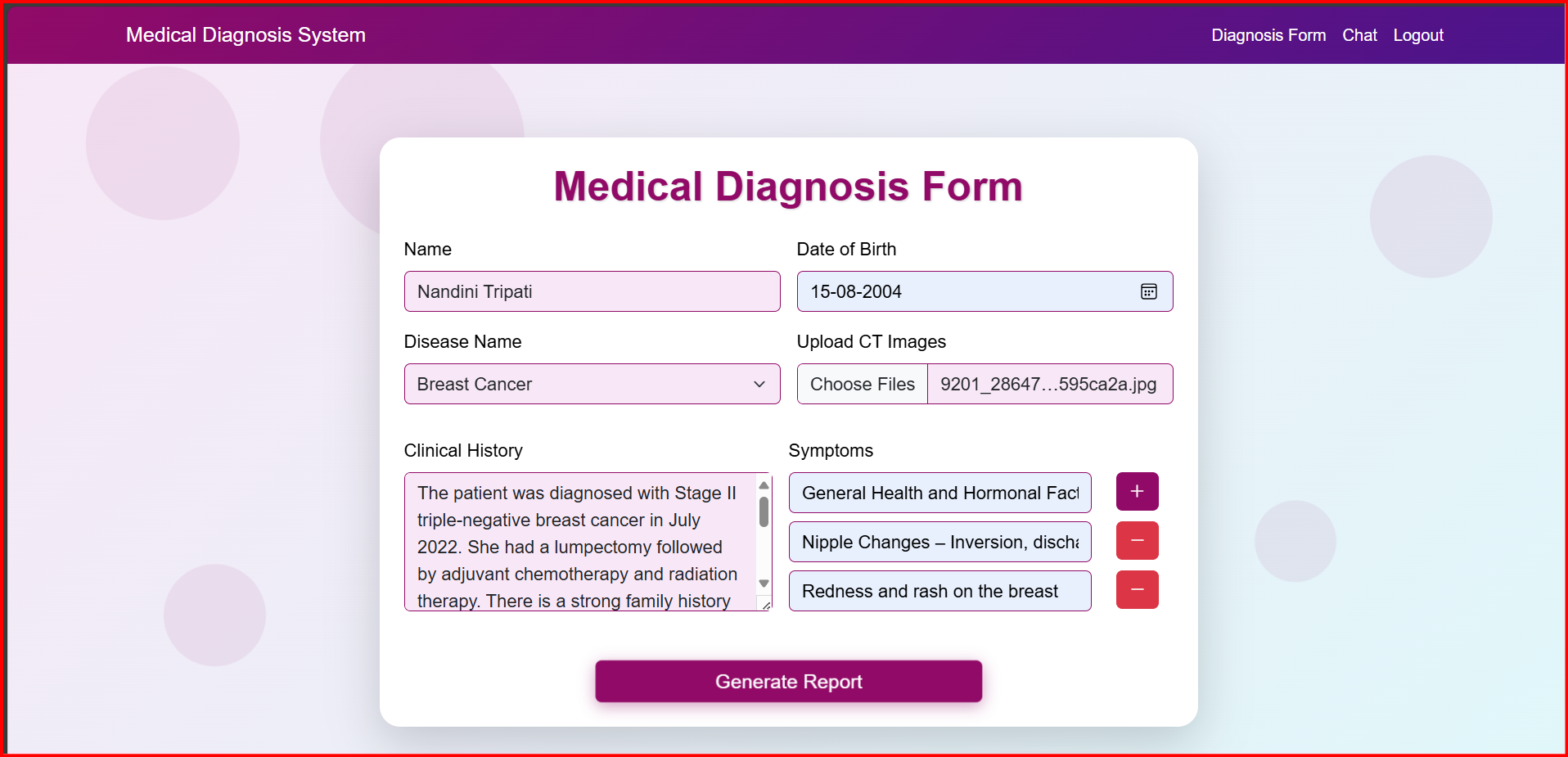
Medical Diagnosis Data Form
-
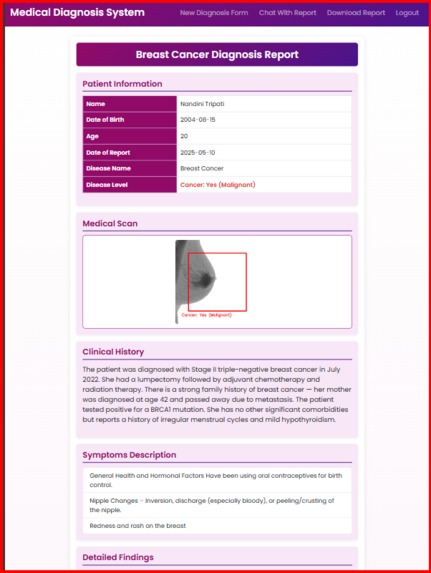
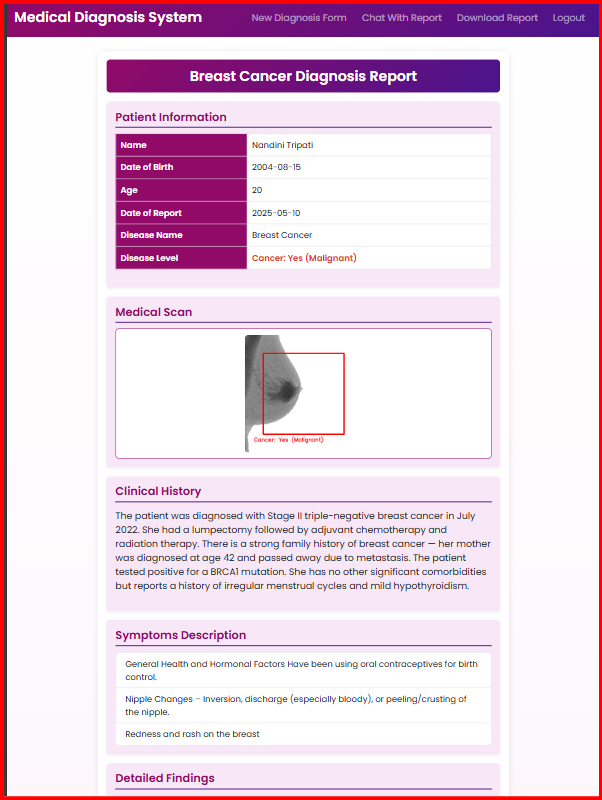
Generated Report
-
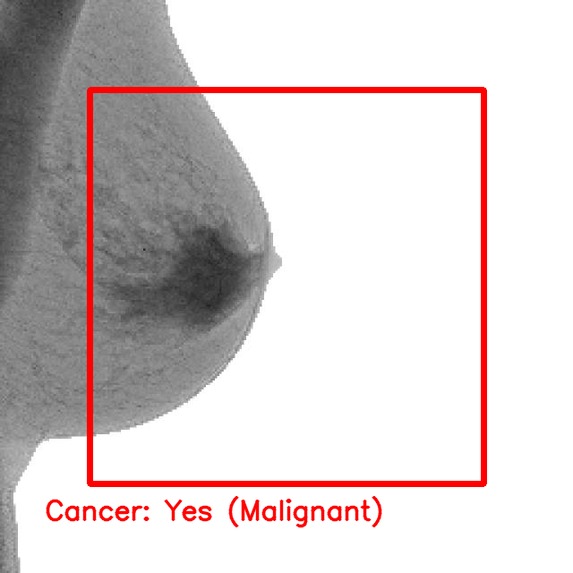
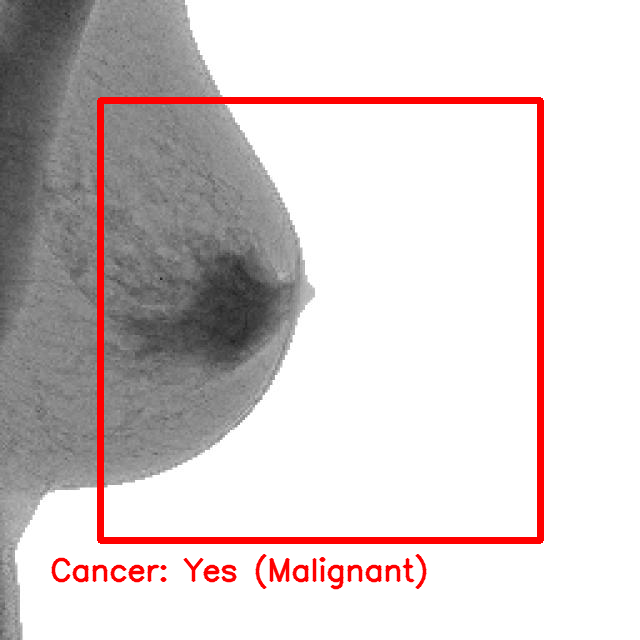
CNN Output Image
-
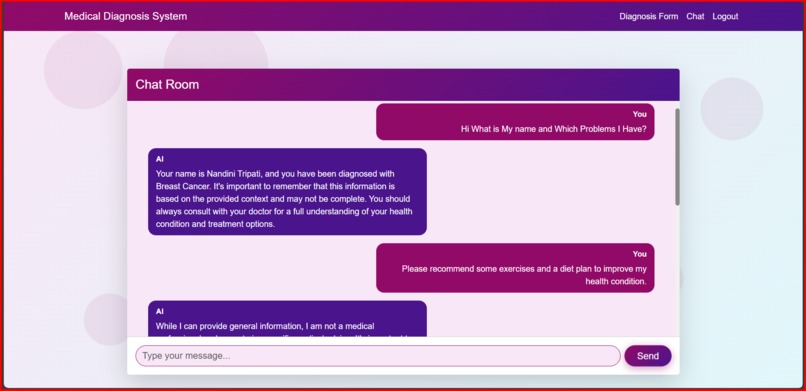
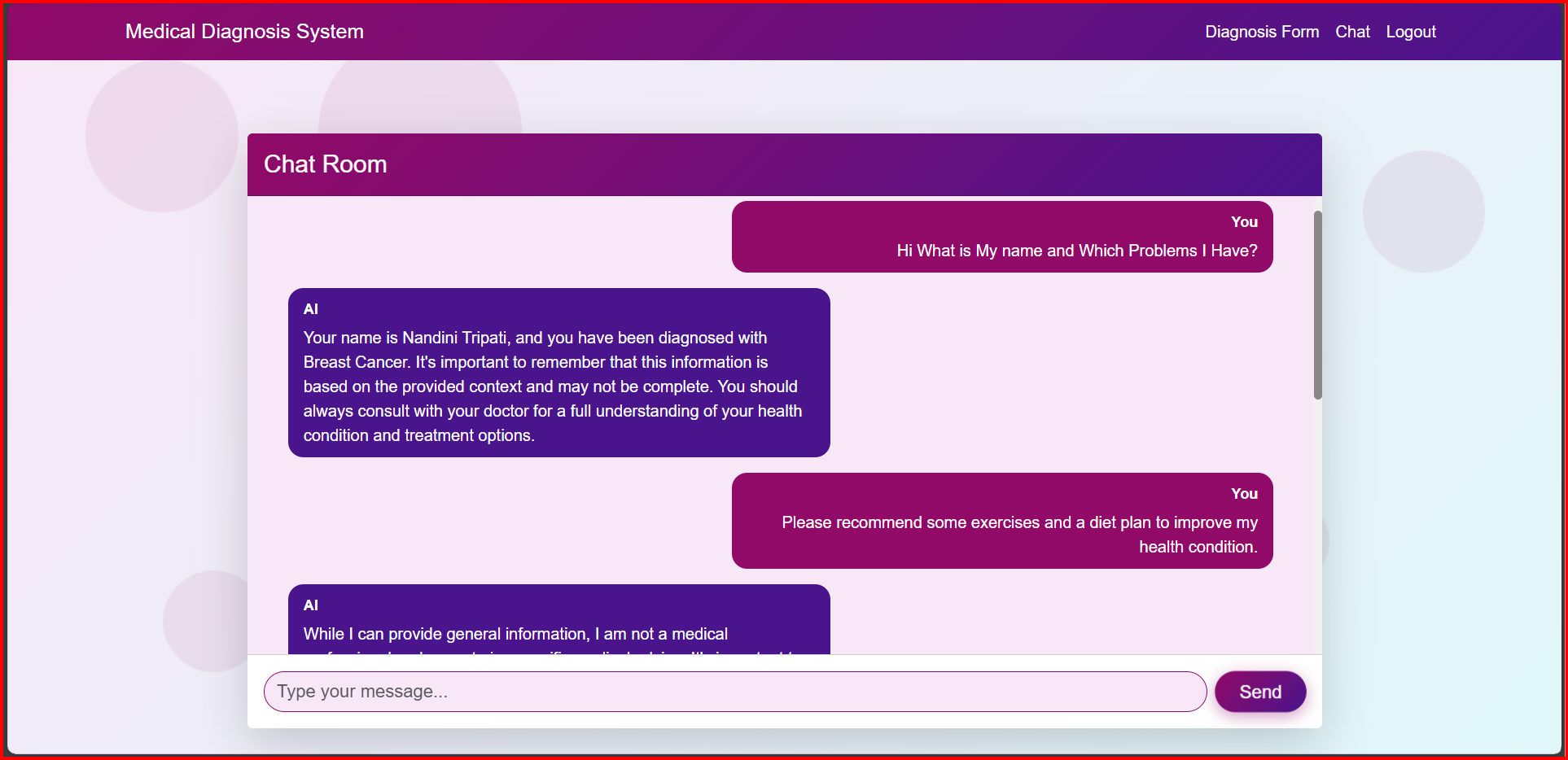
RAG Chat assistant
Inspiration
Healthcare in underserved regions faces delays and errors in medical imaging diagnosis due to a shortage of radiologists. Patients, especially elderly individuals and women with sensitive health concerns like breast cancer, often hesitate to discuss their reports openly. This lack of clarity and confidence leads to delayed treatment and poorer health outcomes.
We were inspired to build a platform that bridges this gap—making radiology more accessible, understandable, and interactive for everyone.
What it does
- Analyzes medical scans (CT, MRI, X-ray) using AI to detect breast cancer, lung cancer, brain tumors, bone fractures, kidney stones, thyroid abnormalities, and many more diseases.
- Generates clear and simplified diagnostic reports using Few-Shot Learning.
- Provides a RAG-powered chatbot that answers patient questions in plain language and assists junior doctors with interpretations.
- Secures and stores reports for easy access by both patients and healthcare professionals.
How we built it
- Image Preprocessing – Converted DICOM scans to standard formats, normalized pixel values, and applied noise reduction filters.
- Disease Detection – Used CNN models (ResNet50, VGG19, InceptionV3) trained on diverse datasets:
- Breast Cancer: Kaggle hayder17/breast-cancer-detection
- Lung Cancer: IQ-OTHNCCD dataset
- Brain Tumor: Brain MRI dataset (Yes/No labeled)
- Bone Fracture: X-ray fracture dataset with spatial attention
- Kidney Stones: CT-Kidney-Stone dataset
- Thyroid Abnormalities: Kaggle Thyroid Disease Dataset
- Breast Cancer: Kaggle hayder17/breast-cancer-detection
- Report Generation – Integrated Few-Shot Learning with Grok API for structured diagnostic reports.
- Interactive Chatbot – Implemented Retrieval-Augmented Generation (RAG) to answer patient queries and assist doctors.
- Secure Data Handling – Used encrypted storage to protect sensitive health data.
Challenges we ran into
- Data Privacy & Accessibility: Medical data availability was limited due to privacy regulations.
- Patient Trust & Explainability: Making AI predictions transparent and easy to understand.
- Resource Constraints: Optimizing AI models for faster processing in low-resource environments.
Accomplishments that we're proud of
- Achieved 94% accuracy in breast cancer detection and strong results across lung cancer, brain tumor, bone fracture, and other conditions.
- Created a dual-function platform that serves both patients and healthcare providers.
- Addressed a social stigma by empowering women and elderly patients to access and understand their health reports without hesitation.
What we learned
- Building explainable AI increases trust and acceptance in healthcare.
- Few-Shot Learning enables rapid report generation with minimal labeled data.
- RAG-based chatbots can bridge communication gaps between patients and clinicians.
What's next for AI-Driven Radiology Assistant
- Expanding to include real-time teleconsultation features with doctors.
- Integrating federated learning for enhanced data privacy.
- Deploying the platform in rural and underserved clinics to improve healthcare accessibility.
- Adding multilingual support for diverse patient populations.
- Extending disease coverage to include cardiovascular conditions, liver disorders, and other multi-organ diagnostics.

Log in or sign up for Devpost to join the conversation.