-
-
-
-
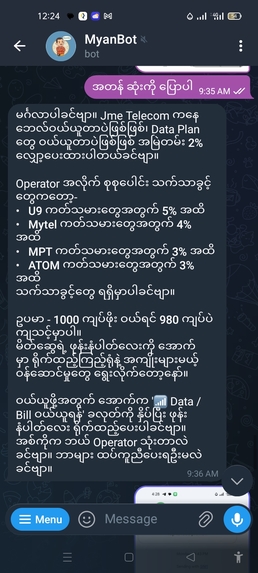
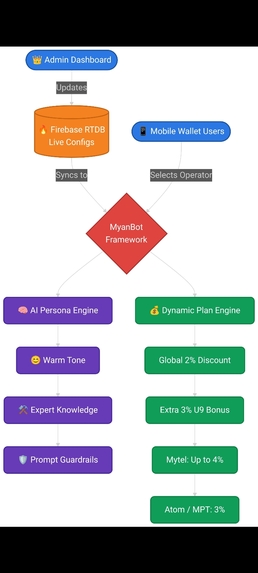
AI is permitted of promotion setting node of RealTimeDatabase that is dynamically changing by adminDashboard of admin bot.


Inspiration
In Myanmar, the digital landscape is heavily mobile-centric. Most users rely on diverse and complex mobile data plans, but navigating through various SMS and social media promotions to find the best value is a daily struggle. I was inspired to build an AI agent that doesn't just list prices, but actually "sees" and "understands" the visual promotional content users encounter, making digital services more accessible and easier to manage for everyone.
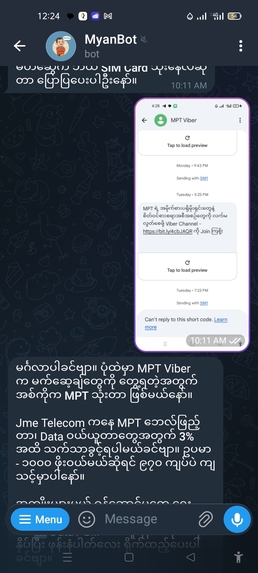
## What it does MyanBot is an AI-powered multimodal assistant that transforms static telecom screenshots into interactive services. Multimodal Recognition: Users simply upload a screenshot of a telecom offer. Intelligent Parsing: Using Gemini 1.5 Flash, the bot identifies the operator (MPT, ATOM, Ooredoo, or Mytel) and extracts plan details directly from the image. Real-time Analysis: It calculates dynamic discounts and provides users with an immediate, clear breakdown of the offer, bridging the gap between a visual ad and a final purchase.
## How we built it The project is built on a robust Node.js backend using Clean Architecture for high scalability and modularity. AI Core: Integrated the Google GenAI SDK to leverage Gemini’s vision capabilities. Data Management: Used Firebase Realtime Database for live configuration and plan syncing. Mobile-First Dev: Entirely developed and managed using a mobile-first infrastructure via Termux on Android, demonstrating that sophisticated AI agents can be built without a high-end desktop setup.
## Challenges we ran into Infrastructure deployment was a major hurdle. Due to regional payment card limitations for Google Cloud registration, I couldn't deploy to Cloud Run as planned. This led me to optimize the system for lightweight, mobile-based local server environments. Additionally, fine-tuning prompts to accurately interpret Myanmar-specific telecom terminologies and varied screenshot formats required extensive testing.
## Accomplishments that we're proud of I am incredibly proud of creating a functional, multimodal system that solves a real-world localized problem. Successfully implementing a "Vision-to-Logic" flow—where an image input results in precise data extraction and discounted pricing—is a significant technical milestone for this project.
## What we learned This challenge deepened my expertise in Prompt Engineering for vision models and taught me how to structure an AI-driven backend efficiently. I also learned the value of adaptability; finding creative ways to overcome infrastructure constraints while maintaining a "Build in Public" philosophy.
What's next for AI-Driven Multimodal Telecom Assistant
The next phase involves migrating to a hybrid backend with Java (Spring Boot) for core services and Python for analyzing telecom data trends. I also plan to add automated SMS parsing to provide a 360-degree telecom assistant experience.
Built With
- firebaserealtimedatabase
- gemini-2.5-flash
- javascript
- markdown
- node.js
- telegraf
- termux

Log in or sign up for Devpost to join the conversation.